#1 Overall Winner
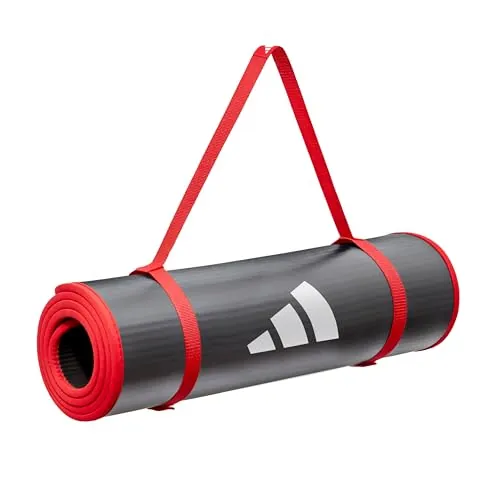
adidas 10mm Extra Thick Training Mat
- 10 mm NBR foam provides notably soft cushioning for floor workouts.
Comparison
The adidas 10mm Extra Thick Training Mat and BalanceFrom 3-Panel Folding Gymnastics Mat are both well-reviewed options for home floor workouts. adidas offers a lighter, softer roll-up mat, while BalanceFrom delivers much deeper, firmer cushioning in a foldable, wipe-clean design. The better choice comes down to whether you value streamlined bodyweight training and roll-up storage or thicker support for Pilates, stretching, gymnastics, and low-impact floor work.
#1 Overall Winner
Contender
Choose the adidas for a lighter, soft roll-up mat focused on bodyweight workouts and everyday floor exercise. Choose BalanceFrom for substantially thicker, firmer padding, wipe-clean care, and folding storage. For Pilates, stretching, gymnastics, and knee-sensitive floor work, BalanceFrom is the more capable option.
Overall winner
Depends on your needs
| Feature | adidas 10mm Extra Thick Training Mat | BalanceFrom 6x2 Feet 3-Panel Folding Gymnastics Mat | Winner |
|---|---|---|---|
| Primary format | 10 mm roll-up training mat | 2-inch, 3-panel folding mat | Depends |
| Dimensions when open | 72.05 x 24.02 inches | 72 x 24 inches stated | Tie |
| Cushioning | Soft 10 mm NBR foam | Firm 2-inch EPE foam | BalanceFrom 6x2 Feet 3-Panel Folding Gymnastics Mat |
| General floor workouts | Soft, lightweight workout surface | Firm, highly padded workout surface | Depends |
| Mobility and Pilates | Useful, but some yoga slip/stretch feedback | Firm padding for yoga, Pilates, and stretching | BalanceFrom 6x2 Feet 3-Panel Folding Gymnastics Mat |
| Strength floor work | Strong for core and bodyweight work | Useful for cushioned floor exercises | adidas 10mm Extra Thick Training Mat |
| Floor grip and stability | Ridged bottom; some mixed yoga stability feedback | Resilient firm pad; positive stay-in-place feedback | BalanceFrom 6x2 Feet 3-Panel Folding Gymnastics Mat |
| Cleaning | Closed-cell foam; machine wash listed | Vinyl surface; soap-and-water cleaning | BalanceFrom 6x2 Feet 3-Panel Folding Gymnastics Mat |
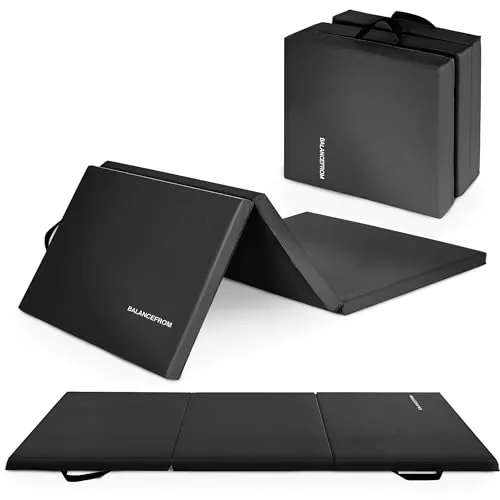
| Storage | Rolls up with shoulder strap | Folds to 24 x 24 x 6 inches with handles | Depends |
| Portability | 1.25 kg; rollable | 3 lb; folding handles | BalanceFrom 6x2 Feet 3-Panel Folding Gymnastics Mat |
| Durability considerations | Positive reports of sturdy, durable foam | Positive reports, with seam and corner wear concerns | adidas 10mm Extra Thick Training Mat |
| Value | Lower listed price | Slightly higher price with deeper padding and folding design | BalanceFrom 6x2 Feet 3-Panel Folding Gymnastics Mat |
For gentle cool-downs, floor stretching, and relaxation-oriented mobility, both mats offer a more comfortable alternative to bare flooring. BalanceFrom has the advantage for extended floor time because of its 2-inch firm cushioning and wipe-clean cover. adidas is a sensible choice for lighter stretching sessions where a softer, less bulky roll-up mat is preferable. Buyer comments about comfort are useful practical signals, but they should not be interpreted as evidence of treatment or recovery outcomes.
For broad home-training use, both mats provide a 6-foot-long surface that can make floor exercise more comfortable on hard flooring. The adidas is better aligned with quick bodyweight circuits, core work, and sessions where a slim roll-up mat is preferred. BalanceFrom is more versatile where the workout includes kneeling, static mobility, Pilates, tumbling practice, or martial-arts drills because its 2-inch firm foam provides a more substantial base. Neither mat replaces task-specific equipment, but both can make a dedicated floor-training area more practical.
For bodyweight strength work such as planks, sit-ups, glute bridges, and controlled push-up variations, the adidas mat is a strong fit: it is soft, light, and designed as a training mat. The BalanceFrom can also support floor strength sessions and offers more comfort under knees and elbows, but its thick folding structure is less streamlined for fast transitions. Neither product supplies resistance or load progression, so their role in strength training is primarily comfort, traction, and protection from hard flooring.
Neither product is a dedicated cardio tool, but both can support low-impact conditioning or exercise-video sessions. The adidas mat is likely more convenient for compact bodyweight circuits because it rolls out quickly and has a lighter profile. BalanceFrom offers more cushioning for low-impact movement, but its thick folding construction is better suited to controlled floor drills than high-movement cardio. Users planning regular jumping or intense lateral movement should consider their available floor area and the mat's 24-inch width.
BalanceFrom is the clearer choice for mobility, stretching, and Pilates routines. Its 2-inch firm foam gives more protection during kneeling, seated, and supine positions, while its stated uses include yoga and Pilates. adidas offers soft cushioning that many users appreciate for general stretching, but the supplied feedback includes a report of slipping or stretching during held yoga poses. For dynamic warm-ups and general floor mobility, either can work; for longer, more supported practice, BalanceFrom has the stronger case.
Both mats can support non-medical recovery routines such as gentle stretching, relaxed floor mobility, and post-workout cool-downs. BalanceFrom's deeper, firm padding is likely more comfortable for extended time on hard floors, particularly in kneeling or lying positions. The adidas mat remains useful for shorter mobility sessions and is easier to roll up once finished. These are exercise surfaces rather than treatment products, and the available information does not establish outcomes for soreness, injury, or medical recovery.
Both products appear to perform well within their intended roles, with extensive positive feedback for comfort and quality. The adidas mat stands out as a soft, cushioned training surface that is easy to roll out for home exercise; buyers frequently mention comfort on tile or other hard floors. BalanceFrom performs especially well as a protective padded platform, with firm 2-inch foam and stated suitability for activities ranging from Pilates to gymnastics and martial arts. The main performance caveats are adidas stability concerns in some yoga poses and BalanceFrom reports of seam or corner wear with rough use.
BalanceFrom offers the stronger all-round platform for varied floor routines because its thick, firm padding can accommodate stretching, Pilates, gymnastics drills, martial-arts practice, and general exercise. The folding layout also makes it simple to put away after training. adidas provides excellent support for repeatable home workouts where portability, soft cushioning, and low setup friction matter most. Beginners may appreciate either option, but BalanceFrom gives more physical protection for floor movements, while adidas may be easier to live with for short daily bodyweight sessions.
For floor-based strength work, adidas has a slight practical edge because it is purpose-built as a training mat, has a ridged base, and is light enough to deploy for frequent sessions. Its soft 10 mm foam can reduce pressure under knees and elbows without creating a very tall surface. BalanceFrom provides more cushioning for planks, bridges, and kneeling work, but does not add resistance or progression. Users doing controlled bodyweight strength work can choose based on desired padding depth rather than training load.
Cardio suitability is limited for both mats because neither is designed as a dedicated conditioning machine or impact surface. adidas is the more practical option for low-impact exercise circuits thanks to its lighter roll-up profile and general training focus. BalanceFrom is better reserved for controlled floor conditioning, where its thicker foam can add comfort. The supplied data does not establish that either mat is intended for repeated high-impact jumping, so fit should be judged by exercise style and available space.
BalanceFrom has the stronger mobility and flexibility profile. The firm, thick EPE foam is specifically described for yoga and Pilates, and buyer feedback often highlights comfort during stretching and support under knees. The adidas mat remains a comfortable option for basic mobility work, but it has mixed pose-stability feedback and less padding depth. For users who spend longer periods seated, kneeling, or lying on the mat, the BalanceFrom design is the more accommodating choice.
For gentle cool-downs, floor stretching, and relaxation-oriented mobility, both mats offer a more comfortable alternative to bare flooring. BalanceFrom has the advantage for extended floor time because of its 2-inch firm cushioning and wipe-clean cover. adidas is a sensible choice for lighter stretching sessions where a softer, less bulky roll-up mat is preferable. Buyer comments about comfort are useful practical signals, but they should not be interpreted as evidence of treatment or recovery outcomes.
Both mats can make floor exercise more comfortable and may reduce direct contact with hard surfaces, but safe use still depends on matching the mat to the activity and floor. adidas has a ridged base designed to limit movement, though one review reports slipping or stretching in yoga holds. BalanceFrom's firmer, thicker pad and positive stability feedback offer a stronger platform for controlled mobility and floor work, but folding seams and corners should be inspected for wear. Neither supplied listing establishes suitability for every high-impact exercise or surface.
Comfort is a major strength for both products. adidas is the softer option, using 10 mm NBR foam that buyers repeatedly praise for reducing pressure under knees and elbows during standard workouts. BalanceFrom is firmer but significantly thicker at 2 inches, giving it an advantage for users who want deeper support during kneeling, stretching, Pilates, or extended floor sessions. Choose adidas for softer everyday cushioning and BalanceFrom for a more substantial, dense padded surface.
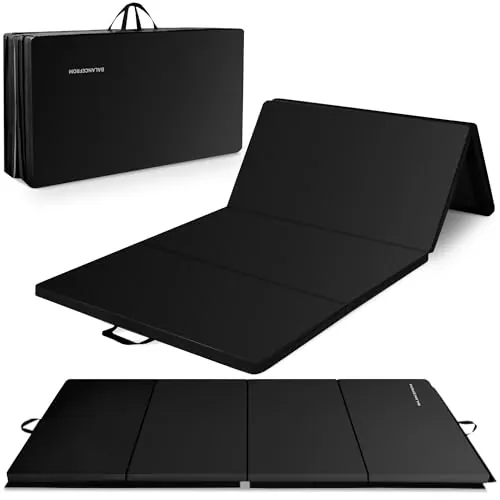
BalanceFrom has the edge for everyday handling because it folds into three panels, includes handles, and has a vinyl surface that can be washed with soap and water. Its setup is simply unfolding the pad. adidas is also easy to use: it rolls out, can be stored with a strap, and is light at 1.25 kg. The practical difference is storage format—adidas is slimmer when rolled, while BalanceFrom is faster to fold into a defined square package.
Both mats are intended to stay usable on home floors, but BalanceFrom has the stronger stability case in the available information. Its firm foam is described as helping users keep balance, and buyers report that it stays in place during use. adidas has a ridged bottom to improve floor grip and many positive reports of steadiness, yet one reviewer found it slipped or stretched during yoga holds. For static poses, BalanceFrom is the safer bet; for ordinary floor exercise, adidas remains capable.
adidas uses a ridged underside intended to grip the floor and reduce mat movement. This appears effective for many users, although feedback is mixed for yoga-style holds. BalanceFrom's supplied details emphasize its vinyl surface and firm resilience rather than a specific textured underside, while some reviews describe it as non-slip and stable. Neither product has a clear universal grip advantage across every floor type, so the flooring beneath the mat remains important.
Both mats are highly practical for home storage because they do not need to stay laid out. adidas is the better option for users who need the slimmest stored profile: it rolls up and weighs 1.25 kg. BalanceFrom folds to 24 by 24 by 6 inches, which makes it simple to stack, carry, or slide into a storage area. The folding mat uses more volume, but it offers much greater cushioning once unfolded. Choose based on whether shelf depth or overall bulk is the bigger constraint.
Both mats have positive build-quality signals from buyer feedback. adidas is described as thick, soft, sturdy, and well made, with users noting that it rolls out well and has a finished edge. Its NBR foam construction supports a lightweight training-mat format. BalanceFrom combines firm EPE foam with a vinyl cover, stitched panels, and built-in carrying handles. Its construction is more substantial for padded floor work, although reports of corner damage and seam wear mean storage and handling are important for preserving the foldable design.
adidas has a slight durability advantage based on the supplied comparison context and feedback describing prolonged softness, steadiness, and sturdy construction. BalanceFrom also receives many positive long-term comments, including reports that it retains density after repeated use. Its weak point is more specific: several buyers mention that corners can be damaged or that fold seams may begin to tear over time. For either mat, rolling or folding carefully and avoiding rough storage should help protect the material and edges.
BalanceFrom is easier to maintain based on the provided care information. Its non-absorbent vinyl surface is moisture resistant and can be cleaned with soap and water, and buyers frequently describe it as easy to wipe down. adidas uses closed-cell foam intended to minimize moisture absorption and lists machine washing in its product care details. Both should be stored dry and handled carefully, but BalanceFrom has the more straightforward surface-cleaning routine for frequent home use.
Both mats are portable, but BalanceFrom has the stronger overall transport setup with a three-panel fold and carrying handles. It is listed at 3 pounds, allowing it to remain manageable despite its 2-inch thickness. adidas is also easy to move at 1.25 kg, rolls into a slimmer shape, and is described as including a Velcro shoulder strap, although buyer feedback is inconsistent about strap inclusion. BalanceFrom is more self-contained; adidas is less bulky when rolled.
Material disclosure is clearer for BalanceFrom. It identifies firm high-density EPE foam and an 18-ounce, non-toxic, lead-free vinyl surface, alongside its moisture-resistant cleaning approach. adidas identifies NBR foam, closed-cell technology, a foam material listing, and a ridged base. Both provide enough material information to distinguish their construction, though BalanceFrom gives more detail about its outer surface. No additional certifications or testing documentation were supplied for either product.
Both mats offer strong value based on their listed prices, positive ratings, and large bodies of customer feedback. adidas costs less and provides a well-regarded, comfortable 10 mm mat with roll-up storage, making it a sensible value for general bodyweight and floor exercise. BalanceFrom costs slightly more but adds a 2-inch firm padded construction, folding panels, handles, vinyl cleaning, and a wider range of stated uses. For buyers who need deep cushioning, BalanceFrom's extra capability supports the higher outlay; for basic training, adidas may be the more economical fit.
adidas has the advantage in brand recognition within fitness and sports equipment, and buyer feedback for this mat is consistently positive on comfort, quality, and durability. BalanceFrom also has a very large base of positive purchaser feedback for this specific folding mat, particularly around cushioning, practical storage, and value. The supplied material and care details are more extensive for BalanceFrom, while adidas has strong product-specific sentiment. Neither listing provides warranty information or independent testing evidence, so brand preference should not be the only deciding factor.
Both products have excellent customer ratings and substantial review counts, indicating broad buyer experience rather than a small review sample. adidas purchasers repeatedly praise thickness, softness, comfort on hard floors, and portability; the most notable recurring reservation is its suitability for stable yoga holds and inconsistent strap inclusion. BalanceFrom has an even larger review base and frequent praise for dense cushioning, easy folding, cleaning, and value. Its recurring concerns are potential corner or seam wear and isolated reports of dimension differences. Overall buyer sentiment is marginally stronger for BalanceFrom.
The central claims for both mats are reasonably supported by the provided specifications and buyer feedback. adidas's cushioning, roll-up portability, closed-cell construction, and ridged base are tied to stated material and design details, while reviewers commonly support its comfort and perceived durability. BalanceFrom's thick padding, folding storage, handles, and wipe-clean vinyl are also clearly specified and widely reflected in feedback. Statements about suitability for particular activities should still be treated as intended-use guidance rather than proof of performance for every user, surface, or training intensity.
BalanceFrom is the stronger overall choice for most users seeking a versatile, heavily cushioned home exercise mat. Its firm 2-inch foam, foldable storage, carrying handles, wipe-clean vinyl, and broad stated activity range make it particularly compelling for mobility work, Pilates, gymnastics, and extended floor exercise. Its primary limitation is the possibility of corner or seam wear with rough handling.
The adidas mat remains an excellent alternative for general training. It is softer, lighter, less bulky when rolled, and well suited to bodyweight sessions on hard floors. Its main trade-offs are less padding depth, a standard narrow width, and mixed feedback for held yoga poses. Pick BalanceFrom for protection and versatility; pick adidas for a streamlined training mat.

Overall winner
Depends on your needs
Neither is best for every workout. The adidas mat is the more streamlined roll-up choice for general bodyweight sessions and portable home training. The BalanceFrom mat is the stronger option when deeper, firmer cushioning, folding storage, and activities such as Pilates, stretching, gymnastics, or martial-arts drills are the priorities.
The BalanceFrom mat has the deeper padded construction at 2 inches and uses firm high-density EPE foam. The adidas mat is 10 mm thick and is repeatedly described by buyers as soft and comfortable, but it does not offer the same depth of protection for kneeling or more padded floor work.
The adidas mat can be used for gentle yoga and floor mobility, especially where soft cushioning is important. However, feedback is mixed for held poses: one buyer reported that it slipped or stretched during yoga. Users who prioritize a firm, thick surface for yoga or Pilates may prefer the BalanceFrom mat.
The BalanceFrom mat has the clearer cleaning advantage based on the supplied details. Its non-absorbent vinyl surface is described as moisture resistant and washable with soap and water. The adidas mat uses closed-cell NBR foam to reduce moisture absorption and lists machine washing, but its care approach is less specifically detailed.
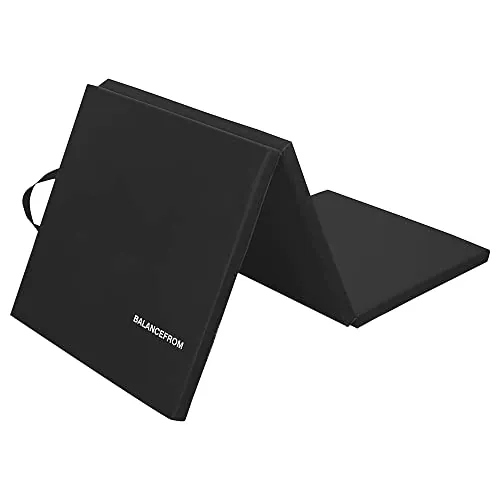
Both are practical for home storage, but they suit different setups. The adidas mat rolls into a relatively slim format and weighs 1.25 kg. The BalanceFrom mat folds into three panels measuring 24 by 24 by 6 inches, making it easy to stack or slide into a storage area, although it remains thicker when packed.
The BalanceFrom mat is likely the more forgiving starting point for beginners who need substantial, firm padding for kneeling, stretching, Pilates, and floor movements. The adidas mat is also beginner-friendly for basic home workouts, particularly for users who want a lighter mat that is quick to roll out and carry.
Both products receive substantial positive feedback on build and durability. For the adidas mat, buyers often mention sturdy construction and continued softness. For the BalanceFrom mat, some reviews note that corners can ding and folding seams may eventually tear with repeated use or rough storage, so careful handling is sensible.
Confirm that the shared 24-inch width works for your movements, particularly push-ups and wider stretches. Choose the adidas mat for a lighter roll-up format and softer 10 mm cushioning. Choose BalanceFrom if you need a 2-inch firm pad, folding storage, and a vinyl surface that can be wiped with soap and water.
Check our rankings and expert guides to find the best fitness products for your goals.