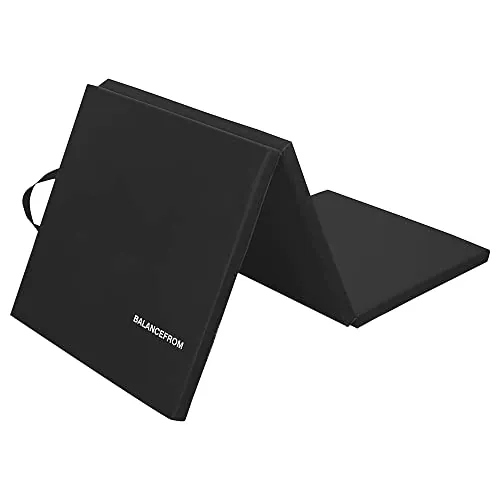
#1 Overall Winner
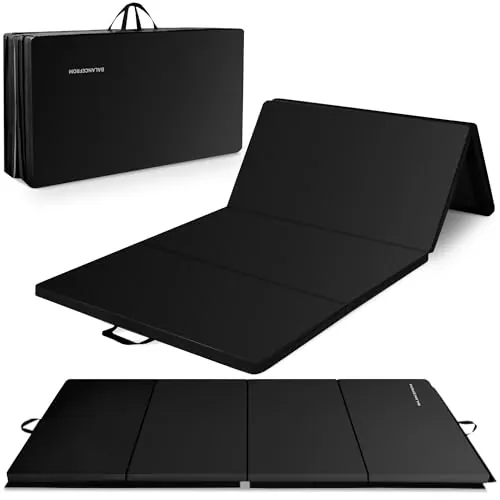
BalanceFrom 10x4 Feet 4-Panel Folding Gymnastics Mat
- Large 10-by-4-foot training surface for floor work and tumbling practice.
Comparison
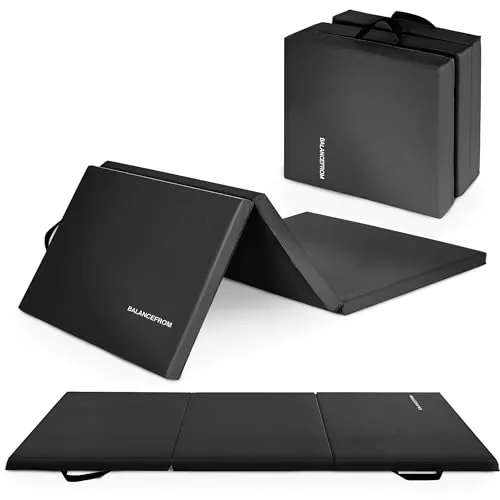
Both BalanceFrom folding mats use firm 2-inch foam and easy-clean vinyl for yoga, Pilates, gymnastics, martial arts, and home floor workouts. The 10x4 model provides a much larger training area and connectable edges, while the 6x2 model is lighter, less expensive, and easier to store.
#1 Overall Winner
Contender
Choose the BalanceFrom 10x4 mat for a spacious home-gym, gymnastics, martial arts, or connected-mat setup. Choose the 6x2 mat for personal yoga, stretching, Pilates, and compact home workouts where low weight, easy storage, and price matter more than training area.
Overall winner
Depends on your needs
| Feature | BalanceFrom 10x4 Feet 4-Panel Folding Gymnastics Mat | BalanceFrom 6x2 Feet 3-Panel Folding Gymnastics Mat | Winner |
|---|---|---|---|
| Expanded size | 10 x 4 x 2 in listed as 10 x 4 x 2 ft | 6 x 2 x 2 in listed as 6 x 2 x 2 ft | BalanceFrom 10x4 Feet 4-Panel Folding Gymnastics Mat |
| Folded size | 48 x 30 x 8 in | 24 x 24 x 6 in | BalanceFrom 6x2 Feet 3-Panel Folding Gymnastics Mat |
| Weight | 15 lb | 3 lb | BalanceFrom 6x2 Feet 3-Panel Folding Gymnastics Mat |
| Foam | 2-inch firm high-density EPE foam | 2-inch firm high-density EPE foam | Tie |
| Cover material | 18 oz non-absorbent vinyl | 18 oz non-absorbent vinyl | Tie |
| Panel design | 4-panel fold | 3-panel fold | Depends |
| Connectable edges | Hook-and-loop strips on all sides listed | Not confirmed in supplied details | BalanceFrom 10x4 Feet 4-Panel Folding Gymnastics Mat |
| Mobility and stretching | More room for broad movement | Compact personal exercise area | Depends |
| Gymnastics and martial arts | Broad surface and connectable design | Suitable for basic individual practice | BalanceFrom 10x4 Feet 4-Panel Folding Gymnastics Mat |
| Portability | Handles; 15 lb | Handles; 3 lb | BalanceFrom 6x2 Feet 3-Panel Folding Gymnastics Mat |
| Reported durability | Reinforced stitching; positive long-term feedback | Positive durability feedback; seam and corner wear reported by some | BalanceFrom 10x4 Feet 4-Panel Folding Gymnastics Mat |
| Price | 142.99 | 43.99 | BalanceFrom 6x2 Feet 3-Panel Folding Gymnastics Mat |
Both options can make post-workout stretching and gentle floor mobility more comfortable by adding firm cushioning between the user and a hard floor. The 6x2 is more convenient for a short recovery routine in a bedroom or small living area. The 10x4 is more comfortable for users who want more room to change positions or combine stretching with other floor work. Reviews describe supportive comfort, but individual comfort needs and training contexts differ.
Both mats support home floor-training routines, particularly yoga, Pilates, stretching, bodyweight work, martial arts, and basic gymnastics. The 10x4 version is more versatile when the session includes broad movements, tumbling drills, grappling practice, or several participants because it offers four times the listed surface area. The 6x2 version works best as a personal training station for controlled movements. Its compact size reduces setup friction in apartments and multipurpose rooms, while the 10x4 model better suits a dedicated home gym or studio area.
Neither mat is a loadable strength-training tool, but both can improve comfort for floor-based strength work such as core exercises, bodyweight movements, and mobility work between sets. The 10x4 mat is more useful for kettlebell-adjacent floor drills, wider bodyweight sessions, and exercises requiring space to reposition. The 6x2 mat is adequate for planks, sit-ups, glute work, and a single exerciser’s floor routine. For heavy lifting, buyers should consider whether the vinyl surface and foam are appropriate for their equipment and floor setup.
These are not cardio machines, but each mat can provide a cushioned surface for low-impact aerobics and floor conditioning. The 10x4 mat is the better option for sessions involving larger movement patterns because its wider surface gives more room to step, transition, or practice martial arts footwork. The 6x2 mat is better limited to compact, low-impact routines where movement stays largely in place. Neither product’s supplied information establishes it as a dedicated surface for high-impact cardio or jump training.
Both mats are strong options for mobility, flexibility, yoga, Pilates, and stretching because they pair firm support with 2-inch cushioning. The 6x2 model is well matched to a solo stretching routine and is particularly practical when the mat must be put away after every session. The 10x4 model is preferable for users who want more room for wide-leg positions, flowing transitions, side-to-side mobility drills, or shared use. The firmer foam can feel more supportive than thin mats on hard flooring, though personal cushioning preferences vary.
For gentle stretching and post-workout floor mobility, either mat offers a more cushioned surface than a bare floor. The 6x2 model is convenient for a short personal routine because it is light and quick to unfold. The 10x4 model gives more freedom for longer stretching sessions and varied positions. These are exercise mats rather than medical or therapeutic products; the supplied data supports their use as comfortable flooring but does not establish treatment benefits.
Both products appear to perform their intended role well: creating a firm, cushioned, wipe-clean surface for floor training. The 10x4 model stands out for coverage, stable use, and the ability to connect multiple mats, which broadens its usefulness for gymnastics and martial arts. Buyer feedback describes it as supportive enough for practice on hard floors and durable through regular use. The 6x2 model performs strongly for individual exercise and receives repeated praise for dense cushioning and folding convenience. Its narrower dimensions and isolated reports of seam or corner wear are the main practical constraints.
The 10x4 mat offers greater training support for varied routines because the broad surface accommodates more movement and can be expanded with compatible mats. That makes it the more adaptable choice for a dedicated home-gym or shared practice area. The 6x2 mat supports consistency in a different way: it is light, compact, and simple to deploy, which can suit users who otherwise would skip floor work due to limited space. Beginners can use either, but advanced or higher-movement practice benefits more from the 10x4 format.
For floor-based strength and conditioning, the 10x4 mat gives more room for core circuits, bodyweight transitions, and exercises requiring a wider base. Its larger surface can also help keep knees, elbows, and back off hard flooring across a longer session. The 6x2 mat is a practical option for planks, sit-ups, bridges, and compact strength routines, but the narrow width can feel restrictive. Neither mat replaces suitable flooring or protective equipment for dropping weights or performing heavy loaded movements.
The 10x4 model has the advantage for low-impact conditioning and martial arts-style movement because there is more room to move without stepping off the mat. The 6x2 model can support compact aerobics or in-place conditioning, but its 2-foot width naturally limits lateral travel. Both are described as firm and stable, yet neither listing provides detailed evidence on high-impact cardio use. Buyers planning vigorous jumping should assess their specific flooring, workout style, and space requirements.
The difference for mobility work is mostly size rather than cushioning, since both products list firm 2-inch high-density EPE foam. The 6x2 mat is sufficient for most individual stretches and mat-based Pilates movements, while its low weight makes regular setup straightforward. The 10x4 mat is more accommodating for yoga flows, broad mobility patterns, and users who prefer extra clearance around their body. Both vinyl surfaces are designed to be non-absorbent and easy to clean after training.
Both options can make post-workout stretching and gentle floor mobility more comfortable by adding firm cushioning between the user and a hard floor. The 6x2 is more convenient for a short recovery routine in a bedroom or small living area. The 10x4 is more comfortable for users who want more room to change positions or combine stretching with other floor work. Reviews describe supportive comfort, but individual comfort needs and training contexts differ.
Both mats are designed to add a firm, cushioned surface for floor activities and list non-toxic, lead-free vinyl covers. The 10x4 model offers more coverage for movement and has a listed non-slip surface, which may reduce the likelihood of stepping off the mat during broad drills. Its hook-and-loop edges can also help secure connected mats. The 6x2 is suitable for controlled individual exercise, but its narrow width requires more attention during dynamic movements. Neither listing establishes either product as suitable protection for every fall, impact, or advanced gymnastics skill.
Both mats are highly suited to users who want firm cushioning for knees, elbows, back, and general floor exercise. The 10x4 model is more comfortable for extended or varied sessions because users have more room to remain on the padded surface. The 6x2 model receives particularly positive feedback for knee comfort in yoga and for feeling supportive rather than mushy. Neither is designed as a soft mattress-style surface; the foam is described as firm, which may be preferable for exercise stability.
The 6x2 mat is the easier option for frequent everyday setup. Its three-panel fold, 3-pound listed weight, handles, and small folded dimensions make it simple to move, unfold, clean, and tuck away. The 10x4 mat also folds and has handles, and its vinyl cover is similarly easy to wash, but it is a larger 15-pound item. In exchange, it creates a much more useful training area once opened. Choose based on whether setup convenience or workout space is the priority.
The larger 10x4 mat has the advantage for stability during broad or dynamic floor training because it provides a wider base and has positive feedback for staying secure on the floor. Its added weight may also help it feel planted. The 6x2 receives positive comments for staying in place during use, including on low berber rug, but its narrower profile gives less usable margin during movement. Surface type and workout style will affect real-world grip for either mat.
The 10x4 model has the stronger grip case because it is specifically described as double-sided and non-slip, and reviews mention that it does not slide during more dynamic movements. The 6x2 listing describes exceptional resilience for balance and a non-slip vinyl surface in review feedback, but provides less detailed traction information. Both should be used on a suitable, clean floor surface for best control.
The 10x4 model has the more flexible setup because its hook-and-loop strips on all sides are listed for joining multiple compatible mats into a larger workout or tumbling area. The 6x2 model has no confirmed modular joining feature in the supplied information. Neither mat offers adjustable foam thickness or built-in resistance settings. For buyers who need a surface that can expand with a home gym, the 10x4 is the clearer choice.
The 6x2 mat is the better option for tight spaces. It folds to 24 by 24 by 6 inches and weighs 3 pounds, so it is easier to store in a closet, under suitable furniture, or in a compact room. The 10x4 mat is still storage-conscious for its large open size, folding to 48 by 30 by 8 inches. It is more space-efficient for users who need maximum usable training area from a single mat, but not for those with limited storage.
Neither listing identifies meaningful operating noise because these are passive floor mats rather than machines. Both can provide a cushioned training surface that may reduce direct contact noise from bodyweight floor exercise compared with a hard floor. Actual sound reduction depends on the activity, underlying flooring, and whether weights or other equipment are used.
Both mats use the same core construction concept: firm 2-inch foam inside a moisture-resistant vinyl cover with a folding-panel layout and carrying handles. The 10x4 model has a stronger build case because its listing specifies reinforced stitching and its reviews describe a solid, stable feel with no reported sagging in one long-term account. The 6x2 also receives extensive praise for dense foam and sturdy stitching, but buyer reviews include reports of damaged corners and wear at fold seams. Careful storage matters more for the smaller model.
The 10x4 model has the more favorable durability profile in the supplied evidence. Its reinforced stitching, puncture-resistant vinyl, and reviews describing sturdy use on hard floors support confidence for regular floor training. The 6x2 model also has many positive reports of retaining shape and holding up through repeated use, including one multi-year update. However, some buyers report that corners can tear if handled roughly and that folding seams may eventually wear. Neither mat should be assumed to resist all equipment contact or outdoor conditions indefinitely.
Maintenance is similar for both products. Their non-absorbent, moisture-resistant vinyl surfaces are listed as washable with soap and water, which suits regular cleanup after home workouts. The 10x4 model’s larger surface takes more time to wipe down, while the 6x2 is quicker to clean and store after a personal session. To protect either mat, dry it before folding and avoid rough storage. This is especially relevant to the 6x2 model, where some reviews mention corner and seam wear.
The 6x2 mat is the clear portability winner. At a listed 3 pounds, with handles and a compact 24-by-24-by-6-inch folded form, it is easier to carry between rooms or take elsewhere. The 10x4 model remains portable relative to its expanded size because it folds into four panels and includes handles, but its 15-pound weight is more appropriate for occasional transport. Choose the larger mat when coverage outweighs carrying convenience.
Material disclosure is relatively clear for both mats. Each listing identifies firm high-density EPE foam and a non-toxic, lead-free, 18-ounce puncture-resistant, non-absorbent vinyl surface, along with soap-and-water care guidance. The 10x4 listing adds reinforced stitching and hook-and-loop strips on all sides. The 6x2 listing identifies a three-panel layout, carrying handles, and multiple color availability. There is more detail about the 10x4 model’s joining system, while the supplied 6x2 information does not confirm compatible connector strips.
The 6x2 mat offers strong value for an individual buyer who needs supportive flooring for yoga, stretching, Pilates, or compact home workouts. It costs substantially less, has a large body of favorable reviews, and is easy to store. The 10x4 mat costs more but delivers a much larger training surface, reinforced stitching, and listed connectable edges. It can represent better value for gymnastics, martial arts, or a dedicated home-gym space where users might otherwise need multiple small mats. The better purchase depends on required coverage, not price alone.
Both products come from BalanceFrom and have the same strong listed customer rating, so there is no meaningful brand distinction between them. The 6x2 model has a larger supplied review count, providing a broader pool of buyer feedback, while the 10x4 model also has a substantial number of reviews. In both cases, the listings provide material and care details, but buyers should verify current product details, dimensions, and any support terms for the exact color or variant selected.
Customer sentiment is very positive for both mats, with the same listed star rating and thousands of reviews. Feedback for the 10x4 repeatedly highlights generous coverage, dense cushioning, easy cleaning, folding storage, and use for gymnastics or Brazilian jiu-jitsu. Feedback for the 6x2 consistently praises comfort on hard floors, light weight, easy folding, and value. The main negative patterns are milder for the 10x4, with occasional new-mat odor, while the 6x2 has specific reports of corner damage, seam wear, and an occasional dimension discrepancy.
Warranty information is limited in the supplied data. One review of the 10x4 model refers to a two-year warranty, but the product details provided do not independently state terms, coverage, or the claims process. No warranty details are supplied for the 6x2 model. Buyers for whom support coverage is important should confirm current warranty and return information with the retailer or manufacturer before purchase.
The main product claims are supported by the supplied specifications and broadly consistent buyer feedback. Both listings identify 2-inch firm high-density EPE foam, vinyl covers, folding designs, handles, and soap-and-water cleaning. Reviews support claims of cushioning, convenience, and practical home use, but these are individual experiences rather than independent testing. The 10x4 model’s modular hook-and-loop feature is directly listed; it is not confirmed for the 6x2 model. Claims about joint protection should be understood as comfort and cushioning context, not medical evidence.
The BalanceFrom 10x4 Folding Gymnastics Mat is the more capable overall training mat when space and budget allow. Its key strengths are its expansive surface, firm cushioning, stable use, reinforced construction, and listed ability to connect with additional mats. Its primary limitation is that it is heavier, more expensive, and less compact than the alternative.
The BalanceFrom 6x2 Folding Gymnastics Mat is the smarter compact choice. It offers the same listed foam thickness and vinyl construction in a very lightweight, affordable, easy-to-store format, with strong buyer feedback for comfort. Its limitations are its narrow training area and some reported seam or corner wear. Choose coverage and versatility with the 10x4; choose compact practicality with the 6x2.

Overall winner
Depends on your needs
The 10x4 model is the stronger choice for users who need a broad surface for tumbling, martial arts drills, or spacious floor workouts. The 6x2 model is better for individual exercise when portability, compact storage, and lower upfront cost matter most. Both provide firm 2-inch cushioning and easy-clean vinyl.
The 6x2 mat is the more practical small-space option. It folds to 24 by 24 by 6 inches and weighs 3 pounds, making it easier to store under furniture or move between rooms. The 10x4 model also folds, but its expanded surface and 15-pound weight demand more room.
For home gymnastics practice, the 10x4 mat provides more coverage for floor drills and a larger area around equipment. Its listed hook-and-loop edges also allow multiple mats to be connected. It remains a firm floor mat, so buyers should match the mat to the specific skill, equipment, and supervision needs involved.
The 6x2 mat is easier to carry because its listed weight is 3 pounds and it folds into a compact three-panel shape. The 10x4 mat includes carrying handles and remains portable for its size, but at 15 pounds it is more suitable for moving around a home, garage, gym, or studio.
Yes. Both mats use firm 2-inch foam and are listed for yoga, Pilates, stretching, and aerobics. The 6x2 version suits a single exerciser with limited floor space, while the 10x4 version gives more room for wider movements, transitions, and general floor training.
The 6x2 mat is the better value for a buyer who only needs a compact personal exercise surface, given its much lower price and strong review feedback. The 10x4 mat offers better value for users who would otherwise need several smaller mats, especially when its larger coverage and connectable edges are useful.
Both products list a moisture-resistant, non-absorbent vinyl surface that can be washed with soap and water. Letting the mat dry before folding and storing it away from rough edges may help preserve the cover. Reviews of the 6x2 version specifically suggest avoiding rough storage because corners and folds can wear.
The 10x4 product listing specifically states that hook-and-loop strips on all four sides can connect compatible mats. The supplied information for the 6x2 model does not confirm this feature, and one review says it had no Velcro. Buyers planning a modular surface should verify the exact current variant before ordering.
Check our rankings and expert guides to find the best fitness products for your goals.