TrainingRanker
Menu
BalanceFrom Folding Gymnastics Mat vs EVA Tiles

Comparison

BalanceFrom Folding Gymnastics Mat vs EVA Tiles

The BalanceFrom 10x4 Folding Gymnastics Mat and BalanceFrom EVA Interlocking Foam Tiles both add cushioning to home workout spaces, but they serve different setups. The folding mat prioritises a thick, continuous portable surface for floor training, while the tiles prioritise broad, modular flooring coverage at a lower listed price.

Expert tested Data driven Unbiased reviews Updated 2 August 2026
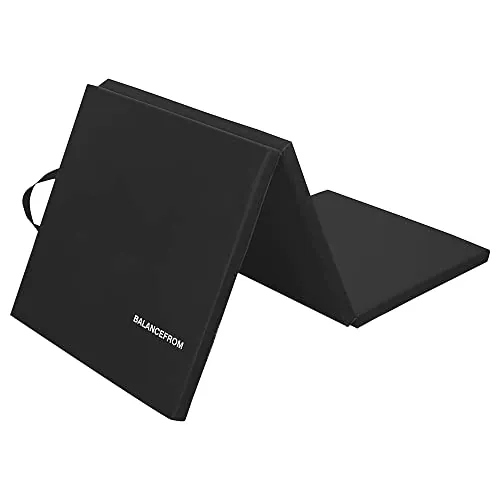
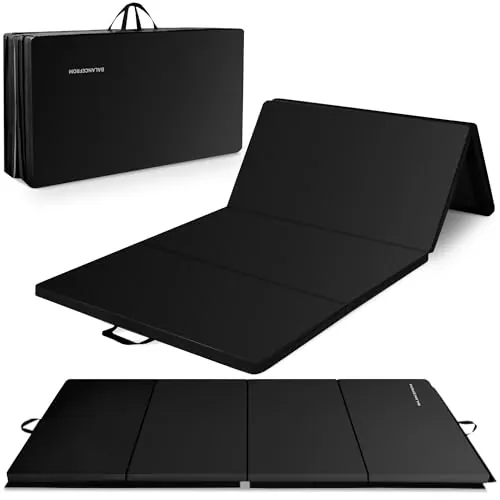
BalanceFrom 10x4 Feet 4-Panel Folding Gymnastics Mat

#1 Overall Winner

BalanceFrom 10x4 Feet 4-Panel Folding Gymnastics Mat

91/100
  • Thick, firm 2-inch EPE foam provides a dedicated cushioned surface for floor training.
View review
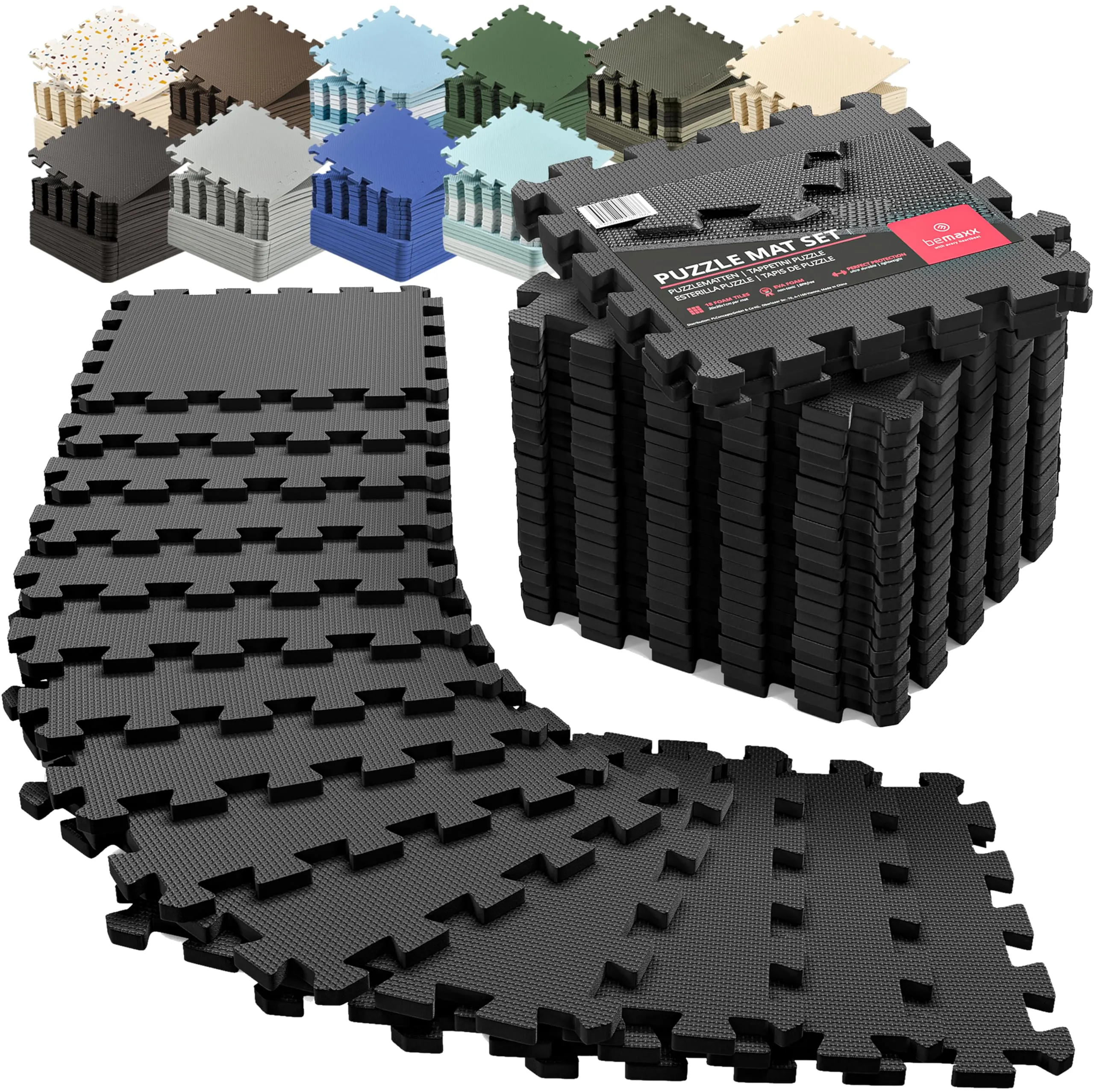
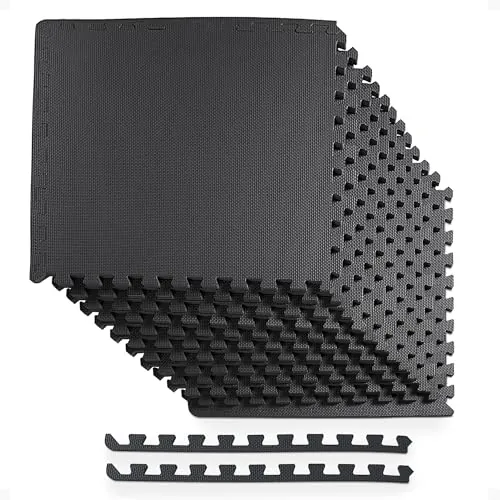
BalanceFrom 24x24 Inch EVA Interlocking Foam Exercise Tile Mat

Contender

BalanceFrom 24x24 Inch EVA Interlocking Foam Exercise Tile Mat

84/100
  • 12 interlocking EVA tiles cover 48 square feet for a low-cost workout-floor setup.
View review

Quick verdict

Choose the folding gymnastics mat for thicker cushioning, a seamless training surface, and fold-away portability. Choose the EVA tiles for an affordable, modular home-gym floor that can be shaped to a room. For tumbling or dedicated floor practice, the folding mat has the clearer edge; for broad general-purpose coverage, the tiles make more sense.

Overall winner

Depends on your needs

At-a-glance comparison

Feature BalanceFrom 10x4 Feet 4-Panel Folding Gymnastics Mat BalanceFrom 24x24 Inch EVA Interlocking Foam Exercise Tile Mat Winner
Primary format Four-panel folding mat 12 interlocking foam tiles Depends
Listed thickness 2 inches Approximately 0.4–0.5 inch BalanceFrom 10x4 Feet 4-Panel Folding Gymnastics Mat
Training surface Continuous 10 by 4 feet 48 square feet of tiled coverage Depends
Tumbling and gymnastics Purpose-built padded surface General cushioned flooring BalanceFrom 10x4 Feet 4-Panel Folding Gymnastics Mat
Home-gym floor coverage Single rectangular pad Modular 48-square-foot layout BalanceFrom 24x24 Inch EVA Interlocking Foam Exercise Tile Mat
Mobility and floor work Thick, supportive surface Cushioned configurable flooring BalanceFrom 10x4 Feet 4-Panel Folding Gymnastics Mat
Portability Folds with built-in handles; 15 pounds Lightweight individual tiles Depends
Storage Folds into four panels Disassembles into stackable tiles Depends
Cleaning Wipeable vinyl; soap and water Wipeable EVA; soap and water Tie
Stability feedback Generally secure non-slip feedback Some alignment and sliding complaints BalanceFrom 10x4 Feet 4-Panel Folding Gymnastics Mat
Price 142.99 39.99 BalanceFrom 24x24 Inch EVA Interlocking Foam Exercise Tile Mat
Best overall use Portable padded floor training Modular home-gym flooring Depends

Detailed comparison

Recovery Support

For post-workout stretching and relaxed floor mobility, the folding mat offers the more comfortable setup because its foam is thicker and the surface is continuous. It can also be folded away after a short routine. The tile set is useful when stretching is part of a permanent home-gym space and a broad cushioned floor is preferred. Neither product should be viewed as addressing injuries or medical recovery; they are simply padded training surfaces for appropriate activities.

Training Use

Product A is designed around active floor sessions: unfold it, train on a thick continuous pad, then fold it away. That makes it a natural fit for gymnastics drills, yoga, Pilates, stretching, and martial arts practice in a shared room. Product B is designed around space creation: connect the tiles to establish a dedicated exercise zone that can support general home workouts and floor exercises. For frequent session-based training, Product A is more focused. For a permanent or semi-permanent multipurpose home-gym floor, Product B is more adaptable.

Strength Training

Neither product replaces load-bearing lifting platforms or strength equipment, but both can improve comfort for bodyweight work and help protect floors in a home gym. The EVA tiles are the better match for placing beneath a general workout zone because their layout can cover more area around equipment. The folding mat offers more cushioning for kneeling, core work, and floor-based movement, but its larger single pad is less flexible as room flooring. Buyers should match the surface to the equipment and training style they plan to use.

Cardio Training

For low-impact, floor-based cardio sessions, both options can provide a more comfortable surface than bare hard flooring. The EVA tiles have the advantage for creating a wider workout zone for moving side to side or following exercise videos. The folding mat provides a secure, thicker surface but is limited to its 10-by-4-foot footprint. Neither product is presented as a dedicated machine mat, so users should check that their chosen cardio equipment and available floor space are compatible with the intended setup.

Mobility & Flexibility

The folding mat is the stronger mobility, stretching, yoga, and Pilates option because its 2-inch padding and continuous surface reduce interruptions from seams. Its firm foam is intended to remain supportive while giving more cushioning on knees, elbows, hips, and back during floor positions. The EVA tiles are also useful for basic mobility routines, particularly when a larger layout is needed. However, the thinner profile and puzzle joins make them better suited to a general exercise floor than a dedicated comfort-focused practice mat.

Recovery

Both products can support gentle stretching and floor-based mobility as part of a post-training routine, but neither is a recovery treatment product. The folding mat is more comfortable for longer floor positions because it has a thicker padded construction and no joins through the main surface. The EVA tiles are useful when recovery stretching takes place in an established home-gym area and broader coverage matters. Select based on preferred cushioning and whether the surface must be stored after each session.

Performance

Each product performs well within its intended role. The folding mat is built as a thick, stable, portable pad, and its listed high-density foam, puncture-resistant vinyl, reinforced stitching, and edge connectors support that purpose. Reviews regularly describe firm cushioning and reliable use for gymnastics, martial arts, and home exercise. The tile set performs best as a configurable protective floor, with easy assembly, textured surfaces, and generous coverage for the listed configuration. Its performance is less consistent where tile fit and traction are concerned, as some users report misalignment or sliding on smooth floors.

Training Support

Product A supports regular floor training by reducing setup friction: it unfolds into a ready-to-use 10-by-4-foot surface and folds away with handles when finished. The seamless layout is useful for repeated mobility, Pilates, and skill-practice sessions. Product B supports routine consistency differently by turning part of a room into a designated workout area. Its modular layout can accommodate a broader range of general exercise movements and protect the underlying floor. Beginners can use either, but Product A is more focused on comfort for floor work while Product B offers greater room-layout flexibility.

Strength Training Analysis

For strength-oriented home gyms, the tile set is more useful as configurable protective flooring around a general exercise area. The 48-square-foot layout can be adjusted to the room, while the folding mat is best kept for bodyweight work, kneeling exercises, and floor drills. The folding mat’s extra thickness may be more comfortable for those movements, but it is not a substitute for purpose-selected equipment flooring. Product B’s reported seam and sliding issues mean the installation surface should be clean, level, and checked before use.

Cardio Training Analysis

The tile set has the advantage for workouts requiring a wider movement area because its 48-square-foot coverage can be arranged to suit the room. The folding mat provides a more heavily cushioned and continuous surface for compact, floor-based conditioning or movement drills. Review feedback indicates that some tile installations can shift on smooth concrete, which may be a consideration during dynamic exercise. The folding mat’s non-slip vinyl surface and substantial weight are more reassuring where secure positioning is the main priority.

Mobility & Flexibility Analysis

Product A is better suited to focused flexibility and mobility practice. The 2-inch EPE foam and uninterrupted vinyl surface provide a supportive area for kneeling, supine positions, and transitions across the mat. Product B remains a workable choice for stretching, particularly where the user wants to cover more floor area. Still, the tile profile is thinner and the joins can be noticeable, so it is less tailored to comfort-led floor sessions than the folding mat.

Recovery Support

For post-workout stretching and relaxed floor mobility, the folding mat offers the more comfortable setup because its foam is thicker and the surface is continuous. It can also be folded away after a short routine. The tile set is useful when stretching is part of a permanent home-gym space and a broad cushioned floor is preferred. Neither product should be viewed as addressing injuries or medical recovery; they are simply padded training surfaces for appropriate activities.

BalanceFrom 10x4 Feet 4-Panel Folding Gymnastics Mat

Pros

  • Thick, firm 2-inch EPE foam provides a dedicated cushioned surface for floor training.
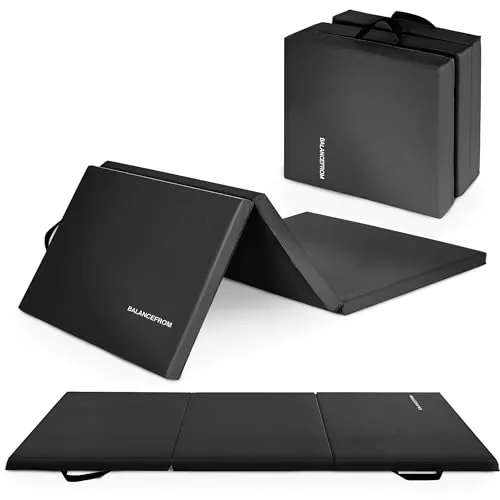
  • Large 10-by-4-foot continuous surface has no seams across the main training area.
  • Four-sided hook-and-loop strips allow compatible mats to be joined into a larger area.
  • Vinyl surface is moisture resistant and can be cleaned with soap and water.
  • Four-panel fold and carrying handles support storage and transport.
  • Customer feedback frequently highlights cushioning, foldability, and versatility.

Cons

  • Its 10-by-4-foot shape may not suit rooms that need wall-to-wall flooring coverage.
  • The firm foam is designed for support rather than a soft, plush feel.
  • At 15 pounds, it is portable but less convenient to carry than a small tile set.
  • Some review feedback mentions a mild new-product odour that may require airing out.
  • It is primarily a floor-training mat, not a configurable protective floor system for equipment zones.
BalanceFrom 10x4 Feet 4-Panel Folding Gymnastics Mat

BalanceFrom 24x24 Inch EVA Interlocking Foam Exercise Tile Mat

Pros

  • 12 interlocking EVA tiles cover 48 square feet for a low-cost workout-floor setup.
  • Modular pieces can be arranged for different room shapes and expanded with additional sets.
  • Lightweight puzzle construction assembles and disassembles quickly.
  • Textured anti-slip surfaces and end borders create a finished exercise area.
  • Suitable for protecting hard floors during general home-gym and floor-work sessions.
  • Customer feedback commonly praises easy assembly, cushioning, and cleaning.

Cons

  • The listed configuration is much thinner than the folding mat, at approximately 0.4 to 0.5 inch.
  • Tile seams can remain visible and may be less suitable than a continuous mat for tumbling practice.
  • Some buyers report inconsistent alignment between pieces or movement on smooth concrete.
  • EVA foam is described as suitable for typical home-gym use, not as extremely heavy-duty flooring.
  • Product details and reviews reference multiple thicknesses and coverage variants, so buyers should verify the selected option.
BalanceFrom 24x24 Inch EVA Interlocking Foam Exercise Tile Mat

Final verdict

The BalanceFrom Folding Gymnastics Mat wins this comparison for dedicated floor training. Its 2-inch foam, seamless 10-by-4-foot surface, folding portability, and consistently favourable feedback make it the more capable choice for users who prioritise cushioning, stability, and versatile practice sessions. Its limitation is that it covers one fixed rectangular area rather than an entire workout room. The BalanceFrom EVA Interlocking Foam Tiles are the better specialist choice for affordable, configurable home-gym flooring. They are easy to assemble and cover more area for the money, but their thinner construction, seams, and occasional fit or sliding complaints make them less suitable for tumbling-focused use. Select Product A for a training pad and Product B for modular flooring.

Overall winner

Depends on your needs

Frequently asked questions

Which is better, the BalanceFrom folding gymnastics mat or EVA interlocking tiles?

The folding gymnastics mat is the stronger choice for a portable, thick, continuous floor-training surface. The EVA tile set is the better fit for covering a larger or irregularly shaped home-gym area at a lower entry price. The right option depends on whether you need impact-focused padding for a session or configurable flooring that can stay in place.

Which BalanceFrom mat is better for tumbling and gymnastics practice?

The 10-by-4-foot folding mat is the more suitable option for tumbling and gymnastics practice because it provides a continuous 2-inch padded surface. Its hook-and-loop edges also allow additional compatible mats to be connected. The thinner tiled system may work for basic floor activity, but its seams and lower thickness make it less purpose-specific for this use.

Are the EVA tiles suitable for a home gym?

Yes, the listed 12-tile set is intended to create a 48-square-foot home-gym floor area. Buyers commonly report that it is easy to assemble, comfortable for general floor exercise, and simple to clean. However, prepare smooth hard floors carefully and check the tile fit during installation, as some reviews describe shifting or alignment variation.

Which option is better for small spaces?

Both can work in smaller spaces differently. The folding mat stores as a compact four-panel unit and can be brought out only for training. The tile set can be configured around the room shape and taken apart when needed. Choose the folding mat for temporary sessions, or the tiles when you want modular coverage in a fixed area.

Which mat is easier to clean?

Both products list soap-and-water cleaning. The folding mat has a moisture-resistant vinyl surface that can be wiped down as one continuous pad. The EVA tiles are also easy to wipe, but a multi-tile installation has seams and individual pieces that may require more attention when dirt collects around the joins.

Can either product be used for yoga and Pilates?

Both products are listed for yoga, Pilates, stretching, and general floor exercise. The folding mat offers more thickness and a seamless 10-by-4-foot surface, which may suit users wanting more cushioning. The tile set offers a larger configurable exercise zone, though the interlocking seams may be noticeable in some positions.

Which product offers better value?

The EVA tile set has the lower listed price and includes 48 square feet of modular coverage, making it practical for budget-conscious home-gym flooring. The folding mat costs more but supplies substantially thicker padding, a continuous surface, folding storage, and connection strips. Value therefore depends on whether broad coverage or thicker portable padding is the priority.

Do these mats have reported odour or stability concerns?

A small number of reviews for both products mention a new-material smell that improved after airing out. For stability, feedback on the folding mat is generally positive, while some tile users report sliding on smooth concrete or imperfect tile alignment. Neither point is universal, but both are useful checks when setting up a training space.

Related comparisons

Still not sure which one to choose?

Check our rankings and expert guides to find the best fitness products for your goals.

View all rankings