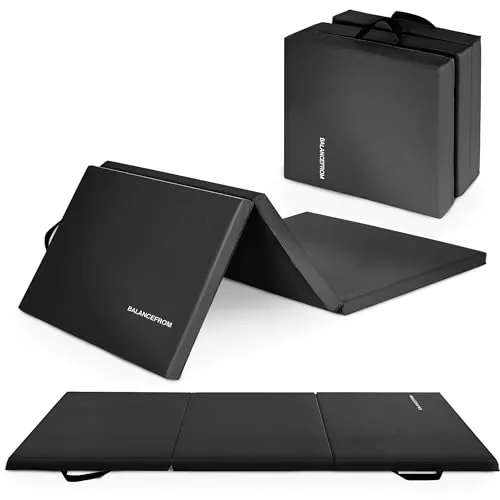
#1 Overall Winner
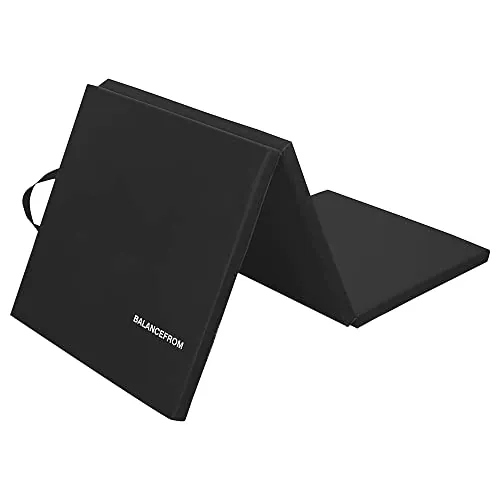
BalanceFrom 6x2 Feet 3-Panel Folding Gymnastics Mat
- Thick, firm 2-inch EPE foam provides substantial cushioning for floor work.
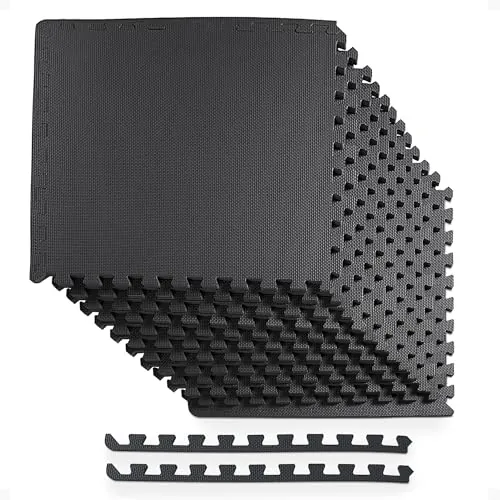
Comparison
The BalanceFrom 3-panel folding mat and BalanceFrom EVA interlocking tiles both make hard-floor workouts more comfortable, but they solve different problems. The folding mat prioritizes thick, portable cushioning for one person, while the tile set creates a larger configurable surface for a home gym or multipurpose room. Choose the folding design for compact floor work and fast storage; choose the tiles when broad coverage and movement space matter more.
#1 Overall Winner
Contender
Choose the BalanceFrom folding mat for thick support during yoga, Pilates, stretching, and compact floor training, especially if you need fast storage. Choose the BalanceFrom EVA tiles for a larger home-gym, garage, or activity area where configurable coverage and floor protection are more important than a deeply cushioned single mat.
Overall winner
Depends on your needs
| Feature | BalanceFrom 6x2 Feet 3-Panel Folding Gymnastics Mat | BalanceFrom 24x24 Inch EVA Interlocking Foam Exercise Tile Mat | Winner |
|---|---|---|---|
| Primary format | Single 3-panel folding mat | 12 interlocking foam tiles with borders | Depends |
| Listed coverage | 6 x 2 feet | 48 square feet | BalanceFrom 24x24 Inch EVA Interlocking Foam Exercise Tile Mat |
| Listed thickness | 2 inches | 1/2 inch | BalanceFrom 6x2 Feet 3-Panel Folding Gymnastics Mat |
| Material | Vinyl cover with high-density EPE foam | High-density EVA foam | Depends |
| Mobility and flexibility work | Thick, continuous exercise surface | Large configurable area with seams | BalanceFrom 6x2 Feet 3-Panel Folding Gymnastics Mat |
| Cardio and lateral movement | Narrow 2-foot surface | Broad configurable coverage | BalanceFrom 24x24 Inch EVA Interlocking Foam Exercise Tile Mat |
| Home-gym floor protection | Small designated exercise lane | Covers a larger flooring zone | BalanceFrom 24x24 Inch EVA Interlocking Foam Exercise Tile Mat |
| Portability | 3 pounds; folds and has handles | Lightweight tiles; can be disassembled | BalanceFrom 6x2 Feet 3-Panel Folding Gymnastics Mat |
| Storage | Folds to 24 x 24 x 6 inches | Disassembles into separate tiles | BalanceFrom 6x2 Feet 3-Panel Folding Gymnastics Mat |
| Stability feedback | Resilient pad; generally stays put in reported use | Textured tiles; some reports of sliding or alignment issues | BalanceFrom 6x2 Feet 3-Panel Folding Gymnastics Mat |
| Cleaning | Soap-and-water washable vinyl | Soap-and-water washable EVA | Tie |
| Price and coverage | Lower coverage at a slightly higher listed price | 48 square feet at a slightly lower listed price | BalanceFrom 24x24 Inch EVA Interlocking Foam Exercise Tile Mat |
| Customer feedback volume | Very large review base with 4.7/5 stars | Large review base with 4.6/5 stars | BalanceFrom 6x2 Feet 3-Panel Folding Gymnastics Mat |
Product A offers more practical support for cooldown stretching and relaxed floor mobility because it provides a thicker layer between the body and hard flooring. Customer feedback commonly emphasizes its firm but comfortable cushioning for knees during yoga and floor exercise. Product B can make an entire room feel less harsh underfoot and can support stretching within a home-gym area. Its benefit is area coverage rather than deep padding, so it is better considered a base layer for a training space.
For general home training, Product A works as a dedicated station for floor exercises: unfold it, train, wipe it down, and fold it away. Its thicker foam is useful when kneeling, lying down, or practicing controlled mobility work. Product B is more suitable for setting up a training environment, giving users a larger base for bodyweight circuits, movement drills, or a home-gym layout. It can also sit beneath a separate exercise mat. The key choice is not simply quality; it is whether your routine needs a portable personal pad or a broader floor surface.
Neither product is a load-bearing strength tool, but each can support a strength-training space differently. Product A is better for kneeling work, core exercises, push-ups, and other bodyweight movements where thicker local cushioning is useful. Product B is more appropriate for a wider home-gym floor area and may help protect the underlying floor around a training setup. Customer reports include use beneath a power cage, but the listing does not provide a specific equipment load rating. For heavy or concentrated loads, verify the flooring needs of the equipment separately.
Product B is the more capable cardio-training surface because its 48-square-foot, configurable layout gives more room for stepping, directional changes, and workout-video routines. Its textured EVA surface is intended to provide traction, though some users report sliding on smooth concrete. Product A can support low-impact cardio or aerobic floor sessions, but the 2-foot width makes it less practical for lateral movement. For compact, stationary routines, the folding mat remains useful; for a dedicated movement area, the tile system is the clearer fit.
Product A has the advantage for mobility, flexibility, yoga, and Pilates. Its 2-inch firm foam creates a continuous, deeply cushioned base for kneeling, seated positions, and stretching without interlocking seams. The 6-foot length accommodates many users for straight-line floor work, although taller users may want to confirm the usable length. Product B offers more room to spread out and can support group or wider movement work, but its thinner tiles and visible seams make it less specialized as an individual comfort mat.
For gentle post-workout stretching and floor-based mobility routines, Product A is the better recovery-oriented option because its thicker, firm cushioning can make extended kneeling or lying positions more comfortable on hard floors. Product B can create a more forgiving room surface for cooldowns, but its primary strength is coverage rather than concentrated padding. Neither product is a recovery treatment, and the listings do not establish specific outcomes beyond their described cushioning and exercise-surface roles.
Both products appear well matched to their intended purposes. Product A performs as a thick, portable personal exercise mat: its firm foam, vinyl cover, folding layout, and handles are directly relevant to floor work. Reviews repeatedly describe good cushioning and easy folding, although some users cite corner damage, seam wear, or slightly inconsistent dimensions. Product B performs as modular home-gym flooring, offering a far larger covered area, easy assembly, and a textured surface. Its main performance uncertainty is connection consistency, as some buyers report gaps, alignment issues, or sliding on smooth flooring.
Product A supports training consistency by minimizing setup friction. It unfolds quickly, provides a defined exercise space, and folds into a compact package after a session. That makes it particularly practical for small homes and routines built around mobility, bodyweight work, or mat-based videos. Product B supports broader training variety because it can create space for cardio, circuits, floor exercise, and a home-gym layout. It requires more initial assembly and occasional fit checks, but its larger footprint makes it the better base for users whose workouts involve movement beyond a narrow mat.
Product B has the more useful strength-training role for a home gym because its interlocking format covers a larger floor zone and is intended to protect the surface beneath. It is better suited to creating room for bodyweight strength work and equipment placement, though the listing does not supply a weight-capacity rating. Product A is the better choice for floor-based strength movements requiring comfort at the knees, elbows, or back. Its 2-inch foam offers more padding, but the narrow footprint limits exercises needing lateral space.
Product B is the better platform for cardio-oriented exercise because its 48-square-foot coverage can be shaped into a wider movement area. This is useful for aerobic routines, HIIT-style bodyweight sessions, and exercise videos involving forward, backward, or side-to-side steps. Product A can be used for stationary or low-impact movements, but its 6-by-2-foot dimensions confine footwork. Tile stability should be checked before vigorous sessions because customer feedback includes some reports of sliding or imperfect connections on smooth floors.
Product A is the clearer choice for mobility and flexibility work. Its thick, continuous foam surface is well suited to controlled stretching, yoga, Pilates, and floor transitions, while the washable vinyl cover is practical after repeated sessions. Product B is still useful when a larger room surface is needed, such as shared activity space or wide-range movement. However, the thinner EVA tile construction and seams do not offer the same individual padding depth as Product A for prolonged kneeling or grounded positions.
Product A offers more practical support for cooldown stretching and relaxed floor mobility because it provides a thicker layer between the body and hard flooring. Customer feedback commonly emphasizes its firm but comfortable cushioning for knees during yoga and floor exercise. Product B can make an entire room feel less harsh underfoot and can support stretching within a home-gym area. Its benefit is area coverage rather than deep padding, so it is better considered a base layer for a training space.
Both products are intended to create a more cushioned exercise surface, but safe use still depends on the activity and setup. Product A's continuous, firm 2-inch surface is better for controlled floor work because there are no tile joints under the user. Inspect corners and folding seams if wear develops. Product B's textured tiles are designed for traction and floor protection, but users should make sure the pieces are fully connected and the base floor is clean and level. Customer reports of sliding on smooth concrete mean stability should be checked before dynamic exercise.
Product A is the more comfortable choice for focused floor work because its listed 2-inch firm foam offers substantially more depth than the tile set. Reviews frequently mention cushioning for knees and comfortable support without an overly soft feel. Product B still adds useful comfort over hard flooring across a larger area, with customers often describing it as soft or cushiony underfoot. The better option depends on whether comfort means deep padding beneath the body or less harsh flooring throughout a room.
Both products are straightforward, but Product A is easier for a single workout session. It opens as one mat, folds in three panels, has carrying handles, and can be washed with soap and water. Product B is also simple to assemble without tools and can be reconfigured, but joining, aligning, and later separating multiple tiles requires more time. Users who leave a training area set up may prefer the tiles; users who need to clear the room after every session will likely prefer the folding mat.
Product A has the advantage for stable individual floor work because it is one continuous mat, and customer feedback includes reports that it stays in place during use on carpet. Product B has textured anti-slip surfaces and many users find the tiles secure once connected, but feedback is mixed. Some buyers report sliding on concrete or imperfectly fitting pieces. A clean, level base is especially important for the tiles, and users should inspect connected seams before active sessions.
Product B has a modest advantage in stated traction features because it uses double-sided anti-slip, textured EVA tiles designed to help secure the surface. Product A is described as resilient and some reviewers say it stays in place, but the listing provides less specific traction detail. In practice, the tile system's grip can be affected by the floor beneath it, with some customers reporting sliding on smooth concrete. Neither product should be assumed slip-proof in every environment.
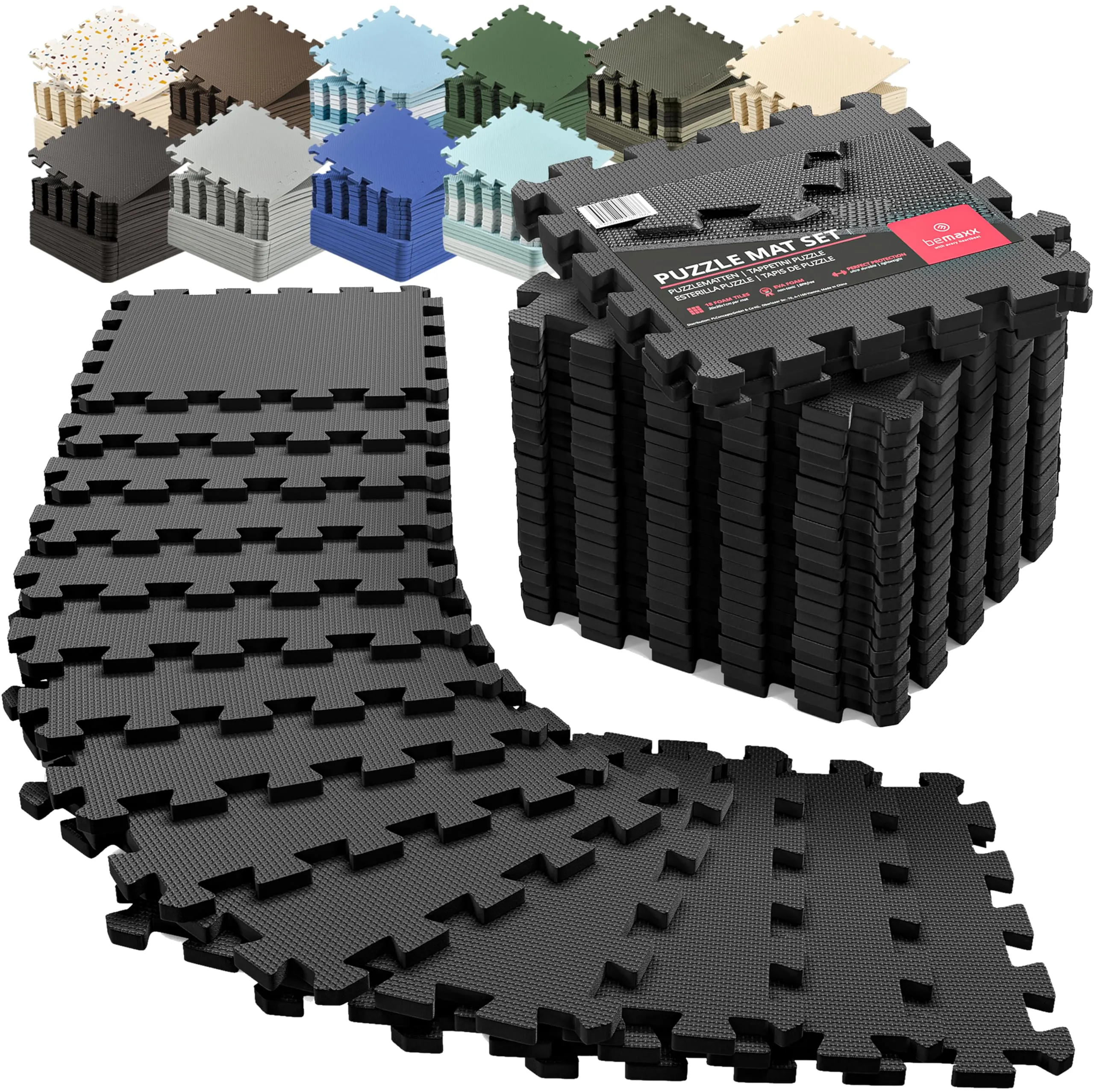
Product B is more adjustable in layout because its individual 24-by-24-inch tiles can be connected to create different floor shapes and coverage areas. This is useful when fitting a gym zone around room dimensions or equipment. Product A does not offer adjustable dimensions; it is a fixed 6-by-2-foot mat that either lies flat or folds for storage. Its simplicity is an advantage for portable use, while the tile set offers more flexibility for permanent or semi-permanent setups.
Product A is more space efficient for small homes because it provides a workout surface yet folds to 24 by 24 by 6 inches when not in use. At 3 pounds, it can be moved out of sight with little effort. Product B is space efficient when used to define a larger workout zone, but its 48 square feet of coverage require more storage volume once disassembled. Choose Product A for quick room conversion and Product B when you have dedicated floor area to protect.
Product B is the more relevant option for noise reduction because its listing describes the EVA tile system as water- and noise-resistant, and the broader coverage can separate activity from a hard floor over a larger area. Product A can cushion floor exercises within its 6-by-2-foot footprint, but no specific noise-reduction feature is stated. Actual sound reduction will vary with the exercise, underlying floor, footwear, and whether impacts occur outside the covered area.
Product A has a more robust-looking construction for its specific role, combining firm foam with an 18-ounce vinyl cover and stitched folding panels. Buyer feedback often praises its dense feel and cover quality, although the folding edges and corners are potential wear points. Product B uses lightweight EVA foam tiles, which are appropriate for removable protective flooring rather than a single heavy-duty pad. Customers generally find the tiles adequate for typical home-gym use, but reports of uneven joints and puncture marks show that assembly and use conditions matter.
Both products receive positive durability feedback, but their likely wear patterns differ. Product A has reports of continuing to hold shape through repeated exercise, while some users report dings, tearing at corners, or seam wear where the panels fold. Product B has reports of multi-year use and generally resilient foam, including in home-gym settings. However, some customers mention puncture marks and joints that do not align perfectly. Product A is the better option for repeated folding and individual workouts; Product B is best treated as protective foam flooring rather than an indestructible equipment surface.
Maintenance is simple for both products: each listing recommends soap and water. Product A's non-absorbent vinyl cover can be wiped down as a single surface, which is convenient after individual mat sessions. Product B's moisture-resistant EVA tiles are also easy to wipe, though the joints and floor beneath may need occasional attention if dust or moisture collects. For either choice, storing the surface clean and dry and checking for visible wear supports more consistent use.
Product A is more portable. Its listed 3-pound weight, three-panel fold, and carrying handles make it designed for carrying to another room, gym, or activity space. Product B is lightweight and can be disassembled, but it is a 12-tile system covering 48 square feet, so moving it involves more pieces and assembly. The tiles are portable in the sense that they are removable flooring, while the folding mat is portable in the everyday carry-and-store sense.
Material information is clearer for Product B, which identifies high-density EVA foam, a textured anti-slip design, and a material-free statement covering rubber, plastic, and metal. Product A identifies a vinyl surface and high-density EPE foam, and states that the vinyl is non-toxic and lead-free. Both listings provide cleaning guidance with soap and water. Neither listing supplies detailed information on all component layers, manufacturing processes, or testing documentation, so material claims should be treated as listing information rather than independently verified evidence.
Value depends strongly on intended use. At its listed price, Product A offers a 2-inch-thick, folding exercise pad with handles and a washable vinyl cover; it is strong value for people who need substantial comfort in a compact format. Product B is listed at a slightly lower price while providing 48 square feet of EVA flooring, making it the stronger value for a buyer who needs broad home-gym coverage. Product B is not automatically the better buy for everyone, however, because it does not provide Product A's deeper cushioning or one-piece portability.
Both products come from BalanceFrom and have substantial customer feedback, so there is no meaningful brand-versus-brand distinction in this comparison. Product A has a much larger review base and a slightly higher displayed star rating, which gives more evidence of consistent buyer experience for that specific mat. Product B also has thousands of reviews and generally favorable feedback, though fit and sliding comments are more common. Neither listing provides warranty or formal support information to compare.
Customer sentiment is positive for both products. Product A has a very large review count and a 4.7/5 displayed rating, with repeated praise for thick, firm cushioning, folding convenience, easy cleaning, and useful size for individual practice. Its recurring complaints involve corner damage, fold-seam wear, and occasional dimension concerns. Product B has a 4.6/5 displayed rating across thousands of reviews. Customers often value its easy setup, comfortable feel, coverage, and cleaning, while mixed feedback focuses on tile alignment, joints, and sliding on some smooth floors.
Many of the practical listing claims are supported by clearly stated construction details and customer feedback, but the evidence is stronger for basic use than for broader performance promises. Product A supplies dimensions, foam type, vinyl material, folding design, weight, and cleaning instructions; reviews broadly align with claims about cushioning and portability. Product B supplies tile count, coverage, material, dimensions, borders, and cleaning details; reviews generally support easy assembly and cushioning. Claims such as impact reduction or safety should be interpreted as product-positioning statements, not as independently verified outcomes for every user or setting.
The BalanceFrom folding gymnastics mat is the clearer overall winner for individual home exercisers because it combines deep, firm cushioning with a simple folding design, washable vinyl cover, and very easy portability. It is especially well suited to mobility work, yoga, Pilates, and floor-based sessions, though its narrow width and potential seam wear are important limitations. The BalanceFrom EVA tile mat is the better specialist choice for a larger home-gym floor, offering broad, configurable coverage for movement routines and floor protection at a strong listed price. Its main drawbacks are thinner cushioning and mixed feedback about fit and sliding. Choose based on whether you need a personal pad or an exercise-floor system.
Overall winner
Depends on your needs
The better choice depends on the job. The folding gymnastics mat is the stronger option for thick cushioning during individual floor work, stretching, yoga, and compact tumbling practice. The interlocking tile mat is the more practical choice for covering a larger home-gym area, creating room for lateral movement, or placing a protective layer over a broader section of floor.
The folding mat is generally the better fit for yoga and Pilates when you want a defined, thicker surface for kneeling, seated work, and stretching. Its 2-inch firm foam and one-piece layout avoid tile joints beneath the body. The tile set can work for these routines too, particularly when a larger area is more important than deep cushioning.
The interlocking EVA tile set is better for a dedicated home gym because it covers 48 square feet and can be arranged to suit the available floor area. It is intended to create a protective, cushioned zone. The folding mat is a better supplemental piece for floor exercises, but its 6-by-2-foot surface is not designed to cover a full training area.
Both are designed to be stored, but they do so differently. The folding mat closes into a 24-by-24-by-6-inch package and has carrying handles, making it especially convenient for quick put-away. The tile set can be disassembled and stacked, but doing so involves separating multiple pieces and borders before storing them.
The folding mat is listed with 2-inch-thick, firm high-density EPE foam, and many reviewers describe it as supportive for knees during yoga and floor exercise. Firmness is useful for maintaining a stable base, though users wanting a very soft surface may prefer a different feel. Its narrow 2-foot width is also worth considering before purchase.
The tiles have textured anti-slip surfaces and many customers say the pieces connect well. However, feedback is mixed: some users report alignment issues, and some mention that the assembled surface can slide on smooth concrete. Preparing a clean, level floor and checking the fit of each connection are sensible steps before using the tiles for active exercise.
The EVA tile set is usually the better match for cardio and HIIT because its larger coverage gives more room for stepping, moving side to side, and changing direction. The folding mat can support low-impact floor circuits, but its 2-foot width limits movement space. Neither listing provides a specific recommendation for every exercise type or intensity.
Yes. Both listings state that the surfaces can be cleaned with soap and water. Product A uses a non-absorbent vinyl cover, while Product B uses moisture-resistant EVA foam tiles. For the tile system, cleaning around the interlocking seams and ensuring the floor beneath is dry can help keep the setup tidy and securely positioned.
Check our rankings and expert guides to find the best fitness products for your goals.