#1 Overall Winner
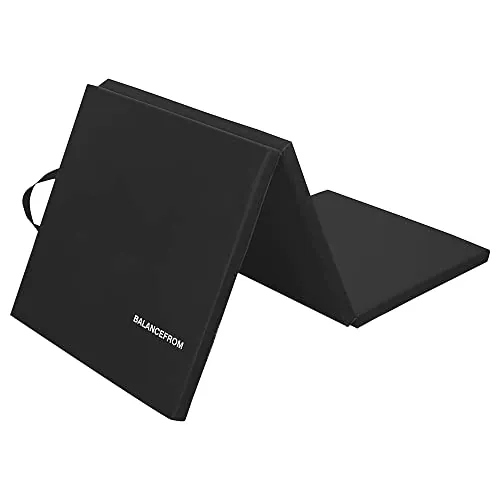
BalanceFrom 6x2 Feet 3-Panel Folding Gymnastics Mat
- Thick 1.5-inch foam cushioning for floor exercises, tumbling, yoga, and Pilates.
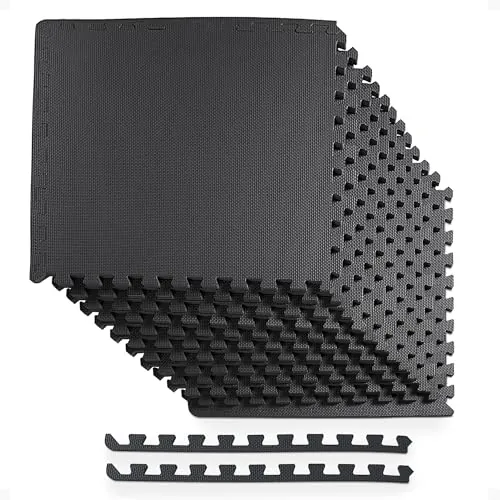
Comparison
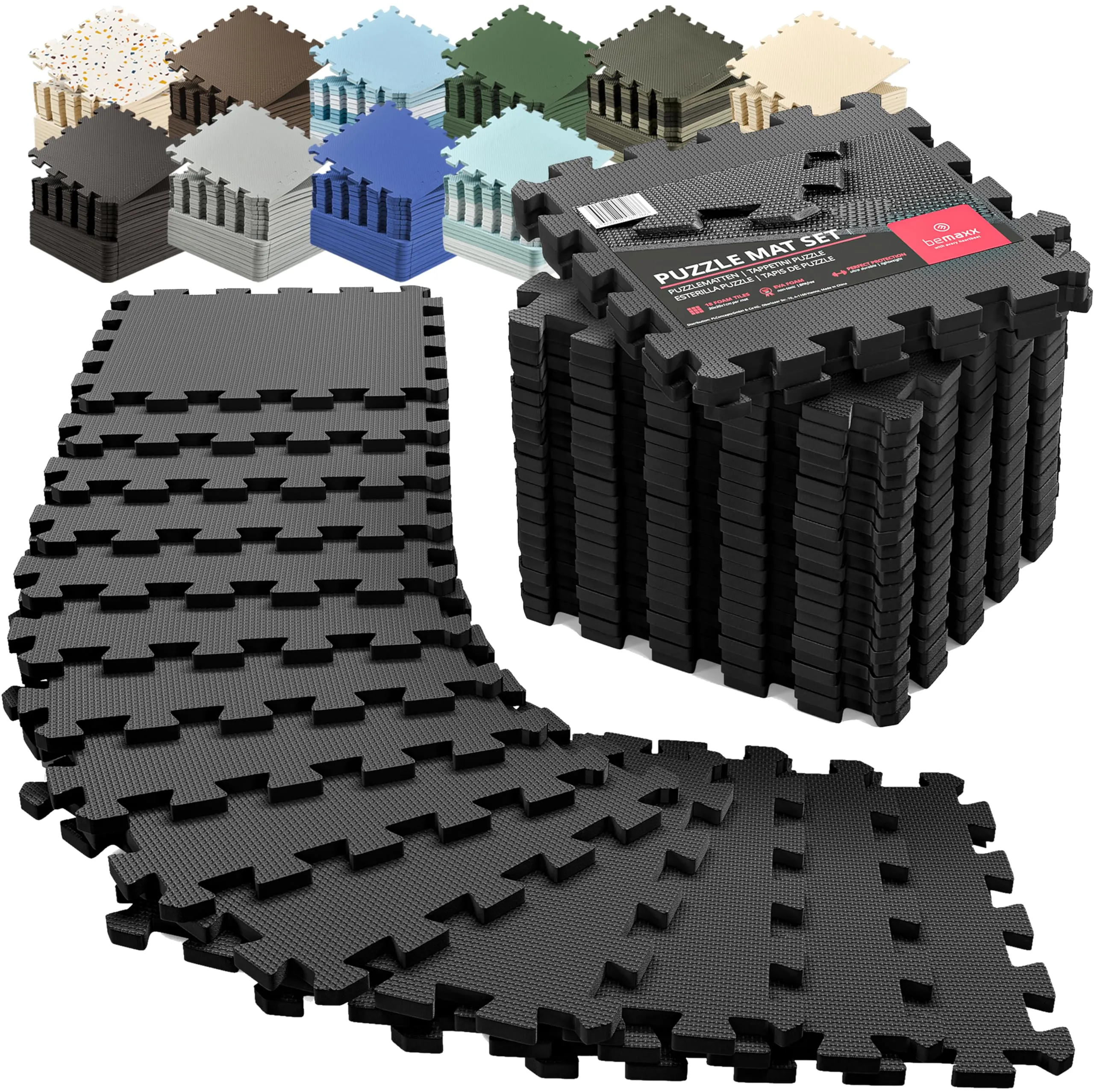
BalanceFrom's 3-panel folding gymnastics mat is a thick, portable pad for individual floor workouts, yoga, Pilates, and basic tumbling practice. The BalanceFrom EVA tile set is a modular flooring system intended to cover a much larger home-gym or activity area. Choose the folding mat for cushioning and quick storage, or the tiles for configurable floor coverage.
#1 Overall Winner
Contender
Choose the BalanceFrom folding gymnastics mat for thicker cushioning, quick setup, and portable yoga, Pilates, floor work, or basic tumbling practice. Choose the EVA tiles when you need to cover a larger home-gym, garage, or play area. For one-person floor comfort, the folding mat is the better all-round pick; for room coverage, the tiles are more suitable.
Overall winner
Depends on your needs
| Feature | BalanceFrom 6x2 Feet 3-Panel Folding Gymnastics Mat | BalanceFrom 24x24 Inch EVA Interlocking Foam Exercise Tile Mat | Winner |
|---|---|---|---|
| Primary format | Single tri-fold mat | 12 interlocking EVA tiles | Depends |
| Specified coverage | 6 x 2 feet | 48 square feet | BalanceFrom 24x24 Inch EVA Interlocking Foam Exercise Tile Mat |
| Specified thickness | 1.5 inches | 1/2 inch | BalanceFrom 6x2 Feet 3-Panel Folding Gymnastics Mat |
| Main training role | Portable floor exercise and tumbling pad | Home-gym floor coverage | Depends |
| Mobility and stretching | Thick continuous cushioned surface | Larger configurable surface | Depends |
| General cardio space | Narrow individual lane | Broad modular area | BalanceFrom 24x24 Inch EVA Interlocking Foam Exercise Tile Mat |
| Portability | Folds and includes handles | Lightweight tiles but requires assembly | BalanceFrom 6x2 Feet 3-Panel Folding Gymnastics Mat |
| Floor protection | Localized protection | Large-area protective flooring | BalanceFrom 24x24 Inch EVA Interlocking Foam Exercise Tile Mat |
| Surface continuity | One continuous vinyl-covered pad | Seamed puzzle layout | BalanceFrom 6x2 Feet 3-Panel Folding Gymnastics Mat |
| Stability feedback | Generally positive grip feedback | Mixed fit and sliding feedback | BalanceFrom 6x2 Feet 3-Panel Folding Gymnastics Mat |
| Cleaning | Wipe-clean vinyl cover | Soap-and-water EVA tiles | Tie |
| Listed price | $34.99 | $39.99 | Depends |
For gentle floor mobility after training, the folding mat is the better choice because its added thickness can make seated, kneeling, and lying positions more comfortable. The tile system remains useful when a larger open area is preferred for stretching or light movement. Evidence here relates to surface comfort and routine usability only; neither product makes a supported claim to improve or treat recovery outcomes.
The folding mat is designed around a single user’s floor session: unfold it, train, wipe it down, and fold it away. That format fits mobility routines, core work, yoga, Pilates, and selected gymnastics drills. The tiles are designed around a training environment rather than one exercise station. Their larger coverage suits standing workouts, a defined bodyweight area, and general home-gym use. Neither product replaces task-specific protective flooring requirements for equipment not covered in the supplied data.
For bodyweight strength exercises such as planks, sit-ups, and floor-based core work, the folding mat’s deeper cushioning is the more comfortable option. It also provides a continuous surface without puzzle seams. The EVA tiles are more practical for a larger strength-training area because they protect more floor space and can sit beneath a general workout zone. The available details do not confirm either product as purpose-built flooring for heavy lifting or dropped weights.
The EVA tiles are the more useful option for general conditioning that involves moving forward, backward, or side to side, because the set creates a substantially larger training area. The folding mat works best for low-impact, space-limited sessions rather than broad movement patterns. Buyers of the tile set report good cushioning for home workouts, but reports of movement on smooth concrete mean the assembled surface should be checked before dynamic exercise.
The folding mat has the advantage for comfort-focused yoga, Pilates, stretching, and floor mobility because its listed 1.5-inch padding provides a more substantial buffer from hard flooring. Its 6-foot length supports many individual positions, although its 2-foot width may feel narrow. The tile set provides more room to move and configure a practice area, but its thinner construction and seams make it less focused on deep cushioning.
Both products can support gentle stretching and floor-based mobility as part of a post-workout routine. The folding mat is more appropriate when comfort on knees, hips, back, or elbows is the priority, based on its greater listed thickness and repeated buyer comments about cushioning. The tiles are useful when a larger calm-down or stretching zone is needed. Neither product should be treated as a substitute for professional advice about pain or injury.
Each product appears to perform well within its intended format. The folding mat is supported by strong buyer feedback for firm cushioning, portability, surface grip, and use across several floor-based activities. The EVA tiles provide the broader usable area expected from modular flooring and are frequently described as easy to assemble and comfortable underfoot. The clearest performance concern belongs to the tile set: feedback is mixed on joint alignment and whether the assembled surface stays fixed on smooth floors.
The folding mat lowers friction for frequent individual workouts because it needs no assembly, has handles, and folds after use. Its continuous padded surface supports consistent floor exercise in a limited space. The tile set supports a more established routine by turning a larger section of a room into a dedicated exercise area. It offers greater layout flexibility, but assembly and potential seam management make it less convenient for users who need to pack away their workout area after every session.
For mat-based strength work, the folding mat offers stronger support through its deeper padding and uninterrupted surface. Buyers specifically mention comfort for planks and floor exercises. The tiles are more versatile for a larger training station and can help protect a broader hard-floor area, but the supplied information does not verify their suitability for heavy loads or dropped equipment. Users planning weight training should match the floor covering to their equipment, workout style, and surface requirements.
The tile set has the better cardio-training fit because 48 square feet allows more standing movement than a 6-by-2-foot mat. Its cushioning may make hard flooring more comfortable for general home conditioning. The folding mat is better reserved for compact, low-impact work where movement stays within its narrow footprint. Because some tile owners describe sliding on smooth concrete, stability should be assessed after installation before performing fast or lateral movements.
The folding mat is the stronger mobility option for users who value cushioning during kneeling, supine, and seated work. Its thickness and buyer feedback point to a notably softer interface with hard floors than standard thin exercise mats. The EVA tiles can create a larger stretch zone and may suit studios or shared rooms, but the specified 1/2-inch profile and seams are less ideal when maximum localized comfort is the priority.
For gentle floor mobility after training, the folding mat is the better choice because its added thickness can make seated, kneeling, and lying positions more comfortable. The tile system remains useful when a larger open area is preferred for stretching or light movement. Evidence here relates to surface comfort and routine usability only; neither product makes a supported claim to improve or treat recovery outcomes.
Both products are intended to create a more cushioned, textured surface over hard flooring, which may be useful for controlled floor exercise. The folding mat has a continuous surface and positive grip feedback, while the tile set introduces seams that require inspection. Tile feedback includes some reports of sliding or poor alignment on smooth floors, so users should confirm that the surface is stable before dynamic training. Neither product’s details establish protection against all falls, impacts, or equipment-related hazards.
The folding mat is the clear comfort choice for concentrated floor work. Its listed 1.5-inch thickness is substantially greater than the specified 1/2-inch tile profile, and buyers frequently praise the supportive cushioning for knees, back, and other contact points. The EVA tiles still provide a softer surface than an uncovered hard floor and have positive feedback for underfoot comfort, but their main advantage is coverage rather than maximum padding.
Both products are straightforward, but they suit different routines. The folding mat is easiest for immediate workouts: unfold it, use it, wipe it, and fold it using the built-in handles. The tile set is easy to assemble without tools and is practical when left in place, but building, moving, or storing a full 12-tile layout naturally takes more time. The folding mat is preferable for frequent pack-away use.
The folding mat has a more dependable stability case for individual floor exercise because its textured vinyl cover is continuous and buyers commonly praise its grip. The tile set also has textured, anti-slip surfaces, but user feedback is mixed: some report secure interlocking while others mention shifting or pieces not aligning well. On smooth concrete or similar flooring, the tile layout deserves an especially careful stability check.
The folding mat is favored for grip based on its textured vinyl surface and buyer comments that it grips well during practice. The EVA tiles are also described as textured and non-skid, but their overall grip can be affected by the underlying floor and the way the pieces join. For either option, a clean, dry surface is important before training.
The EVA tiles provide more layout flexibility because individual squares can be assembled into different floor configurations and expanded with additional compatible coverage. The folding mat has limited but useful flexibility: it can be folded for storage and its hook-and-loop edges are intended to connect mats for a larger surface. Choose tiles for room planning and the folding mat for a fixed, portable individual pad.
The folding mat is more efficient for small homes that need workout equipment to disappear after use. It folds into a compact block and is designed for closet, car, or under-bed storage. The tiles use more storage volume when disassembled, but they are more efficient when the goal is to make a larger room area usable for training. The better choice depends on whether storage or active floor coverage is the priority.
The EVA tiles have the stronger noise-management role because they cover a wider hard-floor area and are described as noise-resistant. The folding mat can also soften contact noise within its smaller footprint. Neither listing provides measured sound-reduction data, so expectations should remain practical, particularly for jumping, equipment use, or apartments with sensitive neighboring spaces.
The folding mat has the more reassuring build profile for portable exercise use, with reinforced stitching, a vinyl cover, integrated handles, and buyer feedback describing durable everyday use. The EVA tiles have a practical high-density foam construction and include end borders for a neater perimeter. They are suitable for general protective flooring, but reported inconsistencies in certain connections mean their finish and assembly can be less uniform than a single-piece mat.
Both products receive reports of lasting through regular use, but their likely wear points differ. Folding-mat buyers mention continued use without ripping, while one review notes temporary wrinkling under concentrated pressure. Tile buyers describe sets lasting for years, though some report puncture marks, inconsistent joints, or fit issues. The folding mat looks better suited to repeated folding and personal floor workouts; tiles are better suited to remaining assembled as a protective surface.
Maintenance is simple for both products. The folding mat’s moisture-resistant vinyl cover can be wiped after use, and its listed care is soap and water. The EVA tiles are likewise described as moisture-resistant and washable with soap and water. The tile set needs a little more attention around seams and beneath the assembled area, where dust or debris can affect the fit and appearance.
The folding mat is more portable in day-to-day use. It has integrated handles, a tri-fold structure, and is specifically described for transport around the house, to a studio, or in a car. The EVA tiles are lightweight and can be disassembled, but transporting a full floor system is less convenient than carrying one folded pad. The tiles are portable in a reconfigurable-space sense rather than a grab-and-go sense.
Material disclosure is clearer for the EVA tile set: it identifies high-density EVA foam and states that it is rubber-, plastic-, and metal-free. The folding mat identifies foam as its material and describes a double-sided vinyl cover, but provides less detail about the foam composition. Neither listing provides the sort of extensive material testing or certification information that would allow broader conclusions beyond the stated materials and care instructions.
The folding mat offers strong value for a buyer who needs a single, deeply cushioned exercise surface at the listed price. Its handles, foldability, vinyl cover, and broad floor-exercise usefulness add practical value without requiring a dedicated room. The tile set costs slightly more at the listed price but covers 48 square feet, making it potentially better value for a planned home-gym floor. Value therefore depends on intended coverage: personal padding favors the folding mat, while room-scale protection favors the tiles.
Both products are sold under the BalanceFrom brand and have large review samples with generally favorable ratings. The folding mat has stronger buyer sentiment in the supplied data, especially around comfort, portability, and perceived durability. The tile set also has substantial positive feedback, though repeated comments about fit consistency and sliding create more uncertainty about installation results. No warranty or formal support details were supplied for either product.
Buyer feedback is highly positive for both products. Folding-mat customers repeatedly mention substantial cushioning, easy folding, convenient handles, wipe-clean care, and use across yoga, gymnastics, and home exercise. Tile buyers commonly praise coverage, easy setup, comfort, and use in home gyms and garages. The difference is consistency: the folding mat has fewer reported functional concerns, while tile feedback includes recurring but not universal complaints about joints, alignment, and movement on smooth floors.
The folding mat’s main claims are reasonably aligned with the supplied specifications and feedback: its thickness, tri-fold construction, handles, vinyl surface, and stated uses are all described directly, while buyers frequently report comfort and portability. The tile set’s coverage, interlocking format, EVA material, and easy-clean design are also clearly specified. Its anti-slip and stable-positioning claims should be treated more cautiously because buyer reports are mixed on alignment and sliding across different floor surfaces.
The BalanceFrom 3-panel folding gymnastics mat is the better overall choice for most individual home exercisers. Its main strengths are deeper listed cushioning, a continuous textured vinyl surface, fast setup, and compact portability. Its main limitation is a narrow 2-foot width, which can restrict broader movement.
The BalanceFrom EVA tile set is the better specialist choice for creating a larger home-gym floor. It offers meaningful coverage, flexible layout options, easy cleaning, and useful protection over hard surfaces. Its main limitations are thinner padding and mixed buyer reports on seam fit and stability on smooth floors. Choose the folding mat for portable comfort; choose the tiles for a dedicated training area.
Overall winner
Depends on your needs
The folding gymnastics mat is the stronger choice for portable, thicker cushioning during individual floor sessions, yoga, Pilates, and basic tumbling practice. The EVA tiles are the better fit for covering a larger, dedicated workout area. The right option depends primarily on whether you need a movable pad or configurable room flooring.
The EVA tile set is generally more practical for a permanent home-gym zone because it covers 48 square feet and can be configured around the available floor area. The folding mat works better as a supplementary station for floor work, stretching, or mobility sessions when full-room coverage is unnecessary.
For users who want more padding beneath knees, back, and other contact points, the 1.5-inch folding mat has a clear advantage over the specified 1/2-inch tiles. Its 2-foot width may be limiting for broad movements, however, so users should check whether its dimensions suit their preferred practice style.
The tiles are described for garages and buyers report using them over concrete for general home-gym workouts. However, feedback on stability is mixed: some users report secure interlocking, while others mention sliding on smooth concrete. Preparing a clean floor and checking the assembled surface before training is sensible.
The folding mat is easier to store after a single workout because it folds into a compact block and has integrated handles. EVA tiles can also be disassembled and stored, but this takes more steps. Their advantage is that they can cover a much larger area when left assembled.
Both products list soap-and-water care. The folding mat has a vinyl cover that is described as moisture-resistant and wipe-clean, while the EVA tiles are also described as moisture-resistant and easy to wipe down. Allow either surface to dry before use or storage, particularly after sweaty sessions.
The folding mat has a textured vinyl surface and buyer feedback generally praises its grip. The tile system also has textured surfaces, but some buyers report alignment gaps or sliding on certain smooth floors. For dynamic movement, inspect the floor surface, seams, and edges before each session.
Check our rankings and expert guides to find the best fitness products for your goals.