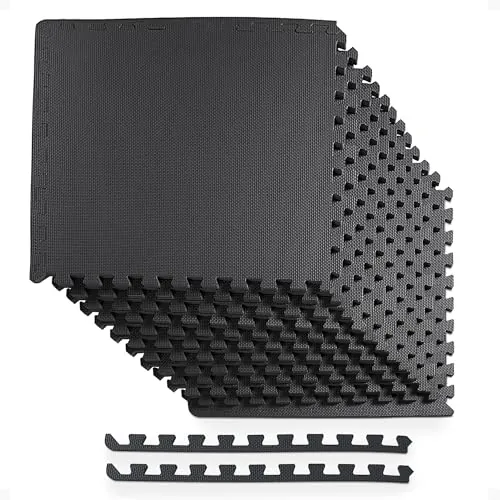
#1 Overall Winner
BalanceFrom 24x24 Inch EVA Interlocking Foam Exercise Tile Mat
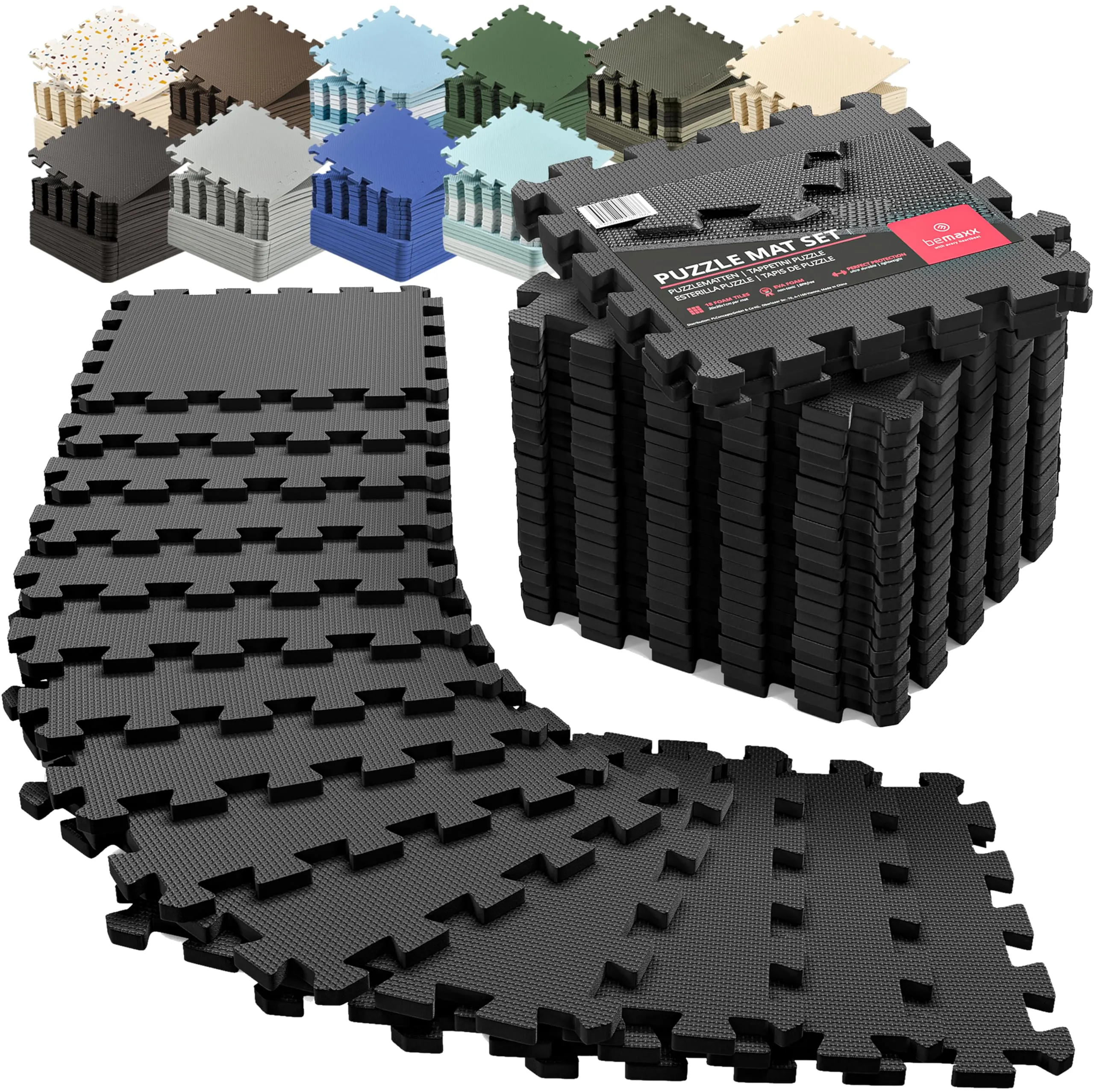
- Interlocking 24-inch EVA tiles can be arranged for a custom workout area.
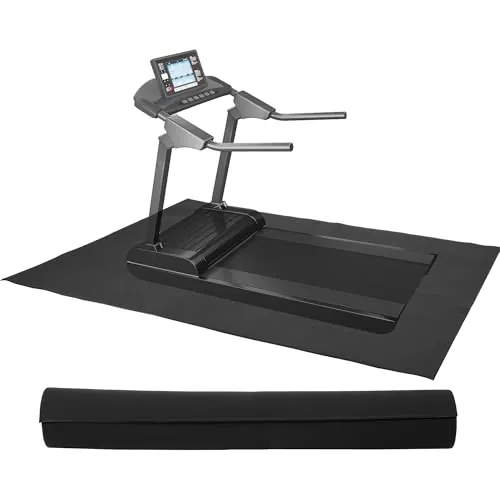
Comparison
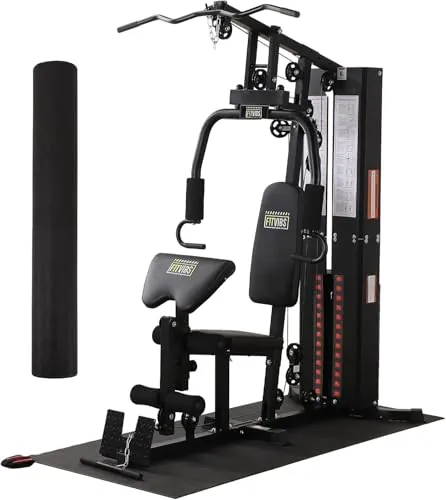
The BalanceFrom EVA Tile Mat and Fitvids Gym Equipment Mat both protect home-gym floors, but they are optimized for different setups. BalanceFrom provides modular, thicker cushioning for floor workouts and flexible spaces, while Fitvids provides a firmer one-piece base for treadmills, bikes, and other cardio equipment.
#1 Overall Winner
Contender
Choose Fitvids for a treadmill, bike, rower, or other fixed equipment that needs a firm, stable protective base. Choose BalanceFrom for a cushioned, reconfigurable area for bodyweight training, mobility work, and general home workouts. Neither is universally better; the training setup decides it.
Overall winner
Depends on your needs
| Feature | BalanceFrom 24x24 Inch EVA Interlocking Foam Exercise Tile Mat | Fitvids High Density 1/4-Inch Thick Gym Equipment Mat | Winner |
|---|---|---|---|
| Primary role | Cushioned modular workout flooring |
Firm cardio-equipment floor protection |
Depends |
| Material | High-density EVA foam |
PVC |
Depends |
| Listed thickness | 1/2 inch |
1/4 inch |
BalanceFrom 24x24 Inch EVA Interlocking Foam Exercise Tile Mat |
| Format | Interlocking 24-inch tiles with borders |
One-piece rectangle |
Depends |
| Coverage | 48 square feet per listed set |
96 by 48 inches |
Depends |
| Cardio-machine support | General protective flooring |
Designed for treadmills, bikes, rowers, and similar machines |
Fitvids High Density 1/4-Inch Thick Gym Equipment Mat |
| Floor exercise comfort | Cushioned EVA surface |
Thin, firm PVC surface |
BalanceFrom 24x24 Inch EVA Interlocking Foam Exercise Tile Mat |
| Stability feedback | Some reports of sliding or uneven tile alignment |
Strong feedback for equipment stability |
Fitvids High Density 1/4-Inch Thick Gym Equipment Mat |
| Ease of setup | Quick puzzle-piece assembly |
Unroll and position |
Tie |
| Cleaning | Soap and water |
Water, damp cloth, or soap |
Tie |
| Storage and reconfiguration | Breaks down into lightweight tiles |
Large single mat |
BalanceFrom 24x24 Inch EVA Interlocking Foam Exercise Tile Mat |
| Buyer feedback | Strong satisfaction; some fit concerns |
Very strong satisfaction for equipment use |
Fitvids High Density 1/4-Inch Thick Gym Equipment Mat |
BalanceFrom is the more relevant option for a post-workout stretching routine because it creates a cushioned floor surface that may be more comfortable for seated, kneeling, or lying positions. Fitvids is primarily a machine mat and is better left beneath equipment. The available information supports a comparison of comfort and setup convenience only; neither mat should be treated as a product that delivers a specific recovery outcome.
BalanceFrom supports a broader range of floor-based training because its tiles create a cushioned area that can be sized for the room and packed away when needed. It is a practical match for bodyweight circuits, warm-ups, stretching, and general movement sessions. Fitvids is more focused: it provides a dedicated foundation for stationary cardio equipment and can also protect floors under benches or racks. For a room centered on a treadmill or bike, Fitvids is more purposeful. For a flexible exercise zone, BalanceFrom is more versatile.
For bodyweight strength work, BalanceFrom has the advantage because its thicker EVA surface is more forgiving for kneeling, planks, and ground-based movements. It can also help define a protected training area. Fitvids is better when the priority is placing a bench or other fixed equipment on a firm protective layer, but it is not described as a thick lifting platform. Neither product should be assumed to replace purpose-designed flooring for repeated heavy impact or drops.
Fitvids is the clearer cardio-training choice. It is specifically described for treadmills, exercise bikes, ellipticals, stair climbers, and rowing machines, and review feedback repeatedly references stable machine placement. The PVC sheet provides a continuous surface without interlocking seams beneath equipment. BalanceFrom can protect a general workout area and support movement-based cardio, but reports of tile movement on smooth floors make it the less certain option for anchoring a fixed cardio machine.
BalanceFrom is better suited to mobility and flexibility work because the listed half-inch EVA construction provides more cushioning between the user and a hard floor. The tiles can be configured around the space needed for stretching or bodyweight movement. Fitvids can function as a protective surface, but its thinner PVC design is aimed at machinery rather than prolonged kneeling, seated mobility drills, or floor-based exercise.
For gentle stretching and post-workout floor mobility, BalanceFrom is the more comfortable option due to its thicker foam construction. The Fitvids mat may protect the floor in an equipment area, but the supplied product information does not position it as a recovery or mobility mat. Neither item makes specific recovery-performance claims, so the comparison is limited to practical comfort and surface use.
Both products appear to perform well when matched to their intended role. BalanceFrom’s EVA tiles provide cushioned, textured, modular coverage, with customers frequently praising comfort, assembly, and general home-gym usefulness. Its main performance caveat is inconsistent feedback on tile fit and movement on very smooth floors. Fitvids shows the stronger fit for machine support: its dense PVC surface, large rectangular dimensions, and buyer reports of stable treadmills and bikes align closely with its equipment-protection purpose. It is less appropriate when substantial floor-exercise cushioning is required.
BalanceFrom supports varied home workouts by allowing the user to build a protected floor area, reposition the tiles, and store them after use. That makes it useful for routines that combine floor movements, stretching, and general conditioning. Fitvids supports workout consistency in a different way: it gives fixed cardio equipment a stable, easy-clean base that can remain in place. Beginners can use either with the right setup, but Fitvids suits a machine-led routine and BalanceFrom better supports adaptable floor training.
BalanceFrom is the more useful choice for floor-focused strength sessions because extra EVA cushioning can improve comfort during kneeling and bodyweight exercises. Its puzzle format also allows coverage to be scaled around the training zone. Fitvids is firmer and better aligned with protecting flooring beneath stationary equipment, including benches, but its quarter-inch thickness offers less cushion. For either option, users should assess their equipment and lifting style rather than assume the mat is suitable for repeated heavy impacts.
Fitvids has the stronger cardio role because it is expressly intended for treadmills, bikes, ellipticals, stair climbers, and rowers. Buyers commonly report that machines sit securely and that floors or carpets remain protected. The continuous PVC sheet is a practical advantage under a fixed machine. BalanceFrom is more useful for cardio sessions performed on the floor, such as movement drills, but its interlocking construction and occasional sliding feedback make it the secondary option for a permanent treadmill or bike base.
BalanceFrom provides the more practical surface for mobility work. Its listed half-inch EVA foam can make hard flooring more comfortable for stretching, kneeling, and transitions between positions, while the tile format can be tailored to the available area. Fitvids offers only quarter-inch thickness and is designed around machine protection. It may be adequate for occasional floor movements, but it does not offer the same cushioning or adaptable layout for regular mobility sessions.
BalanceFrom is the more relevant option for a post-workout stretching routine because it creates a cushioned floor surface that may be more comfortable for seated, kneeling, or lying positions. Fitvids is primarily a machine mat and is better left beneath equipment. The available information supports a comparison of comfort and setup convenience only; neither mat should be treated as a product that delivers a specific recovery outcome.
Fitvids is the better-supported choice for a safety-conscious fixed equipment setup because it is designed to reduce movement beneath treadmills, bikes, and similar machines. Its firm continuous surface also avoids tile seams directly under equipment. BalanceFrom provides a textured, cushioned surface that can make floor exercise more comfortable and is described as non-slip, but users should account for reports of occasional sliding or imperfect tile alignment on smooth floors. For either product, use on a clean, level surface and ensure that the chosen mat size matches the equipment or exercise area.
BalanceFrom is more comfortable for direct floor use. Its listed half-inch high-density EVA foam is designed to cushion contact points during exercise, stretching, gymnastics, and play. Customer feedback often highlights a soft, cushioned feel. Fitvids has some cushioning but is only listed at quarter-inch thick and is primarily made to support equipment without sacrificing firmness. That makes it more suitable beneath a machine than for long sessions involving kneeling or lying on the floor.
Both products are straightforward, but the best setup experience depends on the space. Fitvids is simple to unroll, position, and wipe down beneath a machine. BalanceFrom requires connecting tiles, but its lightweight puzzle construction makes the layout easy to adapt, dismantle, and store. The tile system creates more initial assembly steps, while the one-piece mat may be more awkward to reposition due to its larger fixed size. Neither requires complex ongoing care.
Fitvids is the stronger stability choice. It is designed to reduce equipment movement, and reviews commonly report treadmills and bikes sitting firmly on the mat. BalanceFrom’s textured tiles are intended to provide traction, and many buyers find the assembled surface stable. Still, the aggregated feedback includes reports of tiles sliding or fitting inconsistently on smooth floors. For a stationary cardio machine, the continuous Fitvids surface is the more dependable option based on the available evidence.
Both mats use non-slip surfaces, but Fitvids has the clearer advantage for machine grip because its continuous PVC construction is intended to limit equipment movement. BalanceFrom’s textured EVA tiles offer traction for general exercise and active play, although some users report movement on concrete or joint-related issues. Fitvids reviews note that dust can reduce grip, so regular wipe-downs remain important for either black surface.
BalanceFrom has a clear advantage in adjustability. The interlocking tiles can be arranged to fit a section of a room, expanded with additional coverage, or separated for storage. Fitvids is a fixed rectangular mat, so it works best where the equipment footprint already suits its dimensions. Some reviews note that Fitvids can be cut to size, but cutting is a permanent modification rather than the reconfigurable flexibility offered by puzzle tiles.
BalanceFrom is more space-efficient for temporary or irregular workout areas because individual tiles can be assembled only when needed and stacked away afterward. The listed set also adapts more readily around room features. Fitvids uses a fixed 8-by-4-foot footprint that is efficient under a permanently positioned treadmill or machine but occupies a larger continuous area. Choose Fitvids for a dedicated station and BalanceFrom for a room that must serve more than one purpose.
Both products are described as helping reduce noise, though neither product provides detailed acoustic measurements. Fitvids is designed to sit under machines and is the more relevant option for isolating a treadmill, bike, or rower from the floor. BalanceFrom’s thicker foam may soften the feel of floor-based movement and provide a less harsh surface. Actual noise reduction will depend on the machine, floor construction, workout style, and installation.
Fitvids has the stronger build proposition for its stated purpose. Its high-density PVC construction is designed to withstand the concentrated, stationary load of gym machines, and buyer feedback frequently describes it as firm, durable, and substantial. BalanceFrom’s high-density EVA foam is appropriate for a cushioned training surface and receives positive comments for everyday home-gym use. However, it is a foam tile system with seams, and some buyers report inconsistent joint alignment. The better build depends on whether firmness or cushioning is needed.
Both products have positive durability feedback, but Fitvids has the clearer edge for long-term placement beneath cardio equipment. Reviews describe mats lasting for years under treadmills and retaining their basic appearance with routine use. BalanceFrom reviews also include multi-year home-gym use and generally good wear resistance, although users mention occasional puncture marks and imperfect joints. EVA foam can be a sound choice for normal workout flooring, while dense PVC is the more purpose-aligned material for a fixed machine footprint.
Maintenance is simple for both mats. BalanceFrom lists soap and water care, and its individual tiles can be lifted or rearranged when cleaning the floor beneath. Fitvids has a waterproof PVC surface that can be wiped with water, a damp cloth, or soap, making it convenient under sweat-producing cardio equipment. Black surfaces can show dust, and reviews for both products support regular wipe-downs. Keeping the underlying floor clean may also help maintain traction and a tidy appearance.
BalanceFrom is more portable despite covering a sizable area because the tiles are lightweight, separate into pieces, and can be packed away after use. Fitvids is portable enough to unroll and reposition, but its large one-piece format and higher stated weight make frequent transport less convenient. For a permanent home-gym machine location, this difference is less important. For a temporary workout zone, BalanceFrom is the easier option to handle.
Material disclosure is clear for both products. BalanceFrom identifies high-density ethylene vinyl acetate foam and lists its set dimensions, coverage, end borders, and water-and-soap care. Fitvids identifies PVC and provides a 96-by-48-inch, quarter-inch specification along with damp-cloth and soap care. Fitvids is more explicit about intended machine categories, while BalanceFrom gives the clearer modular tile count and listed coverage. Neither product provides broader material-testing or certification information in the supplied data.
Fitvids offers stronger value for buyers who specifically need a large mat beneath a treadmill or other cardio machine. Its firm PVC design, equipment-focused dimensions, durability feedback, and strong buyer satisfaction make the price easier to justify for that task. BalanceFrom offers better value for users who need flexible cushioned coverage rather than a single machine base. Its 48-square-foot tile set, end borders, and simple storage are useful advantages. The value winner therefore depends on whether the purchase is for equipment protection or a broader floor-training area.
Both listings provide specific dimensions, materials, care guidance, and large volumes of customer feedback. Fitvids is manufactured by BalanceFrom according to the supplied specifications, so the two listings are not entirely separate from a manufacturing perspective. Fitvids has more reviews and slightly stronger reported buyer satisfaction for its intended equipment-mat role. BalanceFrom has substantial positive feedback for general workout flooring, but more repeated concerns around tile fit and sliding. No warranty details are provided for a broader support comparison.
Buyer sentiment is strong for both products. BalanceFrom has a high review volume and commonly receives praise for cushioning, easy assembly, cleaning, floor protection, and value. Its recurring criticisms concern tile alignment, visible seams, and possible movement on smooth surfaces. Fitvids has an even larger review base and frequent praise for treadmill and bike stability, thickness, durability, and floor protection. The most repeated Fitvids concerns are a temporary odor for some buyers and reduced grip when the surface is dusty.
The supplied specifications and buyer feedback support the central practical claims for both mats, with appropriate limits. BalanceFrom’s stated EVA material, tile format, coverage, end borders, and cleaning instructions support its positioning as configurable cushioned flooring. Reviews generally align with that use, although they also identify seam and sliding limitations. Fitvids provides dimensions, PVC material, thickness, and intended equipment uses that align with feedback about treadmill and bike support. Claims about noise reduction or long-term performance should still be viewed as setup-dependent rather than guaranteed outcomes.
Fitvids wins overall for dedicated cardio-equipment protection. Its firm PVC construction, continuous design, strong stability feedback, and good durability record make it the more dependable foundation beneath a treadmill, bike, or similar machine. Its main limitation is reduced cushioning for direct floor exercise.
BalanceFrom remains the better choice for adaptable floor training. The thicker EVA tiles offer more comfort, flexible layout options, and easy storage, making them useful for bodyweight workouts, stretching, and multi-use rooms. Its main limitation is the possibility of visible seams, alignment variation, or movement on smooth flooring. Match the mat to the training style rather than treating either as a universal flooring solution.
Overall winner
Depends on your needs
The Fitvids mat is the stronger choice for a treadmill, bike, rower, or similarly fixed machine because its firm one-piece PVC surface is designed for equipment stability and floor protection. The BalanceFrom tiles are better when cushioning, modular coverage, and floor exercises are the priority. The right choice depends mainly on whether the space is machine-led or floor-training-led.
The Fitvids mat is the more direct treadmill option. Its listed 96-by-48-inch format and high-density PVC construction are intended for treadmills and other large cardio equipment. Customer feedback frequently mentions stable treadmill placement and floor protection. Measure the treadmill footprint before buying, as equipment dimensions vary and some alternate Fitvids sizes are also referenced in reviews.
The BalanceFrom interlocking tiles are the better fit for general floor-based sessions. Its listed half-inch EVA foam construction offers more cushioning than the quarter-inch Fitvids mat, and the tiles can be arranged around the usable workout area. The Fitvids mat may work for some floor movements, but it is primarily described as equipment flooring rather than a cushioned exercise surface.
The BalanceFrom tiles are described as protective workout flooring and reviews include home-gym and garage use, including equipment placed on some thicker variants. However, the supplied half-inch tile set is best assessed against the equipment footprint and intended load. Buyers should note reports of occasional tile movement or alignment issues on smooth floors, particularly where a very stable machine base is needed.
BalanceFrom is easier to store when the workout area must be temporary. Its lightweight puzzle pieces can be separated, stacked, and reconfigured. The Fitvids mat is a larger one-piece rectangle intended to remain beneath equipment, so it is less convenient to move or store frequently. Its fixed format is more practical for a permanent cardio-machine position.
Some reviews for both products mention an initial foam or material smell after unpacking. Several reviewers report that airing the product out reduced or removed the odor. This is not universal feedback: other buyers report little or no smell. If this is a concern, allow ventilation time before installing either mat in an enclosed workout room.
Fitvids offers the stronger value proposition for a dedicated treadmill or bike area because its design, buyer feedback, and large one-piece coverage align with equipment protection. BalanceFrom offers better value for people who need adaptable, cushioned flooring across a multi-use workout area. Comparing the actual space to be covered and the type of training matters more than comparing prices alone.
Both products are designed for simple maintenance. BalanceFrom lists water and soap for its EVA tiles, while Fitvids lists water, a damp cloth, and soap for its PVC surface. Reviews for both mention straightforward wipe-down cleaning. Keeping the underlying floor clean is also sensible, as buyers note that dust can be visible on black surfaces and may affect perceived grip.
Check our rankings and expert guides to find the best fitness products for your goals.