#1 Overall Winner
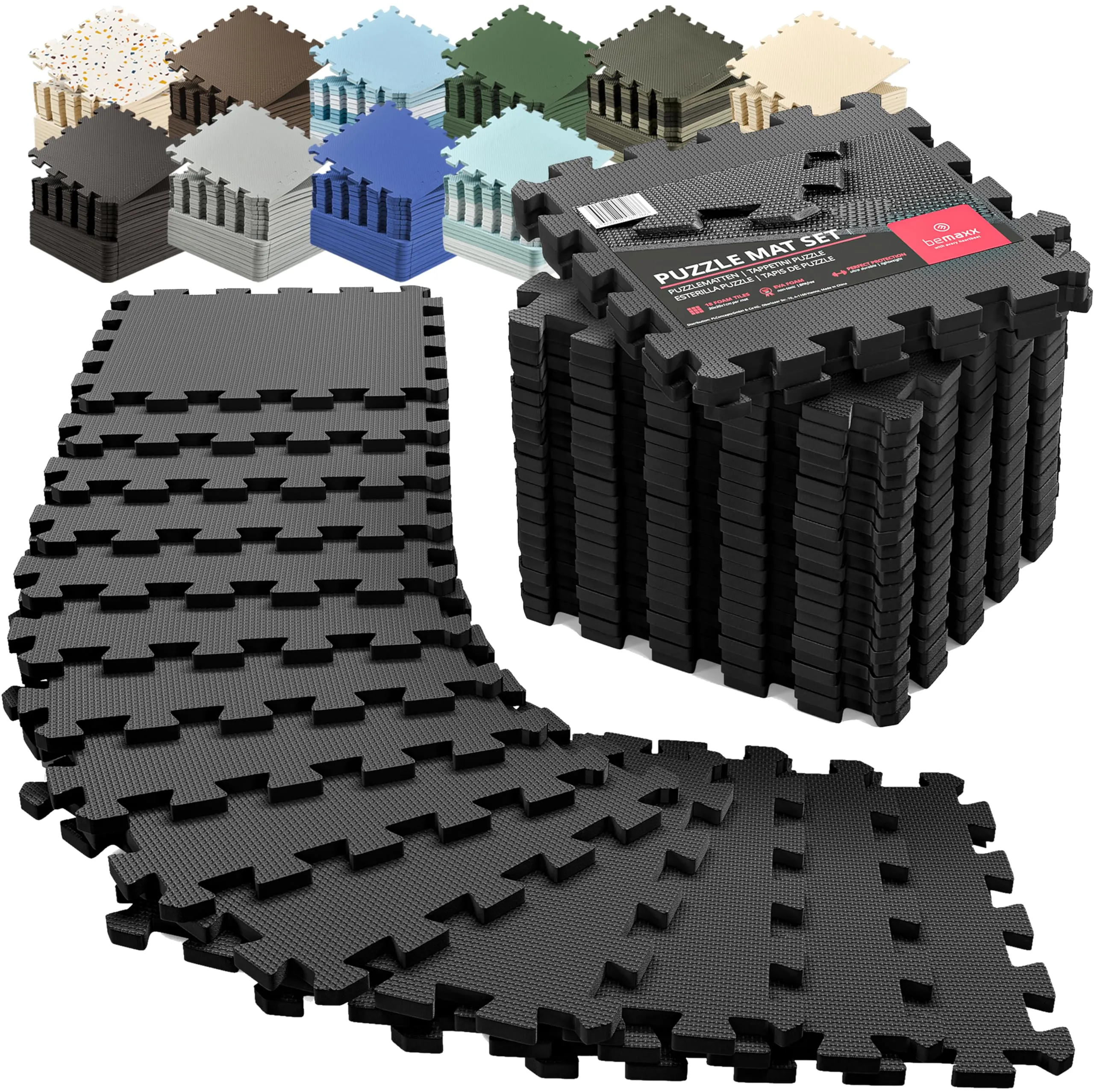
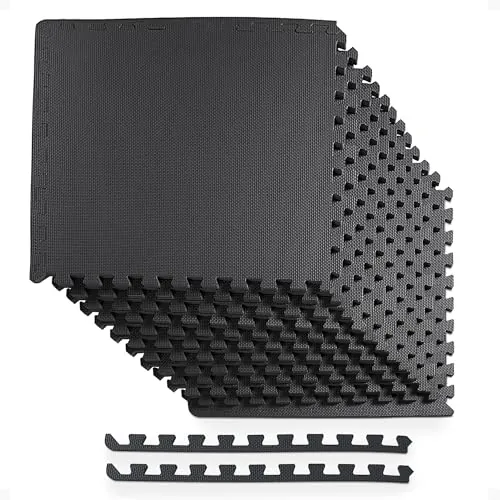
BalanceFrom 24x24 Inch EVA Interlocking Foam Exercise Tile Mat
- Interlocking 24-inch EVA tiles cover 48 square feet per set.
Comparison
BalanceFrom foam tiles and the Fitvids gym equipment mat both protect home-gym floors, but they serve different setups. BalanceFrom offers a cushioned, configurable surface for floor training, while Fitvids is a denser rubber mat better suited to stabilizing treadmills, bikes, and other stationary equipment.
#1 Overall Winner
Contender
Choose Fitvids for treadmill or bike placement, stable equipment support, and durable floor protection. Choose BalanceFrom if you want a larger cushioned area for bodyweight training, mobility work, or a flexible home-gym floor. The deciding factor is whether your priority is machine stability or padded, modular coverage.
Overall winner
Depends on your needs
| Feature | BalanceFrom 24x24 Inch EVA Interlocking Foam Exercise Tile Mat | Fitvids High Density 1/4-Inch Gym Equipment Mat | Winner |
|---|---|---|---|
| Primary role | Configurable cushioned workout flooring |
Stationary equipment floor protection |
Depends |
| Material | High-density EVA foam |
Rubber |
Depends |
| Listed thickness | 0.5 inch stated in listing details |
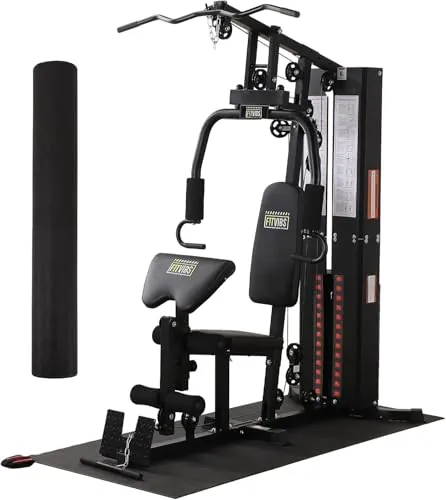
0.25 inch |
BalanceFrom 24x24 Inch EVA Interlocking Foam Exercise Tile Mat |
| Format | 12 interlocking square tiles with borders |
One-piece rectangle |
Depends |
| Listed coverage | 48 square feet |
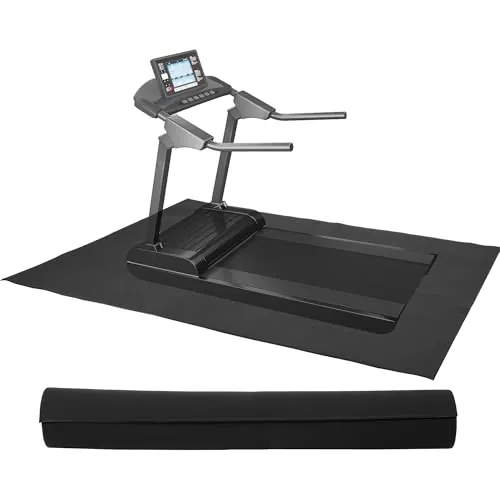
78 by 36 inches |
BalanceFrom 24x24 Inch EVA Interlocking Foam Exercise Tile Mat |
| Treadmill and bike use | General floor protection |
Designed for equipment placement |
Fitvids High Density 1/4-Inch Gym Equipment Mat |
| Floor exercise comfort | Cushioned foam surface |
Thin dense rubber surface |
BalanceFrom 24x24 Inch EVA Interlocking Foam Exercise Tile Mat |
| Stability | Mixed reports on seams and sliding |
Strong equipment-stability feedback |
Fitvids High Density 1/4-Inch Gym Equipment Mat |
| Setup flexibility | Can be expanded, shaped, and disassembled |
Unroll and position |
BalanceFrom 24x24 Inch EVA Interlocking Foam Exercise Tile Mat |
| Durability evidence | Positive moderate-use reports, with some puncture and joint concerns |
Repeated long-term equipment-use praise |
Fitvids High Density 1/4-Inch Gym Equipment Mat |
| Cleaning | Soap-and-water wipe cleaning |
Easy wipe-down care |
Tie |
| Portability | Lightweight tiles that disassemble |
Rollable single mat |
BalanceFrom 24x24 Inch EVA Interlocking Foam Exercise Tile Mat |
| Value focus | Coverage and cushioning |
Equipment protection and durability |
Depends |
For a post-workout routine centered on gentle stretching or floor mobility, BalanceFrom is the more supportive surface because of its thicker foam construction. Fitvids is better understood as a machine mat and offers limited extra comfort for those sessions. This does not establish any recovery benefit from either product; it simply reflects the difference between a cushioned tile floor and a thinner equipment-protection mat.
BalanceFrom supports a broader range of floor-based training because its tiles can create a larger, padded zone for bodyweight circuits, mobility sessions, and general home workouts. Fitvids is more focused: it supports training indirectly by providing a stable, protective base beneath cardio equipment. For a mixed-use room where the floor itself is the training surface, BalanceFrom is more adaptable. For a dedicated treadmill or bike station, Fitvids is the more purposeful choice.
For lighter strength and bodyweight work, BalanceFrom offers a more comfortable surface for planks, lunges, and floor-based exercise. Its foam design can also protect the floor in a general training area, but buyer feedback indicates that the interlocking joints and foam surface are not the most secure choice for every setup. Fitvids is the better fit beneath stationary equipment and may be useful under a bench or machine when its dimensions fit, but it provides less cushioning for floor work.
Fitvids is the clearer cardio-training option because it is specifically designed for treadmills and exercise bikes. Its rubber construction and continuous shape are intended to protect the floor and help limit equipment shifting, with reviews repeatedly supporting that use. BalanceFrom can work under a general exercise area for low-impact movement or workout videos, but its main advantage is cushioning rather than creating a dedicated stable base for a treadmill or bike.
BalanceFrom is the better mobility and flexibility choice. The thicker EVA foam surface is designed to cushion contact points during stretching, yoga-style movement, and floor exercises, while the tiles can be arranged around the available space. Fitvids is firmer and thinner, making it more appropriate below equipment than for sustained kneeling or relaxed floor work. Users who want one surface mainly for stretching and bodyweight routines should favor BalanceFrom.
BalanceFrom is more relevant for gentle post-workout stretching and floor mobility because its foam surface offers more stated cushioning. Fitvids can protect a floor beneath equipment used during a training routine, but it does not add the same comfort for recovery-oriented floor sessions. Neither product is a recovery tool or makes a specific recovery outcome claim; this comparison concerns surface comfort and practical routine use only.
Each product performs well when matched to its intended role. BalanceFrom provides a large, cushioned, textured workout surface that buyers frequently describe as easy to assemble and comfortable underfoot. Its performance is less consistent when a completely seamless or highly secure installation is required, as some reviews mention alignment issues and sliding. Fitvids is more convincing for machine support: feedback repeatedly describes stable treadmill and bike placement, durable floor protection, and a mat that lays flat. It is not intended to replace thicker padded flooring for floor exercise.
BalanceFrom contributes more directly to varied training routines because its modular tiles can define an exercise area for bodyweight work, movement drills, and mobility sessions. The ability to assemble and store the tiles can reduce friction in multipurpose rooms. Fitvids supports routine consistency in a different way: it creates a dedicated, stable base for a treadmill or bike, which may be more useful for regular cardio equipment users. Beginners can use either easily, but the more versatile training surface is BalanceFrom.
BalanceFrom is better suited to strength-adjacent floor training, including bodyweight movements and exercises where knee, elbow, or back contact with the floor is common. The foam layer adds more stated padding, though the tile system has reported fit and sliding limitations on some hard surfaces. Fitvids has the firmer, more stable equipment-oriented base and stronger durability evidence, but it does not offer comparable cushioning. For machine-based strength setups, verify dimensions and equipment requirements rather than assuming either mat suits all loads.
Fitvids has the more focused cardio role. Its rubber material, slip-resistant design, and 78-by-36-inch format are built around treadmill and bike placement, and reviews commonly report that equipment stays more secure. It may also help separate the machine from the floor. BalanceFrom is more suitable for cardio-style floor workouts where comfort and a larger movement area matter, such as low-impact routines. It is less compelling as the primary base for a large stationary cardio machine.
BalanceFrom has a practical advantage for mobility sessions because the foam tiles provide a softer contact surface and can be arranged into a wider training zone. This matters for activities involving kneeling, seated positions, and transitions across the floor. Fitvids offers a firm rubber layer that may protect flooring, but its quarter-inch thickness and equipment-focused format make it less comfortable for these uses. BalanceFrom is the more natural choice for a dedicated stretching or general movement area.
For a post-workout routine centered on gentle stretching or floor mobility, BalanceFrom is the more supportive surface because of its thicker foam construction. Fitvids is better understood as a machine mat and offers limited extra comfort for those sessions. This does not establish any recovery benefit from either product; it simply reflects the difference between a cushioned tile floor and a thinner equipment-protection mat.
Fitvids has the clearer safety advantage for stationary machines because its design and buyer feedback emphasize stable placement and reduced shifting. A level floor and a mat sized appropriately for the equipment remain important. BalanceFrom can create a more cushioned and textured floor-training surface, which may be useful for general movement, but users should account for reported seam alignment and sliding on smooth floors. Neither product eliminates normal training risks, and neither listing provides a substitute for proper equipment setup or exercise technique.
BalanceFrom is the more comfortable mat for direct exercise contact. Its listed half-inch EVA foam construction is intended to cushion the knees, hips, elbows, and feet during workouts or play. Fitvids is a quarter-inch dense rubber mat, which is beneficial for a stable machine base but offers less padding for kneeling and floor mobility. For a training area where you regularly lie, kneel, or move on the surface, BalanceFrom is the better choice.
Both products are easy to use, but in different ways. Fitvids is simple to unroll, position, and wipe down, making it low-friction for a fixed equipment station. BalanceFrom takes a little more initial assembly but its lightweight tiles connect without tools and can be removed or reshaped as needed. For permanent machine placement, Fitvids is simpler. For a room that changes between workouts and other uses, BalanceFrom offers more practical flexibility.
Fitvids is the stronger stability option. Its continuous rubber base is designed to prevent equipment shifting, and treadmill and bike users frequently report secure placement. BalanceFrom has textured anti-slip surfaces and many positive stability comments, but the review overview also notes mixed feedback on tile fit and movement. On smooth concrete in particular, some users have needed an additional measure to reduce sliding. For a heavy or moving machine, Fitvids is the safer practical choice.
Both products use slip-resistant surfaces, but their grip advantages differ. Fitvids receives stronger feedback for keeping equipment and users stable on a continuous rubber surface. BalanceFrom offers textured foam traction for floor exercise, yet its overall grip can be affected by tile movement on some smooth floors. One Fitvids review notes that dust can reduce grip, so regular wiping remains useful for either product.
BalanceFrom is substantially more adjustable in layout. The interlocking tiles can be assembled into different shapes, expanded with additional coverage, or broken down for storage. Fitvids has a fixed rectangular form, so its adjustability is limited to placement and, based on one review, it may be cut to fit a specific non-equipment use. For a treadmill or bike, avoid altering the mat unless the setup remains stable and properly supported.
BalanceFrom is more space-efficient for multipurpose rooms because the tile set can be configured around available floor space and disassembled when not needed. Its 48-square-foot coverage is useful for creating a defined workout zone. Fitvids has a compact dedicated footprint for a treadmill or bike station, but its fixed 78-by-36-inch rectangle is less adaptable. The better option depends on whether the room needs flexible flooring or permanent equipment placement.
Fitvids is the more relevant choice for machine-related noise because it is designed as an equipment mat and the listing references noise reduction. BalanceFrom also describes a water- and noise-resistant design and may soften contact during floor training. Actual noise reduction will vary with the machine, subfloor, workout intensity, and room construction, so neither product should be expected to fully isolate sound.
Fitvids has the stronger build-quality case for its intended equipment role. Its one-piece rubber format avoids interlocking seams, and reviews often describe it as dense, sturdy, and suitable for long-term machine placement. BalanceFrom uses lightweight EVA pieces that are practical for quick layout changes and cushioning, but the puzzle connections are a potential weak point. Buyers report that some sets connect well, while others have alignment inconsistencies. Choose Fitvids for a firm equipment base and BalanceFrom for adaptable padded flooring.
Fitvids leads on durability evidence. Reviews include reports of mats remaining effective beneath treadmills and bikes after years of use, and the rubber construction is positioned for equipment contact. BalanceFrom also has positive reports from moderate-use home gyms and users who have kept tiles for several years. However, reviews note possible puncture marks and uneven joint quality. Those issues may not always affect basic function, but they make Fitvids the more dependable option for sustained stationary-equipment use.
Maintenance is straightforward with both mats. BalanceFrom is described as moisture-resistant and can be cleaned with soap and water; its modular seams may require attention if dirt collects between tiles. Fitvids is designed for wipe-down cleaning and is described as resistant to carpet bleeding. Reviews for both mention easy cleaning, although dust may be more noticeable on black surfaces and can affect traction. Regular wiping and fully drying the floor before installation are sensible steps.
BalanceFrom is more portable for temporary setups. The lightweight interlocking tiles can be separated, stacked, and stored when the room needs another use. Fitvids can be rolled and moved, but its single rubber sheet is intended more for a fixed equipment location and is less flexible in shape. For frequent setup and breakdown of a workout zone, BalanceFrom has the advantage.
Material information is clearer for BalanceFrom. The listing identifies high-density EVA foam, states that the tiles are rubber-, plastic-, and metal-free, and provides dimensions, coverage, and care guidance. Fitvids identifies rubber material, a quarter-inch thickness, PVC-free status, dimensions, and hand-wash care. Both provide enough basic material information to understand their intended role, although neither listing supplies extensive detail about rubber composition, surface treatments, or manufacturing processes.
Both products offer good value within their different roles. BalanceFrom provides 48 square feet of listed coverage, end borders, cushioning, and layout flexibility at the stated price, making it compelling for an all-purpose exercise floor. Fitvids costs slightly less at the stated price and has stronger buyer evidence for durability, equipment stability, and long-term floor protection. It is the better value for a treadmill or bike owner. BalanceFrom is the better value when a larger padded floor area is the real requirement.
Both products have substantial buyer feedback and generally positive review patterns. Fitvids has a larger review count and slightly stronger satisfaction evidence in the supplied data, particularly around equipment-mat performance. BalanceFrom also has a large review base and is well received for home-gym comfort, setup, and value. The supplied information notes that Fitvids is manufactured by BalanceFrom - Exercise & Fitness, but it does not provide further detail about the relationship, support standards, or brand history.
Both products have strong customer satisfaction, supported by high star ratings and thousands of reviews. BalanceFrom buyers commonly praise comfort, easy assembly, cleaning, and value, with mixed comments around tile alignment and sliding. Fitvids has a larger review base and especially consistent praise for treadmill and bike use, floor protection, stability, and durability. Its recurring drawback is an initial odor for some users. Fitvids has the more consistent satisfaction profile for its narrowly defined equipment-mat purpose.
The core claims for both products are reasonably supported by their stated specifications and review patterns, though they should be interpreted as product-use information rather than independently verified performance testing. BalanceFrom discloses EVA material, tile count, coverage, thickness, and care instructions, while buyers frequently confirm cushioning and assembly ease. Fitvids discloses rubber construction, dimensions, thickness, and slip resistance, with extensive reviews supporting use under treadmills and bikes. Noise, cushioning, and stability outcomes can vary by floor, equipment, and installation.
Fitvids is the overall winner for a dedicated treadmill, bike, or stationary-equipment setup. Its rubber construction, continuous surface, durability feedback, and stability-focused design make it the more dependable machine mat. Its main limitation is that it is thin and firm for extended floor exercise. BalanceFrom is the better alternative for a flexible workout floor: it supplies more cushioning, broader configurable coverage, and easier temporary storage. Its main limitations are the puzzle seams, occasional alignment complaints, and reports of sliding on some smooth surfaces. Select Fitvids for equipment support and BalanceFrom for a cushioned, multipurpose training area.
Overall winner
Depends on your needs
The better choice depends on the job. Fitvids is the stronger option for a treadmill, bike, or another stationary machine because its continuous rubber surface is designed for stable equipment support. BalanceFrom is the better fit for a larger, configurable area where cushioning, floor exercises, and easy rearrangement matter more.
The Fitvids mat is the more appropriate treadmill choice. Its listed 78-by-36-inch rectangular format, rubber construction, and equipment-focused design suit machine placement. Buyer feedback frequently mentions treadmills, floor protection, and reduced shifting. Check your treadmill footprint before ordering, as machine dimensions vary.
BalanceFrom is generally the more suitable option for bodyweight sessions, stretching, and movement routines. Its EVA foam tile design provides more stated cushioning and can cover a broader workout zone. Fitvids can be used for basic floor exercise, but its thinner, denser equipment-oriented construction offers less padding.
They can suit a general garage-gym floor area for bodyweight work, stretching, and basic equipment protection. Reviews include positive experiences on concrete and with moderate home-gym use. However, some buyers report tile movement on smooth concrete, so a clean, level surface and the intended equipment load should be considered first.
BalanceFrom is more flexible for storage and layout changes because the individual puzzle tiles can be assembled, separated, and repositioned. Fitvids is a single rolled mat, so it is straightforward to unroll but does not offer the same ability to change the shape or selectively cover an area.
Yes. Some reviews for both products mention a mild initial foam or rubber smell. Several reviewers report that airing the product out reduced or removed the odor. This is buyer feedback rather than a universal result, so allowing time to air out before indoor installation may be practical.
Fitvids is the clearer choice for stationary equipment protection based on its rubber material, equipment-specific positioning, and buyer feedback from treadmill and bike users. BalanceFrom tiles protect flooring in a general workout area, but the product information and reviews position them more as cushioned modular flooring than dedicated machine support.
Both listings describe noise-related benefits, but the practical effect will depend on the floor, equipment, workout type, and room below. Fitvids is designed as an equipment mat and may help limit direct machine-to-floor contact. BalanceFrom adds foam cushioning across a larger floor-training area, but neither listing guarantees a specific reduction.
Check our rankings and expert guides to find the best fitness products for your goals.