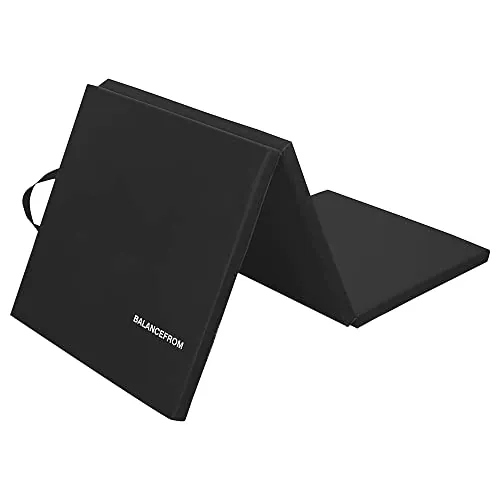
#1 Overall Winner
BalanceFrom 6x2 Feet 3-Panel Folding Gymnastics Mat
- Thick foam padding provides a more cushioned surface for floor-based exercise.
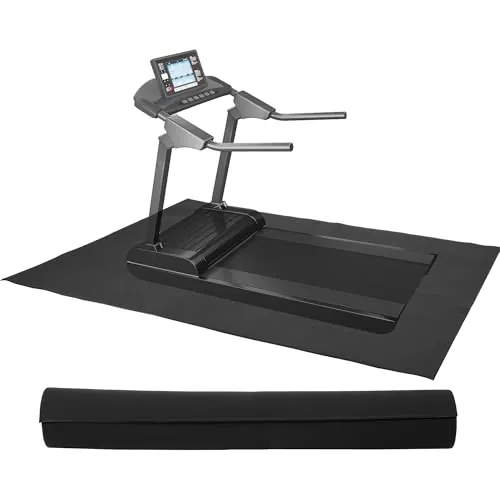
Comparison
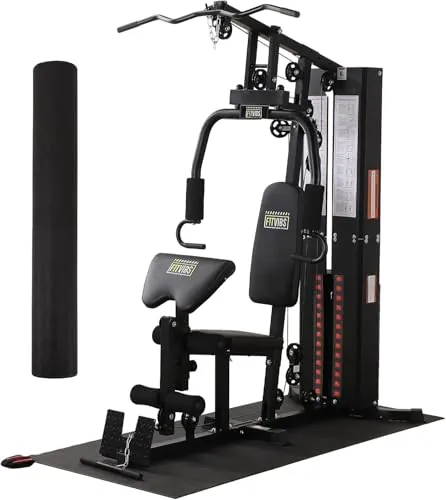
The BalanceFrom 6 x 2 foot folding mat and Fitvids 8 x 4 foot equipment mat are both practical home-gym surfaces, but they solve different problems. BalanceFrom prioritizes thick cushioning for floor exercise and tumbling, while Fitvids prioritizes a broad, firm base for treadmills, bikes, and other equipment. The better option depends on whether your priority is comfort under your body or protection beneath a machine.
#1 Overall Winner
Contender
Choose the BalanceFrom if you want a thick, foldable mat for cushioned floor workouts, mobility work, and tumbling practice. Choose the Fitvids if your main goal is to protect carpet or hard flooring beneath a treadmill, bike, rower, or bench. Neither replaces the other particularly well: one is a body-comfort mat, while the other is an equipment base.
Overall winner
Depends on your needs
| Feature | BalanceFrom 6x2 Feet 3-Panel Folding Gymnastics Mat | Fitvids High Density 1/4-Inch Gym Equipment Mat | Winner |
|---|---|---|---|
| Primary role | Cushioned folding floor-exercise mat | Firm equipment and floor-protection mat | Depends |
| Thickness | 1.5 inches | 0.25 inches | BalanceFrom 6x2 Feet 3-Panel Folding Gymnastics Mat |
| Coverage | 6 x 2 feet | 8 x 4 feet | Fitvids High Density 1/4-Inch Gym Equipment Mat |
| Yoga and Pilates | Designed for cushioned floor exercise | Possible but thin for this role | BalanceFrom 6x2 Feet 3-Panel Folding Gymnastics Mat |
| Treadmill and bike use | Not the stated primary role | Designed for gym equipment | Fitvids High Density 1/4-Inch Gym Equipment Mat |
| Tumbling practice | Listed use with foam padding | Not a dedicated tumbling mat | BalanceFrom 6x2 Feet 3-Panel Folding Gymnastics Mat |
| Storage | Tri-fold with carrying handles | Large flat mat | BalanceFrom 6x2 Feet 3-Panel Folding Gymnastics Mat |
| Stability under equipment | Textured exercise surface | High-density non-slip equipment base | Fitvids High Density 1/4-Inch Gym Equipment Mat |
| Cleaning | Vinyl; water and soap care | PVC; water, damp cloth, or soap care | Tie |
| Portability | Foldable with handles | Large and heavier stated weight | BalanceFrom 6x2 Feet 3-Panel Folding Gymnastics Mat |
| Floor protection coverage | Narrow exercise lane | Large protective footprint | Fitvids High Density 1/4-Inch Gym Equipment Mat |
| Value | Lower listed price and broad floor-exercise use | Large equipment coverage at a moderate listed price | Depends |
BalanceFrom offers more practical support for post-training stretching and low-intensity floor routines, largely because its padded foam surface can make floor positions more tolerable. Review feedback consistently emphasizes the mat’s cushioning and comfort. Fitvids has a role in maintaining a usable home-gym space under equipment, but its thinner PVC construction is not intended to provide the same level of body cushioning. Neither product should be viewed as a substitute for professional care.
The BalanceFrom supports active floor-based sessions: yoga, Pilates, mobility drills, bodyweight work, martial-arts practice, and low-height tumbling are all within its stated use case. The Fitvids supports training more indirectly by creating a protected, stable foundation for cardio machines and home-gym equipment. For an adaptable mat that comes out for each workout, BalanceFrom is more useful. For a dedicated workout station that stays in place beneath equipment, Fitvids is the more suitable choice.
For bodyweight strength exercises such as planks, core work, and kneeling movements, the BalanceFrom’s thicker foam is more comfortable and is supported by reviews describing better padding than thinner mats. The Fitvids is better suited to strength-training environments that include benches, racks, or equipment placed on finished flooring. It is not as cushioned for direct floor work, but its firm PVC construction is more aligned with creating a protected base under heavier gym items.
The Fitvids is clearly the better cardio-training companion when a treadmill, bike, elliptical, stair climber, or rowing machine is involved. Its stated purpose is to reduce equipment movement and shield the underlying floor, and customer feedback specifically references treadmills and bikes. The BalanceFrom can support aerobic and bodyweight routines, but its narrow 6 x 2 foot format and soft foam construction are not a substitute for a dedicated machine mat.
The BalanceFrom is the better mobility and flexibility option. Its 1.5-inch padding can make kneeling, seated work, stretching, and yoga or Pilates floor positions more comfortable, while its folding construction allows quick setup and storage. Fitvids has a non-slip surface and can be used for basic floor movements, but its quarter-inch PVC build is aimed at equipment protection rather than comfort during sustained floor practice.
For gentle stretching, cool-down work, and floor-based mobility routines, BalanceFrom is the more useful recovery-oriented surface because it provides substantially more padding between the body and the floor. It may make common seated, kneeling, and supine positions more comfortable, although it is not a medical or therapeutic product. Fitvids can define a workout area but provides much less cushioning and is principally designed for equipment placement.
Both mats appear to perform well within their own intended roles. BalanceFrom is built around a cushioned, textured training surface that can be folded and connected to compatible mats; reviews frequently support its comfort, easy cleaning, and use for home workouts and gymnastics practice. Fitvids is built around a high-density PVC barrier that helps protect flooring and keep equipment positioned more securely; reviews often report effective treadmill and bike use. Performance is therefore a category-specific tie: BalanceFrom for body contact and floor movement, Fitvids for machine placement.
BalanceFrom offers stronger direct support for varied routines because it can be used for warm-ups, mobility work, yoga, Pilates, core training, and tumbling drills, then folded away. Its thick surface may reduce the discomfort that can discourage regular floor exercise. Fitvids is more valuable to routine consistency when a home gym centers on machines: it helps establish a stable, protected location for a treadmill, bike, or other equipment. Beginners who need a general exercise mat will usually get more direct use from BalanceFrom.
BalanceFrom is more supportive for unweighted and bodyweight strength movements performed on the floor, particularly when forearms, knees, hips, or back contact the mat. Its foam padding and buyer feedback favor comfort during these sessions. Fitvids is the more logical match for a strength area containing a bench, rack, or free-weight setup because it is designed to protect the floor under equipment. Neither listing establishes that the mat alone makes dropped weights safe for all floors.
Fitvids is the stronger cardio option because it is explicitly designed for treadmills, bikes, ellipticals, stair climbers, and rowers. Its large dimensions can accommodate machine footprints and its dense, non-slip surface is intended to limit movement. BalanceFrom is relevant for aerobic floor workouts and warm-ups, but its softer, narrower design better suits exercise performed on the mat rather than a machine operating on top of it.
BalanceFrom is the clear option for mobility and flexibility sessions. The thick foam construction, textured vinyl cover, and portable tri-fold design make it more suitable for stretching sequences, yoga positions, Pilates movements, and seated or kneeling drills. Its 2-foot width can be a constraint for broader flows. Fitvids offers a stable surface but only quarter-inch thickness, so it is less comfortable for prolonged floor contact and less specialized for mobility practice.
BalanceFrom offers more practical support for post-training stretching and low-intensity floor routines, largely because its padded foam surface can make floor positions more tolerable. Review feedback consistently emphasizes the mat’s cushioning and comfort. Fitvids has a role in maintaining a usable home-gym space under equipment, but its thinner PVC construction is not intended to provide the same level of body cushioning. Neither product should be viewed as a substitute for professional care.
Each mat supports safer training conditions in a different way. BalanceFrom’s thicker padding and textured cover can provide a more forgiving surface for floor movements, stretching, and beginner tumbling drills, but it does not eliminate the need for appropriate instruction, clear space, and sensible progression. Fitvids can help create a stable base and protect flooring beneath equipment, particularly treadmills and bikes. Buyers should verify that the machine fits the mat and remains level. Some Fitvids buyers reported an initial odor, so airing it out before indoor use may be sensible.
BalanceFrom is the clear comfort choice. Its 1.5-inch foam padding is designed to cushion knees, back, and joints during transitions and floor exercise, and reviewers repeatedly describe it as comfortable and substantially more padded than thin yoga mats. Fitvids has only quarter-inch thickness and prioritizes dense support for equipment. It may be adequate for standing or short floor sessions, but it is not the better option for prolonged kneeling, seated exercise, or tumbling practice.
BalanceFrom is easier to use when workouts require frequent setup and storage: it folds into three panels, includes handles, and can be moved around the home. Fitvids is easy to unroll, wipe down, and leave under a machine, but its large 8 x 4 foot size makes it less convenient to relocate regularly. Both have simple cleaning requirements. Choose BalanceFrom for flexible daily use and Fitvids for a mostly fixed equipment station.
Fitvids has the advantage for stability beneath exercise equipment. Its high-density PVC construction, large dimensions, and stated non-slip function are specifically intended to reduce machine movement. BalanceFrom has a textured surface intended to help it remain secure during stretching and jumping, and reviewers generally praise its grip. However, its softer foam construction is better suited to a person exercising on the surface rather than to stabilizing a large treadmill or bike.
Both mats emphasize traction. BalanceFrom’s textured vinyl cover is intended to stay secure for stretching and movement, and reviews mention a grippy surface. Fitvids is also designed to resist slipping beneath equipment and during basic floor activity. The key difference is maintenance: one Fitvids reviewer noted that dust reduced grip until the mat was wiped down. For active floor training, BalanceFrom has the more relevant traction profile.
BalanceFrom offers more functional adaptability. Its three folding panels can be positioned in different configurations, and its hook-and-loop edges are intended to connect multiple compatible mats for a larger surface. Fitvids does not offer training adjustments, although one review noted that it could be cut to fit certain uses. Cutting may affect coverage and should be planned carefully. For configurable floor training, BalanceFrom is the better fit.
BalanceFrom is more space-efficient for multipurpose homes. It provides a 6 x 2 foot workout lane when open, then folds into a smaller block for storage in a closet, under furniture, or in a car. Fitvids provides much more surface area at 8 x 4 feet, which is beneficial beneath machines but requires a larger dedicated footprint. The choice depends on whether storage convenience or full equipment coverage matters more.
Fitvids is the more relevant option for reducing noise and vibration from a treadmill or other equipment because noise reduction is part of its stated purpose. Buyer feedback also mentions its use beneath treadmills. BalanceFrom may soften contact during bodyweight floor exercise, but it is not positioned as a dedicated machine-vibration barrier. Actual noise reduction will vary with the flooring, machine, workout intensity, and room below.
BalanceFrom’s construction focuses on foam padding, reinforced stitching, a vinyl cover, folding panels, and hook-and-loop edges. Reviews commonly describe it as sturdy and durable for regular floor use. Fitvids uses high-density PVC in a much larger, thinner sheet intended to resist the stress of equipment placement. Buyer feedback describes it as heavy-duty and able to hold up under treadmills and bikes. Build quality is close, but the preferred construction depends on whether you need flexible padding or a firm protective layer.
Both products have favorable durability evidence from their listings and reviews. BalanceFrom uses reinforced stitching and a wipe-clean vinyl surface, with buyers reporting long use without ripping. Fitvids is described as durable PVC, and several reviewers report years of use under treadmills, bikes, or other protective applications. The different materials affect the likely wear pattern: BalanceFrom may show temporary impressions or wrinkling from concentrated pressure, while Fitvids may need periodic cleaning to preserve traction.
Both mats are low-maintenance. BalanceFrom’s vinyl surface is described as moisture-resistant and can be cleaned with water and soap, while Fitvids’ waterproof PVC can be wiped with a damp cloth, water, or soap. Fitvids may need more regular dust removal to maintain grip, based on one review. BalanceFrom should be dried before folding and storing. Neither product listing provides a complex maintenance routine.
BalanceFrom is substantially more portable. It is designed to fold into three panels, has built-in carrying handles, and is listed as lightweight. Fitvids is a large 8 x 4 foot mat with a much higher stated item weight, making it better suited to placement beneath equipment than frequent transport. For moving a mat between rooms, taking it to a studio, or storing it after each session, BalanceFrom is the more practical option.
Material information is clearer and more relevant than nutrition-style scoring for this comparison. BalanceFrom identifies foam construction with a double-sided vinyl cover and provides water-and-soap care guidance. Fitvids identifies PVC as its material and provides water, damp-cloth, and soap care instructions. Neither listing provides extensive material composition details beyond those broad descriptions. Fitvids has buyer reports of an initial odor, while selected BalanceFrom feedback mentions no odor; individual experiences may vary.
Both products offer strong value when matched to the correct use case. BalanceFrom has the lower listed price and combines thick cushioning, foldability, portability, and several floor-training applications, making it a compelling choice for users who need one adaptable bodyweight mat. Fitvids costs more but provides a much larger protective footprint and equipment-specific stability for treadmills, bikes, and other machines. It is not better value for yoga or tumbling simply because it is larger. Value depends on whether the purchase protects a machine area or supports direct floor exercise.
Both products have very strong buyer-rating averages and large review volumes, which provides useful evidence of broad marketplace use. BalanceFrom has especially consistent review themes around cushioning, portability, and home-workout versatility. Fitvids feedback is similarly positive around floor protection, treadmill placement, and durability. The provided data does not include third-party testing, detailed warranty terms, or formal brand certification information, so trust should be based primarily on the supplied specifications and buyer experience rather than broader unverified claims.
Customer satisfaction is strong for both mats, with each holding the same high star average and a substantial review count. BalanceFrom buyers repeatedly praise its thick cushioning, easy storage, versatile exercise use, and apparent durability. Fitvids buyers frequently praise its floor protection, equipment stability, size options mentioned in reviews, and long-term use under treadmills and bikes. The recurring cautions differ: BalanceFrom may be narrow or bulky when folded, while Fitvids may arrive with an odor and can lose traction if dusty.
The main claims for both mats are reasonably aligned with the supplied specifications and review patterns. BalanceFrom’s claims around folding portability, cushioning, wipe-clean care, and varied floor-exercise uses are supported by its stated foam, vinyl, dimensions, and buyer feedback. Fitvids’ claims around large-area floor protection, equipment use, wipe-clean PVC, and non-slip support are supported by its stated dimensions, material, and treadmill or bike reviews. Claims about safer exercise or noise reduction should remain context-dependent, as neither listing establishes outcomes for every setup.
Neither product clearly wins overall because they are built for different jobs. The BalanceFrom is the better direct-training mat: its key strengths are 1.5-inch cushioning, foldable portability, and broad usefulness for floor workouts, yoga, Pilates, and tumbling practice. Its main limitations are a narrow 2-foot width and some folded bulk. The Fitvids is the better equipment mat: its key strengths are broad 8 x 4 foot coverage, a dense PVC surface, and strong suitability for treadmill, bike, and home-gym floor protection. Its main limitations are minimal floor-exercise cushioning, a large footprint, and occasional odor feedback. Buy BalanceFrom for comfort and movement; buy Fitvids for machine stability and flooring protection.
Overall winner
Depends on your needs
They serve different roles. The BalanceFrom is the better choice for cushioned floor training, yoga, Pilates, stretching, and compact tumbling practice. The Fitvids is the better choice for placing a treadmill, bike, rower, or similar equipment on carpet or hard flooring. Choose based on whether you need body cushioning or machine support.
Yes. Its 1.5-inch foam padding, 6 x 2 foot format, and folding design make it relevant for yoga, Pilates, stretching, core work, and other floor exercises. Reviews frequently describe it as more cushioned than a typical yoga mat. Its narrow width may still be limiting for users who prefer a broad practice area.
Yes. The Fitvids mat is specifically described for treadmills and other heavy gym equipment. Its large PVC surface is intended to protect floors and help reduce equipment movement. Before buying, compare the 8 x 4 foot dimensions with your treadmill footprint and leave room for safe access around the machine.
The BalanceFrom folding mat is more practical for small spaces because it folds into a compact form and has carrying handles. The Fitvids offers far more coverage, but its 8 x 4 foot size suits a more permanent home-gym position. The best option depends on whether the mat must be stored between workouts.
The BalanceFrom provides more cushioning because it uses 1.5-inch foam padding. It is the more appropriate option for kneeling, stretching, Pilates, yoga, and floor-based routines where a softer surface is useful. The Fitvids is much thinner and is principally designed as a firm protective layer beneath exercise equipment.
Both are designed for straightforward cleaning. The BalanceFrom vinyl cover can be cleaned with water and soap, while the Fitvids PVC surface can be wiped with water, a damp cloth, or soap. For the Fitvids, buyer feedback suggests removing dust can help maintain traction. Allow either mat to dry before reuse or storage.
The Fitvids is the more relevant choice for supporting equipment, free weights, benches, and racks because it is marketed as a high-density floor-protection mat. It should not be treated as confirmation that every dropped weight is safe for every floor. The BalanceFrom is a cushioned exercise mat rather than a dedicated heavy-equipment base.
Some Fitvids reviewers reported an initial rubber or chemical-like odor, though others reported little or no smell; airing it out was a commonly mentioned response. One review also found dust could reduce grip until wiped clean. BalanceFrom reviews generally praise its grippy surface, but concentrated pressure may temporarily wrinkle the cover.
Check our rankings and expert guides to find the best fitness products for your goals.