#1 Overall Winner
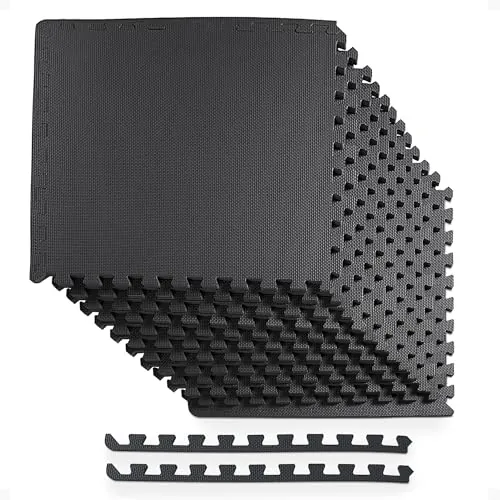
BalanceFrom 24x24 Inch EVA Interlocking Foam Exercise Tile Mat
- Covers 48 square feet per set, giving one pack meaningful home-gym coverage.
Comparison
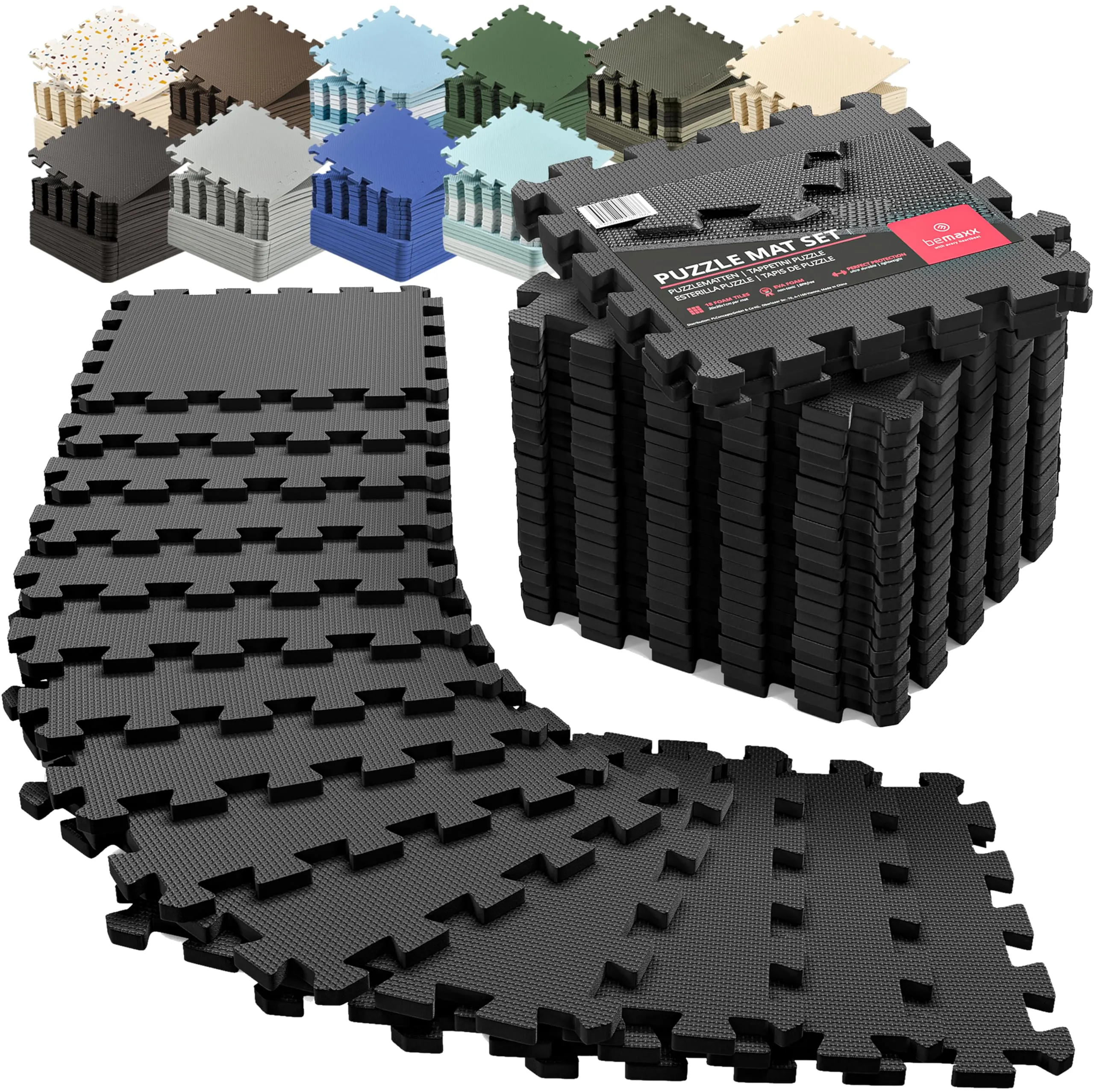
BalanceFrom Exercise Tiles and bemaxx Gym Mats are interlocking EVA foam flooring systems for home workouts, basic equipment protection, and multipurpose activity areas. BalanceFrom provides much broader coverage with larger, thicker listed tiles, while bemaxx is a lower-cost compact set with smaller pieces for more flexible layouts.
#1 Overall Winner
Contender
Choose BalanceFrom for a larger home-gym floor, more cushioning, and fewer seams. Choose bemaxx for a compact equipment area or a flexible, lower-cost starter layout. For movement-heavy workouts, BalanceFrom has the clearer edge, although both mats should be installed on a clean, suitable surface.
Overall winner
Depends on your needs
| Feature | BalanceFrom 24x24 Inch EVA Interlocking Foam Exercise Tile Mat | bemaxx Gym Mats Set | Winner |
|---|---|---|---|
Set coverage |
48 sq ft |
About 18 sq ft |
BalanceFrom 24x24 Inch EVA Interlocking Foam Exercise Tile Mat |
Tile size |
24 x 24 in |
12.6 x 12.6 in |
Depends |
Listed thickness |
0.5 in in product details |
0.4 in |
BalanceFrom 24x24 Inch EVA Interlocking Foam Exercise Tile Mat |
Material |
EVA foam |
EVA foam |
Tie |
Floor-work comfort |
High-density foam with strong cushioning feedback |
Cushioned, but some buyers find it thin |
BalanceFrom 24x24 Inch EVA Interlocking Foam Exercise Tile Mat |
Active-use stability |
Mixed reports of sliding or alignment issues |
Mixed reports of separation during movement |
BalanceFrom 24x24 Inch EVA Interlocking Foam Exercise Tile Mat |
Layout flexibility |
Large modular tiles |
Small modular tiles |
bemaxx Gym Mats Set |
Ease of setup |
Quick interlocking assembly |
Tie |
Cleaning |
Soap and water |
Damp cloth; soap and water described |
Tie |
Portability |
Lightweight modular set |
2.65 lb listed set; modular design |
Tie |
Noise reduction |
Water- and noise-resistant design |
Noise- and impact-dampening claims |
bemaxx Gym Mats Set |
Material disclosure |
EVA; rubber-, plastic-, and metal-free listing |
EVA; BPA-, latex-, lead-, phthalate-, and silicone-free listing |
bemaxx Gym Mats Set |
Buyer feedback |
4.6/5 from 6,167 reviews |
4.3/5 from 21,252 reviews |
BalanceFrom 24x24 Inch EVA Interlocking Foam Exercise Tile Mat |
Price |
$39.99 |
$24.29 |
bemaxx Gym Mats Set |
Value for broader coverage |
More coverage in one set |
Lower-cost compact set |
BalanceFrom 24x24 Inch EVA Interlocking Foam Exercise Tile Mat |
BalanceFrom has a modest advantage for recovery-oriented floor use because the larger, more cushioned listed surface can make gentle stretching and mobility work more comfortable. bemaxx remains useful for a small post-workout stretch area and is easy to place or remove. Neither product is designed to treat soreness or deliver a medical recovery benefit. Their role is limited to providing a cleaner, softer floor surface for low-intensity movement and relaxation routines.
Both products improve the practicality of training on hard floors by adding a configurable, wipe-clean surface for bodyweight work, stretching, and basic home-gym use. BalanceFrom is better for building a general workout zone because one set covers more space and its larger tiles create fewer seams. bemaxx is more appropriate for a small equipment footprint, a short mobility area, or a layout that must fit around furniture. Neither option eliminates the need to consider the demands of heavy equipment or high-impact training.
For general strength-training spaces, BalanceFrom is the better option because its set covers more room for benches, bodyweight exercises, and transitions between movements. Its thicker listed foam profile may also be preferable for floor work. bemaxx can protect flooring beneath lighter, smaller equipment, and reviewers have used it under home-gym equipment, but its smaller coverage and reports of movement-related separation limit its appeal for an open, active strength area. Neither listing provides a specific heavy-drop or high-load rating.
BalanceFrom is the stronger option for home cardio sessions that involve stepping, side-to-side movement, or exercise videos because it offers a larger exercise surface and has stronger feedback for cushioning. bemaxx can suit a small treadmill, bike, or low-movement equipment area, and its noise-dampening design is useful in that role. However, supplied reviews caution that bemaxx’s lightweight tiles may shift or separate during jumping and unweighted active movement. BalanceFrom also has some sliding reports on smooth floors, so surface preparation remains important.
Both mats are suitable for mobility routines, stretching, yoga, and floor-based exercise because EVA foam creates a softer layer than concrete, tile, or hardwood. bemaxx’s smaller puzzle pieces provide useful flexibility when fitting a compact space, while its buyer feedback supports use for light workouts and stretching. BalanceFrom is preferable when you want a larger, less interrupted floor area for longer mobility sessions, lunges, kneeling, or moving between positions. Its larger tiles also mean fewer seams to work around.
Neither product is a recovery device, but both can make post-workout stretching, gentle mobility work, and floor relaxation more comfortable than using a bare hard floor. BalanceFrom has the advantage for users who want more cushioning across a larger area, particularly for kneeling or lying exercises. bemaxx is adequate for a small stretch zone, but its thinner construction offers less padding. These mats support a more comfortable exercise surface; they do not establish specific recovery outcomes.
For their central task of providing protective, cushioned home-gym flooring, BalanceFrom performs more convincingly. Its 48-square-foot set, larger 24-inch tiles, high-density EVA description, and strong buyer feedback make it a practical solution for a broader workout area. bemaxx performs well as a compact floor-protection layer for light exercise and basic equipment, with many buyers noting easy assembly and useful cushioning. Its thinner profile and reports of tiles coming apart during active use are the major performance concerns. Both may need careful placement on smooth floors to limit shifting.
BalanceFrom provides stronger support for consistent home training because it can establish a larger dedicated exercise zone from one set. That helps users perform bodyweight work, mobility drills, and basic cardio movement without continually repositioning a small mat. bemaxx is better for users who only need a small, adaptable section beneath equipment or for a limited-space routine. Its small tiles are flexible, but its lower coverage and stability concerns make it less suited to workouts involving repeated lateral movement, jumping, or broad floor use.
BalanceFrom is the better strength-training floor layer for general home use. Its larger coverage can accommodate more of a workout area, and its thicker listed foam is more suitable for floor exercises than bemaxx’s 0.4-inch tiles. Review feedback includes use under garage-gym equipment, although some foam puncture marks and imperfect joints have been reported. bemaxx can be effective beneath small equipment and for basic workouts, but its thin construction and reports of separation mean it is better treated as compact protective flooring than a robust strength-training platform.
BalanceFrom has the better cardio-training fit because its larger floor area supports stepping, exercise-video routines, and movement in several directions. Its cushioning and traction-focused surface are relevant to indoor floor workouts, though users should address any sliding on smooth concrete. bemaxx is more appropriate under stationary equipment or for lower-movement exercise. Reviews suggest it may stay more secure when equipment weights it down, while jumping and active movement can pull tiles apart. Neither product provides a specialized cardio-machine stability system.
bemaxx is a strong compact choice for stretching, yoga, and mobility because its smaller tiles can be shaped to a limited space and reviewers describe adequate cushioning for light floor work. BalanceFrom is still the better option where space allows: its larger tiles and wider supplied coverage give users more freedom to move through stretches and transitions. The BalanceFrom set’s thicker listed profile also favors kneeling and floor-based movement. Selection should primarily depend on available floor space and desired amount of cushioning.
BalanceFrom has a modest advantage for recovery-oriented floor use because the larger, more cushioned listed surface can make gentle stretching and mobility work more comfortable. bemaxx remains useful for a small post-workout stretch area and is easy to place or remove. Neither product is designed to treat soreness or deliver a medical recovery benefit. Their role is limited to providing a cleaner, softer floor surface for low-intensity movement and relaxation routines.
Both products can add a more comfortable, textured layer over hard floors, but neither removes all workout-floor risks. BalanceFrom lists anti-slip surfaces and earns more favorable support for general stability, yet some users report sliding on smooth concrete and imperfect tile alignment. bemaxx provides detailed material-free disclosures and is described as slip-resistant, but reviews report that tiles can separate during active movement when not held down by equipment. For both, keep seams engaged, use the mats on a clean level surface, and select flooring appropriate to the intensity and equipment used.
BalanceFrom is the more comfortable choice for most floor training. Its high-density EVA construction, half-inch listed thickness, and consistently positive cushioning feedback support use for bodyweight exercise, kneeling, stretching, and workouts on hard flooring. bemaxx is also cushioned and is often described as comfortable for feet and light floor work, but its 0.4-inch thickness draws mixed feedback from buyers seeking more padding. bemaxx is sufficient for compact, lighter sessions; BalanceFrom better supports a more cushioned exercise area.
Both mats are straightforward to use: the puzzle pieces assemble without tools, can be rearranged, and can be wiped clean after workouts. BalanceFrom’s larger pieces allow a large surface to be built with fewer connections, while bemaxx’s smaller pieces make it easier to tailor a layout around equipment or room boundaries. bemaxx’s tile count may require more individual connections for the same coverage. Overall, setup and upkeep are easy with either choice, provided the underlying floor is cleaned first.
BalanceFrom has a slight stability advantage, supported by generally positive feedback for staying in place and its larger tile format. However, the supplied reviews also include reports of sliding on concrete and occasional alignment problems. bemaxx reviewers say the tiles can fit well together, particularly when equipment sits on top, but some report movement or separation during jumping and more active drills. For either system, a thoroughly cleaned, level floor and a layout appropriate to the activity are important.
BalanceFrom lists double-sided anti-slip textured surfaces and receives positive feedback for traction, though this does not fully prevent the assembled mat from sliding on every smooth surface. bemaxx also lists an anti-slip surface and some buyers describe decent grip. Its lower stability feedback during active movement, however, means grip should be considered alongside tile connection strength. BalanceFrom is the more reassuring choice for general floor exercise, while neither system should be treated as slip-proof in all conditions.
Both sets are modular, allowing users to alter the shape of the covered area and disassemble the tiles for storage. bemaxx has the advantage in fine-grained adjustment because its 12.6-inch tiles make it easier to fit around smaller equipment, corners, and irregular spaces. BalanceFrom’s 24-inch tiles are faster for covering a broad rectangular area but offer fewer layout increments. Buyers should measure the intended area before ordering, especially because the supplied sets cover very different total areas.
Both options are more space-efficient than a permanent floor installation because they can be separated and stored when not in use. bemaxx is especially practical in tight spaces: its small tiles, lower total coverage, and light listed set weight make it easy to create a compact footprint. BalanceFrom is the better option for efficiently covering a medium-size home-gym zone with one set, and its larger tiles reduce seam count. The best choice depends on whether compact configurability or broad coverage is the priority.
Both EVA foam systems are intended to reduce some noise and impact transfer compared with direct contact on a hard floor. bemaxx has a slight advantage in this comparison because its listing specifically emphasizes noise- and impact-dampening use and buyers mention reduced noise in play and exercise areas. BalanceFrom also describes a noise-resistant design and provides a cushioned layer. Actual noise reduction will vary with the floor beneath, workout type, footwear, and equipment.
BalanceFrom has the stronger overall build case based on its high-density EVA description, larger tile format, included end borders, and customer feedback describing regular home-gym use over extended periods. Still, it remains foam flooring, and some users report joint alignment inconsistencies or puncture marks. bemaxx is also lightweight EVA puzzle flooring with edge pieces and generally positive initial setup feedback. However, mixed durability reviews and reports of pieces separating under active use make its construction better suited to lighter-duty, compact applications.
BalanceFrom has the better durability outlook from the provided evidence. Buyers report examples of the mats holding up through moderate or heavy home use, although punctures and inconsistent-looking joints can occur. bemaxx has positive feedback for basic floor protection, but reviews are more divided on whether it withstands long-term gym-flooring demands. Its thinner profile is also a practical limitation where equipment, repeated movement, or more demanding use is involved. Neither foam system should be assumed to resist every type of impact or equipment load.
Maintenance is equally simple for both products. BalanceFrom specifies cleaning with soap and water, while bemaxx can be wiped with a damp cloth and is also described as washable with soap and water. Their interlocking construction means individual pieces can be lifted or rearranged if cleaning beneath the surface is necessary. BalanceFrom’s black tiles may show dust and footprints more visibly according to buyer feedback, so routine sweeping of the surrounding floor may be useful.
Both products are portable relative to fixed flooring because they are lightweight EVA puzzle tiles that can be disassembled and moved. bemaxx has the lower listed set weight and smaller individual tiles, which can make it easier to carry and pack into a small storage space. BalanceFrom is also designed for quick repositioning and storage, but its larger tiles and greater supplied coverage create a bigger overall set. Choose bemaxx for frequent small-scale setup changes.
Both listings clearly identify EVA as the primary material and provide basic care information. BalanceFrom lists its mat as rubber-free, plastic-free, and metal-free, while bemaxx gives a more extensive set of material-free disclosures, including BPA-free, latex-free, lead-free, phthalate-free, and silicone-free. bemaxx therefore offers clearer detail for buyers who prioritize those disclosures. These material statements describe the listings and should not be interpreted as a broader safety certification beyond the information provided.
bemaxx has the lower upfront price and is a practical budget entry point for a compact workout corner, light stretching area, or small equipment zone. Its value becomes less clear if you need to cover a large room, since multiple 18-square-foot sets may be needed. BalanceFrom costs more initially but supplies 48 square feet, larger tiles, a thicker listed profile, and stronger buyer satisfaction. For a medium-size home gym, BalanceFrom offers the more complete value; for minimal coverage on a constrained budget, bemaxx can be enough.
The supplied data provides limited evidence for broad brand-reputation conclusions. BalanceFrom has stronger customer satisfaction in this comparison, with positive review patterns around comfort, easy assembly, and home-gym usefulness, although fit concerns appear in some feedback. bemaxx has a much larger displayed review count and offers detailed material-free disclosures plus stated customer support, but its reviews are more mixed on durability, thickness, and stability. Product-level evidence favors BalanceFrom, while neither listing provides extensive independent support information.
BalanceFrom has the stronger displayed average rating and customer satisfaction pattern. Buyers regularly praise its cushioning, large tiles, easy assembly, cleaning, and usefulness over garage or home-gym floors. The recurring negatives are occasional sliding, visible dust, and inconsistent seams. bemaxx has a substantially larger review count and many satisfied users who value its small-space fit, setup, and basic floor protection. However, feedback is more mixed on thinness, expected coverage, durability, color accuracy, and whether the tiles remain connected during active workouts.
Warranty and formal support details are limited in the supplied BalanceFrom information. bemaxx states that it offers 24/7 support and invites dissatisfied customers to contact the support team, but no specific warranty duration, return period, or replacement process is provided here. Buyers who consider post-purchase support important should confirm the current seller policy, return terms, and any warranty coverage before ordering.
Both listings support their basic claims with clear material, tile-size, thickness, coverage, care, and included-component information. Buyer feedback broadly supports easy assembly, cushioning, and routine floor protection for each product. BalanceFrom’s claims are more consistently aligned with its review evidence for a home-gym workout surface, though stability is not universal across floor types. bemaxx’s claims about compact floor protection, cleaning, and light cushioning are broadly supported, but stronger language around secure performance and durability should be treated cautiously because supplied reviews are mixed on tile separation and long-term use.
BalanceFrom is the clearer overall winner. It offers much more coverage per set, larger tiles, a thicker listed profile, strong comfort and setup feedback, and better support for a dedicated home workout floor. Its main limitations are occasional seam alignment issues and reports of sliding on especially smooth surfaces.
bemaxx is still a useful budget-oriented alternative for small spaces. It is lightweight, easily configurable, and provides detailed material-free disclosures, but its thinness, smaller supplied coverage, and mixed reports of tile separation reduce its suitability for active open-floor training. Buy BalanceFrom for a broader, more cushioned home-gym setup; choose bemaxx when compact layout flexibility and lower upfront cost are the deciding factors.

Overall winner
Depends on your needs
The BalanceFrom set is the stronger overall choice for a dedicated workout area because one pack covers more floor space, uses larger tiles, and has a thicker listed profile. The bemaxx set is better suited to a compact, lower-cost setup where small tiles and flexible layout options matter more than broad coverage or extra cushioning.
For most home gyms, BalanceFrom is the more practical option because its supplied set covers 48 square feet and is designed around larger tiles with cushioning for floor exercise. bemaxx can work well under basic equipment or in a small training corner, but its 18-square-foot coverage means larger spaces will require multiple sets.
Both products can provide a protective, cushioned layer for bodyweight work and basic home-gym equipment. BalanceFrom is the better fit for a larger strength-training area because of its broader coverage and thicker listed configuration. Neither listing establishes that the foam is intended as a dedicated heavy-impact lifting platform, so match the flooring to your equipment and training style.
Both mats can support yoga, stretching, and floor-based mobility sessions by adding a softer surface over hard flooring. bemaxx is particularly useful when a compact, adjustable layout is enough. BalanceFrom may suit users who want a larger uninterrupted area with fewer seams and more listed cushioning for kneeling or floor exercises.
bemaxx is the better small-space option because its 12.6-inch tiles make it easier to shape coverage around furniture, equipment, or tight room dimensions. Its starter set also covers less space, which can reduce unnecessary material for a small corner. BalanceFrom can still be stored or reconfigured, but its larger tiles are less granular.
Both products are designed for straightforward cleaning. BalanceFrom specifies water and soap, while bemaxx specifies wiping with a damp cloth and also describes soap-and-water cleaning in its product details. Their EVA foam construction is intended to be wipeable, but seams should be checked and cleaned as needed after sweaty workouts or spills.
Neither mat has uniformly positive stability feedback in every setting. BalanceFrom buyers generally appreciate its stability, although some report sliding on smooth concrete or imperfect joins. bemaxx reviews note that the tiles can work well when weighted by equipment or used for seated and lying exercise, but may separate during more active movement.
Value depends on the size of the area you need to cover. bemaxx has the lower purchase price and can be a sensible starter option for a small zone. BalanceFrom costs more but includes considerably more coverage per set, along with larger tiles and a thicker listed profile, making it the more complete value for a medium-size home-gym floor.
Check our rankings and expert guides to find the best fitness products for your goals.