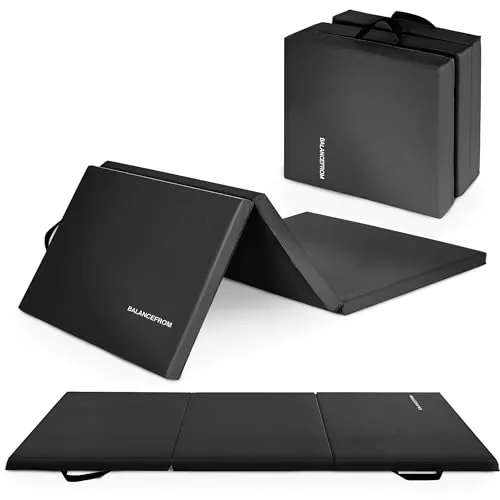
#1 Overall Winner
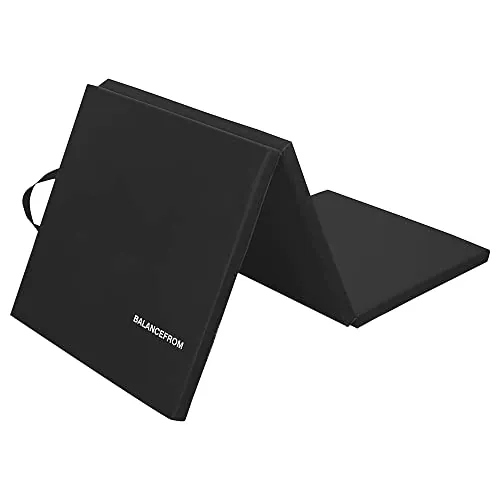
BalanceFrom 6x2 Feet 3-Panel Folding Gymnastics Mat
- Firm 2-inch EPE foam provides substantially more cushioning for floor exercises than a thin flooring layer.
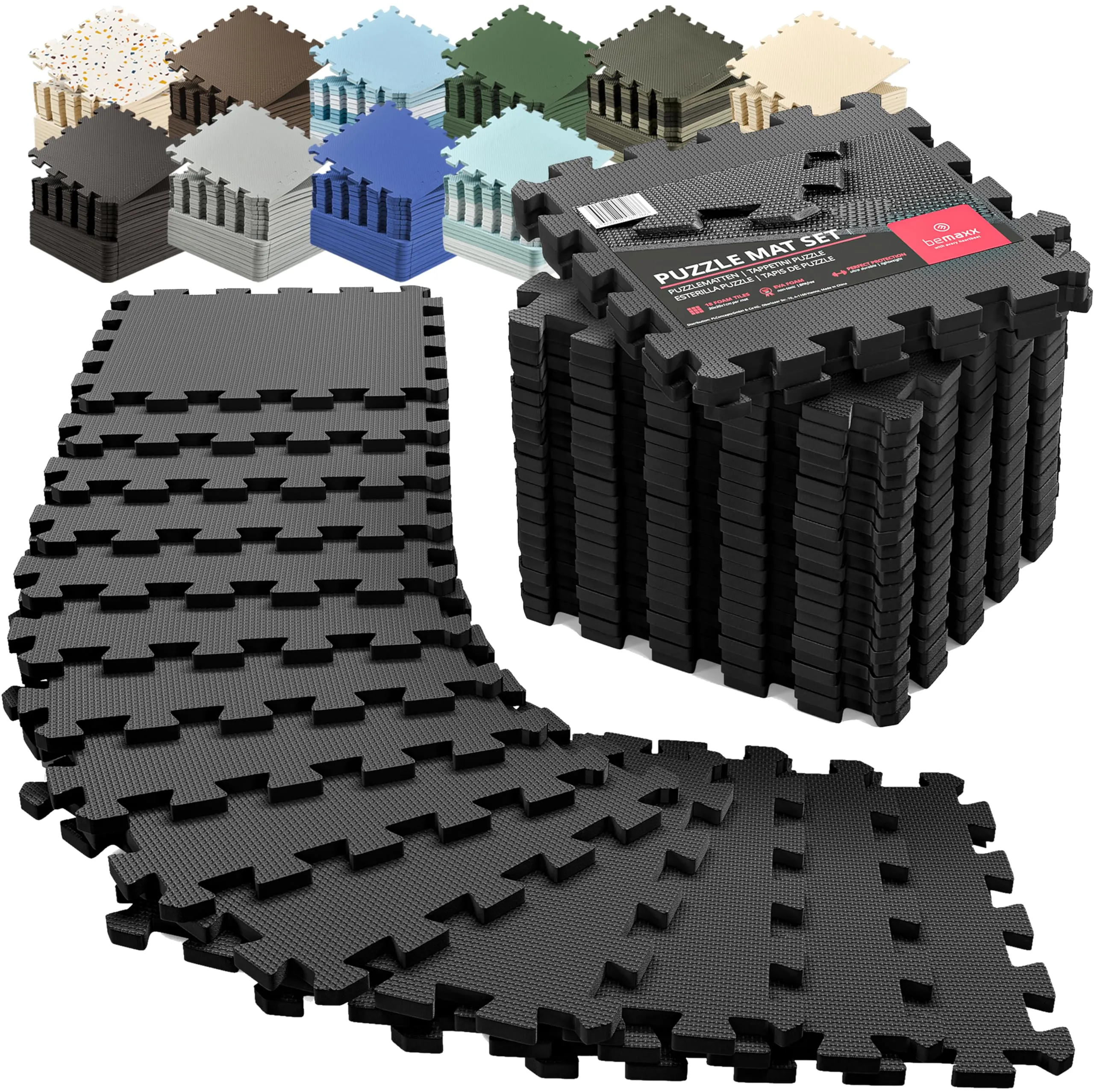
Comparison
The BalanceFrom Folding Gymnastics Mat and bemaxx Gym Mats both improve home workout surfaces, but they serve different roles. BalanceFrom is a thick, portable mat for floor exercise, while bemaxx is a thinner interlocking tile system for configurable coverage and equipment-floor protection. For yoga, Pilates, stretching, and cushioned bodyweight work, BalanceFrom has the clearer advantage. For building out a small gym zone under equipment, bemaxx is the more adaptable option.
#1 Overall Winner
Contender
Choose BalanceFrom for a thick, firm, portable mat for floor workouts, mobility work, and comfort on hard surfaces. Choose bemaxx if you need a low-profile, adjustable coverage area under basic home-gym equipment. BalanceFrom is more rounded for direct exercise use; bemaxx is more focused on flooring.
Overall winner
Depends on your needs
| Feature | BalanceFrom 6x2 Feet 3-Panel Folding Gymnastics Mat | bemaxx Gym Mats Set 18 pcs EVA Interlocking Foam Floor Tiles | Winner |
|---|---|---|---|
| Primary role | Thick personal exercise mat |
Configurable protective floor tiles |
Depends |
| Thickness | 2 inches |
0.4 inches |
BalanceFrom 6x2 Feet 3-Panel Folding Gymnastics Mat |
| Workout surface | Fixed 6-by-2-foot mat |
About 18 square feet, configurable |
Depends |
| Mobility and flexibility work | Firm, thick cushioning |
Light floor cushioning |
BalanceFrom 6x2 Feet 3-Panel Folding Gymnastics Mat |
| Equipment-floor protection | Limited fixed strip |
Expandable tile coverage |
bemaxx Gym Mats Set 18 pcs EVA Interlocking Foam Floor Tiles |
| Storage | Tri-fold with carrying handles |
Separate lightweight tiles |
BalanceFrom 6x2 Feet 3-Panel Folding Gymnastics Mat |
| Active-movement stability | Single continuous surface |
Tiles may separate in active use |
BalanceFrom 6x2 Feet 3-Panel Folding Gymnastics Mat |
| Cleaning | Soap-and-water vinyl surface |
Wipe-clean EVA tiles |
Tie |
| Portability | 3 pounds with handles |
2.65 pounds, modular pieces |
BalanceFrom 6x2 Feet 3-Panel Folding Gymnastics Mat |
| Material disclosure | Lead-free, non-toxic vinyl |
EVA with multiple material-free disclosures |
bemaxx Gym Mats Set 18 pcs EVA Interlocking Foam Floor Tiles |
| Buyer feedback | Higher rating and stronger comfort feedback |
Positive but more mixed on thickness and durability |
BalanceFrom 6x2 Feet 3-Panel Folding Gymnastics Mat |
| Value focus | Thick, portable exercise padding |
Lower-cost configurable floor coverage |
Depends |
BalanceFrom is the preferable choice for gentle floor-based recovery routines such as relaxed stretching and mobility work. Its thicker foam is more likely to reduce the harsh feel of a hard floor during prolonged kneeling, seated, or lying positions. bemaxx can create a modestly cushioned area for these activities, but its main strength is floor coverage rather than comfort. Buyer comments support BalanceFrom’s use for regular stretching and yoga, while neither listing provides evidence for broader recovery outcomes beyond surface comfort.
BalanceFrom is designed for direct training: unfold it, exercise on it, then fold it away. Its thick, firm foam is more appropriate for floor routines where knees, hips, elbows, or back contact the ground. bemaxx serves training more indirectly by creating a defined surface under equipment or across a small workout zone. It can support light exercises and stretching, but its thinner segmented construction is less suited to tumbling, repeated kneeling, or dynamic drills. For a personal workout mat, BalanceFrom is the clearer option; for a modular home-gym base, bemaxx has the better format.
For bodyweight strength work such as planks, sit-ups, and floor-based core sessions, BalanceFrom offers more protection from hard flooring and more consistent support across one continuous surface. bemaxx has an advantage for strength setups that involve placing a bench or other small equipment on a protected area, because the tiles can be expanded or shaped around the setup. Neither listing establishes suitability for heavy lifting or repeated dropping of weights. The practical split is personal floor exercise for BalanceFrom and light equipment-area protection for bemaxx.
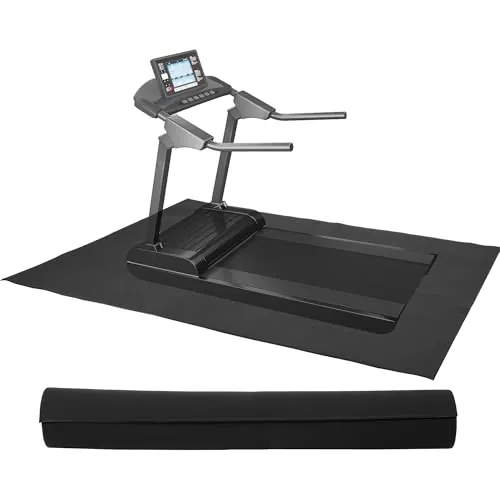
Neither product is a dedicated cardio machine mat, but bemaxx is the more relevant option for placing beneath a treadmill or bike because its tiles can cover a broader, configurable footprint. Reviews specifically mention treadmill and weight-bench use. BalanceFrom can provide a comfortable surface for low-impact aerobic floor routines in its fixed 6-by-2-foot area, but it is not designed to create a large equipment base. For equipment-based home cardio, bemaxx is the more suitable choice; for floor cardio, it depends on movement space.
BalanceFrom is better suited to mobility, yoga, Pilates, and stretching because its firm 2-inch foam provides noticeably more support for kneeling and seated positions. The continuous 6-foot length also gives one person a predictable space for linear stretches. bemaxx can create a larger or differently shaped area for light stretching, and its tiles offer modest cushioning, but the 0.4-inch thickness is less protective for pressure-sensitive floor positions. Choose BalanceFrom for comfort-focused mobility sessions and bemaxx when adjustable area coverage is more important.
For gentle post-workout stretching and floor-based mobility routines, BalanceFrom is the stronger recovery-oriented surface because its thicker padding can make hard floors more comfortable. Buyer feedback repeatedly highlights knee comfort and firm cushioning. bemaxx can still provide a cleaner, less harsh layer for light stretching, but it is primarily a floor-protection product and its thinner construction offers less padding. Neither product should be viewed as a treatment tool; their role is limited to providing a more comfortable exercise surface.
Both products perform their intended roles reasonably well, but their roles are distinct. BalanceFrom’s firm high-density foam, 2-inch thickness, and continuous vinyl surface support stable, comfortable floor exercise, with reviews citing yoga, cartwheels, planks, and general home workouts. bemaxx performs best as a configurable protective layer for small equipment areas and light exercise, with buyers often noting simple assembly and useful floor protection. Its limitations become more apparent during active unweighted movement, where some reviewers report separating tiles. BalanceFrom is the stronger all-purpose exercise surface; bemaxx is more task-specific flooring.
BalanceFrom lowers the friction of regular floor training because it unfolds quickly, offers substantial cushioning, and folds away with handles after use. That makes it approachable for beginners and practical for consistent yoga, Pilates, stretching, and bodyweight routines. bemaxx supports a more permanent or semi-permanent home-gym layout by defining and protecting a workout area. Its modular design can accommodate changing room layouts, but assembly and potential tile movement make it less convenient for fast, high-movement sessions. BalanceFrom better supports direct exercise consistency; bemaxx better supports a basic equipment zone.
BalanceFrom provides stronger support for floor-based strength work, particularly exercises involving planks, push-ups, core training, and kneeling positions. Its thick, dense foam is repeatedly described as supportive rather than overly soft. bemaxx is more useful when the strength-training priority is protecting flooring beneath a bench or small equipment, and its modular tiles can be expanded with additional sets. However, the supplied information does not establish that either option is intended for heavy impact from dropped weights. For direct bodyweight strength work, BalanceFrom leads.
bemaxx has the stronger cardio-equipment fit because its interlocking tiles can be arranged under a treadmill or bike, and buyer feedback includes this type of setup. The tiles also aim to dampen light impact and noise. BalanceFrom is better viewed as a surface for floor-based aerobic routines, not as full equipment flooring; its 2-foot width may limit movement variety. Neither option includes machine-specific anchoring or a large single-piece equipment footprint. Choose bemaxx for a small cardio-equipment area and BalanceFrom for low-impact floor sessions.
BalanceFrom has the more convincing mobility and flexibility profile. Its 2-inch, firm foam and 6-foot length create a comfortable surface for floor stretches, yoga, Pilates, and cool-down work, while reviews frequently reference knee comfort. bemaxx offers a versatile layout for stretching zones but has much less thickness, and joins between tiles may be noticeable in certain positions. The interlocking design can be helpful if a wider area is needed, but BalanceFrom is the more comfortable and straightforward option for one-person mobility practice.
BalanceFrom is the preferable choice for gentle floor-based recovery routines such as relaxed stretching and mobility work. Its thicker foam is more likely to reduce the harsh feel of a hard floor during prolonged kneeling, seated, or lying positions. bemaxx can create a modestly cushioned area for these activities, but its main strength is floor coverage rather than comfort. Buyer comments support BalanceFrom’s use for regular stretching and yoga, while neither listing provides evidence for broader recovery outcomes beyond surface comfort.
Both products provide relevant material and surface considerations, but the safe choice depends on use. BalanceFrom lists a non-toxic, lead-free vinyl surface and firm foam; its continuous construction avoids gaps between tiles during floor movements. bemaxx lists EVA material with BPA-free, latex-free, lead-free, phthalate-free, and silicone-free disclosures, and its surface is described as slip resistant. However, reports of tiles separating during active exercise are important to consider. Neither supplied listing establishes suitability for heavy dropped weights, so users should match the surface to the intended activity.
BalanceFrom is clearly more comfort-oriented. Its 2-inch firm foam is frequently praised for cushioning knees and making floor exercise more tolerable without feeling excessively soft. The bemaxx tiles provide lighter cushioning that buyers find comfortable for feet, bodyweight work, and light floor activity, but reviews also note their thin profile. If comfort during yoga, Pilates, planks, kneeling, or stretching is the key requirement, BalanceFrom is the better match. bemaxx is adequate where floor protection and modest cushioning are sufficient.
Both products are simple to use, but in different ways. BalanceFrom is ready after unfolding and folds into three panels with integrated handles when the session ends. Its wipe-clean vinyl cover also keeps routine care simple. bemaxx requires initial tile assembly, but buyers generally say the pieces fit together easily and edge pieces create a tidy finish. The modular format is useful when adapting to a room, although rearranging or securing sections may add friction. For immediate workout use, BalanceFrom is easier; for custom layout, bemaxx is more flexible.
BalanceFrom benefits from being one continuous mat, and buyers report that it stays in place in at least some low-pile carpet use. Its firm foam also provides a predictable platform for controlled floor work. bemaxx tiles can fit tightly and remain stable under equipment, but reviews identify a meaningful caveat: pieces may pull apart during jumping or active movement when they are not held down. BalanceFrom is therefore the safer bet for movement on the surface, while bemaxx is more stable when used as an anchored equipment base.
BalanceFrom’s vinyl surface is described in buyer feedback as non-slip, though the supplied listing does not provide detailed traction specifications. bemaxx explicitly lists an anti-slip surface, and some buyers describe decent grip. However, surface grip is only part of stability: bemaxx tile joins may separate during active movement. For controlled floor routines, BalanceFrom’s single-piece construction gives it a practical edge; bemaxx is more dependable where equipment helps keep the tiles in place.
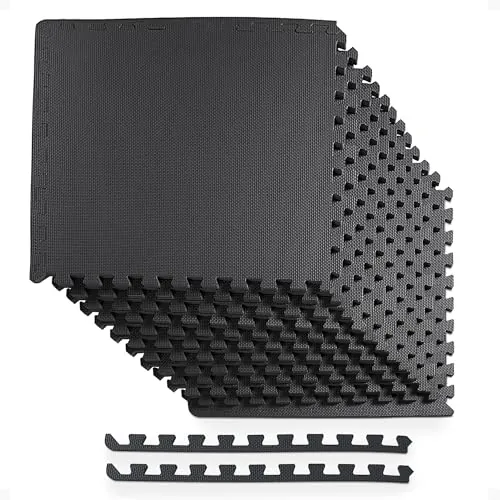
bemaxx is the clear winner for adjustability because 18 interlocking tiles can be arranged to suit a small gym zone, equipment footprint, garage, or play area. Additional sets can also be used to increase coverage. BalanceFrom has a fixed 6-by-2-foot open size and only changes form for storage through its tri-fold design. That fixed format is convenient for individual exercise but does not adapt to different room shapes. Choose bemaxx when layout flexibility is essential.
BalanceFrom is excellent for temporary workout spaces: it opens to a 6-by-2-foot surface and folds to 24 by 24 by 6 inches for storage. bemaxx is efficient for making use of an irregular or defined floor area because the tiles can be configured rather than left as one fixed rectangle. However, once assembled, its intended use is closer to a laid-out flooring zone. BalanceFrom is better for storing away after each session; bemaxx is better for tailoring ongoing floor coverage.
bemaxx has the clearer noise-management role. Its EVA tiles are marketed as impact- and noise-dampening, and buyers mention reduced noise from jumping, running, and equipment-area use. BalanceFrom’s thick foam may soften the feel of bodyweight floor contact, but the supplied listing does not make a specific noise-reduction claim. For a small gym area where reducing equipment vibration or light impact noise is a priority, bemaxx has the better-supported use case.
BalanceFrom has the stronger build case for direct exercise use. It combines dense foam with an 18-ounce vinyl cover, stitched panels, and carrying handles; buyers often describe it as sturdy and well made. Still, corner scuffs and fold-seam wear have been reported. bemaxx uses lightweight EVA tiles with interlocking edges and included border pieces. This is a practical construction for adaptable coverage, but it is inherently more dependent on secure tile joins. Reviews are positive about fit and finish in many cases, though long-term robustness is less consistently praised.
BalanceFrom receives more consistently positive durability feedback, including reports of maintaining its shape through repeated use. Its vinyl cover and firm foam appear well suited to regular indoor floor exercise, although corners and folding seams can be vulnerable if stored roughly or heavily used. bemaxx durability feedback is more divided: some users find the tiles sturdy enough for their intended purpose, while others say they are not durable enough for gym flooring. For recurring direct exercise use, BalanceFrom has the more reliable evidence; bemaxx is best treated as lighter-duty protective flooring.
Both options are low-maintenance. BalanceFrom specifies washing its non-absorbent vinyl surface with soap and water, and customers frequently describe it as easy to clean. bemaxx recommends wiping the EVA tiles with a damp cloth and describes them as washable and water-resistant. BalanceFrom has fewer joins, so routine cleaning is likely more direct. bemaxx may require attention around interlocking edges and beneath tiles if used as a semi-permanent floor layer. Neither listing provides special maintenance requirements such as lubrication or treatments.
BalanceFrom is the stronger portable option despite weighing slightly more. At 3 pounds, it folds into a single compact package and includes carrying handles, allowing it to be moved or stored without disassembly. The 2.65-pound bemaxx set is lightweight, but consists of multiple separate tiles and edge pieces, making it better suited to transport for setup rather than frequent carry-and-go use. For taking a mat between rooms or locations, BalanceFrom is more convenient.
For non-consumable products, material disclosure is the relevant comparison. BalanceFrom identifies firm EPE foam and a non-toxic, lead-free, puncture-resistant vinyl surface. bemaxx identifies EVA foam and provides a broader set of material-free disclosures: BPA-free, latex-free, lead-free, phthalate-free, and silicone-free. bemaxx therefore gives more detailed supplied information about excluded materials, while BalanceFrom offers clear basic information about its foam, vinyl cover, and cleaning method. Neither product provides a full technical material breakdown beyond the listing details.
BalanceFrom offers stronger value when the goal is a durable, thick, ready-to-use exercise mat. The supplied price includes dense 2-inch cushioning, a washable cover, handles, and foldable storage, while buyer feedback is especially favourable on comfort and long-term usefulness. bemaxx costs less and delivers roughly 18 square feet of configurable coverage, which can be valuable for protecting a small equipment area. However, mixed reports on tile durability, thinness, and separation mean its value is most convincing for lighter-duty flooring rather than demanding active exercise. The better buy depends on the required role.
BalanceFrom has stronger confidence signals in the supplied data, driven by a much larger body of highly favourable buyer feedback and repeated praise for practical qualities such as cushioning, storage, and cleaning. bemaxx has a sizeable review base and clear product-use information, including material-free disclosures and stated customer support availability. However, feedback is more mixed on durability, exact size, colour, and tile performance during movement. This comparison supports greater product-level confidence in BalanceFrom, while bemaxx remains a viable option for its more specialised flooring purpose.
BalanceFrom has more consistently favourable customer sentiment. Its buyers repeatedly praise firm cushioning, thick padding, comfort for knees, foldability, easy cleaning, and value, with several reports of continued use over time. The main recurring criticisms concern corner damage, fold-seam wear, and occasional dimension discrepancies. bemaxx also receives praise for simple assembly, floor protection, light cushioning, and flexible layout. However, buyer feedback is more divided on thickness, durability, value, size expectations, and whether tiles stay connected during active movement. BalanceFrom has the stronger satisfaction profile overall.
Warranty details are not provided for the BalanceFrom mat. bemaxx states that a 24/7 support team is available and invites customers to contact the company if they are not satisfied, but the supplied information does not define a warranty length, return period, or replacement process. Buyers who place high importance on after-sales coverage should confirm current terms directly before purchasing either option.
BalanceFrom’s core claims are reasonably aligned with the listed specifications and buyer feedback: its thickness, tri-fold form, carrying handles, washable vinyl surface, and use for floor exercise are all directly described. Reviews broadly support comfort and portability, though they also identify seam and corner wear concerns. bemaxx’s product details support its tile count, dimensions, EVA material, edge pieces, and configurable coverage. Reviews support basic floor protection and easy assembly, but they qualify broader durability and stability claims by reporting thinness and tile separation. Neither product’s performance should be extended beyond the stated use cases.
BalanceFrom wins as the better all-round exercise mat. Its main strengths are thick, firm cushioning, straightforward fold-away storage, easy cleaning, and highly consistent buyer feedback for comfort and home training. Its main limitations are the narrow fixed width and occasional reports of seam or corner wear.
bemaxx wins for modular home-gym flooring. Its puzzle tiles cover a larger configurable area and are better suited to protecting a floor under light equipment, with useful material disclosures and simple assembly. Its main limitations are the thin profile, mixed durability feedback, and reports that tiles can separate during active movement. Pick BalanceFrom for direct floor exercise and bemaxx for adaptable flooring coverage.
Overall winner
Depends on your needs
The BalanceFrom is the stronger choice for a cushioned personal workout surface because it is much thicker, folds for storage, and receives especially positive feedback for comfort. The bemaxx set is the better fit when configurable coverage and protection beneath basic home-gym equipment matter more than deep padding.
The BalanceFrom is generally better for yoga and Pilates floor work because its firm 2-inch foam provides more cushioning for knees and other pressure points. The bemaxx tiles can support light stretching, but their thinner build is intended more for floor coverage and equipment protection than a deeply cushioned individual practice mat.
Yes. The bemaxx tiles are specifically positioned for small home-gym zones and beneath equipment such as treadmills and bikes. Buyer feedback also mentions use under a treadmill and weight bench. Measure the intended area first, as one set provides about 18 square feet of coverage.
Both can work in limited spaces, but they solve storage differently. The BalanceFrom mat folds to a compact square package with handles, making it simple to put away after a session. bemaxx tiles are more useful when you want to tailor a fixed small-area layout, though they require assembly and floor space while in use.
Both products are designed for simple cleaning. BalanceFrom specifies a non-absorbent vinyl surface that can be washed with soap and water. bemaxx lists damp-cloth cleaning and describes its EVA tiles as washable and water-resistant. Cleaning the joins between puzzle tiles may take more attention than wiping one continuous folding mat.
The BalanceFrom provides clearly greater cushioning: it is listed at 2 inches thick versus 0.4 inches for the bemaxx tiles. Reviews often describe the BalanceFrom surface as firm but comfortable for knees and floor exercise. bemaxx offers lighter cushioning that reviewers find useful for bodyweight work and floor protection.
Stability depends on how they are used. Some buyers say the tiles fit together well and remain in place, particularly when equipment sits on them. Others report that sections can separate during jumping or active movement when not weighted down. They are therefore a better match for controlled floor use and equipment zones than fast lateral drills.
BalanceFrom feedback is broadly positive on durability, although some users mention corner damage and eventual wear at fold seams. bemaxx feedback is more mixed: some buyers find the tiles durable for their intended use, while others question their longevity as gym flooring. Neither product includes warranty details in the supplied information.
Check our rankings and expert guides to find the best fitness products for your goals.