TrainingRanker
Menu
BalanceFrom Yoga Mat vs 10x4 Folding Gymnastics Mat

Comparison

BalanceFrom Yoga Mat vs 10x4 Folding Gymnastics Mat

The BalanceFrom Yoga Mat is a compact, one-inch foam mat built around personal comfort for yoga, stretching, and floor workouts. The BalanceFrom 10x4 Folding Gymnastics Mat is a much larger, firmer two-inch pad designed for broader training uses such as tumbling, Pilates, martial arts, and home exercise. Choose the Yoga Mat for low-cost, roll-up convenience and soft cushioning; choose the Folding Gymnastics Mat for surface area, stability, impact-oriented practice, and wipe-clean maintenance.

Expert tested Data driven Unbiased reviews Updated 2 August 2026
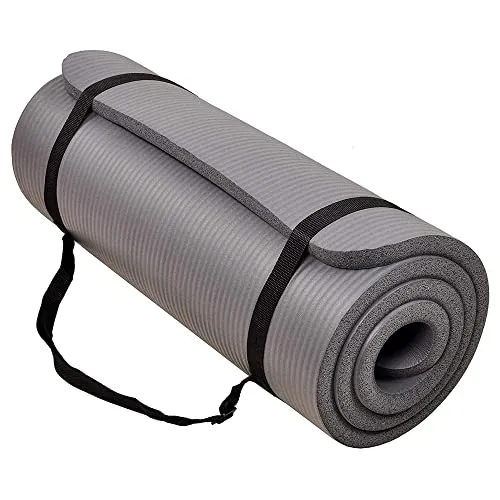
BalanceFrom Yoga Mat, 1-Inch Extra Thick High Density Exercise Mat

#1 Overall Winner

BalanceFrom Yoga Mat, 1-Inch Extra Thick High Density Exercise Mat

91/100
  • One-inch foam construction provides substantial cushioning for floor exercises.
View review
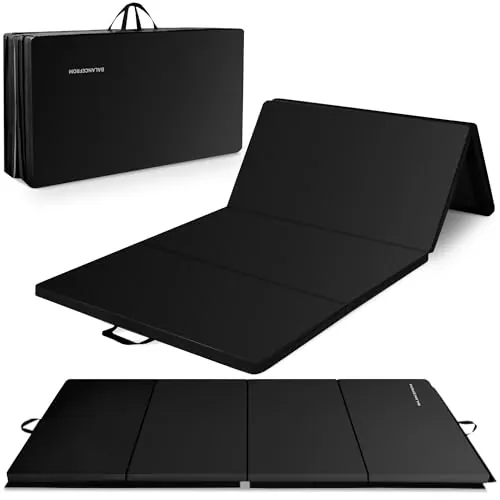
BalanceFrom 10x4 Feet 4-Panel Folding Gymnastics Mat

Contender

BalanceFrom 10x4 Feet 4-Panel Folding Gymnastics Mat

91/100
  • Large 10-by-4-foot training surface supports broader floor-work sessions.
View review

Quick verdict

Choose the BalanceFrom Yoga Mat if you want a soft, portable, lower-cost mat for personal floor workouts and joint-friendly cushioning. Choose the BalanceFrom Folding Gymnastics Mat if you need a large, firm, wipe-clean surface for tumbling, martial arts, Pilates, or a more complete home training area. For general-purpose home gym flooring, Product B has the broader capability.

Overall winner

Depends on your needs

At-a-glance comparison

Feature BalanceFrom Yoga Mat, 1-Inch Extra Thick High Density Exercise Mat BalanceFrom 10x4 Feet 4-Panel Folding Gymnastics Mat Winner
Primary format

Roll-up foam mat

Four-panel folding vinyl mat

Depends
Dimensions

71 x 24 x 1 inches

120 x 48 x 2 inches

BalanceFrom 10x4 Feet 4-Panel Folding Gymnastics Mat
Weight

1 kilogram

15 pounds

BalanceFrom Yoga Mat, 1-Inch Extra Thick High Density Exercise Mat
Surface material

Foam

Vinyl over firm foam padding

Depends
Floor-work comfort

Very thick, cushioned personal mat

Firm, impact-cushioning pad

Depends
Stability

Non-slip surfaces; thickness may feel wobbly in some poses

Non-slip vinyl surface and heavier construction

BalanceFrom 10x4 Feet 4-Panel Folding Gymnastics Mat
Mobility and Pilates space

Personal-width practice area

Large 10-by-4-foot practice area

BalanceFrom 10x4 Feet 4-Panel Folding Gymnastics Mat
Gymnastics and martial arts use

General floor exercise use

Listed for tumbling, martial arts, and light aerobics

BalanceFrom 10x4 Feet 4-Panel Folding Gymnastics Mat
Storage

Rolls up with included strap

Folds into four panels

BalanceFrom Yoga Mat, 1-Inch Extra Thick High Density Exercise Mat
Cleaning

Hand wash only

Soap-and-water cleaning

BalanceFrom 10x4 Feet 4-Panel Folding Gymnastics Mat
Expandability

No connection feature listed

Hook-and-loop edges connect multiple mats

BalanceFrom 10x4 Feet 4-Panel Folding Gymnastics Mat
Price

Lower listed price

Higher listed price

BalanceFrom Yoga Mat, 1-Inch Extra Thick High Density Exercise Mat
Durability evidence

Mixed reports, including some cuts or tears

Vinyl, reinforced stitching, and consistently sturdy feedback

BalanceFrom 10x4 Feet 4-Panel Folding Gymnastics Mat

Detailed comparison

Recovery Support

Product A has the edge for simple recovery-oriented floor routines because reviews repeatedly emphasize cushioning for knees and other pressure points. It is easy to bring out for gentle stretching after training and to roll away afterward. Product B is useful when recovery work includes more floor space, longer mobility sequences, or shared practice, and its surface cleans easily. Both are exercise surfaces rather than recovery treatments, so expectations should remain focused on comfort and routine practicality.

Training Use

Product A is best viewed as a personal comfort layer for daily floor exercise. It fits mobility sessions, ab work, bodyweight movements, and low-intensity yoga without taking over a room. Product B functions more like portable training flooring: its wide, padded surface better accommodates movement drills, paired practice, tumbling, martial arts, and workouts requiring room to reposition. Both can support home routines, but Product B has a wider training range, while Product A has less setup friction for a quick solo session.

Strength Training

Neither mat supplies resistance, but each can support bodyweight strength work by making floor contact more comfortable. Product A is especially suitable for sit-ups, planks, glute work, and kneeling exercises where cushioning is the priority. Product B gives more room for burpees, kettlebell-adjacent floor drills, and movement-based sessions, with a firmer and more stable base. For conventional loaded lifting, neither listing establishes that the mat should be used as protective flooring beneath heavy equipment.

Cardio Training

Product B is the more practical option for light aerobics and dynamic conditioning because it offers a much larger, more stable surface and is explicitly listed for aerobics. Its two-inch firm padding can make floor-based conditioning more comfortable, although it is still primarily a mat rather than dedicated cardio equipment. Product A can support low-impact bodyweight circuits and warm-ups, but its narrower dimensions and softer feel are less suitable for movements requiring broad lateral space.

Mobility & Flexibility

Both mats work well for mobility, stretching, yoga, and Pilates, but they emphasize different benefits. Product A offers soft one-inch cushioning in a compact form, making it appealing for personal flexibility routines on hard floors. Product B supplies four feet of width and ten feet of length, useful for expansive Pilates sequences, longer stretch sessions, or instructors and families needing more usable space. Users who prioritize a traditional roll-up mat format may prefer Product A; users prioritizing room and firmness should favor Product B.

Recovery

For gentle post-workout stretching and floor-based mobility, both mats can make hard surfaces more comfortable. Product A has the advantage for users who want pronounced cushioning under knees, elbows, hips, or the back during a simple recovery routine. Product B offers a larger, firmer platform for extended mobility work or shared use. Neither product should be treated as a medical or therapeutic device; their role is to provide a more comfortable exercise surface.

Performance

Both products appear effective within their intended roles. Product A performs strongly as a thick personal exercise mat: supplied reviews consistently highlight cushioning, comfort, ease of rolling, and usefulness on hard floors. Its performance limitation is that the thicker foam can feel less steady for certain balance movements, and durability reports are not entirely consistent. Product B performs more broadly as a large floor-training pad. Its firm two-inch padding, non-slip vinyl surface, and large footprint better support dynamic practice, while reviews describe reliable impact absorption and stable placement.

Training Support

Product A lowers the barrier to consistent floor training because it is light, quick to unroll, and easy to store with its included strap. It is particularly useful for repeatable home routines built around core work, flexibility, and low-impact bodyweight exercise. Product B provides greater scope for progression in floor-based training because it accommodates larger movement patterns and can connect to additional mats. It is a better fit for dedicated home gym, gymnastics, or martial arts routines, but requires more storage space and a higher initial spend.

Strength Training Analysis

For bodyweight strength sessions, Product A's cushioning is useful for planks, sit-ups, glute bridges, and kneeling movements, especially on hard floors. Product B offers more usable area and a firmer base for floor circuits, agility-style drills, and movements requiring repositioning. Product B is therefore the stronger training platform where space allows, while Product A is the better portable accessory for personal mat work. Neither product has a stated role as a base for heavy weights or loaded strength equipment.

Cardio Training Analysis

Product B has the clearer cardio and conditioning advantage because the listing specifically includes light aerobics and its 10-by-4-foot footprint provides more room for dynamic bodyweight movement. The heavier, non-slip construction may also help it stay positioned during active sessions. Product A can support low-impact conditioning and warm-ups, but it is primarily a personal exercise mat. Its narrower width and softer foam make it less appropriate for higher-movement routines.

Mobility & Flexibility Analysis

Product B is the better choice for spacious Pilates, yoga, and mobility sessions because it offers considerably more length and width while maintaining firm padding. Product A remains highly competitive for individual stretching and floor mobility, particularly when soft cushioning is the main concern. Its foam surface and one-inch depth can be more comfortable for pressure-sensitive positions, but the extra thickness may compromise confidence in balance-focused poses for some users. The best option depends on whether room or softness matters more.

Recovery Support

Product A has the edge for simple recovery-oriented floor routines because reviews repeatedly emphasize cushioning for knees and other pressure points. It is easy to bring out for gentle stretching after training and to roll away afterward. Product B is useful when recovery work includes more floor space, longer mobility sequences, or shared practice, and its surface cleans easily. Both are exercise surfaces rather than recovery treatments, so expectations should remain focused on comfort and routine practicality.

BalanceFrom Yoga Mat, 1-Inch Extra Thick High Density Exercise Mat

Pros

  • One-inch foam construction provides substantial cushioning for floor exercises.
  • Double-sided non-slip surfaces are specified for traction.
  • Lightweight, rollable format with an included carrying strap.
  • Well suited to kneeling, stretching, core work, and home exercise on hard floors.
  • Strong buyer feedback for comfort, cushioning, and simple storage.

Cons

  • The narrower 24-inch width offers less room for movement than the folding mat.
  • Extra foam thickness can feel less steady for some balance-focused yoga poses.
  • Some buyers report cuts on arrival or tearing over time.
  • Hand-wash-only care may be less convenient than a wipe-clean vinyl surface.
BalanceFrom Yoga Mat, 1-Inch Extra Thick High Density Exercise Mat

BalanceFrom 10x4 Feet 4-Panel Folding Gymnastics Mat

Pros

  • Large 10-by-4-foot training surface supports broader floor-work sessions.
  • Two-inch firm padding and a vinyl surface suit impact-oriented practice.
  • Four-panel folding design, carrying handles, and edge hook-and-loop strips add versatility.
  • Vinyl surface is moisture resistant and can be cleaned with soap and water.
  • Buyer feedback frequently praises sturdiness, stability, storage, and multi-activity use.

Cons

  • It costs substantially more and is designed for a more specialized, larger-area role.
  • At 15 pounds, it is less convenient to carry than the roll-up mat.
  • The firm vinyl-and-foam construction may not suit users wanting a softer, more flexible yoga mat.
  • A small number of reviews mention a new-product odor.
BalanceFrom 10x4 Feet 4-Panel Folding Gymnastics Mat

Final verdict

The BalanceFrom Folding Gymnastics Mat is the more capable all-around training surface. It stands out for its large footprint, firm two-inch padding, stable vinyl construction, easy cleaning, folding storage, and ability to join with other mats. Its limitations are a higher price, greater bulk, and a more specialized feel than a typical yoga mat.

The BalanceFrom Yoga Mat is the better focused purchase for everyday personal floor workouts. Its main strengths are deep cushioning, light weight, simple roll-up storage, and a much lower listed cost. Its main limitations are the narrower training area, occasional balance instability from thick foam, and mixed durability reports. Choose based on training scope: Product A for personal comfort and portability, Product B for larger-area floor practice.

Overall winner

Depends on your needs

Frequently asked questions

Which is better, the BalanceFrom Yoga Mat or the BalanceFrom Folding Gymnastics Mat?

Neither is universally better. The one-inch BalanceFrom Yoga Mat is the more practical choice for individual floor workouts, easy rolling, and lower-cost cushioning. The 10-by-4-foot Folding Gymnastics Mat is better suited to users who need a larger, firmer, more protective surface for gymnastics, martial arts, or shared home training.

Which mat is better for yoga and stretching?

Both can work for yoga and stretching, but the better fit depends on the session. The Yoga Mat is easier to roll out for a personal routine and is strongly focused on cushioning. The Folding Gymnastics Mat supplies much more room and a firm base, although its larger size and vinyl surface make it less like a conventional yoga mat.

Which product is better for home gymnastics or martial arts?

The Folding Gymnastics Mat is the clearer choice. Its large surface, two-inch padding, firm construction, and connectable edges are specifically relevant to tumbling and martial arts practice. Reviews also describe use for gymnastics, Brazilian jiu-jitsu, and training on concrete or basement floors. It should still be matched to the activity and appropriate supervision needs.

Which BalanceFrom mat is easier to store in a small home?

The Yoga Mat is easier to store for most small-space users because it weighs about one kilogram, rolls up, and includes a strap. The Folding Gymnastics Mat does fold into panels, which is useful for its size, but its folded form remains much larger and it weighs 15 pounds.

Is the BalanceFrom Yoga Mat comfortable for knee-intensive floor exercises?

Buyer feedback repeatedly highlights the Yoga Mat's thick foam cushioning for knees, back, tailbone, and other pressure points during floor work. Its one-inch thickness is its main advantage over a typical thin mat. However, comfort is individual, and the same thickness may feel less stable during certain standing balance poses.

Is the Folding Gymnastics Mat easy to clean?

The supplied listing describes the Folding Gymnastics Mat's vinyl surface as non-absorbent and moisture resistant, with cleaning by soap and water. That makes routine wipe-downs more straightforward than hand-washing a foam mat. Let the surface dry fully before folding and storing it to help keep the training area clean.

What are the main durability considerations?

The Folding Gymnastics Mat has the stronger durability case in the supplied material: it specifies puncture-resistant vinyl and reinforced stitching, and reviews often describe it as sturdy. The Yoga Mat receives positive durability comments too, but its review summary includes reports of ripping or arriving with cuts. Check either mat on arrival and avoid sharp surfaces.

Can multiple Folding Gymnastics Mats be connected together?

Yes. The Folding Gymnastics Mat is described with hook-and-loop strips on all sides, allowing compatible mats to be joined for a larger workout or tumbling area. This is a meaningful advantage for users building a modular practice surface. The roll-up Yoga Mat does not list a comparable connection system.

Related comparisons

Still not sure which one to choose?

Check our rankings and expert guides to find the best fitness products for your goals.

View all rankings