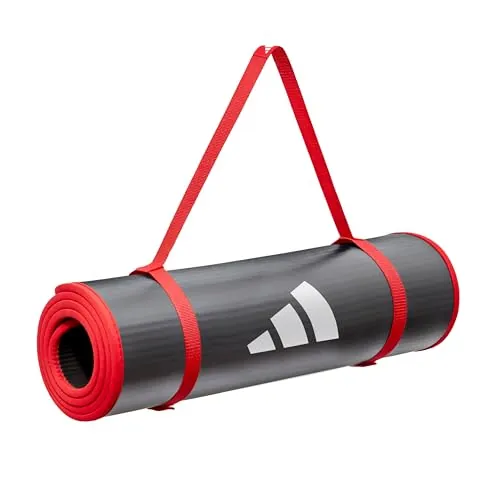
#1 Overall Winner
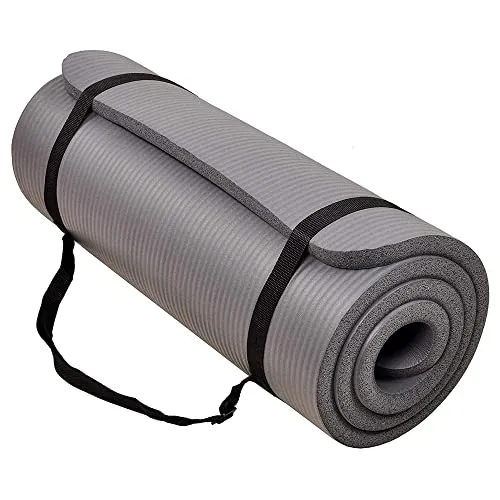
adidas 10mm Extra Thick Training Mat
- 10 mm NBR foam provides substantial cushioning for knees, elbows, and floor exercises.
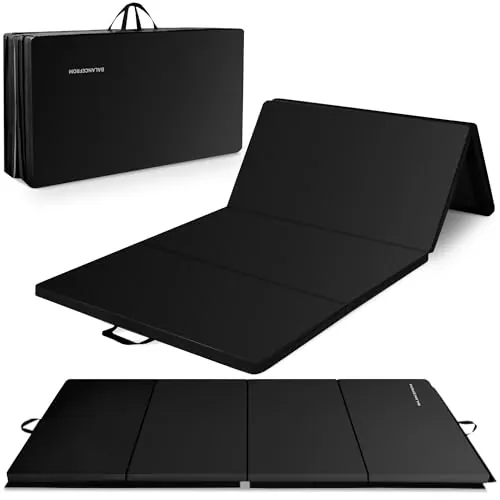
Comparison
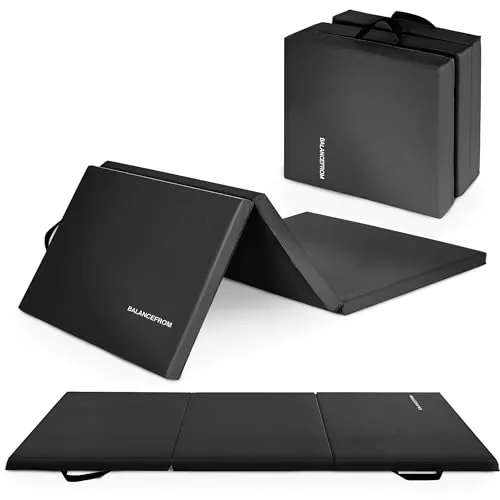
The adidas 10mm Extra Thick Training Mat is a lightweight, soft roll-up option for individual home workouts and floor exercise. The BalanceFrom 10x4 Folding Gymnastics Mat is a much larger, firmer, thicker platform for gymnastics, martial arts, Pilates, and broader floor training. Choose the adidas for portability and lower cost; choose the BalanceFrom for coverage, impact-conscious padding, and connectable mat edges.
#1 Overall Winner
Contender
Pick the adidas for affordable, soft, lightweight cushioning during everyday home workouts, core sessions, and floor exercise. Pick the BalanceFrom for a larger, firmer, more secure padded area for gymnastics, martial arts, Pilates, or multi-user training. The BalanceFrom is more versatile as a training surface, while the adidas is easier to live with in a small home setup.
Overall winner
Depends on your needs
| Feature | adidas 10mm Extra Thick Training Mat | BalanceFrom 10x4 Feet 4-Panel Folding Gymnastics Mat | Winner |
|---|---|---|---|
Primary format |
Roll-up training mat |
Four-panel folding gymnastics mat |
Depends |
Listed dimensions |
72.05 x 24.02 x 0.39 in |
120 x 48 x 2 in |
BalanceFrom 10x4 Feet 4-Panel Folding Gymnastics Mat |
Material |
NBR foam |
High-density EPE foam with vinyl surface |
Depends |
Comfort for floor exercise |
Soft 10 mm cushioning |
Firm 2-inch padding |
Depends |
Gymnastics and martial arts |
General floor exercise use |
Large, thick mat designed for these activities |
BalanceFrom 10x4 Feet 4-Panel Folding Gymnastics Mat |
Mobility and Pilates |
Suitable for basic floor mobility |
Large, firm surface listed for yoga and Pilates |
BalanceFrom 10x4 Feet 4-Panel Folding Gymnastics Mat |
Grip and stability |
Ridged non-slip base; some pose-slip feedback |
Double-sided non-slip vinyl surface |
BalanceFrom 10x4 Feet 4-Panel Folding Gymnastics Mat |
Portability |
1.25 kg, roll-up design, shoulder strap |
15 lb, folding panels, carrying handles |
adidas 10mm Extra Thick Training Mat |
Storage |
Rolls up |
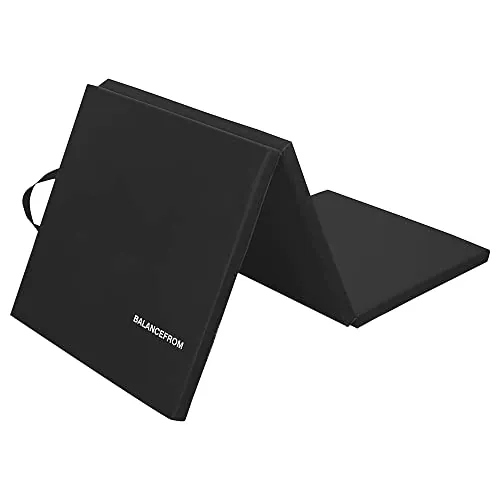
Folds into four panels |
Depends |
Cleaning |
Machine-wash care instruction listed |
Soap-and-water cleaning listed |
Depends |
Expandable training area |
No connection system listed |
Hook-and-loop edges on all sides |
BalanceFrom 10x4 Feet 4-Panel Folding Gymnastics Mat |
Provided price |
$37.93 |
$142.99 |
adidas 10mm Extra Thick Training Mat |
Buyer feedback |
4.6/5 from 12,038 reviews |
4.7/5 from 12,562 reviews |
BalanceFrom 10x4 Feet 4-Panel Folding Gymnastics Mat |
Both mats can make post-training floor routines more comfortable by adding cushioning between the user and hard flooring. The adidas is the better choice for compact, gentle stretching and relaxation-oriented floor work because its NBR foam is repeatedly described as soft. The BalanceFrom is more useful when a recovery routine includes full-body stretches, mobility flows, or ground movements that need more space. Its surface is also listed as easy to wash with soap and water. These are practical comfort benefits, not evidence of a recovery treatment effect.
The adidas is built around convenient individual exercise: roll it out for bodyweight circuits, abdominal work, kneeling movements, or a short mobility session, then roll it away. Its soft foam is a good fit for contact points against hard floors. The BalanceFrom supports a wider range of floor practice because its larger and thicker surface accommodates greater movement and activities such as tumbling, martial arts, Pilates, and aerobics. For everyday general workouts in a small room, the adidas is simpler. For a dedicated training zone or more dynamic floor skills, the BalanceFrom is more capable.
For floor-based strength work such as planks, push-ups, core training, and bodyweight circuits, the adidas offers a soft, comfortable surface that buyers specifically praise for knees and elbows. Its narrow width may be restrictive for wide hand positions or more expansive movements. The BalanceFrom is not a weight-training mat in the conventional sense, but its large, firm platform is more useful for kettlebell-adjacent floor work, bodyweight drills, and training that needs broader ground coverage. Neither listing establishes it as protection for dropped weights.
Neither product is a dedicated cardio machine accessory, but both can support floor-based conditioning. The adidas is convenient for low-impact home circuits because it is fast to deploy and store, although its smaller surface limits travel-based drills. The BalanceFrom offers far more room for light aerobics and dynamic conditioning and is described as stable during more active movements. Its firmer, thicker construction also makes more sense for users who need a substantial exercise surface, provided they have enough room to open it fully.
The BalanceFrom is the stronger option for Pilates, stretching, and broad mobility work because its 10 ft by 4 ft surface gives room to change positions without leaving the mat, while its firm padding supports controlled floor work. The adidas is still useful for basic stretching and cool-downs, with soft cushioning that can feel comfortable on hard floors. However, reported slipping or stretching during held yoga poses makes it the less reliable choice for users whose routine depends on stable balance positions and traction.
For gentle post-workout stretching, floor mobility, and low-intensity recovery routines, both mats create a more comfortable surface than a hard floor. The adidas is particularly appealing for relaxed floor work because of its soft NBR foam and compact size. The BalanceFrom provides more room for longer stretching sequences and a firm, supportive base that is easy to wipe clean. Neither product should be treated as a medical or therapeutic device; their role is simply to provide padded space for movement and floor exercise.
Each mat performs well within its intended role, but the roles are different. The adidas is effective as a cushioned, portable workout mat, with reviews frequently supporting its softness, thickness, and ability to stay flat after unrolling. Its practical performance is less convincing for traction-dependent yoga poses, where some users report movement or stretching. The BalanceFrom is better equipped for broad floor training, with 2-inch foam, a large surface, vinyl covering, and buyer reports of use for tumbling and martial arts. It is the more capable platform for demanding floor practice, while the adidas is the more focused everyday exercise mat.
The adidas supports training consistency by reducing setup friction: it is lightweight, rolls up, and fits easily into a routine built around home bodyweight sessions. Its cushioning can make floor exercises more tolerable on tile or other hard surfaces. The BalanceFrom supports a greater variety of planned sessions because it offers more room, thicker padding, foldable storage, and the ability to connect compatible mats. Beginners can benefit from either, but the BalanceFrom has more scope as skills and activity needs expand. The adidas remains the easier option for quick, individual workouts in limited space.
The adidas is the more natural match for conventional bodyweight strength sessions, especially exercises where knees, elbows, or the back contact the floor. Its soft foam and portable design support frequent use, though the 24-inch width can limit wider positions. The BalanceFrom provides firmer footing and considerably more area for circuits, ground drills, and movements requiring space to reposition. Its thicker padding is useful for floor practice, but the listing does not position either mat as a solution for dropped-weight protection. Choose based on exercise style rather than expecting either to replace lifting-platform flooring.
The BalanceFrom has the advantage for light aerobics and more dynamic conditioning because the 10 ft by 4 ft surface permits more movement than the adidas mat. Its non-slip-oriented vinyl surface and buyer feedback about stable use further support that role. The adidas can still work well beneath lower-impact bodyweight circuits, particularly when quick setup and soft cushioning are more important than movement area. Neither product includes cardio-specific features such as resistance, tracking, incline, or programmed workout modes, so their value is limited to providing a floor-training surface.
The BalanceFrom is better suited to mobility, Pilates, and stretching sessions that use a large range of movement. Its generous dimensions and firm foam create a broad, supportive surface, and these activities are specifically listed. The adidas gives a softer feel for simple stretching and floor mobility, but its smaller dimensions are more restrictive. In addition, mixed feedback on stability during held yoga poses means users who prioritize balance work may prefer the BalanceFrom's more stable vinyl-covered layout.
Both mats can make post-training floor routines more comfortable by adding cushioning between the user and hard flooring. The adidas is the better choice for compact, gentle stretching and relaxation-oriented floor work because its NBR foam is repeatedly described as soft. The BalanceFrom is more useful when a recovery routine includes full-body stretches, mobility flows, or ground movements that need more space. Its surface is also listed as easy to wash with soap and water. These are practical comfort benefits, not evidence of a recovery treatment effect.
A mat can improve comfort and reduce direct contact with hard floors, but neither listing replaces instruction, appropriate supervision, or a suitable training environment. The BalanceFrom is the stronger choice where a larger, thicker, secure floor surface is needed for gymnastics, martial arts, or dynamic practice; its non-slip-oriented vinyl surface and firm padding are relevant advantages. The adidas offers cushioned support for general workouts, but mixed reports of slipping or stretching during yoga-style poses are worth considering. Neither product is listed as protection for dropped weights, and users should ensure the mat is flat and secure before training.
Comfort is close, but the feel differs. The adidas is repeatedly praised for its softness and 10 mm cushioning, making it particularly appealing for users who dislike pressure on knees and elbows during traditional floor exercise. The BalanceFrom offers much thicker 2-inch padding, but its high-density foam is intended to remain firm and supportive rather than plush. Choose the adidas for a softer single-user exercise experience; choose the BalanceFrom when thicker, more structured padding and larger-area floor comfort are the priority.
The adidas is easier for quick daily use: it is light, rolls up, and is supplied with a listed Velcro shoulder strap, although feedback on strap inclusion is mixed. It is well suited to users who want to take out and put away a mat without much effort. The BalanceFrom is also practical, using four folding panels and built-in handles, but its larger size and 15 lb weight make it more of a deliberate setup. It is easier to clean quickly thanks to the listed soap-and-water vinyl care.
The BalanceFrom is the stronger stability choice. Its broad 4-foot width, heavier construction, double-sided non-slip vinyl surface, and positive buyer reports of remaining secure during dynamic use support a stable floor presence. The adidas has a ridged underside intended to reduce movement, and many buyers report it lies flat and stays in place. However, some users specifically report slipping or stretching during yoga poses. For static balance work or active floor drills, the BalanceFrom provides more consistent evidence of stability.
The BalanceFrom has the clearer grip advantage, based on its listed double-sided non-slip vinyl surface and feedback describing secure use during active practice. The adidas uses a ridged bottom to help grip the floor and earns praise from many users for staying put. Still, reports of slipping or stretching in yoga poses mean its traction may be less dependable when hand and foot pressure are sustained in one position. Floor condition and cleaning can affect either mat's grip.
The BalanceFrom offers more practical configuration because hook-and-loop strips on all four sides allow compatible mats to be connected into a larger area. Its four-panel design also lets users fold it for storage. The adidas does not have adjustable dimensions or a connection system; its flexibility is limited to rolling it up for transport and storage. For users who expect their training area to change over time, the BalanceFrom is the more adaptable option.
Both products are designed to be put away, but they optimize space differently. The adidas is better for small homes because its narrow, lightweight roll-up form occupies little space when not in use. The BalanceFrom is highly efficient relative to its very large 10 ft by 4 ft open surface because it folds into four panels, but it still requires more storage volume and much more clear floor area during use. Choose the adidas for compact living; choose the BalanceFrom for larger dedicated training spaces.
The BalanceFrom is the stronger option for reducing direct impact against a hard floor because of its 2-inch foam thickness and larger padded surface. This may be useful for floor-based practice where contact noise is a concern. The adidas also separates the user from the floor and can suit quieter low-impact routines, but it is thinner and not aimed at tumbling or landing practice. Neither listing provides measured noise data, so real-world results will vary by activity and floor type.
The adidas is described as an NBR foam mat with a ridged base, and buyer feedback regularly characterizes it as thick, well made, and durable. Its roll-up construction is a strength for routine use, although the softer material is not designed around high-impact gymnastics. The BalanceFrom has a more substantial build for floor practice: high-density EPE foam, vinyl coverage, reinforced stitching, fold panels, carry handles, and edge fasteners. For construction aligned with large-area, repeated floor training, the BalanceFrom has the clearer advantage. The adidas remains well built for its lighter-duty format.
Both products receive favorable durability feedback, but their materials target different conditions. The adidas's closed-cell NBR foam is intended to minimize moisture absorption, and reviewers mention that it holds up well and does not readily curl after being stored rolled. The BalanceFrom's puncture-resistant vinyl surface, reinforced stitching, firm foam, and reviews describing continued use without rips or sagging point to stronger durability for larger-scale floor practice. Long-term durability will still depend on storage, cleaning, footwear, and the type of training performed on each surface.
The BalanceFrom is more straightforward for surface cleaning: its non-absorbent vinyl cover is listed as moisture resistant and washable with soap and water. That is useful after shared training, martial arts practice, or frequent floor sessions. The adidas uses closed-cell foam to minimize moisture absorption and lists machine-wash care instructions; reviews also describe it as relatively easy to clean. Both should be stored dry and clean, but the BalanceFrom's wipe-clean vinyl is the simpler option for regular surface maintenance.
The adidas is the better travel-friendly mat. At a listed 1.25 kg, it rolls up and is intended to be carried with a Velcro shoulder strap, making it easier to move to another room, gym, or outdoor session. The BalanceFrom folds and includes handles, so it remains portable for its size, but its 15 lb weight and larger folded bulk make it better for moving between storage and a training area than for frequent transport. Its advantage is portable coverage, not minimal carry effort.
Material disclosure is clearer for the BalanceFrom. Its listing identifies high-density EPE foam, an 18 oz non-absorbent vinyl surface, reinforced stitching, and lead-free, non-toxic vinyl claims. The adidas provides the key information that it uses NBR foam, has closed-cell technology, and has a ridged bottom, though it gives less detail about the outer finish and construction. Both provide enough information to identify the basic material approach, but the BalanceFrom offers more specific construction and surface details.
The adidas delivers strong value for users who need a comfortable, lightweight individual mat: it has a much lower provided price, a high volume of favorable feedback, 10 mm cushioning, and a portable format. It becomes less compelling if the intended activity demands a large, highly stable, impact-conscious surface. The BalanceFrom costs substantially more, but its 10 ft by 4 ft size, 2-inch padding, vinyl cover, folding construction, and connectable edges provide materially different utility. For gymnastics, martial arts, or a shared training area, the BalanceFrom's higher cost is more readily justified.
adidas has a stronger provided brand-trust profile and a very large review base for this mat, with repeated positive comments around comfort and quality. BalanceFrom also has extensive buyer feedback and strong customer satisfaction for this product, particularly around versatility, folding storage, and durability. Product-specific evidence is stronger than broad brand assumptions in this comparison: both mats have substantial review volume, while the adidas has the clearer brand-recognition advantage and the BalanceFrom has more detailed construction disclosure.
Both mats have exceptionally large review counts and strong provided star ratings. adidas buyers most often praise thickness, softness, comfort on hard floors, ease of rolling, and perceived quality. Common concerns are its narrow format, occasional curling advice, mixed strap reports, and some instability during yoga poses. BalanceFrom buyers frequently praise firm cushioning, easy folding, broad coverage, wipe-clean vinyl, and use across gymnastics and martial arts. The recurring drawbacks are its greater bulk and occasional new-product odor. Overall buyer sentiment is slightly stronger for BalanceFrom, but both have robust support.
Warranty information is only provided in an individual BalanceFrom buyer review, which mentions a two-year warranty. This is not confirmed in the supplied product specifications, so shoppers should verify current warranty terms, return conditions, and support processes with the seller before purchase. No warranty information is provided for the adidas mat, so a direct support comparison cannot be made from the available data.
The core practical claims for both products are reasonably supported by listed specifications and buyer feedback. For the adidas, the stated 10 mm thickness, NBR foam, dimensions, low weight, ridged base, and roll-up design align with reviews praising soft cushioning and portability. The stability claim is less universal because some users report slipping in yoga poses. For the BalanceFrom, its dimensions, 2-inch foam, vinyl cover, folding panels, handles, and edge fasteners align with feedback about floor coverage, cleaning, and martial arts or gymnastics use. Marketing language about safety should still be understood as product positioning, not independent proof of injury prevention.
The BalanceFrom 10x4 Feet 4-Panel Folding Gymnastics Mat is the better overall choice for users seeking a large, stable, thickly padded floor-training platform. Its main strengths are broad coverage, firm 2-inch foam, wipe-clean vinyl, folding storage, and edge connections. Its main limitations are cost, bulk, and a firmer feel that will not suit everyone.
The adidas 10mm Extra Thick Training Mat is the better choice for affordable daily home exercise. Its soft cushioning, low weight, and roll-up portability make it highly practical for individual bodyweight and floor sessions. Its main limitations are the narrow surface and less consistent traction for yoga-style poses. Choose based on training type and space rather than expecting one mat to serve every purpose.
Overall winner
Depends on your needs
The BalanceFrom is the broader all-purpose choice for users who need a large, thick, firm surface for gymnastics, martial arts, Pilates, and shared floor work. The adidas is the more practical choice for single-person home workouts that need soft cushioning, quick roll-up storage, and low carrying weight. The better fit depends mainly on available space and activity type.
Both work well for home workouts, but they suit different setups. The adidas mat is easier to bring out for bodyweight sessions, core work, and kneeling exercises in a smaller room. The BalanceFrom gives more usable area and firmer padding for a more permanent or dedicated training space, especially where tumbling or ground practice is planned.
The adidas mat can work for gentle stretching and general mobility, but it is not the clearest choice for yoga poses requiring reliable traction. Its ridged base is intended to reduce movement, yet some buyer feedback describes slipping or stretching while holding poses. Users focused on yoga should consider whether its soft 10 mm construction matches their preferred level of stability.
The BalanceFrom is the more suitable option based on its 10 ft by 4 ft surface, 2-inch firm foam padding, vinyl cover, and buyer reports of use for gymnastics, Brazilian jiu-jitsu, and martial arts practice. The adidas mat is better positioned for conventional floor exercise than for movements involving repeated landings, tumbling, or ground-based partner drills.
Both are designed for storage, but the adidas is easier to handle for frequent daily use because it is lightweight and rolls up with a shoulder strap. The BalanceFrom folds into four panels and has built-in handles, which is useful for storage, but it remains a larger, heavier item. Choose based on whether compact handling or larger training coverage matters more.
The adidas has a slight practical edge for soft kneeling comfort because it uses 10 mm NBR foam and reviews repeatedly describe it as soft and comfortable on hard floors. The BalanceFrom also supplies substantial cushioning through its 2-inch foam, but its padding is described as firmer, which may be preferable when support and impact management are priorities.
Yes. The BalanceFrom mat is listed with hook-and-loop strips on all four sides so compatible mats can be joined to create a larger practice area or tumbling run. This is a meaningful advantage for households, studios, or users whose training space may expand over time. The adidas mat does not list an edge-connection feature.
The adidas offers strong value for a lower-cost, lightweight individual workout mat with substantial cushioning. The BalanceFrom costs more, but its much larger dimensions, thicker construction, washable vinyl cover, folding design, and connectable edges can justify the outlay for gymnastics, martial arts, or multi-user floor training. Value depends on whether that extra capacity will be used.
Check our rankings and expert guides to find the best fitness products for your goals.