#1 Overall Winner
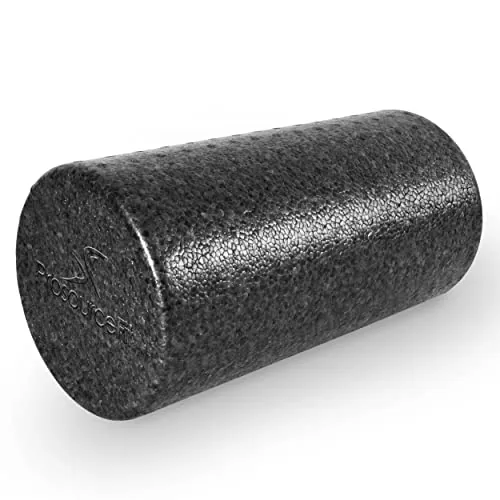
ProsourceFit High Density Foam Roller 12x6 (Black)
- Very strong recovery focus for pre-/post-workout self-massage and mobility work
Comparison
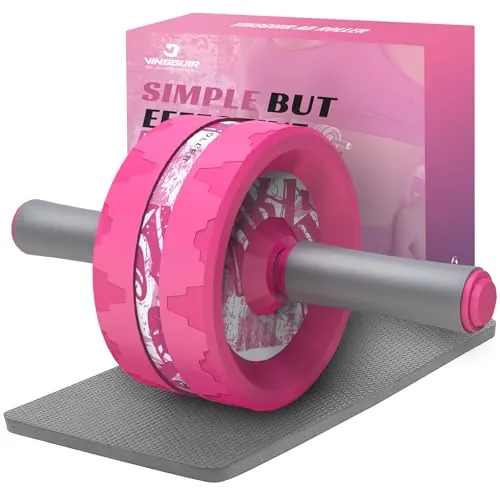
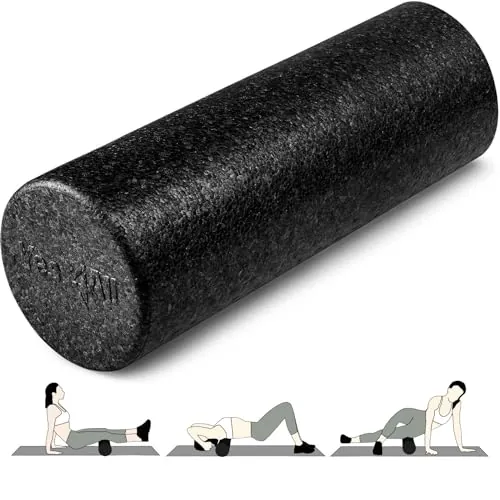
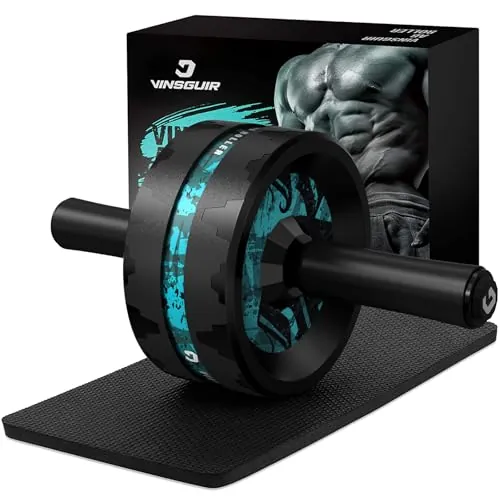
The ProsourceFit High Density Foam Roller (12x6) and the VINSGUIR Ab Roller Wheel are compact home fitness tools, but they’re built for different jobs. ProsourceFit is aimed at recovery-style work like self-massage, stretching, and mobility, while VINSGUIR is a stability-focused ab wheel for core training. Your best pick depends on whether you want post-workout tissue work or progressive rollout workouts.
#1 Overall Winner
Contender
Choose the ProsourceFit High Density Foam Roller if you want a firm, compact tool for self-massage, mobility, and post-workout routines. Choose the VINSGUIR Ab Roller Wheel if you want a stable, space-saving way to train your core at home and you’re comfortable upgrading the knee pad if needed. Neither replaces the other—they complement different parts of a training week.
Overall winner
Depends on your needs
| Feature | ProsourceFit High Density Foam Roller 12x6 (Black) | VINSGUIR Ab Roller Wheel with Knee Pad | Winner |
|---|---|---|---|
| Category / primary use | Foam roller for self-massage, stretching, mobility, recovery | Ab roller wheel for core/ab strength training | Depends |
| Price (listed) | $11.99 | $19.52 | ProsourceFit High Density Foam Roller 12x6 (Black) |
| Average star rating | 4.6/5 | 4.6/5 | Tie |
| Review volume | 20,474 reviews | 23,313 reviews | VINSGUIR Ab Roller Wheel with Knee Pad |
| Portability / travel friendliness | 12-inch roller; lightweight; travel size noted | Compact wheel; 1.41 lb; portable design noted | Tie |
| Recovery & soreness routines | Designed for pre/post-workout self-massage and tension release | Not positioned as a recovery tool | ProsourceFit High Density Foam Roller 12x6 (Black) |
| Core strength training | Can be used as a prop in Pilates/core drills | Purpose-built ab wheel targeting core via rollouts | VINSGUIR Ab Roller Wheel with Knee Pad |
| Stability during use | Stable on floor for rolling; firmness maintains shape | Dual-wheel (3.2 inch) described as extra stable and balanced | VINSGUIR Ab Roller Wheel with Knee Pad |
| Comfort considerations | Very firm; mixed feedback (some find it too hard) | Mixed comfort; knee pad described as minimal; some shoulder discomfort noted | Depends |
| Materials transparency | High-density expanded polypropylene (EPP) stated | Stainless steel shaft stated; handles described as EVA rubber cotton | Tie |
| Ease of setup | No assembly; ready to use | Assembly required but commonly described as easy | ProsourceFit High Density Foam Roller 12x6 (Black) |
| Maintenance / cleaning | Water-resistant and hygienic; easy maintenance noted | No specific cleaning guidance provided | ProsourceFit High Density Foam Roller 12x6 (Black) |
| Weight capacity (stated) | 300 lb maximum weight capacity | 440 lb maximum weight recommendation | VINSGUIR Ab Roller Wheel with Knee Pad |
| Warranty / support info provided | Not provided in the data | 30-day returns; 12-month warranty; lifetime customer service (listed) | VINSGUIR Ab Roller Wheel with Knee Pad |
Recovery support clearly leans toward the ProsourceFit foam roller. It’s positioned for self-myofascial release and post-workout muscle recuperation, and buyers repeatedly mention firmness retention and relief-focused use (especially back and lower body). The main caution is comfort: very firm rollers can be challenging early on. The VINSGUIR ab wheel is more likely to add training stress than reduce it, and its accessory knee pad may need supplementation for comfort.
These tools support training in different ways. The ProsourceFit foam roller is best viewed as a recovery and movement-quality accessory: it can slot into warm-ups, cool-downs, rest days, and yoga/Pilates sessions for self-massage and gentle mobility work. The VINSGUIR ab wheel is a workout tool first—something you program for sets and reps to challenge the trunk and upper body through rollouts. If you want one item that improves how your body feels between sessions, the foam roller fits better; if you want a compact strength challenge that’s easy to progress, the ab wheel fits better.
For strength-focused training, the VINSGUIR ab roller is the more direct choice because it’s designed to load the core through rollout movements and is repeatedly described as stable and effective for ab training. The ProsourceFit foam roller can support Pilates-style stability drills and core control work, but it doesn’t provide the same kind of progressive resistance stimulus as an ab wheel. If your goal is measurable strength progression in a specific exercise pattern, VINSGUIR is the clearer fit.
For mobility and flexibility routines, the ProsourceFit foam roller is more relevant. It’s explicitly described for gentle stretching, range-of-motion work, and releasing tight areas such as calves, thighs, and upper back. The VINSGUIR ab wheel can indirectly support body control, but it isn’t positioned for stretching or mobility practice and will usually feel more like strength work than flexibility work. If your priority is moving better and feeling less tight, the foam roller is the better match.
The ProsourceFit roller is purpose-built for recovery-style use: self-massage, tension release, and post-workout routines. Reviews frequently mention it retaining firmness and being helpful for back and lower-body tightness, though comfort varies due to the high density. The VINSGUIR ab wheel is primarily a training tool; it may complement a routine, but it’s not described as supporting recovery. If you’re choosing one item for soreness-management habits and post-session care, ProsourceFit is the more appropriate option.
On core performance, the VINSGUIR ab roller aligns tightly with its intended job: a stable, compact wheel for rollout training, with many buyers reporting it works as expected and feels sturdy. Its dual-wheel design is repeatedly associated with better balance during reps. The ProsourceFit foam roller performs best for its purpose—firm, targeted pressure for self-massage and mobility work—with strong feedback that it holds its shape. Performance differences mostly reflect goal choice: strength challenge (VINSGUIR) versus recovery and soft-tissue-style work (ProsourceFit).
For supporting a well-rounded weekly routine, ProsourceFit tends to be easier to integrate because it can be used briefly before training, after training, or on off days with minimal friction (no setup, easy wipe-down). VINSGUIR supports training progress when you want a dedicated core block, and reviews suggest it’s easy to store nearby and use regularly. If you’re building consistency through short daily sessions, either can work; if you want the broadest “routine support” across warm-up, cooldown, and mobility, the foam roller has the edge.
Strength-training usefulness favors the VINSGUIR ab wheel because it’s a dedicated core exercise tool with a stability-oriented dual-wheel design and grippy handles. Users can scale difficulty by range of motion and volume, making it easier to apply progressive overload than with a foam roller. The ProsourceFit roller can still contribute to strength sessions by improving readiness (warm-up) and tolerance to training (cool-down), but it’s not a primary resistance tool in the same way.
Mobility and flexibility support is stronger with the ProsourceFit foam roller, which is explicitly described for gentle stretching, increased range of motion, and posture/body-awareness work. Its firm EPP construction is designed to deliver deeper pressure than softer rollers, which some users love and others find too intense. The VINSGUIR ab wheel is not designed around mobility outcomes, so its direct usefulness for flexibility routines is limited compared with a dedicated roller.
Recovery support clearly leans toward the ProsourceFit foam roller. It’s positioned for self-myofascial release and post-workout muscle recuperation, and buyers repeatedly mention firmness retention and relief-focused use (especially back and lower body). The main caution is comfort: very firm rollers can be challenging early on. The VINSGUIR ab wheel is more likely to add training stress than reduce it, and its accessory knee pad may need supplementation for comfort.
Both products have safety considerations tied to how they’re used. With the ProsourceFit roller, the main issue is pressure tolerance—its firm density can feel aggressive, so easing in and avoiding overly painful pressure is a practical precaution. With the VINSGUIR ab wheel, safety is more about controlled movement and joint comfort: the dual-wheel design is intended to improve stability, but poor form or pushing range too fast may aggravate shoulders or lower back for some users. Also, the thin knee pad may not protect well on hard floors without supplementation.
Comfort is mixed for both, but for different reasons. ProsourceFit’s high-density design is intentionally firm, and both the description and reviews suggest some users love the deep pressure while others find it too hard—especially beginners or more sensitive users. VINSGUIR’s comfort depends on rollout tolerance and accessories: the included knee pad is often described as thin, and some users report shoulder discomfort. If comfort is your top priority, technique and surface choice matter for both.
ProsourceFit is the simplest to use: no assembly, no moving parts, and it’s described as easy to maintain thanks to water-resistant, hygienic foam. VINSGUIR is also easy to use once set up, with many reviews praising straightforward assembly and daily convenience, though a small number mention handle fit issues. If you want the least friction from unboxing to first use, the foam roller is typically easier; for guided, repeatable workout sets, the ab wheel is very straightforward.
Stability favors the VINSGUIR ab wheel because it’s specifically designed with a dual-wheel, ultra-wide format intended to reduce side-to-side deviation during rollouts. The ProsourceFit roller is stable in the sense that it maintains firmness under pressure, but its “stability” is not about guiding a movement path—it’s about consistent pressure and shape. For balance during an exercise that can tip or drift, VINSGUIR has the clearer stability edge.
Grip is more relevant to the VINSGUIR ab wheel, which includes EVA rubber cotton handles described as nonslip and comfortable. The ProsourceFit foam roller doesn’t rely on handle grip in the same way; users typically brace with hands or position bodyweight on the roller. If your purchase decision hinges on hand comfort and secure handling during reps, VINSGUIR is the more appropriate product to evaluate.
Neither product is highly adjustable in a mechanical sense. ProsourceFit offers different roller sizes and colors (with the 12-inch version being the most space-saving), but each individual roller is a fixed shape and firmness. VINSGUIR is a single ab wheel design without resistance settings; difficulty changes mainly through technique (range of motion, tempo, volume). If you want built-in settings or multiple resistance levels, neither provides that—progression comes from how you use them.
Both are excellent for small-space home gyms. The ProsourceFit roller in the 12-inch size is specifically positioned for travel and space-saving storage, and it can tuck into a closet or under a bed. The VINSGUIR ab wheel is also compact and easy to store, with reviews mentioning keeping it nearby for daily use. If you want the smallest footprint for a recovery tool, the 12-inch roller is hard to beat; for strength work in a tiny space, the ab wheel also fits well.
Neither product is likely to be a major noise source compared with large gym machines. The foam roller is generally quiet in use, and the ab wheel typically produces only light rolling sound depending on flooring. If you live in an apartment, both are usually more neighbor-friendly than impact-heavy training, though surface choice (hardwood vs mat) can still affect perceived noise.
Both products are widely described as well-made for their price range, but the type of build quality differs. ProsourceFit’s quality signal is firmness retention and resistance to compression in a simple one-piece EPP foam cylinder. VINSGUIR’s quality signal is structural: a stainless steel shaft, a stable dual-wheel configuration, and handles designed for nonslip grip. If your concern is “will it keep its shape,” ProsourceFit stands out; if your concern is “will it feel solid under load,” VINSGUIR stands out.
Durability looks strong for both based on provided information. ProsourceFit customers frequently mention that the roller maintains firmness and doesn’t get “squashed” over time, which is a common failure point for softer foam rollers. VINSGUIR is often described as sturdy, and it includes a high stated weight capacity with a stainless steel shaft; however, there are a few isolated assembly/fit complaints that may affect first impressions. For long-term simplicity, the foam roller’s minimal moving parts are an advantage.
Maintenance is easiest with the ProsourceFit roller because it’s described as water-resistant and hygienic, and it can typically be wiped clean quickly. VINSGUIR doesn’t include specific maintenance instructions in the provided data, but upkeep is generally simple (keeping handles and wheel clean and checking assembly tightness as needed). If you want the lowest-maintenance option with explicit easy-care positioning, ProsourceFit has the advantage.
Portability is strong for both. The ProsourceFit 12-inch roller is marketed as ideal for travel and space-saving, and its lightweight build makes it easy to carry. The VINSGUIR ab wheel is also designed for portability (home, office, gym, outdoors) and lists a 1.41 lb item weight. If you want a portable recovery tool, pick the roller; if you want a portable strength tool, pick the ab wheel.
For material transparency, the ProsourceFit roller provides a clear callout to high-density expanded polypropylene (EPP). VINSGUIR lists a stainless steel shaft and describes EVA rubber cotton handles, but details about other components (such as wheel material composition) aren’t fully specified in the provided data. Neither product provides a full bill of materials, but both give at least some helpful material information for shoppers who care about what they’re using.
Value depends on what you’ll actually use. ProsourceFit offers a low entry price and extremely high review volume, with many buyers praising durability and usefulness for recovery routines—making it an efficient add-on for people who will foam roll consistently. VINSGUIR costs more in the listing but includes a knee pad and explicit warranty/support information, and it’s often described as sturdy and effective for at-home core training. If recovery and mobility are missing from your routine, the foam roller may deliver more day-to-day utility; if you need a compact strength stimulus, the ab wheel may be better value.
Both brands show strong marketplace traction based on very high review counts and consistently high ratings. ProsourceFit also provides clear product positioning and material information (EPP) for this roller. VINSGUIR provides clearer after-sales terms in the provided data (returns, warranty, customer service), which can increase confidence for buyers concerned about defects or fit issues. If after-sales clarity matters most, VINSGUIR has the edge; if you prioritize simple, proven product utility, ProsourceFit is compelling.
Customer satisfaction appears high for both, reflected in strong average ratings and large review volume. ProsourceFit feedback frequently highlights quality, size convenience, and durability, with the most common disagreement being firmness (some love it, others find it too hard). VINSGUIR feedback often highlights stability, ease of assembly, and sturdiness, with recurring notes about the knee pad being thin and occasional comfort concerns (including shoulder discomfort for some users). Overall sentiment is positive on both, with predictable trade-offs.
Warranty/support information is only provided for VINSGUIR in the data: it lists 30-day no-hassle returns, a 12-month warranty, and lifetime customer service. ProsourceFit warranty details are not included in the provided product information. If formal after-sales coverage is important to you, VINSGUIR is the clearer option based on what’s shown here.
ProsourceFit’s claims are largely practical and align with what a firm foam roller can reasonably do: self-massage, stretching support, and range-of-motion work. Reviews commonly support firmness retention and perceived relief, though individual comfort varies. VINSGUIR’s claims focus on stability, durability, and core training usefulness; reviews generally support stability and ease of use. Performance-related promises (like “faster” results) are harder to verify from the provided data, so it’s best to treat those as motivational language rather than guaranteed outcomes.
This is less of a head-to-head battle and more of a goal-based choice. The ProsourceFit High Density Foam Roller is the better all-around recovery and mobility accessory: it’s compact, low maintenance, and widely praised for staying firm and durable, with the main limitation being that its deep pressure can be too aggressive for some users. The VINSGUIR Ab Roller Wheel is the better core-training tool: it’s stable, portable, easy to integrate into short workouts, and includes clear warranty/support terms, but comfort can be hit-or-miss due to the minimal knee pad and some shoulder discomfort reports.
If you can only buy one, choose ProsourceFit for recovery/mobility or VINSGUIR for core strength progress.
Overall winner
Depends on your needs
They’re better for different goals. The ProsourceFit High Density Foam Roller is primarily for recovery-style use (self-massage, gentle stretching, and mobility work). The VINSGUIR Ab Roller Wheel is designed for ab and core strength training with a stable dual-wheel layout. If you want one tool for soreness-management routines, choose the roller; for progressive core workouts, choose the ab wheel.
The ProsourceFit foam roller is the clear fit for recovery routines because it’s specifically described for self-myofascial release, stretching, and reducing tightness in areas like the upper back, calves, and thighs. The VINSGUIR ab wheel can be part of training, but it isn’t positioned as a recovery tool and includes feedback focused more on workout difficulty and comfort during rollouts.
The VINSGUIR Ab Roller Wheel is built for core training and is described as targeting the abdominals, hip flexors, and back muscles. Reviews repeatedly mention ease of assembly, stability from the wider dual-wheel design, and daily use in short home sessions. The ProsourceFit roller can support core-related stability drills, but it’s mainly a recovery/mobility accessory.
It can be. The product description notes that the high-density build provides deep pressure and that new users may be sensitive. Reviews also reflect mixed reactions to firmness—some love the deep, “extra firm” feel, while others find it too hard. If you’re new to foam rolling, consider shorter sessions or a less aggressive roller style if comfort is a priority.
Yes, it includes a knee pad accessory. However, multiple reviewers describe the pad as minimal and suggest using a thicker pad on hard surfaces. If you plan to roll out on tile, hardwood, or thin carpet, it’s worth checking whether you already have a suitable mat/pad to keep the movement comfortable enough to stay consistent.
Both are simple, but in different ways. The ProsourceFit foam roller is essentially “grab-and-go” with no assembly, and it wipes clean easily. The VINSGUIR ab wheel is also described as easy to assemble and easy to use, but a small number of buyers mention handle fit issues. Day-to-day ease may come down to whether you prefer rolling routines or structured rollout sets.
Both are strong options for small spaces. The ProsourceFit model here is a 12-inch roller specifically positioned as travel- and space-saving. The VINSGUIR ab wheel is also compact and designed to be carried to different locations. If you want the smallest “always available” recovery tool, the 12-inch roller is very convenient; for compact strength work, the ab wheel travels well too.
Buyer feedback for both suggests good durability. The ProsourceFit roller is repeatedly praised for maintaining firmness and not compressing over time. The VINSGUIR ab wheel is commonly described as sturdy and well-constructed, and it lists a stainless steel shaft with a high stated weight capacity. As with any mass-market item, there are a few isolated issues, but overall sentiment is strong.
A foam roller is mainly used for self-massage, gentle stretching, and mobility-focused work across many muscle groups. An ab roller wheel is a strength-training tool that challenges the core through rollout-style movements and tends to load the shoulders, arms, and trunk. If your goal is to feel looser and move better, a foam roller fits; if your goal is core training progression, an ab wheel fits.
Check our rankings and expert guides to find the best fitness products for your goals.