#1 Overall Winner
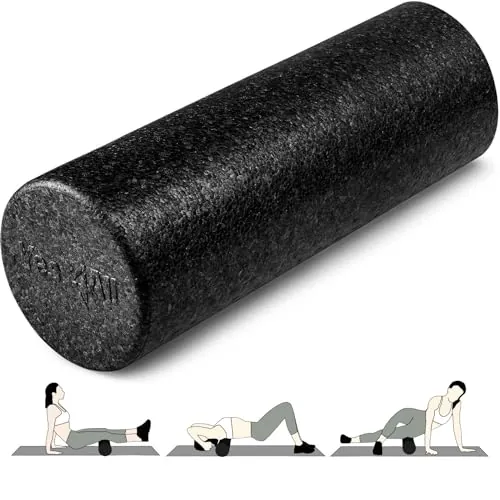
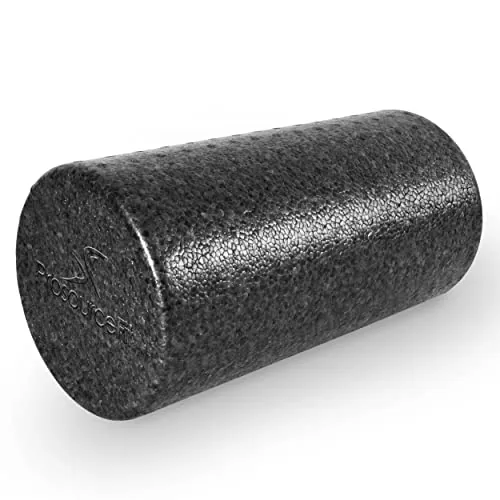
ProsourceFit High Density Foam Roller 12x6 (Black)
- Firm, high-density EPP foam designed for deeper pressure self-massage
Comparison
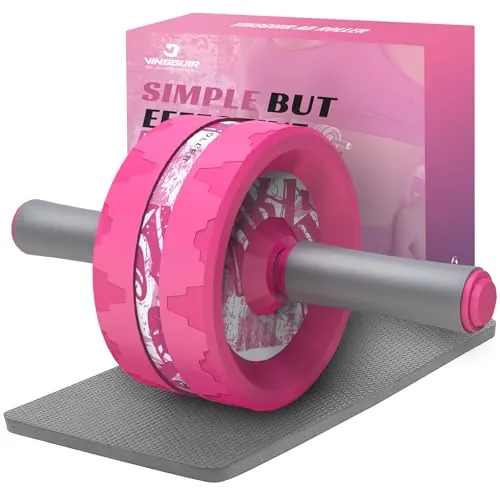
The ProsourceFit High Density Foam Roller and the VINSGUIR Ab Roller Wheel both fit small home gyms, but they serve different purposes. ProsourceFit is mainly a firm self-massage and mobility tool for pre/post-workout routines, while VINSGUIR is a core rollout tool built for ab-focused strength training with a dual-wheel for stability. Your best choice depends on whether you prioritize recovery and flexibility work or ab rollout progression.
#1 Overall Winner
Contender
Pick the ProsourceFit High Density Foam Roller if you want a firm, low-maintenance recovery and mobility tool for pre/post-workout use, yoga, or Pilates. Choose the VINSGUIR Ab Roller Wheel if your priority is core rollouts at home and you want a dual-wheel design for stability plus included warranty/support terms. Comfort can be mixed for both: firmness on the roller and knee/shoulder comfort on rollouts.
Overall winner
Depends on your needs
| Feature | ProsourceFit High Density Foam Roller 12x6 (Black) | VINSGUIR Ab Roller Wheel with Knee Pad | Winner |
|---|---|---|---|
| Primary purpose | Recovery, self-massage, mobility | Core rollouts, bracing strength | Depends |
| Best training category fit | Mobility/recovery, yoga/Pilates accessory | Strength-focused core training tool | Depends |
| Stability during use | Stable (no moving parts) | Dual-wheel for added stability | VINSGUIR Ab Roller Wheel with Knee Pad |
| Comfort for sensitive users | Very firm; mixed comfort feedback | Mixed comfort; knee pad often called thin | Depends |
| Ease of use | Simple: place and roll | Simple assembly; technique-dependent | ProsourceFit High Density Foam Roller 12x6 (Black) |
| Portability | 12-inch travel-friendly size | Compact wheel and pad; easy to take anywhere | Tie |
| Space efficiency | Short cylinder footprint | Small wheel footprint | Tie |
| Maintenance/cleaning | Water-resistant; easy to wipe down | Low maintenance; wipe down wheel/handles | Tie |
| Build materials transparency | High-density EPP disclosed | Stainless steel shaft; EVA handles disclosed | VINSGUIR Ab Roller Wheel with Knee Pad |
| Durability expectations | Maintains shape/firmness per reviews | Durable build; some minor fit issues reported | ProsourceFit High Density Foam Roller 12x6 (Black) |
| Included accessories | Roller only | Knee pad included | VINSGUIR Ab Roller Wheel with Knee Pad |
| Value for money | Lower price; high satisfaction | Higher price; strong satisfaction and training utility | Depends |
| Customer feedback volume and rating | Very high reviews; 4.6/5 | Very high reviews; 4.6/5 | Tie |
| Warranty/support info | Not provided in listing data | 30-day returns; 12-month warranty; lifetime customer service | VINSGUIR Ab Roller Wheel with Knee Pad |
The ProsourceFit foam roller is the more recovery-oriented option. It’s intended for self-massage and tension relief across multiple muscle groups, and buyer feedback frequently highlights firmness and shape retention over time—both important for consistent rolling pressure. The VINSGUIR ab roller is primarily a training tool and may contribute to overall workout structure, but it isn’t described as supporting recovery beyond general fitness use. If your priority is post-workout muscle care and mobility habits, ProsourceFit fits that role more directly.
In a training plan, these tools play different roles. The ProsourceFit foam roller is typically used as a warm-up or cool-down tool to address tightness, support stretching, and add low-intensity mobility work to yoga, Pilates, or strength days. The VINSGUIR ab roller is more of a workout implement—you use it for sets and reps to challenge bracing and control, often as a main core exercise.
If you’re building a routine that includes both training and recovery, they can complement each other: rollouts for core strength practice, and foam rolling for post-session tissue work and range-of-motion work.
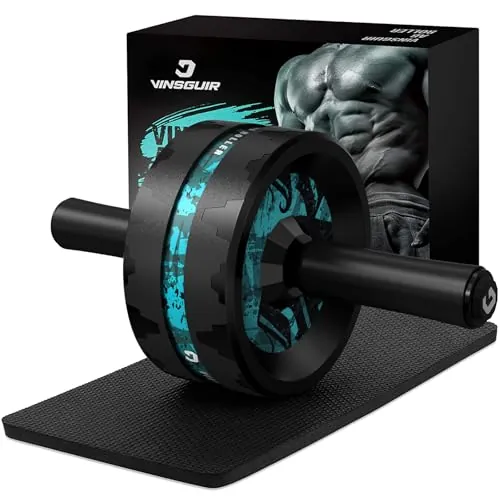
The VINSGUIR Ab Roller Wheel is the more strength-training-oriented product because it’s designed for ab rollouts that demand full-body tension and controlled movement. The ProsourceFit foam roller can support strength training indirectly by helping with warm-ups, mobility work, and recovery, and it can be used in Pilates-style core stabilization drills, but it does not provide progressive resistance in the same way a rollout progression does. If your goal is to train the core with challenging sets, VINSGUIR is the clearer match.
The ProsourceFit foam roller is the stronger choice for mobility and flexibility routines. It’s explicitly described for gentle stretching, increasing range of motion, posture support, and body awareness, and it’s commonly used in yoga and Pilates contexts. The VINSGUIR ab roller is not primarily a mobility tool; while rollouts can involve shoulder and hip positioning, its intent is strength-focused movement rather than flexibility or stretching support. For a mobility-first routine, ProsourceFit is the more relevant option.
For recovery use, the ProsourceFit foam roller is purpose-built: it’s a firm self-massage tool intended for pre- and post-workout routines and targeting common tight areas (upper back, calves, thighs, IT band, glutes, and more). Reviews frequently mention relief and that it holds its firmness over time. The VINSGUIR ab roller is mainly for training stress (core work) rather than recovery; it may fit into a workout program, but it’s not positioned as a recovery accessory and doesn’t replace self-massage tools.
Performance depends on the goal. For recovery and mobility, the ProsourceFit roller’s high-density build and consistent “very firm” feel align with deeper pressure rolling, and buyers often describe it as effective and long-lasting. For core training performance, the VINSGUIR ab roller is designed around controlled rollouts and emphasizes stability via a dual wheel, with many reviews calling it sturdy and straightforward.
The main performance trade-offs are comfort-related: ProsourceFit can feel too hard for some users, while VINSGUIR rollouts can aggravate shoulders for some people and the included knee pad may not be enough on hard floors.
Both support consistency, but in different ways. The VINSGUIR ab roller tends to integrate directly into structured workouts (sets/reps, progression by range of motion), and its compact format makes it easy to leave accessible for frequent use. The ProsourceFit foam roller supports training indirectly by making warm-ups, cool-downs, and mobility sessions easier to stick with, especially when time and space are limited.
If you want a tool that drives a measurable core exercise habit, VINSGUIR fits better. If you want a tool you can use daily for tightness, posture work, or mobility routines, ProsourceFit is usually the better training companion.
For strength-focused use, the VINSGUIR ab roller comes out ahead because it’s designed for rollouts that challenge the trunk and require controlled bracing. The dual-wheel design is intended to reduce side-to-side deviation and improve control, which can help users practice cleaner reps. The ProsourceFit foam roller can still support strength training sessions through mobility and recovery work and can be used in Pilates-style stabilization drills, but it is not a primary strength progression tool in the same way a rollout device is.
The ProsourceFit roller better supports mobility and flexibility routines because it’s explicitly positioned for stretching, range-of-motion work, and spinal stabilization, with common use in yoga and Pilates. Its firm density can be useful for experienced users who want deeper pressure, but it may feel intense for beginners. The VINSGUIR ab roller does not provide the same flexibility-focused utility; any mobility benefit is incidental to the rollout movement rather than a dedicated mobility method.
The ProsourceFit foam roller is the more recovery-oriented option. It’s intended for self-massage and tension relief across multiple muscle groups, and buyer feedback frequently highlights firmness and shape retention over time—both important for consistent rolling pressure. The VINSGUIR ab roller is primarily a training tool and may contribute to overall workout structure, but it isn’t described as supporting recovery beyond general fitness use. If your priority is post-workout muscle care and mobility habits, ProsourceFit fits that role more directly.
Both products are widely used at home, but safety considerations differ. With the ProsourceFit foam roller, the main practical concern is pressure tolerance: the very firm density can be intense, so beginners may need shorter sessions and gentler positioning. With the VINSGUIR ab roller, safety is more about controlled movement and joint comfort: rollouts can strain shoulders or the low back if performed beyond current ability, and knee comfort may depend on using a thicker pad on hard floors. VINSGUIR emphasizes stability and weight capacity, which can help users feel secure, but good form and sensible progression remain important.
Comfort is mixed for both products, but for different reasons. The ProsourceFit foam roller is intentionally very firm, which some users love for deeper pressure but others find too hard—especially beginners or more sensitive users. The VINSGUIR ab roller comfort depends heavily on technique and setup: some reviews mention shoulder discomfort during use, and several note the included knee pad is thin. If comfort is your top priority, consider surface choice (mat/carpet), gradual progression, and whether you prefer pressure-based rolling or joint-loaded rollouts.
The ProsourceFit foam roller is generally the easier tool to start using: it requires no assembly, no setup, and you can scale intensity quickly by shifting body weight and positioning. The VINSGUIR ab roller is also straightforward and often described as easy to assemble, but the exercise itself is more technique-dependent, and some users run into comfort limitations (knees/shoulders) that can slow consistency. For “pick it up and use it immediately,” ProsourceFit has the edge; for “simple equipment with a clear exercise,” VINSGUIR is still very approachable.
Stability is a standout strength for the VINSGUIR ab roller because the dual-wheel design is intended to improve balance and reduce unwanted side-to-side deviation during rollouts. ProsourceFit is stable in a different way: it’s a solid cylinder with no moving parts, so it won’t wobble due to mechanical play. For the specific challenge of controlling a rollout, VINSGUIR is the more stability-focused option; for static placement and body positioning during rolling, ProsourceFit is reliably stable.
Grip favors the VINSGUIR ab roller because it includes dedicated nonslip handles (EVA) designed to stay secure in the hands during rollouts. The ProsourceFit roller’s “grip” is more about surface traction against the floor and body control; the 12-inch format is easy to handle, but it doesn’t have purpose-built handles. If hand comfort and secure gripping are priorities, VINSGUIR is the clearer fit.
Neither product offers true mechanical adjustability. The ProsourceFit roller is a fixed-density, fixed-size unit (this listing is the 12-inch version), so changes come from how you position your body and how much pressure you apply. The VINSGUIR ab roller similarly has a fixed design; intensity is adjusted by rollout distance, tempo, and total reps rather than settings on the device. If you want adjustability, it’s mostly “user-controlled” rather than built into either product.
Both are excellent for small spaces. The ProsourceFit 12-inch roller takes up minimal room and is easy to slide into a closet or under furniture. The VINSGUIR ab roller is also compact and can be stored in a closet, corner, or gym bag alongside the knee pad. If you’re choosing purely for storage convenience, it’s close to a tie—pick based on whether you’d rather store a short cylinder (foam roller) or a small wheel plus pad (ab roller).
Noise is low for both. The ProsourceFit foam roller is essentially silent aside from light contact sound with the floor. The VINSGUIR ab roller can create some rolling noise depending on flooring type, but it’s still typically quiet compared with cardio machines or free-weight drops. For shared living spaces and late-night sessions, either is generally suitable.
Build quality looks strong for both, based on their positioning and buyer feedback. ProsourceFit’s high-density EPP construction is repeatedly described as retaining firmness and holding shape, which is a key quality marker for foam rollers. VINSGUIR emphasizes a high-strength shaft and stable dual-wheel design, and many reviews describe it as sturdy and well-constructed.
The main build-quality caveat appears with VINSGUIR: there are occasional reports of handle fit/finishing issues, and the knee pad is commonly viewed as minimal. ProsourceFit’s primary concern is feel (very firm) rather than construction problems.
The ProsourceFit foam roller has strong durability signals in the provided feedback, with multiple buyers noting it maintains its firmness and doesn’t get “squashed” like softer rollers over time. VINSGUIR also has good durability sentiment, with users describing it as sturdy even with frequent use. However, VINSGUIR has a few reports of small manufacturing/fit issues (such as handle fit), which can affect long-term satisfaction even if the core structure is durable. If durability mainly means “holds shape and stays usable,” ProsourceFit has the cleaner pattern in the provided data.
Maintenance is simple for both products. ProsourceFit’s EPP foam is described as water-resistant and hygienic, making it easy to wipe down after use. The VINSGUIR ab roller typically just needs occasional cleaning of the wheel and handles and keeping the knee pad clean. Neither requires charging, lubrication, or complicated upkeep based on the provided information, so ongoing maintenance burden is minimal.
Portability is a strength for both. The ProsourceFit roller in the 12-inch length is specifically positioned as travel- and space-friendly. The VINSGUIR ab roller is also described as compact and easy to take to places like the office, gym, or outdoors. If you want “throw it in a bag” convenience, VINSGUIR may pack smaller, while ProsourceFit is still very easy to carry and store.
For material transparency, both provide some useful details, but the VINSGUIR listing is clearer about components: it calls out a stainless steel shaft and EVA rubber cotton handles and includes return/warranty information. ProsourceFit specifies expanded polypropylene (EPP) foam and notes it’s water-resistant and recyclable. Neither provides a deep material breakdown beyond those points, but both disclose the core material used for the main structure.
Both products are priced as accessible home-gym tools and both have very large review counts with strong overall ratings, which supports the idea that many buyers feel they’re worth the money. ProsourceFit costs less and is often praised for durability and long-term firmness, which can make it a strong value if you’ll use it frequently for mobility and recovery. VINSGUIR costs more but includes a knee pad accessory and clear return/warranty/support terms, and it may deliver better value if your priority is a compact core training tool you can progress with. Value depends most on your intended use.
Both brands have extensive buyer feedback for these specific products, which helps reduce uncertainty for first-time purchasers. ProsourceFit’s roller benefits from a long-running product presence and consistent review themes around firmness and durability. VINSGUIR earns trust through repeated mentions of stability and ease of assembly and by stating return/warranty/support terms in the provided details. Without third-party testing or broader brand information in the data, brand trust is best judged by these listing details and the consistency of buyer experiences.
Customer satisfaction appears high for both, with the same headline star rating and very large review counts. ProsourceFit feedback frequently highlights quality, durability, and effectiveness for back/hip/leg tightness, while also noting that firmness can be too intense for some users. VINSGUIR feedback often praises stability, sturdiness, and ease of assembly, with recurring caveats around comfort (some shoulder pain reports) and the knee pad being thin. Overall, both are well-liked, with the most consistent “watch-outs” being comfort and accessory expectations.
Only VINSGUIR provides explicit support terms in the supplied data: 30-day no-hassle returns, a 12-month warranty, and lifetime customer service. ProsourceFit’s listing does not include warranty/support details here, so it’s harder to compare on that dimension. If after-sales coverage is important to you, VINSGUIR is the clearer choice based on the information provided.
Most claims for both products are practical and broadly supported by the provided information. ProsourceFit claims a high-density, firm roller for self-massage, stretching, and mobility, and reviews repeatedly confirm firmness, shape retention, and regular use for back/leg tightness. VINSGUIR claims stability via a dual-wheel design, durability via a strong shaft, and ease of use/portability, and reviews often echo stability and straightforward assembly.
Be cautious with any performance promises framed as speed of results. The listings and reviews can suggest usefulness, but individual outcomes depend on consistency, technique, and personal tolerance.
The better product depends on what you’re trying to do. The VINSGUIR Ab Roller Wheel is the more targeted choice for core rollouts and strength-focused training support, with a stability-first dual-wheel design and clear warranty/support terms. Its main limitation is comfort variability, including mixed reports about shoulder discomfort and a thin knee pad.
The ProsourceFit High Density Foam Roller is the better fit for recovery and mobility routines, with strong feedback around durability and long-term firmness plus easy cleaning and travel-friendly storage. Its main limitation is the very firm feel, which some beginners and sensitive users may find too aggressive. If you want one tool for recovery, pick ProsourceFit; for core rollout training, pick VINSGUIR.
Overall winner
Depends on your needs
They’re built for different jobs. The ProsourceFit foam roller is mainly for self-massage, mobility work, and post-workout recovery, with a notably firm feel. The VINSGUIR ab roller is for core rollouts and full-body bracing practice, with a dual-wheel design aimed at stability. Choose based on whether you want recovery/mobility support or core training progression.
For many beginners, the VINSGUIR ab roller can be approachable because it’s simple to assemble and the dual wheel is designed for stability, but form still matters and some users report shoulder discomfort. The ProsourceFit foam roller is very firm, and reviews note that newer users may find it too hard. If you’re sensitive to pressure, a softer roller may be easier than a firm one.
The ProsourceFit foam roller is the clearer recovery-focused option. Its high-density foam is intended for self-myofascial release and stretching, and customer feedback frequently mentions relief in areas like back, hips, and legs. The VINSGUIR ab roller is not positioned as a recovery tool; it’s primarily for abdominal rollouts and core training rather than tissue work.
The VINSGUIR ab roller is purpose-built for core rollouts and bracing practice. The dual-wheel format is intended to help with balance and control compared to many single-wheel designs. The ProsourceFit foam roller can be used for Pilates-style instability drills and core engagement, but it’s mainly a mobility and recovery accessory rather than a dedicated strength tool.
Some buyers love the firmness for deeper pressure, while others find it too aggressive—especially if they’re new to foam rolling or prefer gentler pressure. The listing also notes that new users may be sensitive to the high-density feel. If you want a softer experience, consider using lighter body weight, shorter sessions, or choosing a less firm roller style.
Feedback is mixed. Some users say the knee pad cushions fine, while others report it’s very thin and prefer replacing it with a thicker mat—especially on hard floors. If knee comfort is a priority, plan to use it on a softer surface or pair it with a more substantial pad.
Both are compact and easy to store, but they’re compact in different ways. The ProsourceFit 12-inch foam roller is a short cylinder that fits easily in closets or under furniture. The VINSGUIR ab roller is also small and typically stores in a closet or corner, with a few parts plus the knee pad. Either works well for apartments and small home gyms.
Both are generally quiet compared with machines. The ProsourceFit foam roller has no moving parts, so noise is minimal beyond contact with the floor. The VINSGUIR ab roller rolls on the ground and may create some rolling sound depending on flooring, but it’s still typically low-noise equipment for home use.
Both listings include practical, use-based claims (durability, stability, and intended use), and both products have large review volumes that provide context on real-world fit. For the ProsourceFit roller, multiple reviews mention firmness and holding shape over time, but experiences vary on comfort. For the VINSGUIR, stability and ease of assembly are recurring themes, while knee pad comfort is more mixed.
Check our rankings and expert guides to find the best fitness products for your goals.