#1 Overall Winner
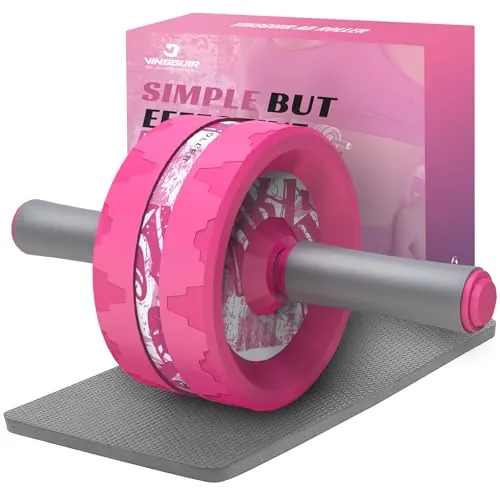
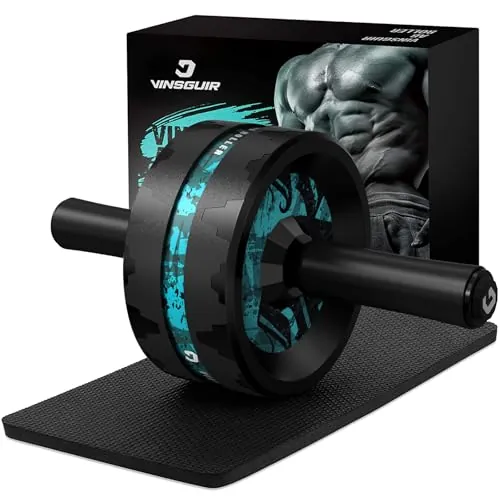
VINSGUIR Ab Roller Wheel (Dual Wheel) with Knee Pad
- Dual-wheel (3.2 inch) design prioritizes straight tracking and stability during rollouts
Comparison
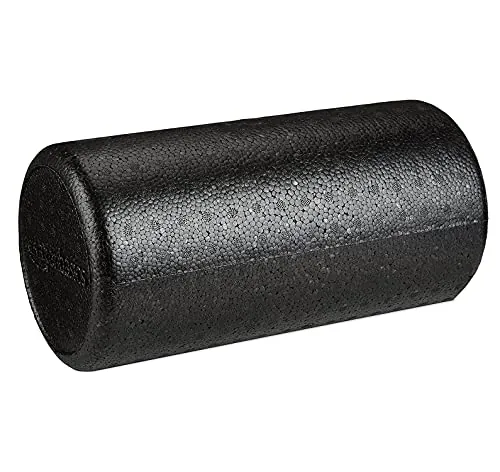
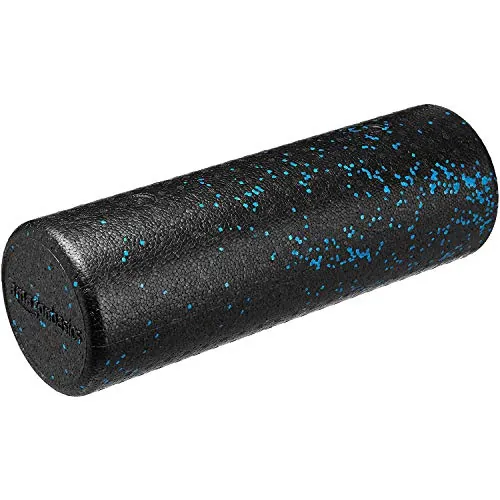
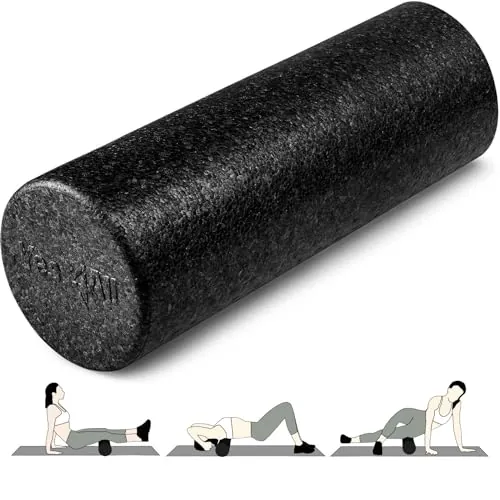
VINSGUIR’s dual-wheel ab roller is designed for rollout-based core strength training in a compact, home-friendly format, while Yes4All’s extra-firm EPP foam roller is aimed at mobility, stretching, and recovery work. Both are affordable, highly reviewed tools, but they fit different parts of a training plan. The clearest difference is training role: strength-focused core work vs flexibility and post-workout rolling.
#1 Overall Winner
Contender
Choose the VINSGUIR Ab Roller if you want a small, stable tool for core rollouts and daily home strength work. Choose the Yes4All EPP Foam Roller if your priority is stretching, mobility, and post-workout rolling, and you’re comfortable with an extra-firm roller. Many home gyms benefit from having both: one for core strength practice and one for mobility/recovery.
Overall winner
Depends on your needs
| Feature | VINSGUIR Ab Roller Wheel (Dual Wheel) with Knee Pad | Yes4All High-Density EPP Round Foam Roller (multiple sizes) | Winner |
|---|---|---|---|
| Product type | Dual-wheel ab roller + knee pad | Extra-firm EPP round foam roller | Depends |
| Primary use | Core rollout strength work | Mobility, stretching, recovery routines | Depends |
| Stability during use | Wide dual wheel designed for balance | Stable cylinder but can slide for some | VINSGUIR Ab Roller Wheel (Dual Wheel) with Knee Pad |
| Comfort considerations | Knee pad included but often called thin | Extra firm; comfort varies by user | Depends |
| Ease of setup | Assembly required; generally easy | No assembly | Yes4All High-Density EPP Round Foam Roller (multiple sizes) |
| Portability | Very compact (6.5 x 12 x 6.5 in) | Lightweight; size depends on length | Depends |
| Weight capacity (listed) | Max weight recommendation: 440 lb | Designed to hold up to 300 lb | VINSGUIR Ab Roller Wheel (Dual Wheel) with Knee Pad |
| Size options | Single format (color variants noted) | 12, 18, 24, 36 inch options | Yes4All High-Density EPP Round Foam Roller (multiple sizes) |
| Grip/handling | EVA handles described as non-slip | Smooth foam; some report low grip | VINSGUIR Ab Roller Wheel (Dual Wheel) with Knee Pad |
| Build materials (disclosed) | Stainless steel (shaft) listed | Foam (EPP), chemical free listed | Tie |
| Noise | Very quiet rolling tool | Virtually silent | Tie |
| Maintenance | Minimal (wipe down; check parts) | Minimal (wipe foam surface) | Tie |
| Best fit for beginners | Stable dual-wheel helps learning rollouts | Extra firm may be intense for some | VINSGUIR Ab Roller Wheel (Dual Wheel) with Knee Pad |
| Value (based on provided price/reviews) | Low-cost core tool with strong feedback | Lower cost mobility tool with strong feedback | Depends |
Yes4All provides stronger recovery support in the practical sense: it’s a simple, low-maintenance tool for rolling and supported stretching after workouts or on rest days. Durability feedback is strong, and many users describe it as helpful for routine soreness management (without that being medical proof). VINSGUIR is less recovery-oriented and more of a training implement; it can be part of a balanced program, but it won’t replace a roller for post-session work. The main caveat for Yes4All is comfort—extra firmness can be a barrier if you prefer a softer feel.
From a training-program perspective, VINSGUIR and Yes4All support different habits. VINSGUIR is best treated like a “main exercise tool” for short, focused sets of rollouts (and rollout progressions) that emphasize controlled bracing. Yes4All is better as a “routine support tool” you can use before training (warm-up and mobility), after training (rolling and stretching), or on rest days. If your workouts already include strength training, the foam roller may improve consistency around warm-ups and cooldowns; if your program lacks direct core rollouts, the ab wheel fills that gap.
VINSGUIR is more directly tied to strength training because rollouts are a challenging bodyweight movement that load the core and require controlled tension through the upper body and hips. The dual-wheel design is intended to reduce unwanted side-to-side deviation, which can help you focus on cleaner reps. Yes4All’s foam roller can support strength training indirectly by helping you prepare joints and tissues for lifting, but it doesn’t provide progressive resistance in the way a rollout tool does. For strength-focused core work, VINSGUIR is the more relevant implement.
Yes4All is the clear mobility and flexibility pick: it’s designed for yoga, Pilates, stretching, and warm-ups, and the size options let you choose anything from targeted work (12 inch) to full-back support (36 inch). VINSGUIR can be used as part of a warm-up (for example, a few controlled reps), but it’s not a flexibility tool and it doesn’t replace stretching props. If your goal is range-of-motion work and mobility sessions, the foam roller aligns better with that use case.
Yes4All fits recovery use more naturally because foam rolling and supported stretching are common parts of cooldown and rest-day routines. Reviews frequently mention using it for sore areas and general post-exercise work, though comfort depends on how you tolerate an extra-firm roller. VINSGUIR is primarily an exercise tool rather than a recovery tool; it may complement recovery by improving core training consistency, but it’s not designed to provide the same type of post-workout rolling experience.
For their intended purposes, both products appear to perform well. VINSGUIR’s performance is mainly about smooth rollouts with good stability and a sturdy feel; reviewer feedback repeatedly calls it effective and easy to use, with the wide dual wheel helping with balance. Yes4All’s performance is about firmness, support, and shape retention during mobility and rolling work, and many reviews describe it as solid and durable. The main performance risk for VINSGUIR is comfort and occasional assembly/fit friction, while for Yes4All it’s that the extra-firm feel (and sometimes slipperiness) can limit usability for certain people and drills.
Yes4All tends to support more training scenarios because it can be used in warm-ups, cooldowns, yoga, Pilates, and general mobility work, and it comes in multiple sizes to fit different routines. VINSGUIR supports training best when your plan includes consistent rollout progressions; it’s a focused tool that can be highly effective when used regularly, but it doesn’t add much variety beyond rollout-style patterns. If you want one accessory that you can use across more sessions each week, the foam roller is typically easier to “fit in.” If you want a dedicated core-builder, the ab wheel supports that goal more directly.
For strength-oriented use, VINSGUIR has the advantage because it’s designed for a demanding core exercise that scales with range of motion, tempo, and form control. The dual-wheel width is positioned to improve stability, which can help users keep reps cleaner as fatigue sets in. Yes4All can assist strength sessions via mobility prep (e.g., supported positioning and rolling), but it won’t provide the same progressive training stimulus as rollouts. If strength training is the main deciding factor, VINSGUIR is typically the more relevant purchase.
Yes4All is strongly aligned with mobility and flexibility work: it’s marketed for yoga and Pilates, and reviews frequently describe use for stretching and mobility routines. The multiple size options also matter here because a longer roller can support more full-body positions, while a shorter one can target specific areas. VINSGUIR does not meaningfully improve flexibility on its own; it’s better categorized as a strength and control tool. If your goal is to build a repeatable mobility habit, Yes4All is the better match.
Yes4All provides stronger recovery support in the practical sense: it’s a simple, low-maintenance tool for rolling and supported stretching after workouts or on rest days. Durability feedback is strong, and many users describe it as helpful for routine soreness management (without that being medical proof). VINSGUIR is less recovery-oriented and more of a training implement; it can be part of a balanced program, but it won’t replace a roller for post-session work. The main caveat for Yes4All is comfort—extra firmness can be a barrier if you prefer a softer feel.
Both products are generally low-risk when used appropriately, but safety considerations differ. VINSGUIR includes a maximum weight recommendation and is designed for stable tracking, which can help reduce unwanted wobble; however, rollouts can place high demands on shoulders and the lower back if you progress too fast or lose control, so gradual range-of-motion progressions matter. Yes4All is extra firm, and several reviews note it can be uncomfortable; users should control pressure and positioning to avoid overdoing it. In both cases, using an appropriate surface (and a better knee pad for VINSGUIR if needed) can improve comfort and control.
Comfort is mixed on both sides, but for different reasons. With VINSGUIR, the most common comfort complaint is the included knee pad being thin, which can be a problem on hard floors; some users also mention shoulder discomfort when using the wheel. With Yes4All, comfort depends heavily on firmness tolerance—many like the extra-firm support, while others find it too hard for certain positions or Pilates drills. The more comfortable choice depends on your joints, surfaces, and how you plan to use the tool.
Yes4All is simpler day-to-day because it requires no assembly and has almost no learning curve: you place it and use it for rolling or supported positions. VINSGUIR is still straightforward, but it involves assembly and rollouts can be technically demanding, especially for beginners who need to control range of motion and bracing. If you want the lowest-friction tool to add to a routine immediately, the foam roller is typically easier; if you want a focused exercise tool and are willing to learn technique, the ab wheel is still very approachable.
VINSGUIR’s stability is a central feature: the dual-wheel width is designed to reduce tipping and side-to-side deviation during rollouts, and users frequently praise how stable it feels. Yes4All is stable in the sense that it’s a solid cylinder that supports bodyweight, but some reviews mention it can slide because the surface is smooth. For movements where slip and tracking matter, VINSGUIR tends to provide more controlled stability.
VINSGUIR has the advantage for grip because it uses dedicated EVA handles intended to be non-slip and comfortable in the hands. With Yes4All, “grip” depends on how the foam contacts your floor and clothing/skin; some users report the surface has little grip and can slide around during use. If you expect sweaty, hand-controlled reps and need secure handling, the ab roller’s handle design is typically more dependable.
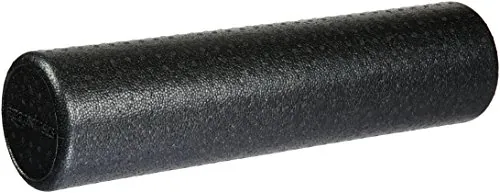
Yes4All offers more practical adjustability because you can choose different lengths (12, 18, 24, 36 inches) depending on your body size, storage needs, and intended drills. VINSGUIR doesn’t have “settings”; progression is mainly achieved by changing leverage and technique (shorter to longer rollouts, tempo, and control). If you want a product you can “configure” at purchase time, Yes4All is more adjustable; if you prefer a single compact tool with skill-based progression, VINSGUIR fits better.
Both are strong for home storage, but VINSGUIR is the most space-efficient because it’s very compact and easy to keep in a small closet or near a workout area. Yes4All is still small relative to larger equipment, but the footprint depends on the size you buy; a 12- or 18-inch roller stores more easily than a 36-inch version. If you have very limited space, the ab roller (or a shorter foam roller size) will be the easiest to accommodate.
Neither product is meaningfully noisy in typical use. VINSGUIR’s wheel movement is generally quiet on most surfaces, and Yes4All’s foam roller is essentially silent. If you train early, late, or in an apartment setting, both are good low-noise choices, with the main consideration being floor protection and comfort rather than sound.
Both products present as well-built in buyer feedback, but construction is different. VINSGUIR’s build quality is tied to the shaft, wheel, and handle fit; most reviews describe it as sturdy and stable, though a small number mention assembly/fit issues (such as a handle needing trimming). Yes4All’s build quality is tied to foam density and shape retention; many reviewers highlight that it doesn’t collapse under weight. If you want moving-part reliability and stable tracking, VINSGUIR is the key; if you want foam that stays firm over time, Yes4All is the focus.
Yes4All has particularly strong durability sentiment for a foam product, with many users saying it holds its shape and doesn’t dent or collapse easily. VINSGUIR also has solid durability signals, with a stainless steel shaft listed and many reviews describing it as sturdy even with frequent use. The durability “risk type” differs: the ab roller can be affected by fit/assembly and component wear over time, while the foam roller’s long-term feel depends on whether you like (or can tolerate) its firmness as it breaks in.
Maintenance is minimal for both. VINSGUIR typically just needs occasional wipe-down and basic checks that parts remain fitted securely after repeated use. Yes4All mainly needs surface cleaning as needed and basic storage to keep the foam in good condition. Neither requires charging, lubrication, or complex care, making both easy additions to a routine with very low upkeep.
VINSGUIR is highly portable due to its compact dimensions and light weight, making it easy to keep at home, bring to the office, or pack for trips. Yes4All is also lightweight, but portability depends on which length you choose; smaller sizes are travel-friendlier, while longer rollers are more awkward to pack. For consistent grab-and-go portability, VINSGUIR is the safer pick, while Yes4All can be very portable if you choose a shorter option.
For equipment, “transparency” comes down to material clarity and key specs. VINSGUIR lists stainless steel (shaft) and mentions EVA rubber cotton handles, plus a maximum weight recommendation. Yes4All lists foam (EPP) and notes “chemical free,” along with size options and a 300 lb capacity statement. Neither listing provides deep technical breakdowns (e.g., foam density figures or detailed component sourcing), but both give enough material information to understand what you’re buying and how it’s intended to be used.
Both products look like strong values given their low prices, high review volumes, and generally positive buyer sentiment. VINSGUIR offers a focused core-training tool that many users describe as sturdy and stable, though you may want to budget for a thicker knee pad if the included one feels insufficient. Yes4All offers a versatile mobility/recovery tool with strong “holds shape” durability feedback and multiple size options, but the extra-firm feel can reduce value if you find it too uncomfortable to use consistently. The better value is the one you’ll use most often for your actual routine.
Based on the provided data, both brands show strong marketplace traction via very large review counts and solid star ratings. VINSGUIR provides clear after-sales terms in the listing (returns, warranty, and customer service), which can increase confidence for some buyers. Yes4All provides clear sizing options and material positioning (EPP, extra firm), but specific warranty/support details aren’t included here. If support clarity matters, VINSGUIR has the edge in the provided information.
Customer satisfaction appears high for both products, reflected in strong average ratings and very large review counts. VINSGUIR reviews frequently praise stability, ease of assembly, and value, with recurring negatives around the thin knee pad and occasional fit/finish issues. Yes4All reviews often praise durability and effectiveness for stretching/rolling routines, with recurring negatives around the roller being too hard for some users and occasional complaints about slipperiness or “styrofoam-like” feel. In both cases, satisfaction depends on matching the tool to your tolerance and intended use.
VINSGUIR lists 30-day no-hassle returns, a 12-month warranty, and lifetime customer service in the provided information. For the Yes4All foam roller, warranty/support terms are not provided here, so it’s hard to compare coverage directly. If warranty clarity is a key buying factor, VINSGUIR is the only product with explicit support details in this dataset.
VINSGUIR’s most supportable claims in the provided data are practical and mechanical: dual-wheel stability, portability, listed materials (stainless steel shaft), and a stated maximum weight recommendation. Claims about “six packs faster” or “burning fat” are marketing language and aren’t directly verifiable from the listing and reviews alone. Yes4All’s best-supported claims relate to firmness, size options, and durability/shape retention, which are repeatedly echoed in reviews. Any “pain relief” language appears in customer feedback and product benefits text, but should be treated as user experience rather than guaranteed outcomes.
This comparison doesn’t have a single winner because the products are designed for different outcomes. VINSGUIR is the better choice for people who want a stable, space-saving ab wheel for rollout progressions; its biggest limitation is comfort, with repeated mentions of a thin knee pad and occasional assembly-fit friction. Yes4All is the better choice for mobility and recovery-focused users who want a durable, extra-firm foam roller with multiple size options; its biggest limitation is that the firmness (and sometimes slipperiness) can make it uncomfortable or harder to use consistently. Choose the one that matches the part of training you’ll actually do every week.
Overall winner
Depends on your needs
They’re better for different goals. VINSGUIR is the more direct choice for core rollouts and strength-focused ab training, with a stable dual-wheel design and strong ease-of-use feedback. Yes4All is the more versatile choice for mobility work and recovery routines, with multiple sizes and strong durability feedback. If you want one tool for abs, pick VINSGUIR; for stretching and rolling, pick Yes4All.
The VINSGUIR ab roller is purpose-built for core rollouts that challenge the trunk, shoulders, and hips as you control the wheel. The Yes4All foam roller can be used for some core stability drills, but it isn’t designed to provide progressive resistance in the same way. If your main goal is ab rollouts and core strength practice, the VINSGUIR is the clearer fit.
The Yes4All EPP foam roller is designed for yoga, Pilates, stretching, and warm-ups, and it comes in multiple sizes depending on how you plan to use it. Reviews often mention using it for back and leg rolling and mobility work. The VINSGUIR ab roller is not a mobility tool; it’s mainly for rollouts and core training.
It can be, depending on your tolerance and how you use it. The product is described as extra firm and reviews are mixed: some people love the support, while others find it too hard or uncomfortable for certain Pilates or sensitive areas. If you’re new to rolling, consider using shorter sessions and controlled pressure, and pick the size that’s easiest to manage.
It includes a knee pad, but comfort feedback is mixed. Several reviews describe the pad as minimal or thin, especially on hard flooring, and some users recommend upgrading to a thicker pad. If you plan frequent kneeling rollouts, it’s worth checking your floor surface and adding a more cushioned mat if needed.
Both store easily, but the VINSGUIR ab roller is extremely compact and is commonly mentioned as easy to keep in a closet and use daily. The Yes4All foam roller is lightweight, but length varies by the size you choose (12 to 36 inches). If space is tight, the VINSGUIR or a shorter foam roller size will be the simplest.
Both have strong durability signals, but in different ways. VINSGUIR lists a stainless steel shaft and a high maximum weight recommendation, and many reviewers describe it as sturdy. Yes4All’s high-density EPP foam is frequently praised for holding shape and not collapsing, with strong durability sentiment overall. Your “more durable” pick depends on whether you’re worried about moving parts (ab wheel) or foam compression (roller).
VINSGUIR explicitly lists 30-day no-hassle returns, a 12-month warranty, and lifetime customer service. For the Yes4All foam roller, warranty/support details aren’t provided in the data here. If after-sales coverage is a priority, VINSGUIR is the only one with clearly stated support terms in the provided information.
Check our rankings and expert guides to find the best fitness products for your goals.