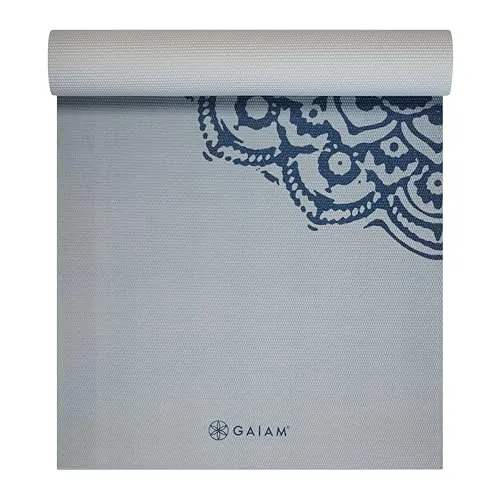
#1 Overall Winner
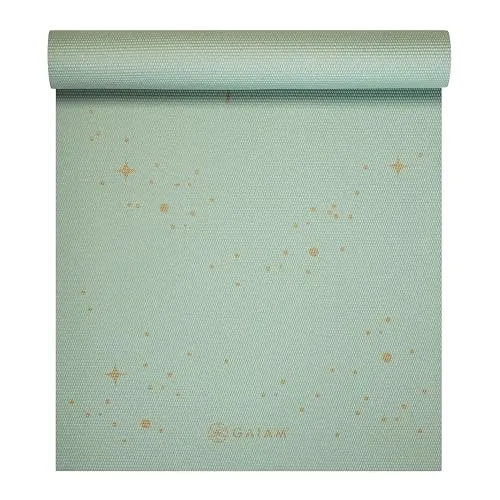
Gaiam Premium Print Extra Thick Yoga Mat
- 6 mm cushioning provides a more comfortable base for yoga, Pilates, stretching, and floor exercises.
Comparison
These Gaiam 6 mm PVC mats are closely matched for yoga, Pilates, stretching, and home floor workouts. The Premium Print model has stronger durability and portability support, while the Reversible version adds two-sided styling, a slightly lower listed price, and a lifetime guarantee. Both provide welcome cushioning, but neither has uniformly positive traction feedback in very sweaty practice.
#1 Overall Winner
Contender
Choose the Premium Print Yoga Mat for the better-supported all-round combination of cushioning, portability, and durability. Choose the Reversible Yoga Mat if two-sided styling, included online videos, and the listed lifetime guarantee are higher priorities. Both are well suited to low-impact home workouts, but sweaty users should account for the mixed grip feedback.
Overall winner
Depends on your needs
| Feature | Gaiam Premium Print Extra Thick Yoga Mat | Gaiam Premium Print Reversible Extra Thick Yoga Mat | Winner |
|---|---|---|---|
| Primary use | Yoga, Pilates, and floor workouts | Yoga, Pilates, and floor workouts | Tie |
| Dimensions | 68 x 24 inches, 6 mm | 68 x 24 inches, 6 mm | Tie |
| Weight | 1.36 kg | 1.36 kg | Tie |
| Cushioning | 6 mm cushioned PVC surface | 6 mm cushioned PVC surface | Tie |
| Design format | Single printed design | Two reversible designs | Gaiam Premium Print Reversible Extra Thick Yoga Mat |
| Dry-use traction | Generally positive; mixed sweaty-use feedback | Generally positive; mixed sweaty-use feedback | Depends |
| Durability feedback | More consistently positive | Mixed long-term feedback | Gaiam Premium Print Extra Thick Yoga Mat |
| Care guidance | Cleaning, drying, sun, and storage guidance | Initial airing guidance provided | Gaiam Premium Print Extra Thick Yoga Mat |
| Included content | Downloadable yoga workout | Online video library | Depends |
| Warranty information | Not provided | Lifetime guarantee listed | Gaiam Premium Print Reversible Extra Thick Yoga Mat |
| Listed price | $28.42 | $27.99 | Gaiam Premium Print Reversible Extra Thick Yoga Mat |
| Buyer sentiment | 4.7/5 from 22,062 reviews | 4.7/5 from 15,454 reviews | Tie |
Product A is marginally better for post-workout stretching and gentle mobility because its cushioning, stability, and portability evidence is somewhat stronger. Product B still offers the same stated 6 mm thickness and can work well for calm floor-based routines. Neither listing provides evidence that the mat itself improves recovery outcomes; their role is simply to provide a more comfortable, defined surface for stretching and low-intensity movement.
Both mats support low-impact training that benefits from a defined, cushioned floor surface: yoga flows, Pilates, mobility work, core sessions, glute exercises, and stretching. Their matching size and thickness mean neither offers a major advantage in basic workout coverage. Product A is the more convincing option for frequent general use because its handling and durability feedback is more consistent. Product B is better for users who will make use of the included video library or appreciate a reversible design for alternating home and studio settings.
Neither product is strength equipment, but both can make bodyweight strength work more comfortable by cushioning contact points in planks, core training, glute bridges, and kneeling exercises. Product A has a slight practical edge for these sessions because reviews more consistently describe it as stable, supportive, and durable. For loaded training, users should still consider the floor, the exercise, and the possibility of surface wear; neither listing positions these mats as protective flooring for heavy weights.
These mats are not dedicated cardio products, but both can provide a quieter, more comfortable surface for low-impact conditioning, warm-ups, bodyweight circuits, and cooldowns. Product B has a small edge in cardio routine support from the supplied comparison data, although the difference is not meaningful enough to outweigh personal preference. Neither product should be selected specifically for high-sweat conditioning, as buyer feedback for both identifies variable grip once hands become wet.
Mobility, flexibility, yoga, and Pilates are the clearest use cases for both mats. The shared 6 mm thickness provides cushioning for knees, wrists, hips, and back-contact movements while remaining intended for pose work and balance practice. Product A is the slightly stronger choice for regular practice because users more consistently report a stable surface and lasting condition. Product B matches it on stated cushioning and may appeal more to users who want two designs or guided video content for building a routine.
Both mats can support non-medical recovery routines such as gentle stretching, mobility drills, breath work, and relaxed floor-based movement. Their cushioning may make these routines more comfortable on hard flooring, especially in kneeling or seated positions. Product A has a small advantage because its comfort, stability, and portability feedback is stronger overall. However, neither mat itself provides a recovery treatment, and the best choice still depends on the exercises a user intends to perform.
For their intended role as cushioned exercise surfaces, both Gaiam mats perform well in standard yoga, Pilates, and home floor-workout contexts. Their stated 6 mm thickness is repeatedly praised for reducing discomfort on hard floors without being described as excessively unstable for balance work. Product A has the stronger performance case because feedback on durability, floor stability, and everyday handling is more consistent. Product B remains capable, but its reviews show more variation around grip and long-term wear. In very sweaty practice, neither product has unequivocal traction support.
Both mats can reduce friction in a home routine by rolling up for storage, offering enough cushioning for common floor movements, and supporting several low-impact workout styles. Product A is better suited to consistent mixed training because its lightweight design, storage practicality, and durability feedback are stronger. Product B offers useful routine support through its included online video library and reversible styling, which may help some users keep practice engaging. Advanced users doing hot or highly sweaty sessions should not assume either surface will maintain the same grip as it does when dry.
For mat-based strength work, the two models are broadly equal in dimensions and padding. Both can provide a more comfortable base for planks, abdominal exercises, glute work, and mobility between sets. Product A has the narrow advantage because the supplied feedback more often describes a firm-but-cushioned, stable surface and better wear resistance. Neither product provides load adjustment, handles, or resistance, and neither should be treated as a substitute for dedicated protective flooring under heavy equipment.
Neither mat is designed to be a primary conditioning tool. They are most useful under low-impact cardio-adjacent routines, floor circuits, warm-ups, and cooldowns rather than jumping or machine-based training. Product B has slightly better support for this use in the supplied data, but both remain limited by similar reports of reduced hand traction during high-sweat exercise. Choose based on preferred features rather than expecting a material performance difference for cardio.
Both products are especially appropriate for flexibility and mobility work. Their stated 6 mm cushioning can make extended kneeling, hip-opening, seated, and supine positions more tolerable on firm flooring, and reviews for both frequently praise comfort. Product A takes a slight lead for regular mobility practice due to stronger stability and durability support. Product B is equally viable for users who prioritize reversible styling and guided video content over the stronger long-term feedback for Product A.
Product A is marginally better for post-workout stretching and gentle mobility because its cushioning, stability, and portability evidence is somewhat stronger. Product B still offers the same stated 6 mm thickness and can work well for calm floor-based routines. Neither listing provides evidence that the mat itself improves recovery outcomes; their role is simply to provide a more comfortable, defined surface for stretching and low-intensity movement.
Both mats are intended to provide a cushioned, textured surface for yoga and floor exercise, and both list the same six phthalates as excluded from the PVC material. The key practical safety consideration is traction: many buyers report good dry-use grip, but some reviews for each model describe slipping when hands are sweaty. Product A has a slight edge because its stability and grip evidence is stronger overall. Users should place either mat on an appropriate surface, keep it clean and dry, and adjust practice if traction is reduced.
Comfort is effectively a tie. Both mats use a stated 6 mm thickness and receive repeated positive feedback for cushioning knees, wrists, and other contact points during yoga and floor workouts. Product A is often described as cushioned while still sufficiently firm for balance; Product B is praised for a soft, supportive feel on hard surfaces. The best choice comes down to design preference, care requirements, and expected frequency of use rather than padding alone.
Product A is slightly easier to live with day to day. It is lightweight, straightforward to roll up, and comes with detailed instructions for airing, cleaning, drying, and storing the mat. Product B is also easy to roll and store, and its reversible design offers quick visual variety, but the supplied care direction is less comprehensive. Both require an initial airing period if odor is noticeable, which is an extra step before first use.
Both mats are intended to stay positioned on the floor and offer enough density for pose work without excessive softness. Product A has the clearer stability advantage, with reviews describing a surface that does not slide around and remains suitable for balance-focused yoga. Product B also receives favorable reports of floor traction and support, but feedback is somewhat less consistent. For either mat, sweaty hands are the main reported condition that may reduce confidence in surface grip.
Product A has the modest grip advantage overall, with many users describing a sticky texture that helps during regular practice. Still, reviewers of both mats report that hands can slide once sweat accumulates, so their non-slip positioning is best interpreted as dry-use performance rather than a guarantee for hot yoga. Product B has positive traction reports too, but similarly mixed wet-use feedback.
Both mats are strong options for small homes because they share a 68 by 24 inch exercise footprint and can be rolled up after a session. Product A has a slight advantage due to stronger portability and storage feedback, including comments that it is easy to move around the house or carry to class. Product B is also practical for compact spaces, but the reversible print does not change its physical storage requirements.
Both mats are well suited to quiet home exercise because they create a soft barrier between the body and a hard floor during yoga, Pilates, and controlled floor movements. Neither listing provides a distinct noise-reduction feature beyond the cushioned construction. They are not designed to manage the impact or equipment noise associated with dropping weights, running, or other high-impact training.
Product A has the stronger build-quality case in the supplied information. Reviewers often describe it as sturdy, supportive, easy to roll, and still in good condition after regular use, while the listing supplies clear use and care guidance. Product B is also commonly viewed as well made, with positive comments on its dense feel and textured surface, but its durability feedback is more divided. Both use PVC and share the same stated thickness, so the distinction comes mainly from the consistency of user-reported wear.
Product A is the better-supported durability choice. Several supplied reviews describe regular use without visible wear, flaking, or loss of print, although no mat is immune to storage and environmental factors. Product B has positive long-term reports from some owners, but its aggregated feedback is more mixed, including claims that it does not hold up well. Product A's care instructions also explicitly address sun exposure, cleaning, and storage, which may help users preserve the material and printed finish.
Product A is the easier choice for users who want explicit maintenance direction. Its listing advises spot cleaning with mat wash or cold water and mild detergent, drying flat, avoiding extended sun exposure, and storing in a mat bag. Product B instructs users to air the mat out after opening but provides less supplied detail on regular cleaning and storage. Both may release an odor initially, so airing out is a sensible first step.
Product A has the portability advantage, although both models share the same listed 1.36 kg weight and roll-up format. Reviews for Product A repeatedly emphasize that it is lightweight and easy to take around the home or to class. Product B is still transportable and several buyers call it easy to travel with, but its portability feedback is less consistently strong in the supplied comparison data.
Material transparency is similar. Both listings identify polyvinyl chloride as the mat material and state that the products are free from DEHP, DBP, BBP, DINP, DIDP, and DNOP. Product A provides more extensive care details, including cleaning method, flat drying, storage, and a warning about prolonged sun exposure. Product B clearly explains the initial airing requirement but supplies fewer maintenance specifics. Neither listing provides a broader material breakdown beyond PVC and the specified phthalate exclusions.
Product B has the narrow value advantage. Its listed price is slightly lower, and it combines reversible styling, online video content, and a listed lifetime guarantee with the same 6 mm thickness and dimensions as Product A. Product A remains a strong value option because it costs only slightly more while offering stronger durability, portability, and care support. Buyers should not choose on price alone: frequent users may place more value on Product A's more consistent wear feedback, while occasional users may prefer Product B's added features.
Brand trust is essentially even because both products are Gaiam mats with the same listed rating and broadly positive buyer sentiment. The supplied reviews for both show repeat purchasers and favorable comments about comfort, design, and price. Product A gains a small practical advantage from more detailed care information, while Product B adds a listed lifetime guarantee. Neither product's listing supplies independent testing or evidence beyond the stated material exclusions and customer feedback.
Customer satisfaction is very strong for both products: each has a listed 4.7 out of 5 rating and a large review base. Product A has more supplied reviews and more consistent praise for cushioning, design, lightweight handling, and everyday durability. Product B is likewise well liked for its reversible appearance, comfort, and value, but reports of odor, variable grip, and durability are more mixed. These reviews describe user experience and should not be read as proof that either mat will perform identically for every person or practice style.
Product B is the only clear choice for warranty support because its listing specifies a lifetime guarantee. No warranty or replacement-policy information was provided for Product A, so it cannot be compared on terms, claims process, exclusions, or customer service outcomes. Buyers who consider long-term coverage important should confirm the guarantee conditions with the seller before purchasing.
The principal claims for both mats are reasonably aligned with their provided specifications and buyer feedback: each is stated to be 6 mm thick, 68 by 24 inches, PVC, textured, and intended for yoga, Pilates, and floor workouts. Reviews often support the cushioning and dry-use comfort claims. The non-slip claim needs qualification, because feedback for both products is inconsistent in sweaty conditions. Product A's detailed care instructions offer clearer practical support for preserving the mat, while Product B's reversible design and lifetime guarantee are directly stated in its listing.
The Gaiam Premium Print Extra Thick Yoga Mat is the better overall choice for most users. It delivers the same useful 6 mm cushioning and compact roll-up format as the Reversible model, while showing stronger support for durability, stability, portability, and regular mixed floor training. Its main limitations are initial odor reports and less reliable grip when hands are very sweaty.
The Gaiam Premium Print Reversible Extra Thick Yoga Mat is not far behind. Its main strengths are two-sided styling, a slightly lower listed price, online video content, and a listed lifetime guarantee. Its main drawback is more inconsistent feedback around durability and traction. Pick Product A for the more dependable everyday mat; pick Product B when reversibility and coverage matter most.

Overall winner
Depends on your needs
The Premium Print Yoga Mat is the stronger all-round choice when durability, portability, and detailed care guidance matter most. The Reversible Yoga Mat is a compelling alternative for buyers who prefer two designs, a slightly lower listed price, included video content, and the listed lifetime guarantee. Both provide the same stated size and 6 mm cushioning.
Yes. Both listings identify yoga, Pilates, and floor workouts as intended uses, and both provide 6 mm cushioning. Reviewers commonly mention comfort during stretching, abdominal work, glute exercises, and kneeling poses. They are best viewed as cushioned surfaces for low-impact training rather than equipment designed to add resistance or load.
The Reversible Yoga Mat has a slight beginner advantage because it includes an online library of helpful videos and carries a listed lifetime guarantee. The Premium Print Yoga Mat also suits beginners well, particularly because it includes a downloadable yoga workout and is lightweight enough to handle easily. Either mat can work for introductory yoga and floor routines.
Both mats have textured surfaces and many customers report satisfactory dry-use traction. However, supplied reviews for each model also describe hands slipping during very sweaty practice. For hot yoga or sessions where palms become very wet, the available feedback suggests considering a towel over the hand area rather than relying on either mat's surface alone.
It depends on design preference rather than cushioning, because both products are listed at 6 mm thick and receive positive comfort feedback for knees and wrists. The Premium Print Yoga Mat has slightly stronger overall support for its comfort and training role, while the Reversible model is also repeatedly described as cushioned and supportive on hard floors.
Both listings state that a strong but harmless odor may be present after unwrapping and recommend airing the mat out for two to three days. Buyer feedback is mixed: some users noticed little or no smell, while others found it unpleasant initially. The odor reports should be considered before purchasing for an enclosed space.
The Reversible Yoga Mat has the slight value edge based on its marginally lower listed price, two-sided design, included video library, and listed lifetime guarantee. The Premium Print Yoga Mat remains competitively positioned because reviewers more consistently praise its durability, handling, and comfort. The better value depends on whether reversibility and warranty coverage outweigh those practical advantages.
Both mats should be aired out after opening. The Premium Print Yoga Mat has more specific care guidance: spot clean with a yoga mat wash or cold water and mild detergent, dry flat, avoid prolonged sun exposure, and store in a mat bag. The Reversible mat's supplied care guidance primarily focuses on airing it out after unwrapping.
Check our rankings and expert guides to find the best fitness products for your goals.