#1 Overall Winner
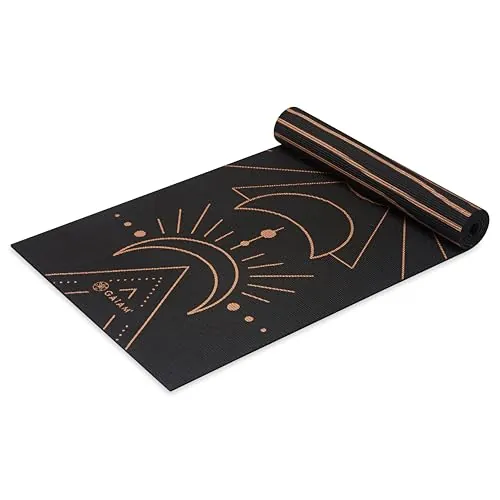
Gaiam Yoga Mat - Premium 6mm Print Extra Thick Non Slip Exercise & Fitness Mat
- 6 mm PVC construction provides substantial cushioning for yoga, Pilates, and floor exercise.
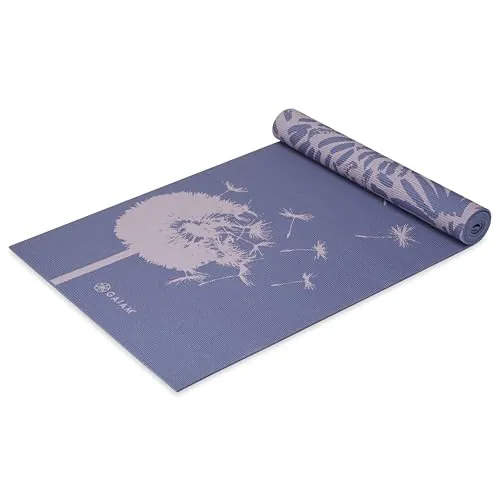
Comparison
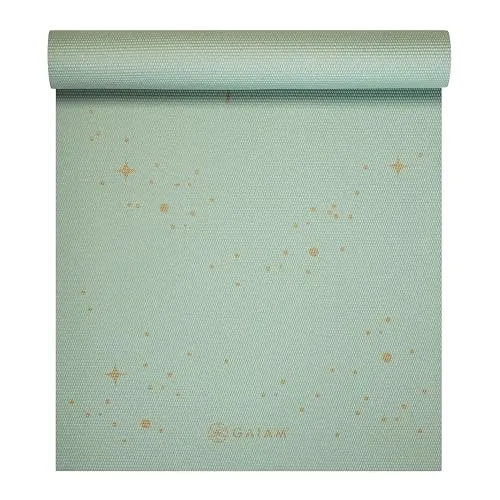
These Gaiam 6 mm PVC mats are closely matched options for yoga, Pilates, stretching, and floor workouts. The Premium 6mm Print Mat has stronger supplied evidence for stability, durability, and portability, while the Premium Print Reversible Mat costs less and adds two-sided styling. Both provide meaningful cushioning, but neither has uniformly positive feedback for grip during very sweaty practice.
#1 Overall Winner
Contender
Choose the Premium 6mm Print Mat for the stronger all-round case on durability, stability, and carrying convenience. Choose the Premium Print Reversible Mat if a lower price and two-sided design are more important. Both suit yoga, Pilates, stretching, and floor workouts, but users with sweaty hands should expect grip to vary.
Overall winner
Depends on your needs
| Feature | Gaiam Yoga Mat - Premium 6mm Print Extra Thick Non Slip Exercise & Fitness Mat | Gaiam Yoga Mat - Premium Print Reversible Extra Thick Non Slip Exercise & Fitness Mat | Winner |
|---|---|---|---|
| Primary design | Single printed yoga mat |
Reversible printed yoga mat |
Gaiam Yoga Mat - Premium Print Reversible Extra Thick Non Slip Exercise & Fitness Mat |
| Stated dimensions | 68 in x 24 in x 6 mm |
68 in x 24 in x 6 mm |
Tie |
| Material | PVC |
PVC |
Tie |
| Listed weight | 1.36 kg |
3.12 lb |
Gaiam Yoga Mat - Premium 6mm Print Extra Thick Non Slip Exercise & Fitness Mat |
| Cushioning | Extra-thick 6 mm surface |
Extra-thick 6 mm surface |
Tie |
| Dry-use traction | Textured sticky surface; generally positive feedback |
Textured sticky surface; mixed feedback |
Gaiam Yoga Mat - Premium 6mm Print Extra Thick Non Slip Exercise & Fitness Mat |
| Durability feedback | Generally positive |
Mixed |
Gaiam Yoga Mat - Premium 6mm Print Extra Thick Non Slip Exercise & Fitness Mat |
| Comfort | Strong knee and joint cushioning feedback |
Strong knee and wrist cushioning feedback |
Tie |
| Portability | Lightweight and easy to roll |
Rollable, but less favourable portability evidence |
Gaiam Yoga Mat - Premium 6mm Print Extra Thick Non Slip Exercise & Fitness Mat |
| Initial odour | Possible; air out before use |
Possible; recurring review concern |
Gaiam Yoga Mat - Premium 6mm Print Extra Thick Non Slip Exercise & Fitness Mat |
| Listed price | $28.42 |
$20.90 |
Gaiam Yoga Mat - Premium Print Reversible Extra Thick Non Slip Exercise & Fitness Mat |
| Best buying angle | Durability, stability, and lighter carrying |
Lower cost and reversible styling |
Depends |
Both mats are useful as a comfortable base for post-workout stretching, gentle mobility, and relaxation-focused floor routines. Their role is supportive rather than therapeutic: the added cushioning can make these activities more tolerable on hard flooring, but the mats do not make medical recovery claims. Item 2 is the better value choice for mainly gentle recovery use, while Item 1 is the more versatile choice if recovery sessions are combined with frequent yoga, Pilates, or bodyweight workouts.
Both mats fill the same role: creating a cushioned, defined training surface for yoga, Pilates, mobility work, warm-ups, cool-downs, and bodyweight floor exercise. Their 6 mm construction is particularly relevant for kneeling, seated, supine, and wrist-supported movements on hard floors. Item 1 is the more dependable general-training pick when repeated transport, stability, and reported durability matter. Item 2 is equally usable for routine practice but is the better fit when a reversible look and lower entry cost are the priority. Neither mat replaces equipment designed for progressive resistance or dedicated cardio training.
Neither product is a strength-training implement, but both can support bodyweight strength sessions by cushioning planks, push-ups, glute bridges, abdominal work, and mobility between sets. Item 1 is the preferable option for this supporting role because its supplied stability and grip evidence is stronger. Item 2 remains suitable for lower-impact floor work, although mixed reports on traction and durability matter more if sessions include frequent plank transitions or sweaty hands.
These mats are not cardio machines or conditioning tools, but they can provide a floor surface for low-impact cardio circuits, dance-inspired workouts, or exercise transitions. Their main contribution is cushioning and floor traction rather than intensity, tracking, resistance, or endurance progression. Item 1 has the slight practical edge due to stronger stability and portability evidence. For high-sweat intervals, neither product has consistently dependable wet-hand grip feedback, so their role is better suited to controlled floor-based movement than demanding hot or sweaty conditioning work.
Mobility, flexibility, yoga, and Pilates are the clearest use cases for both mats. The shared 6 mm thickness provides a more forgiving surface for kneeling stretches, seated positions, and floor-based mobility without creating the excessive softness that can interfere with balance. Item 1 has the better overall case for regular practice because of more favourable stability, grip, and durability evidence. Item 2 is just as relevant for stretching and Pilates, with the added appeal of a reversible design and lower price.
Both mats can support recovery-oriented routines such as gentle stretching, breathing practice, easy mobility, and floor-based relaxation. Their cushioning may make time spent in kneeling, seated, or lying positions more comfortable than exercising directly on a hard floor. Item 2 has a slight advantage for this lower-intensity use because it offers similar comfort at a lower listed price. Item 1 is preferable if the same mat will also be used frequently for more demanding yoga or floor workouts.
For their intended purpose, both Gaiam mats appear to perform well as cushioned surfaces for yoga, Pilates, and floor exercise. Reviews repeatedly highlight knee comfort, attractive prints, and easy roll-up storage. Item 1 performs more consistently in the supplied comparison data for stability, durability, and dry-use grip, making it the safer choice for regular mixed practice. Item 2 still offers useful cushioning and many buyers report good traction, but feedback is more divided on whether it remains grippy and durable over time. Neither mat has uniformly positive results when hands become sweaty.
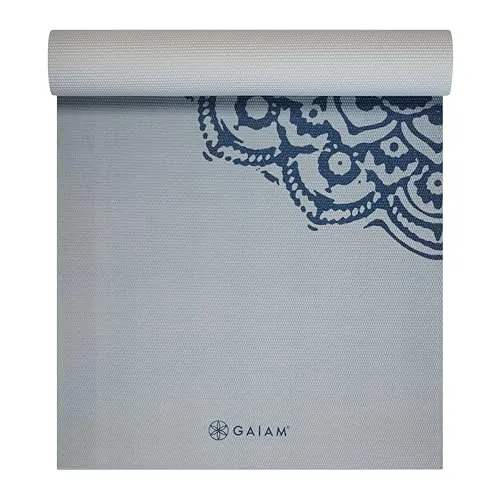
Both products can lower the friction of maintaining a home movement routine by providing a dedicated, comfortable surface that stores rolled up. The included downloadable yoga workout may also help a new owner begin using either mat. Item 1 better supports frequent, varied practice because the supplied feedback is stronger for stability, durability, and carrying convenience. Item 2 is a good beginner-friendly alternative for yoga, stretching, and basic floor work, especially for shoppers who want a lower initial cost. Neither product provides adjustable resistance or built-in progression for advanced strength or cardio programming.
For floor-based strength work, the main considerations are a stable base, enough cushioning for knees and wrists, and traction during planks or push-ups. Item 1 has the stronger evidence in these areas and is more appropriate for regular core, glute, and bodyweight sessions. Item 2 provides comparable cushioning but has more variable grip and durability reports. Neither mat is intended to support heavy lifting, loaded jumping, or resistance progression; they function as a comfort and floor-protection accessory rather than a strength tool.
Cardio relevance is limited because neither product provides resistance, movement tracking, or a dedicated conditioning mechanism. Both can be used beneath low-impact home circuits and as a surface for floor transitions, with cushioning as their primary benefit. Item 1 is the marginally stronger choice where secure placement and frequent transport matter. However, user reports of slippery hands under sweat mean neither mat should be assumed to provide the same traction in intense, hot, or high-sweat workouts as it does during dry practice.
Both mats are highly suited to flexibility and mobility routines because their shared 6 mm thickness adds comfort for kneeling, seated, and lying positions. Reviews for each commonly mention support for knees and wrists without making the surface feel excessively soft for basic balance work. Item 1 has a modest advantage for consistent regular practice due to stronger stability and grip evidence. Item 2 remains an effective lower-cost choice for stretching, beginner yoga, Pilates, and gentle movement sessions.
Both mats are useful as a comfortable base for post-workout stretching, gentle mobility, and relaxation-focused floor routines. Their role is supportive rather than therapeutic: the added cushioning can make these activities more tolerable on hard flooring, but the mats do not make medical recovery claims. Item 2 is the better value choice for mainly gentle recovery use, while Item 1 is the more versatile choice if recovery sessions are combined with frequent yoga, Pilates, or bodyweight workouts.
Both mats are intended to provide a cushioned surface and feature a textured finish designed for traction. Their listings also disclose that the PVC is free of six named phthalates: DEHP, DBP, BBP, DINP, DIDP, and DNOP. However, users should not assume the non-slip description guarantees grip in every condition. Reviews for both mention that sweaty hands can slide, particularly in planks or more intense yoga. Item 1 has somewhat stronger stability and grip evidence, but careful setup on a clean, dry floor remains important for either mat.
Comfort is a tie. Both 6 mm mats are frequently praised for making kneeling, wrist-supported, seated, and floor-based exercise more comfortable than a hard surface. Item 1 is often described as offering a useful balance between cushioning and balance support. Item 2 receives similarly strong feedback for knee and wrist comfort. The choice is therefore less about padding and more about whether the buyer prefers Item 1's stronger all-round evidence or Item 2's reversible design and lower price.
Both products are straightforward to use: unroll the mat, allow it to air out if needed, and roll it away after practice. They share simple spot-cleaning guidance and do not require assembly, charging, or complex adjustment. Item 1 has a small advantage because its lighter listed weight and stronger portability evidence make moving it around home or taking it to class easier. Item 2 remains easy to handle, with the added convenience of choosing between two printed sides.
Item 1 has the clearer stability advantage. Reviews describe it as firm enough for balance while giving useful cushioning, and users commonly report that it stays in place on the floor. Item 2 also receives positive comments about support and traction, but its feedback is less uniform. Both are most likely to feel stable in dry yoga, Pilates, and floor-workout conditions; neither should be treated as consistently non-slip once hands are heavily sweaty.
Both mats use a textured sticky surface intended to improve traction, but real-world grip varies. Item 1 has the better supplied grip profile and many positive reports, although some users find their hands slide during sweaty planks or hot practice. Item 2 also has buyers who describe it as slip resistant, alongside reports of reduced traction when sweat builds. For either, a towel may be useful in high-sweat sessions.
Space efficiency is effectively equal. Both mats have the same stated 68 by 24 inch working area and can be rolled up between sessions, making them suitable for apartments, shared rooms, and compact home workout spaces. Item 1 gains a small practical edge for users who carry their mat regularly because it has the lower listed weight and better supplied portability assessment. Item 2 remains compact in storage and adds reversible styling without changing the stated floor footprint.
Neither mat has a mechanical noise source, and both can create a softer, more controlled contact surface for floor-based movement than exercising directly on hard flooring. Noise performance is therefore not a meaningful differentiator. The choice should instead be based on traction, durability, portability, price, and design preference.
Both mats are presented as durable yet lightweight PVC products with textured surfaces and printed finishes. Item 1 has stronger build-quality evidence in the supplied data, supported by reviews describing a firm-but-cushioned feel and reports of the design staying visible after regular use. Item 2 receives positive quality feedback as well, particularly for its texture and reversible prints, but its buyer feedback is less consistent on long-term resilience. For frequent practice, Item 1 has the more convincing overall construction case.
Item 1 is the stronger durability choice based on the supplied data and review pattern. Multiple users describe it as holding up well with regular use, though long-term outcomes will vary with cleaning, storage, and training style. Item 2 has some reports of remaining intact after extended ownership, but its aggregated feedback is notably more divided, with some users questioning longevity. For either mat, avoid extended sunlight, dry it flat after cleaning, and store it appropriately to reduce the stated risks of fading and brittleness.
Maintenance is almost identical. Gaiam advises spot cleaning with yoga mat wash or a damp cloth using cold water and mild detergent, then drying flat. Both mats may need airing out for two to three days after unboxing because an initial odour can occur. The same care guidance warns against long sun exposure and recommends a mat bag for storage. Item 1 has a slight edge only because odour complaints appear less prominent in the supplied feedback.
Item 1 is the better portable option. It is listed at 1.36 kg and reviews often describe it as lightweight, easy to roll, and convenient to move around the house or take to class. Item 2 also rolls up and is described as travel-friendly by some buyers, but it has less favourable portability evidence and a higher listed weight relative to Item 1. Neither supplied listing includes a carrying sling.
Material disclosure is reasonably clear for both products. Each listing identifies PVC as the mat material and states that it is free of DEHP, DBP, BBP, DINP, DIDP, and DNOP. Both also provide specific cleaning, drying, sunlight, and storage guidance. Item 1 has a slight advantage in the supplied transparency assessment. Neither product description provides broader material certifications or detailed information beyond the listed phthalate disclosure, so buyers with specific material preferences should rely on the stated information rather than assumptions.
Item 2 has the stronger value case for shoppers focused on initial cost. It has the lower listed price, the same stated dimensions and thickness as Item 1, a reversible design, and very positive overall buyer sentiment. Item 1 costs more but offers stronger supplied evidence for durability, stability, grip, and portability, which may justify the difference for regular users. Neither is automatically the better purchase for every shopper: choose Item 2 for lower-cost cushioning and visual versatility, or Item 1 for a more robust all-round training case.
This is a tie because both products are Gaiam mats made by the same listed manufacturer, Fit For Life. Both listings provide detailed dimensions, PVC material identification, care instructions, a six-phthalate disclosure, and a downloadable yoga class. The large review bases and matching high star averages provide useful buyer context, but they do not remove the mixed reports on sweaty grip, odour, and durability. There is no supplied warranty information to distinguish the two models.
Both mats have a 4.7 out of 5 star average across large review counts, indicating broad positive buyer reception. Item 2 has the stronger supplied satisfaction signal and is frequently praised for comfort, design, price, and reversible appearance. Item 1 also receives extensive positive feedback, particularly for cushioning, lightweight handling, design quality, and perceived durability. The main recurring concerns differ in emphasis: Item 1 draws comments about sweaty-hand slipping, while Item 2 has more mixed comments on both grip and long-term durability, as well as odour.
The central claims are reasonably supported by the supplied specifications and buyer feedback. Both products clearly state their dimensions, PVC material, textured surface, care requirements, and listed phthalates they do not contain. Reviews broadly support the cushioning and ease-of-storage claims, while also adding important context: traction is not consistently reliable when wet, and initial odour can occur. Item 1 has somewhat stronger support for durability and stability. Item 2's reversible design is directly supported by its listing, but its non-slip and durability positioning should be viewed with the mixed review evidence in mind.
The Gaiam Premium 6mm Print Mat is the better overall choice by a small margin. Its main strengths are stronger supplied evidence for durability, stability, dry-use grip, and portability, while its main limitations are possible unboxing odour and less reliable traction when wet. It is the better fit for frequent home or studio practice.
The Premium Print Reversible Mat is the better value-led alternative. It matches the stated dimensions, cushioning, material disclosure, and core uses, while adding a reversible design at a lower listed price. Its main limitation is more mixed feedback on grip and durability, alongside a recurring initial-odour concern. For occasional practice, beginners, and design-conscious budget buyers, it remains a sensible option.
Overall winner
Depends on your needs
The non-reversible Premium 6mm Print Mat is the stronger all-round option when durability, stability, and easier carrying matter most. The Premium Print Reversible Mat is the better fit for shoppers who want two designs and a lower listed price. Both offer similar dimensions, cushioning, material disclosure, and intended uses.
Yes. Both listings position the mats for yoga, Pilates, and general floor exercise, and both use approximately 6 mm of cushioning. Reviews for both frequently mention comfort during knee-supported poses, stretching, abdominal exercises, and other bodyweight work. They are not adjustable or load-bearing strength-training tools.
Neither mat has fully consistent sweaty-hand feedback. Both are described as textured and non-slip, and many buyers report useful traction, but reviews also note slipping when hands become wet. The Premium 6mm Print Mat has comparatively stronger grip feedback in the supplied data, but a yoga towel may still be practical for hot or high-sweat sessions.
Both product listings state that printed mats may release a harmless odour after unwrapping. Gaiam recommends unrolling and airing either mat for two to three days. Buyer feedback confirms that some users notice the smell, particularly with the reversible version, although reports differ and some users did not notice an issue.
It is effectively a tie for storage. Both mats share the same stated 68 by 24 inch footprint and roll up for storage. The Premium 6mm Print Mat has an edge for carrying based on its listed weight and supplied portability comparison, while the reversible model remains a practical roll-away option for compact home workout areas.
The Premium Print Reversible Mat has the lower listed price and adds a reversible design while retaining the same stated size, thickness, PVC material, and included yoga class. The Premium 6mm Print Mat costs more but has stronger supplied evidence for durability, stability, and portability. Value therefore depends on whether longevity or lower initial cost is the priority.
For either mat, the provided care guidance recommends spot cleaning with yoga mat wash or a damp cloth using cold water and mild detergent, then drying flat. Avoid prolonged sunlight, which may fade the print and make the material brittle. Storing the mat in a mat bag when not in use is also recommended.
Both listings identify the material as PVC and specifically state that the mats are free of DEHP, DBP, BBP, DINP, DIDP, and DNOP. The stated dimensions and care instructions are also clear. The non-reversible model has slightly stronger supplied material-transparency evidence, but neither listing provides broader material certifications in the provided information.
Check our rankings and expert guides to find the best fitness products for your goals.