#1 Overall Winner
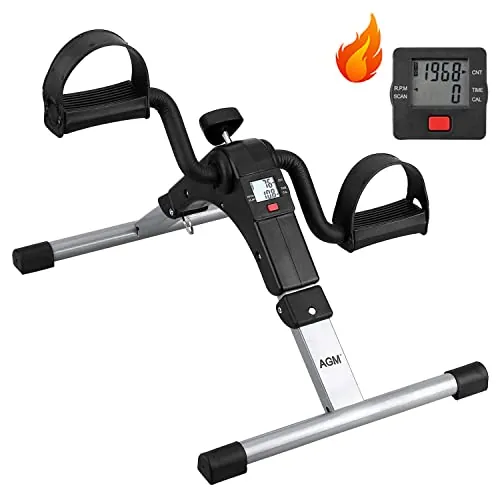
AGM Folding Pedal Exerciser
- Compact folding format fits under many desks and stores with minimal space.
Comparison
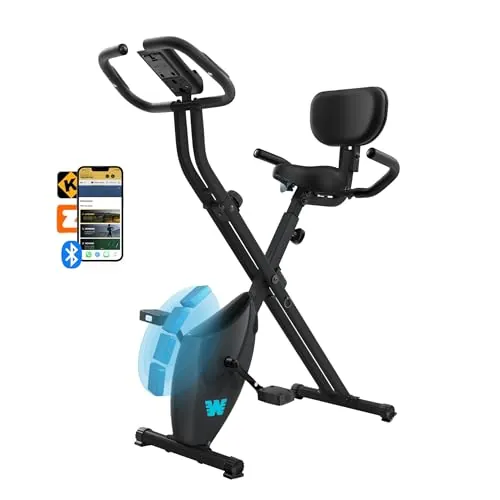
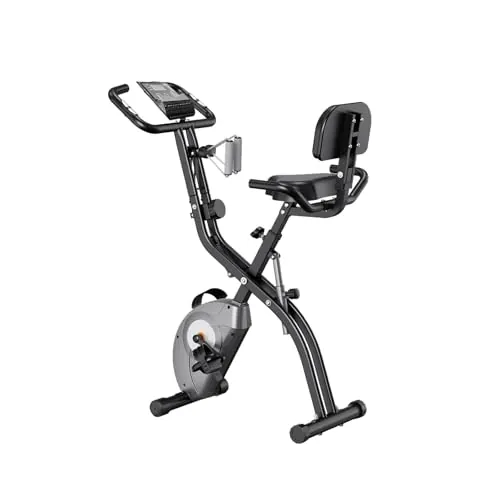
The AGM Folding Pedal Exerciser is a small, low-cost pedal unit for light arm or leg movement while sitting. The ATIVAFIT 3-in-1 Foldable Exercise Bike is a more complete seated cardio bike with magnetic resistance, an adjustable seat, and upright or recumbent use. Choose AGM for portability and under-desk-style use; choose ATIVAFIT for quieter, steadier, more structured home cycling.
#1 Overall Winner
Contender
Choose the ATIVAFIT for quiet, regular seated cardio in a compact home setup. Choose the AGM if you need a very portable, inexpensive pedal unit for light movement at a desk, chair, or tabletop. The ATIVAFIT is more capable for cycling; AGM is more flexible for compact arm-and-leg use.
Overall winner
Depends on your needs
| Feature | AGM Folding Pedal Exerciser | ATIVAFIT 3-in-1 Foldable Exercise Bike | Winner |
|---|---|---|---|
| Product type | Foldable mini pedal exerciser | Foldable upright and recumbent indoor bike | Depends |
| Primary use | Arm or leg pedalling while seated | Seated indoor cardio cycling | ATIVAFIT 3-in-1 Foldable Exercise Bike |
| Resistance | Manual tension knob; 6 listed levels | Magnetic resistance; 8 listed levels | ATIVAFIT 3-in-1 Foldable Exercise Bike |
| Riding positions | Uses the user's existing chair or tabletop | Upright and recumbent modes | ATIVAFIT 3-in-1 Foldable Exercise Bike |
| Arm exercise | Tabletop arm pedalling | Built-in arm resistance bands | Depends |
| Portability | 6.1 pounds; folds for storage | Foldable frame with transport wheels | AGM Folding Pedal Exerciser |
| Small-space storage | Compact under-desk format | Foldable bike format | Tie |
| Noise | Mixed feedback, especially with added tension | Magnetic belt drive; repeatedly described as quiet | ATIVAFIT 3-in-1 Foldable Exercise Bike |
| Stability | Reports of sliding during use | Generally stable while seated | ATIVAFIT 3-in-1 Foldable Exercise Bike |
| Display | RPM, time, speed, distance, calories | Time, speed, distance, calories, pulse | Depends |
| Ease of setup | Unfold-and-use design | Buyer-reported easy assembly | AGM Folding Pedal Exerciser |
| Reported durability | Pedal and strap breakage complaints | Some reports of loose or detached pedals | ATIVAFIT 3-in-1 Foldable Exercise Bike |
| Price | 27.62 | 130.28 | AGM Folding Pedal Exerciser |
| Regular home cardio | Light seated pedalling | Adjustable seated cycling | ATIVAFIT 3-in-1 Foldable Exercise Bike |
For recovery-style routines centered on gentle movement, AGM is the more convenient tool: it can be used near a chair and stored away immediately afterward. Still, users should account for reported slipping and pedal issues, especially where controlled movement is important. ATIVAFIT offers a steadier seated platform with back support for low-impact pedalling, which may be preferable for users able to use a full bike. The supplied information does not verify recovery benefits for either product.
For overall training use, ATIVAFIT provides the more complete platform. The adjustable seat, backrest, upright and recumbent modes, resistance settings, and quiet magnetic drive make it easier to schedule repeatable indoor cycling sessions. Its device holder can also make longer rides more practical when following entertainment or an app.
AGM is more adaptable to casual daily movement because it can be placed beneath a desk or on a tabletop for arm work. That convenience is valuable, but its small base and basic resistance make it better for light seated activity than for a structured progression-focused routine.
Neither product is a primary strength-training tool. AGM can add low-load arm and leg pedalling, while ATIVAFIT includes arm resistance bands and adjustable cycling resistance. Those features may complement a general routine, but the available data does not support treating either as a substitute for progressive resistance equipment. ATIVAFIT has the more robust lower-body training format; AGM is more useful for gentle movement from a seated position.
ATIVAFIT is the clear cardio choice. Its magnetic resistance, belt drive, dedicated seat, and multiple riding positions are better suited to steady indoor rides than a mini pedal exerciser. Buyer feedback repeatedly describes the ride as quiet and smooth, though resistance may not satisfy users seeking standing sprints or high-intensity cycling.
AGM can support light seated pedalling and movement breaks, with RPM, speed, time, and distance shown on its LCD. However, its smaller footprint, reported sliding, and limited resistance make it more appropriate for gentle activity than sustained cycling sessions.
AGM is the more relevant option for seated mobility-focused movement because it can be used for both arm and leg pedalling in a compact setting. Buyers commonly mention use for leg, knee, and ankle movement, but individual exercise choices should follow appropriate professional guidance where relevant. ATIVAFIT can provide low-impact seated cycling, especially in its recumbent configuration, but it is less versatile for tabletop or tightly seated movement.
AGM is more aligned with light, seated movement routines often described by buyers as rehabilitation-style or mobility-focused. Its small format can be used close to a chair or recliner, although stability needs attention and the product should not replace individualized clinical advice. ATIVAFIT offers a more stable low-impact cycling setup for users who can use a full seated bike. Neither listing establishes a medical recovery outcome.
ATIVAFIT performs its core job more convincingly as an indoor exercise bike. The magnetic belt-drive design, adjustable seat, backrest, and eight listed resistance levels support smooth, repeatable seated rides, and reviews broadly reinforce its quiet operation. Its limits are a relatively modest upper resistance range and display figures that some buyers find inaccurate.
AGM performs best as a simple seated pedal device rather than as a conventional bike. It offers arm and leg use plus basic tracking, but reported sliding, weak-feeling resistance adjustment, and pedal durability concerns can interrupt use. It is suitable for light activity, not demanding cycling.
ATIVAFIT offers stronger support for building a home workout habit. Its adjustable cycling setup, device holder, foldable storage, and quiet operation reduce common barriers to regular training, while the upright and recumbent modes add some variety. It is still mainly for steady seated rides rather than advanced cycling progression.
AGM supports consistency in a different way: it is quick to unfold, light enough to move easily, and can fit into otherwise sedentary time. That makes it practical for short movement breaks. Its less secure feel and basic resistance, however, provide fewer options for progressing a dedicated cardio routine.
ATIVAFIT has the better strength-oriented training role, but only in a limited sense. Pedalling resistance and the built-in arm bands can add light resistance work within a general home routine, and the stable seated frame is more suitable for repeated sessions. AGM offers low-load arm and leg pedalling but lacks the stability and resistance range needed for meaningful load progression. Neither product replaces weights, resistance bands with known loading, or other equipment designed for progressive strength work.
ATIVAFIT is better for cardio because it is designed for sustained seated riding. The magnetic system is described as quiet and smooth, and its resistance settings allow a user to alter session difficulty. However, feedback indicates that the highest setting may not challenge experienced cyclists, and standing riding is not advised by some buyers.
AGM works better for low-intensity pedalling intervals while seated. It can encourage more movement during the day, but its basic tension control and stability feedback make it less suitable for longer or more demanding cardio sessions.
AGM has the advantage for mobility-oriented use because its compact pedal unit can be positioned for seated leg movement or tabletop arm movement. Reviews describe buyers using it for gentle leg, knee, and ankle exercise, although these experiences should not be taken as proof of an outcome for every user. ATIVAFIT may be comfortable for low-impact recumbent pedalling, but it requires a larger setup and is less adaptable to short, chair-based movement sessions.
For recovery-style routines centered on gentle movement, AGM is the more convenient tool: it can be used near a chair and stored away immediately afterward. Still, users should account for reported slipping and pedal issues, especially where controlled movement is important. ATIVAFIT offers a steadier seated platform with back support for low-impact pedalling, which may be preferable for users able to use a full bike. The supplied information does not verify recovery benefits for either product.
ATIVAFIT has the stronger safety case for seated cycling because its larger frame is generally reported as stable and it provides a defined seat and backrest. Users should stay within the listed 265-pound maximum recommendation and avoid assuming that standing riding is appropriate, particularly given review feedback about balance and pedal placement. AGM's key consideration is movement during use: reports of sliding mean it should be placed on a level, secure surface and anchored as instructed where possible. For both products, inspect pedals, straps, and fasteners regularly because reviews mention pedal-related issues.
Comfort depends heavily on the intended setup. AGM lets the user choose their own chair, recliner, or tabletop position, which can be convenient for brief light movement, but it does not provide a dedicated seat or backrest. ATIVAFIT includes a cushioned adjustable seat and 90-degree backrest, offering more built-in support. Reviews are mixed, however: some buyers find the seat comfortable, while others report discomfort or knee pain. ATIVAFIT is more supportive by design, but fit should be checked carefully.
Both products are accessible, but AGM has the simplest starting process: unfold it, position it, and pedal. Its small size also makes it easy to move between rooms. It may require extra attention to anchoring, strap fit, and resistance adjustment. ATIVAFIT requires initial assembly, but buyers frequently describe that process as straightforward and say that included tools help. Once assembled, its seat adjustment, folding mechanism, and transport wheels make routine use practical.
ATIVAFIT is more stable for seated riding. Its larger steel frame and seated bike layout receive positive buyer feedback for stability, although standing pedalling is not a recommended use in some reviews. AGM has a much smaller base and users report that it can slide away during pedalling. The included pad and chair-anchoring strap may help, but the need to secure it is a practical limitation. Use AGM on a level, secure surface rather than assuming it will remain fixed.
AGM provides adjustable foot straps and includes a grip pad, but user feedback identifies strap adjustment, sock snagging, and movement of the device as concerns. ATIVAFIT does not provide detailed pedal-grip specifications in the supplied data, though its seated stability is rated more favorably by buyers. Neither product has enough detailed handle or pedal traction data to make a stronger grip-specific claim.
ATIVAFIT offers more meaningful cycling adjustment. Its listed features include eight magnetic resistance levels, a seven-position adjustable cushioned seat, upright and recumbent modes, and a backrest. AGM has a manual tension knob, six listed resistance levels, and adjustable foot straps. That is adequate for basic seated pedalling, but buyer feedback suggests the tension control is less consistently useful. ATIVAFIT is the better choice for users who need to tailor fit and routine intensity.
Both products are strong options for limited storage. AGM is exceptionally compact at 19.2 by 14.1 by 9.4 inches and weighs 6.1 pounds, making it easier to store in a cupboard or beneath furniture. ATIVAFIT occupies more space during use, as expected of a full seated bike, but it folds and has transport wheels for moving it around the home. AGM wins for absolute compactness; ATIVAFIT is the better space-efficient full-bike alternative.
ATIVAFIT is the better choice for quiet homes and apartments. Its magnetic resistance and belt drive are marketed as quiet, and buyer feedback repeatedly supports a low-noise ride. AGM does not have the same consistent noise record; some users report that the tension mechanism can make noise when tightened. For light, low-resistance use AGM may be unobtrusive, but ATIVAFIT has the more reliable quiet-operation evidence.
ATIVAFIT has the stronger build-quality case based on its listed alloy-steel construction, X-type frame description, and buyer comments that it feels sturdy while seated. It is not without faults: some customers report pedals that loosen or fall off. AGM's lightweight folding form is useful, but its build feedback is more mixed. Several buyers cite breakage around pedals or straps, and the compact base can feel less secure. For regular cycling, ATIVAFIT's frame design is the more confidence-inspiring option.
Neither product has an entirely clean durability record. AGM reviews repeatedly mention pedal breakage, strap concerns, and wear concerns around its basic resistance mechanism. ATIVAFIT receives more favorable overall construction feedback, and one review reports extensive use without problems, but other buyers report loose or detached pedals. The available evidence favors ATIVAFIT for expected durability, particularly for normal seated cycling, while still making periodic checks of pedal and fastener security sensible.
AGM has minimal maintenance demands because it is small, manual, and quick to fold away. Users should keep the pedal area clear, check straps and folding parts, and monitor the resistance mechanism given reported wear concerns. ATIVAFIT requires more periodic attention: buyers mention keeping the supplied tools available to check tightness, and pedal security should be monitored. Its battery-powered display may also need replacement batteries. Neither listing provides a detailed maintenance schedule.
AGM is the more portable product by a wide margin. At 6.1 pounds, it can be carried easily, placed under a desk, used on a tabletop, and folded away after use. ATIVAFIT is intended to be moved within the home rather than carried frequently; its foldable frame and transport wheels are useful for this purpose. Choose AGM for frequent carrying or room-to-room flexibility and ATIVAFIT for repositioning a dedicated exercise bike.
Material disclosure is limited for both products. AGM lists a material entry of “3.2-3.8,” which does not clearly identify the construction material, although its handle is described as black foam. ATIVAFIT provides clearer basic material information, listing alloy steel for the frame-related material and handle material. Neither listing supplies detailed component-level information on pedal compounds, seat foam, coatings, or long-term material testing. ATIVAFIT is therefore clearer, but neither product is comprehensively documented.
AGM provides strong value for a buyer who only needs a low-cost, compact way to add light seated movement. Its arm-and-leg use, folding format, and basic LCD are useful at its lower price, but the value proposition is weakened by recurring stability and durability complaints. ATIVAFIT requires a much higher upfront spend, yet it supplies a more complete cycling setup: magnetic resistance, a seat and backrest, multiple riding positions, quiet operation, and folding storage. For routine home cardio, ATIVAFIT offers the better overall value; for occasional light movement, AGM may be sufficient.
The supplied data provides limited information about either brand beyond product listings and buyer feedback. ATIVAFIT has the stronger evidence from a larger review base, a higher average star rating, and more consistent comments about assembly, quiet operation, and value. AGM also has a substantial volume of reviews, but its feedback is more divided on quality, stability, and pedal durability. This comparison reflects listed product and review evidence rather than a wider assessment of either brand's service, testing, or long-term reputation.
ATIVAFIT has stronger overall buyer sentiment, with a higher average star rating across a larger review count. Frequent praise centers on easy assembly, quiet operation, compact storage, and stable seated use. Repeated criticisms concern seat comfort, limited maximum resistance, display accuracy, and occasional pedal issues.
AGM buyers often appreciate its price, portability, easy setup, and usefulness for light seated arm or leg movement. Satisfaction is tempered by reports of sliding, weak resistance, socks catching, and pedals or straps breaking. Both products have positive users, but ATIVAFIT's feedback is more consistently favorable for its intended bike role.
Both listings support their basic functional claims more clearly than their broader exercise-oriented language. AGM's foldable design, LCD, adjustable straps, and arm-and-leg placement are documented in its listing, while buyer reviews broadly support easy setup and light seated use. Claims about improving muscle strength or mobility should be treated as general product positioning rather than verified individual outcomes.
ATIVAFIT's foldability, magnetic resistance, seat adjustment, backrest, and device holder are specific listed features, and quiet operation is supported by repeated buyer feedback. However, displayed calories and distance are questioned in reviews, so those metrics should not be treated as precise.
The ATIVAFIT 3-in-1 Foldable Exercise Bike wins this comparison for most people seeking a compact home cardio machine. Its main strengths are quiet magnetic operation, stronger seated stability, adjustable cycling positions, and a practical folding design. Its main limitations are modest maximum resistance, mixed comfort feedback, and questions around display accuracy and pedal durability.
The AGM Folding Pedal Exerciser is not a direct replacement for that bike; it is a much smaller, cheaper movement accessory. Its strengths are exceptional portability, arm-and-leg versatility, and simple use from a chair or desk. Its main limitations are a basic resistance system, reported sliding, and more pronounced durability concerns. Select AGM for compact light movement and ATIVAFIT for consistent seated cycling.
Overall winner
Depends on your needs
The ATIVAFIT is the stronger all-round choice for regular seated cardio because it offers a more stable frame, magnetic resistance, an adjustable seat, and upright or recumbent riding. The AGM is the better fit when compact storage, very low cost, tabletop arm use, or under-desk pedalling matters more than cycling intensity.
The AGM is better suited to desk-based use. Its small pedal unit can fit under a desk when clearance allows and can be used while seated. The ATIVAFIT is a dedicated exercise bike rather than an under-desk accessory, so it is more appropriate for planned workout sessions than for pedalling during computer work.
Yes, the available information suggests the ATIVAFIT is well suited to beginners seeking steady indoor cycling. It has eight listed resistance levels, a cushioned adjustable seat, a backrest, and positive feedback on assembly and quiet operation. However, taller users and people sensitive to seat comfort should check fit carefully before buying.
Yes. The AGM is listed for leg use on the floor while sitting and for arm movement when placed on a tabletop. This dual placement is a practical distinction from the ATIVAFIT bike. Buyers should still use a secure, level surface and note the reported tendency for the unit to move if it is not anchored well.
The ATIVAFIT is the clearer choice where low noise is important. Its magnetic resistance and belt drive are consistently described in buyer feedback as quiet during seated riding. The AGM can suit light movement, but reviews mention noise when its tension is increased, so its quieter performance is less consistently supported.
Both products are foldable and space-conscious, but they solve space limitations differently. The AGM is smaller and lighter at 6.1 pounds, making it easier to place in a cupboard or under furniture. The ATIVAFIT needs more room during use, yet its folding frame and transport wheels make it practical for a small home workout area.
Both products provide basic LCD metrics, but the available feedback does not establish that these readings are precise. ATIVAFIT reviews specifically question calorie and distance estimates, while AGM buyers mainly value its simple tracking display. Treat either monitor as a convenient activity reference rather than a precise measure of energy expenditure or distance.
The better value depends on how it will be used. AGM offers an inexpensive route to light seated pedalling, arm use, and compact storage, but its stability and durability feedback is mixed. ATIVAFIT costs more, yet provides a sturdier cycling setup, quiet magnetic operation, more adjustment, and stronger buyer satisfaction for regular home cardio.
Check our rankings and expert guides to find the best fitness products for your goals.