#1 Overall Winner
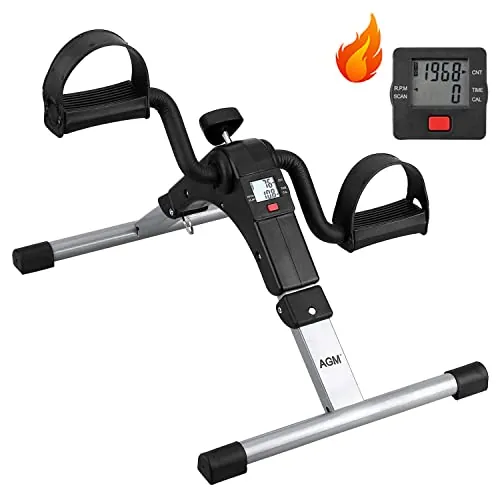
AGM Folding Pedal Exerciser
- Compact folding format fits under many desks and stores easily.
Comparison
The AGM Folding Pedal Exerciser is a lightweight mini cycle for gentle seated arm and leg movement, while the BARWING 5-in-1 is a full folding stationary bike built for more complete indoor cycling sessions. The AGM wins on price and portability, but the BARWING offers stronger stability, quieter operation, more adjustments, and a broader cardio training role.
#1 Overall Winner
Contender
Choose the BARWING for quiet, adjustable home cycling, a supported seating option, and more structured cardio sessions. Choose the AGM if you need the smallest and least expensive option for light seated arm or leg pedaling. The AGM is more portable; the BARWING is the more complete exercise bike.
Overall winner
Depends on your needs
| Feature | AGM Folding Pedal Exerciser | BARWING 5-in-1 Foldable Exercise Bike | Winner |
|---|---|---|---|
| Product type | Mini under-desk pedal exerciser | Foldable stationary exercise bike | Depends |
| Primary training use | Light seated arm and leg pedaling | Indoor cardio cycling | BARWING 5-in-1 Foldable Exercise Bike |
| Resistance | Knob-controlled resistance; six listed levels | Sixteen-level magnetic resistance | BARWING 5-in-1 Foldable Exercise Bike |
| Adjustability | Adjustable pedal straps and tension | Resistance, seat height, seat angle, and riding-position adjustments | BARWING 5-in-1 Foldable Exercise Bike |
| Arm exercise | Tabletop arm pedaling | Included resistance bands | Depends |
| Stability | Mixed feedback; sliding is a repeated concern | Steel frame and reinforced base; generally positive feedback | BARWING 5-in-1 Foldable Exercise Bike |
| Noise | Some tension-related noise feedback | Magnetic belt drive; commonly described as quiet | BARWING 5-in-1 Foldable Exercise Bike |
| Storage | Folding, 6.1-pound unit | Foldable full-size bike, 34 pounds | AGM Folding Pedal Exerciser |
| Display | RPM, time, speed, distance, calories | Time, distance, speed, calories, and stated heart-rate display | BARWING 5-in-1 Foldable Exercise Bike |
| Portability | Lightweight and compact | Foldable with mobility features | AGM Folding Pedal Exerciser |
| Build and durability feedback | Mixed quality; pedal breakage complaints | Generally sturdy feedback with isolated issues | BARWING 5-in-1 Foldable Exercise Bike |
| Price | 27.62 | 129.99 | AGM Folding Pedal Exerciser |
| Warranty and support | No warranty details provided | One-year parts warranty and stated support | BARWING 5-in-1 Foldable Exercise Bike |
The available reviews suggest both products are commonly considered for gentle, low-impact movement, but the evidence is user feedback rather than proof of a particular recovery result. AGM is practical for short, seated pedaling sessions in confined spaces. BARWING may be more comfortable for users who prefer a stable seat and backrest while cycling, and its resistance can be adjusted gradually. The more suitable option depends on individual comfort, movement tolerance, available space, and any applicable professional guidance.
The AGM supports light movement in places where a conventional bike will not fit: under a desk, in front of a television, or on a tabletop for arm pedaling. That flexibility is useful for short, low-intensity sessions. The BARWING is the better training tool when cycling itself is the goal. Its seated design, flywheel, magnetic resistance, and adjustment range make it more appropriate for planned steady rides and gradual progression. Both fold away, but they meet different needs: convenience-first seated pedaling versus a more complete home cardio routine.
Neither product is a primary strength-training machine. The AGM's adjustable tension can add light resistance to arm or leg pedaling, but reviews suggest it is not ideal for meaningful muscle-loading work. The BARWING includes resistance bands that can add simple upper-body movements while riding, although one reviewer found them too light. For progressive strength work, neither provides the load control of dedicated resistance equipment; the BARWING is marginally more versatile because of its included bands.
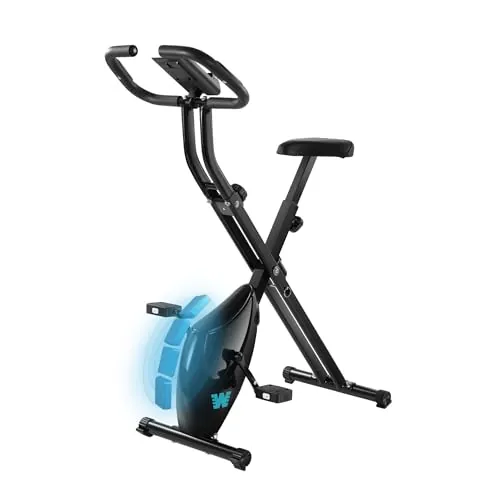
The BARWING is the stronger cardio option. It combines a full cycling position with sixteen magnetic resistance settings, a belt drive, and a flywheel, allowing more practical steady-state or interval-style sessions. Reviews frequently describe the ride as quiet and smooth, though a few users expected more resistance at the top end. The AGM can support low-impact seated pedaling and short activity breaks, but its small format, basic tension system, and stability complaints make it better for light movement than sustained conditioning workouts.
The AGM has the advantage for simple seated mobility-oriented use because it can be used for both arms and legs without mounting a bike. Its compact format can make short bouts of controlled pedaling easier to fit into a day. The BARWING offers supported cycling positions and adjustable resistance, but it is designed more for cardio than for targeted mobility work. Reviews for both products mention gentle use alongside personal therapy-style routines, but product feedback should not be treated as individualized exercise advice.
Both products have buyer feedback describing gentle use in recovery-style or low-impact routines, but neither listing establishes a specific rehabilitation outcome. The AGM is convenient for brief seated arm or leg movement and does not require a dedicated exercise area. The BARWING provides a more stable seated platform, adjustable resistance, and a backrest option that some reviewers found comfortable. Select based on the movement format you can use safely and comfortably, and follow any guidance relevant to your situation.
For their intended purposes, the BARWING performs more convincingly as an exercise bike. Its magnetic resistance, belt drive, flywheel, adjustable seat, and backrest give it the hardware for regular indoor riding, and buyer feedback commonly highlights a smooth, quiet ride. The AGM performs best as a basic seated pedal exerciser: it is quick to position, can work the arms or legs, and provides simple tracking. Its performance ceiling is lower, however, because reviewers report sliding, weak or troublesome resistance, and pedal-related durability concerns.
The BARWING offers better support for a repeatable training routine. Multiple resistance levels, seating adjustments, a phone holder, app compatibility, and a console can make longer or more structured sessions easier to maintain. Its foldable design also reduces the need for a permanent workout area. The AGM supports consistency in a different way: it is extremely easy to bring out for short seated bouts while working or watching television. That low friction is useful, but the device offers less progression and less stable support for dedicated cycling workouts.
Neither option provides a robust route to progressive strength training. AGM's tension knob offers only limited pedaling resistance, and reviews question how effective or durable that resistance system is. BARWING's cycling resistance provides more lower-body effort options, while the included bands create an additional upper-body accessory function. Still, feedback suggests band tension may not satisfy everyone. Choose the BARWING if you want cycling plus light band work; choose neither if load-based strength progression is your central goal.
The BARWING is better equipped for cardio progression because it has sixteen magnetic resistance levels and a full seated riding position. Its belt-drive design is also repeatedly described as quiet, which can make frequent home sessions more practical. The AGM's LCD and adjustable tension allow basic tracking and pacing, but it is designed around seated pedaling rather than a full ride. Its compact chassis may move during use, particularly without careful positioning, limiting confidence for more energetic pedaling.
The AGM is more adaptable for simple range-of-motion-focused movement because it can be used with either the arms or legs while seated and does not require mounting a frame. Its light, portable design can encourage short sessions throughout the day. The BARWING has lower relevance to flexibility specifically, although its adjustable seat and supported riding option can suit users who prefer a stable cycling posture. Neither product replaces dedicated stretching, yoga, or mobility equipment.
The available reviews suggest both products are commonly considered for gentle, low-impact movement, but the evidence is user feedback rather than proof of a particular recovery result. AGM is practical for short, seated pedaling sessions in confined spaces. BARWING may be more comfortable for users who prefer a stable seat and backrest while cycling, and its resistance can be adjusted gradually. The more suitable option depends on individual comfort, movement tolerance, available space, and any applicable professional guidance.
Neither product should be treated as risk-free, and the supplied data points to different practical considerations. With AGM, recurring reports of sliding and pedal or strap problems mean secure placement and careful foot positioning are important. BARWING has stronger stability feedback, but its larger folding frame requires attention when mounting, dismounting, and moving it; one review recommends a rug on hardwood flooring. The BARWING's stated capacity is 330 pounds, while AGM lists a 400-pound maximum recommendation. Confirm fit, floor setup, and secure adjustments before use.
Comfort depends on the preferred movement position. AGM avoids a built-in seat entirely, allowing users to choose their own chair, recliner, or tabletop arrangement; however, its pedal straps can be uncomfortable for some users. BARWING provides a padded adjustable seat and backrest, which many reviewers appreciate, especially in the supported position. Seat comfort is nevertheless mixed, with several buyers finding it hard or uncomfortable after longer rides. BARWING offers more ergonomic adjustment, but it may still benefit from a seat cover for some users.
The AGM is easier to start using: it is light, folds out, has a basic tension knob, and needs no substantial assembly. Its simplicity makes it well suited to short seated sessions. BARWING arrives mostly pre-assembled, and many reviewers found the process manageable, but it still requires attaching parts and may take an hour or longer. Once assembled, its console, phone holder, adjustable seat, and quiet ride support convenient use. AGM wins for immediate simplicity; BARWING wins for a more complete setup.
The BARWING is more stable in normal use because it is a substantially heavier full-frame bike with a reinforced base. Reviewers often call it sturdy, although a rug or mat may be useful on smooth flooring and one reviewer notes care is needed while getting on or off. The AGM includes a grip pad and straps, but sliding is a recurring complaint. It may need careful placement, anchoring, or extra weight to stay positioned during pedaling.
Both products have foot-retention considerations. AGM provides adjustable non-slip straps, but users report sock snagging, pinching when barefoot, and strap-related problems. BARWING reviews describe its pedal cage as difficult for at least one user to adjust. Neither has uniformly strong feedback here, so fit the pedal retention system carefully and use footwear if that improves comfort and control for your use.
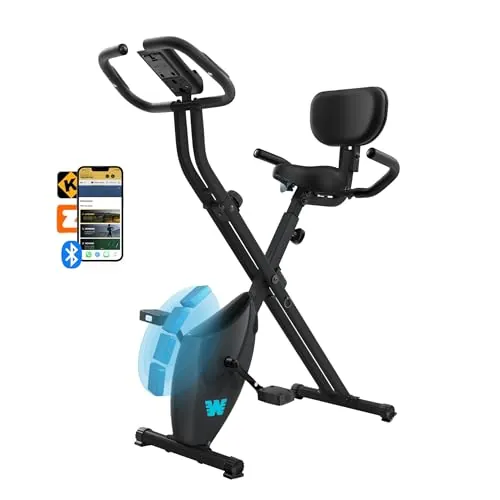
The BARWING provides a much broader adjustment range. It lists sixteen resistance levels, eight seat-height positions, two seat-angle positions, and upright or supported riding modes. AGM offers adjustable pedal straps and a tension knob with six listed resistance levels, which is enough for basic seated pedaling but not comparable for fit or workout variation. BARWING is the better choice for households needing more positioning options or users who want to increase cycling difficulty gradually.
Both products are designed to reduce storage demands. AGM is the more space-efficient option in absolute terms: it weighs 6.1 pounds, folds, and can fit under a desk or similar area. BARWING is exceptionally compact for a full exercise bike, folding for vertical storage and offering a relatively narrow listed width. Still, it requires a dedicated clear area when in use and weighs 34 pounds. Choose AGM for minimal-space living; choose BARWING if you have room to unfold a bike.
The BARWING is the clear quiet-use option. Its magnetic resistance and belt drive are specified for low-noise operation, and many reviewers describe it as silent or very quiet. AGM does not have comparable drive-system details, and some feedback notes noise when the tension is increased. For early-morning, late-night, or shared-space workouts, the BARWING has better support from both its specification and buyer feedback.
The BARWING has the stronger build case. Its listed alloy-steel frame and triangular reinforced base align with many reviews describing the bike as sturdy and solid. Some isolated reports mention a sticky pedal, noise, or missing parts, so the positive pattern is not universal. The AGM's compact folding frame is appropriate for its low-cost, light-duty role, but quality feedback is mixed. Reports of sliding, pedal breakage, and strap issues make it less reassuring for frequent or forceful use.
Durability feedback favors the BARWING. Reviews commonly report a solid frame and continued smooth operation, though some buyers note component concerns or unusual noise. The supplied warranty also gives BARWING buyers a stated parts-support route. AGM durability is a more significant uncertainty: multiple buyers report pedals breaking, and some reviews advise avoiding high tension because of wear or heat. The AGM may be adequate for occasional gentle use, but the provided evidence does not support the same confidence for sustained use.
Both products use battery-powered displays and have no supplied requirement for complex routine servicing. BARWING's magnetic resistance avoids the brake-pad replacement associated with felt-resistance systems, giving it a practical maintenance advantage for regular cycling. AGM's simple folding design is easy to store and wipe down, but buyers should monitor pedal straps, frame stability, and tension behavior given the reported wear concerns. For either product, keep moving parts clear, check fasteners or adjustments periodically, and store it dry.
AGM is substantially easier to carry between rooms, take to a desk, or store in a closet because it weighs 6.1 pounds and has a compact mini-cycle format. BARWING is foldable and has stated mobility features, making it practical to relocate within a home, but its 34-pound frame is less convenient for frequent lifting. BARWING is portable for a stationary bike; AGM is portable in the more literal, everyday sense.
Material disclosure is more useful for the BARWING. It is specified as alloy steel and described as having a heavy-duty steel frame, magnetic resistance, and belt drive. The AGM listing identifies a silver unit with a material entry of “3.2-3.8,” but does not clearly explain the construction material or component composition. Neither listing provides detailed material breakdowns for every contact point, such as pedal straps, padding, or grip surfaces. BARWING therefore provides clearer basic construction information.
AGM offers compelling value for buyers whose only goal is inexpensive, occasional seated pedaling. Its price is far lower, it folds, tracks basic metrics, and can be used for both arms and legs. Its lower cost also reflects clear compromises in stability, resistance, and durability feedback. BARWING requires a larger upfront spend, but the extra outlay brings magnetic resistance, adjustable seating, a more stable frame, quiet operation, console features, and stated warranty coverage. For regular home cycling, BARWING offers the stronger overall value; for minimal-budget movement, AGM remains viable.
BARWING has the stronger trust profile in the provided information. Its product details include a one-year parts warranty, stated after-sales support, and a more consistently favorable review pattern around construction, quiet operation, and value. AGM has a large review base and many buyers find the pedal exerciser easy to use, but its quality feedback is notably mixed, with recurring stability and durability complaints. Neither dataset provides independent testing or broader company history, so the comparison should remain focused on listing and buyer-feedback evidence.
Buyer sentiment is more favorable for BARWING, which has a higher listed star rating across a large review count. Recurring praise covers its quiet operation, sturdy feel, folding design, smooth pedaling, display, and value. The main complaints concern seat comfort, occasional assembly or folding issues, and resistance that may feel too light for some users. AGM also has a substantial number of reviews and is often praised for convenience, mobility-style use, and affordability. However, customer feedback is more divided because of sliding, weak tension, pedal straps, and breakage reports.
BARWING lists a one-year parts warranty and says it provides after-sales assistance for assembly and other issues, with a stated response target through messages. One review mentions waiting for a response about a missing component, so the supplied evidence does not establish how every support case is resolved. No AGM warranty or support details are provided, making a direct comparison limited. BARWING is the only product here with stated coverage information.
BARWING's core product claims are better supported by the provided specifications and review pattern. Magnetic resistance, belt drive, folding design, resistance settings, seat adjustments, and the stated warranty are concrete listing details, while many reviews independently mention quietness and stability. Claims about app connectivity are listed but not extensively discussed in the supplied reviews. AGM's foldability, LCD functions, arm-and-leg positioning, and compact dimensions are also clearly specified. However, broader effectiveness language should be viewed cautiously because user experiences with resistance, stability, and durability vary.
The BARWING 5-in-1 Foldable Exercise Bike wins for most home exercisers because it is a more capable and stable indoor cycling machine. Its main strengths are quiet magnetic operation, a strong adjustment range, foldable storage, and consistently favorable feedback on build and value. Its main limitations are the higher price, assembly requirement, and mixed seat comfort.
The AGM Folding Pedal Exerciser is the more practical choice only when maximum portability, desk-friendly use, arm pedaling, and a very low price are the deciding factors. Its simplicity is appealing, but its main drawbacks are limited resistance, stability concerns, and durability complaints. Buy AGM for gentle convenience; buy BARWING for regular cycling training.

Overall winner
Depends on your needs
The BARWING is the stronger overall choice for regular home cycling because it offers a more stable frame, magnetic resistance, multiple seating adjustments, and consistently positive feedback on quiet operation. The AGM is the better fit when low cost, very small storage requirements, and seated arm or leg pedaling matter more than workout intensity.
Both products fold, but the AGM is easier to place in a very limited area because it weighs 6.1 pounds and is designed to fit under a desk. The BARWING is also space-conscious for a full bike and can fold for storage, but it requires considerably more room and is much heavier.
Yes. The provided product details state that the AGM can sit on a tabletop for arm pedaling or on the floor for seated leg exercise. This versatility is a key difference from the BARWING, which is primarily a stationary cycling bike with separate resistance bands for additional upper-body movements.
The AGM has the lowest setup barrier: it unfolds, uses a simple tension knob, and can be pedaled while seated in an existing chair. The BARWING is also beginner-oriented through its adjustable resistance and seating, but it requires assembly and getting on and off a full-frame bike.
The BARWING has the clearer advantage for quiet operation. Its magnetic resistance and belt drive are specified for low-noise use, and many reviews describe it as very quiet. AGM reviews focus more on convenience, while some users note that increasing its tension can create noise.
The BARWING is more suitable for structured cardio sessions. It has sixteen magnetic resistance levels, a flywheel, and a full seated cycling setup that supports steady rides and intervals. The AGM can add light movement while sitting, but its compact format and mixed resistance feedback limit its suitability for higher-intensity cycling.
Both have reviews describing use alongside gentle mobility or rehabilitation-style routines, but individual needs and appropriate activity levels vary. The AGM is convenient for short seated arm and leg movement. The BARWING adds a supported backrest position and adjustable resistance. Neither product listing replaces individualized professional guidance.
Choose based on available space, desired workout style, and tolerance for assembly. AGM buyers should consider floor grip, pedal straps, and the product's light-duty design. BARWING buyers should check unfolded floor space, seat comfort preferences, assembly needs, and whether the listed resistance range matches their intended training level.
Check our rankings and expert guides to find the best fitness products for your goals.