#1 Overall Winner
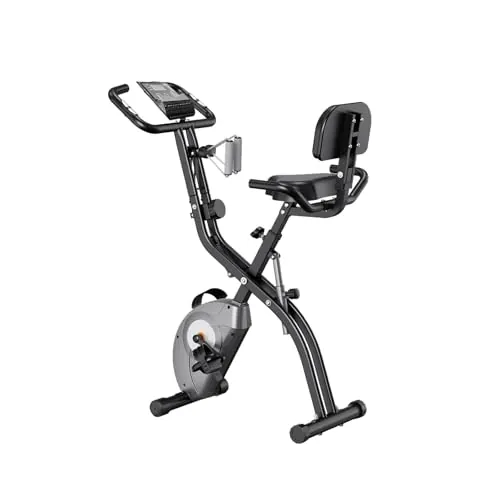
ATIVAFIT 3-in-1 Foldable Exercise Bike
- Very quiet magnetic belt-drive operation, according to the listing and repeated buyer feedback.
Comparison
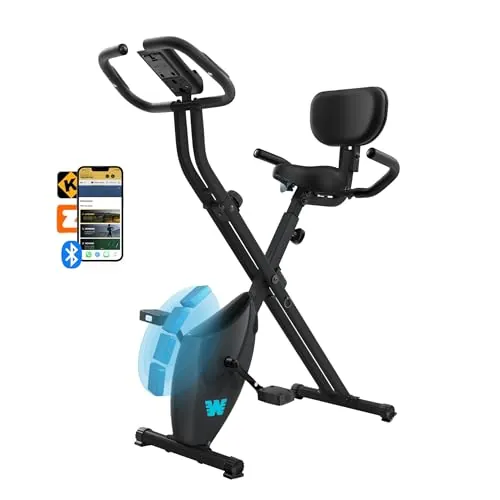
The ATIVAFIT 3-in-1 and BARWING 5-in-1 are compact folding exercise bikes built for quiet indoor cardio, upright or recumbent-style riding, and small homes. BARWING offers more listed resistance levels, more adjustment, app compatibility, and clearer support coverage, while ATIVAFIT is a simple, quiet option with easy assembly and strong space-saving appeal.
#1 Overall Winner
Contender
Choose BARWING for more adjustment, app compatibility, clearer support, and a more versatile home-cardio setup. Choose ATIVAFIT if you want a simple, notably quiet folding bike for steady rides and easy storage. Neither is the ideal choice for riders seeking high-resistance sprint sessions or precise built-in workout metrics.
Overall winner
Depends on your needs
| Feature | ATIVAFIT 3-in-1 Foldable Exercise Bike | BARWING 5-in-1 Foldable Indoor Cycling Bike | Winner |
|---|---|---|---|
| Primary use | Quiet, compact indoor steady-state cycling. |
Adjustable indoor cycling with optional app-based sessions. |
BARWING 5-in-1 Foldable Indoor Cycling Bike |
| Resistance | 8 magnetic levels. |
16 magnetic levels. |
BARWING 5-in-1 Foldable Indoor Cycling Bike |
| Noise | Magnetic belt drive; listing claims under 18 dB. |
Magnetic belt drive; listing claims under 20 dB. |
ATIVAFIT 3-in-1 Foldable Exercise Bike |
| Riding positions | Upright and recumbent modes with a backrest. |
Upright and recumbent-style modes with backrest and seat-angle adjustment. |
BARWING 5-in-1 Foldable Indoor Cycling Bike |
| Listed user weight limit | 265 lb in specifications; 275 lb in product details. |
330 lb in specifications. |
BARWING 5-in-1 Foldable Indoor Cycling Bike |
| App connectivity | Not provided. |
Bluetooth compatibility with Kinomap and Zwift is listed. |
BARWING 5-in-1 Foldable Indoor Cycling Bike |
| Storage | Foldable with transport wheels. |
Foldable with mobility features and listed vertical storage. |
Depends |
| Assembly | Frequently described as quick and easy. |
Substantially pre-assembled, but some buyers report more setup time. |
ATIVAFIT 3-in-1 Foldable Exercise Bike |
| Console feedback | Time, speed, distance, calories, and pulse; accuracy concerns appear in reviews. |
Time, speed, distance, calories, and heart rate; generally positive display feedback. |
BARWING 5-in-1 Foldable Indoor Cycling Bike |
| Seat comfort | Mixed comfort feedback. |
Mixed comfort feedback, with additional seat-angle adjustment. |
BARWING 5-in-1 Foldable Indoor Cycling Bike |
| Durability feedback | Some reports of pedals loosening or falling off. |
Generally sturdy feedback, with isolated reports of noise, pedal sticking, or missing parts. |
BARWING 5-in-1 Foldable Indoor Cycling Bike |
| Warranty and support | No warranty details provided. |
One-year parts warranty and stated after-sales support. |
BARWING 5-in-1 Foldable Indoor Cycling Bike |
| Price | $130.28. |
$129.99. |
Tie |
BARWING is the more adaptable option for gentle cycling routines due to its stated seat-height and seat-angle adjustments, backrest, and 16 resistance levels. The recumbent-style position may be preferable for users who simply want a more supported seated setup, but individual comfort remains variable. ATIVAFIT also offers a backrest and adjustable seat, and several buyers use it for routine movement at home. Neither product's recovery-related marketing should be interpreted as a medical outcome; fit, mounting comfort, and resistance selection matter most.
Both bikes support regular home cardio without the footprint or noise of a larger machine. ATIVAFIT is best viewed as a straightforward choice for steady rides, casual daily movement, and screen-based sessions. BARWING provides a broader training setup through its 16 listed resistance levels, greater seat adjustment, and Bluetooth compatibility with Kinomap or Zwift. Those additions may help users vary sessions and stay engaged, although app access and any related subscription requirements are not detailed. For demanding cycling-specific training, both have reported limits at the high end of resistance.
Neither bike is a primary strength-training product. Both include resistance bands, which can add light upper-body movements alongside pedalling, but the supplied information does not establish adjustable band loading or progressive strength capability. ATIVAFIT may offer a marginal advantage for integrated full-body movement because its product details emphasize the bands as part of its 3-in-1 design. BARWING reviewers are more divided on band tension, with one reporting little tension. Use either as cardio equipment first and add separate resistance equipment for structured strength progression.
Both bikes are well suited to quiet, lower-impact home cycling and steady-state conditioning. ATIVAFIT stands out for very low stated noise and a simple setup that can reduce barriers to frequent use. BARWING has the more flexible cardio specification, with 16 stated resistance levels, a listed flywheel, and Bluetooth compatibility for Kinomap or Zwift sessions. However, user feedback indicates that BARWING's resistance may still be lighter than expected for some riders. ATIVAFIT reviews similarly point to modest top-end resistance, particularly for standing or sprint-style work.
Both bikes can fit a gentle, controlled movement routine because they offer recumbent-style positioning and low-noise magnetic pedalling. BARWING has the stronger practical case for users who want more position changes, as it lists a backrest, seat-angle adjustment, and more resistance increments for gradual changes. ATIVAFIT also includes a backrest and adjustable seat, but feedback on knee comfort is mixed. These are exercise products, not recovery treatments; choose resistance and duration according to personal comfort and any professional guidance you already follow.
For their intended role as compact home cardio bikes, both products appear capable of smooth, quiet pedalling and convenient daily use. ATIVAFIT receives repeated praise for silence, stability while seated, and ease of storage, but its display estimates and limited peak resistance reduce its appeal for data-driven or harder training. BARWING combines similarly positive quiet and stability feedback with more listed resistance settings and app compatibility. Its performance advantage is therefore feature-led rather than absolute: some reviewers still found the resistance relatively easy, so demanding cyclists should keep expectations realistic.
BARWING offers the more complete routine-support package. Its resistance range, adjustable seat configuration, backrest, phone holder, and listed Bluetooth connection can make it easier to progress from gentle rides to more varied sessions. ATIVAFIT is highly supportive for consistency in a different way: it is easy to assemble, easy to move, folds compactly, and is quiet enough for many shared-home settings. Beginners can do well with either. Users seeking app-led variety or finer resistance changes are better served by BARWING, while users wanting minimal setup friction may prefer ATIVAFIT.
The strength-training role is limited for both products because pedalling resistance and included bands are not equivalent to measured, progressive external loading. ATIVAFIT's bands are part of its stated full-body concept, but there is no provided detail on their resistance level. BARWING also includes bands, yet one review reports insufficient tension for meaningful use. Neither bike should be chosen primarily for strength development. For home routines, they work better as a cardio warm-up, cooldown, or low-impact conditioning tool alongside separate weights or resistance bands.
BARWING narrowly leads for cardio flexibility because it lists twice as many resistance settings and Bluetooth compatibility with Kinomap or Zwift. It may therefore offer more ways to structure an indoor ride. ATIVAFIT has a strong advantage for very quiet, uncomplicated cardio, with repeated reports that it is easy to use while others are sleeping or while watching entertainment. Reviews for both models indicate modest top-end resistance. Choose BARWING for greater session variety; choose ATIVAFIT for simple, quiet steady riding.
BARWING is the more adaptable option for gentle cycling routines due to its stated seat-height and seat-angle adjustments, backrest, and 16 resistance levels. The recumbent-style position may be preferable for users who simply want a more supported seated setup, but individual comfort remains variable. ATIVAFIT also offers a backrest and adjustable seat, and several buyers use it for routine movement at home. Neither product's recovery-related marketing should be interpreted as a medical outcome; fit, mounting comfort, and resistance selection matter most.
Both bikes should be used as seated indoor cardio equipment on a stable, level surface. ATIVAFIT feedback specifically advises against standing riding, and its reported pedal-loosening issues make regular checks important. Its user-capacity information also conflicts between sections of the listing, so buyers near the stated maximum should clarify the applicable limit before purchase. BARWING lists a higher maximum user weight and reinforced base, but one reviewer reported slipping while moving it on hardwood; a suitable mat or rug can improve floor protection and positioning. Neither bike's included pulse or calorie data should be treated as precise safety or health monitoring.
Comfort is mixed for both bikes, so personal fit should decide this category. BARWING has the more adjustable seating arrangement, with listed seat-height and seat-angle changes plus a backrest, and several users praise the recumbent-style position. Yet some report a hard or uncomfortable saddle after 20 to 30 minutes. ATIVAFIT also has a cushioned adjustable seat and backrest, but reviews mention average comfort, possible knee discomfort, and a cramped fit for taller users. BARWING is more adaptable, not universally more comfortable.
ATIVAFIT has the edge for immediate simplicity. Reviews repeatedly say it assembles quickly, rolls easily, folds neatly, and is uncomplicated for daily rides. BARWING is also designed for accessible home use and arrives substantially pre-assembled, but reports of longer assembly, difficult folding for some users, and more adjustment options create slightly more setup complexity. BARWING's app connection may be useful for some riders but is another step for users who only want to pedal. Both provide a screen holder and battery-powered console.
Both bikes are described as stable during seated riding, which is the intended use case for these folding designs. BARWING has an edge due to its reinforced-base description, higher listed capacity, and strong buyer feedback on solidity. ATIVAFIT also receives positive comments about seated stability, but reviewers caution against standing riding and describe pedal placement as less suitable for that use. A stable, level floor is important for both; one BARWING reviewer specifically noted sliding on hardwood when moving the bike and recommended a rug.
Grip information is limited. BARWING receives some specific pedal feedback, including one review that found its foot cage difficult to adjust. ATIVAFIT feedback does not provide comparable handle or pedal-grip detail. Neither listing offers detailed traction specifications for pedals or floor-contact points. BARWING has more disclosed user feedback here, but there is not enough evidence to call either a clear grip winner.
BARWING is the clear adjustability leader on paper. It lists 16 resistance levels, eight seat-height positions, two seat-angle positions, upright and recumbent-style modes, and a backrest. ATIVAFIT lists eight resistance levels, a seven-position adjustable cushioned seat, upright and recumbent modes, and a backrest. Both can accommodate different preferences, but BARWING gives more stated increments for resistance and seating. Individual fit is still worth checking, especially for very tall users or anyone who needs easy mounting and dismounting.
Both products are strong choices for small homes because they fold and have transport wheels. ATIVAFIT is a notably compact, lighter option that reviewers say is easy to keep in a corner. BARWING also folds for storage and specifically claims it can stand vertically or tuck away when not in use. Its listed dimensions and higher-capacity construction may make it more substantial in practice, but buyers repeatedly describe its stored footprint positively. This category is close: select based on your usable riding area and preferred storage position.
ATIVAFIT takes a narrow lead for quiet operation because its listing claims under 18 dB, compared with BARWING's under-20 dB claim. Both use magnetic resistance and belt drives, and both receive repeated buyer praise for low operating noise. Isolated BARWING reviews mention unwanted noise or a clunking pedal point, while ATIVAFIT feedback is more consistently silent. Actual noise can change with assembly quality, floor surface, and component wear.
BARWING has the stronger build-quality case from the available information. Its listing describes a heavy-duty steel frame and triangular reinforced base, while buyers commonly call it sturdy and stable. ATIVAFIT also uses an alloy-steel X-frame and earns praise for construction relative to price, particularly when used seated. The difference comes from reported issues: ATIVAFIT has multiple complaints about pedals loosening or falling off, whereas BARWING's concerns are more isolated and include occasional noise, a sticky pedal point, or seat movement.
Long-term durability cannot be confirmed from the supplied listings alone, but BARWING has the more reassuring evidence profile. It receives generally positive comments on sturdiness, includes a stated one-year parts warranty, and has fewer recurring durability concerns in the supplied overview. ATIVAFIT has reports of long use without problems, but multiple customers also describe pedals coming loose or falling off. For either bike, periodically checking fasteners and pedals is sensible based on the review feedback. BARWING is the safer pick if stated coverage matters.
Both magnetic belt-drive bikes avoid the brake-pad replacement associated with some friction-resistance designs. ATIVAFIT may require more routine attention because buyers mention keeping hardware tightened and some report pedals loosening. Its battery-powered display can also require battery replacement. BARWING similarly uses a battery-powered console, but its listing highlights low-maintenance magnetic resistance and provides stated parts warranty coverage. Keep either bike clean, dry, properly stored, and periodically check fasteners, pedals, and console connections.
Both bikes are designed to move around a home after use, thanks to foldable frames and transport wheels. ATIVAFIT lists an item weight of 21,080 grams and receives praise for being relatively lightweight and easy to roll into storage. BARWING is also frequently described as easy to move when folded, though buyer feedback suggests its more substantial construction can make folding or positioning harder for some people. ATIVAFIT is the simpler portability choice; BARWING trades some convenience for a sturdier feel.
For equipment, transparency concerns the disclosed construction and operating specifications rather than ingredients. Both listings identify alloy steel construction, magnetic resistance, belt drive, battery-powered consoles, and foldable designs. BARWING provides more specific feature detail, including its listed flywheel, resistance count, weight limit, Bluetooth compatibility, and one-year parts warranty. ATIVAFIT discloses key materials and features but has a conflicting user-capacity figure between its product details and specifications. Neither listing provides extensive technical component or testing documentation.
BARWING offers the stronger value proposition on the supplied information because its listed price is virtually identical to ATIVAFIT's while it adds 16 resistance levels, Bluetooth compatibility, more seat adjustment, a higher stated weight limit, and a one-year parts warranty. It also has favourable buyer feedback on stability and quiet operation. ATIVAFIT remains good value for users who do not need app features or extensive adjustment and primarily want a quiet, compact bike. Its lower feature depth and reported pedal and console concerns reduce its overall value advantage.
Evidence for broad brand reputation is limited for both products, so neither should be chosen on brand recognition alone. BARWING has a small advantage because its listing clearly states a one-year parts warranty, assembly assistance, and a response-time commitment for support. ATIVAFIT has a much larger supplied review count and substantial positive feedback around quiet use, setup, and value, but warranty details are absent. In both cases, product-specific feedback and seller terms are more informative than general brand assumptions.
Both products hold the same supplied star rating and receive substantial positive feedback for quiet operation, compact storage, ease of assembly, and value. ATIVAFIT has the larger review count, suggesting a broad base of user feedback, and is especially well regarded for simple daily cardio. Its recurring negatives are seat comfort, display accuracy, fit for taller riders, and pedal durability. BARWING buyers more often praise stability, adjustable recumbent-style comfort, and feature set. Its recurring trade-offs are mixed saddle comfort, lighter-than-expected resistance for some, and occasional folding or assembly issues.
BARWING is the only product with stated support coverage in the supplied data: a one-year parts warranty, assembly assistance, and after-sales contact support. Some review feedback indicates that support requests or missing-part situations may still require follow-up, so coverage does not guarantee a frictionless resolution. No warranty or replacement information is provided for ATIVAFIT. Buyers who place high value on documented post-purchase coverage should favour BARWING and confirm current terms before buying.
Both listings provide reasonable support for their core equipment claims through disclosed drive systems, resistance mechanisms, folding designs, included console features, and repeated review comments about quiet operation and storage. BARWING's claim support is stronger because it supplies more specific configuration details and warranty information. Claims about calorie burn, high-intensity results, or therapeutic outcomes should be treated cautiously. ATIVAFIT reviews specifically question calorie and distance accuracy, while neither product provides independent evidence that its console estimates or broader fitness marketing outcomes are precise for every user.
BARWING is the overall winner for most home users because it pairs a nearly identical listed price with more resistance settings, greater adjustability, Bluetooth compatibility, a higher listed weight capacity, and a one-year parts warranty. Its strongest qualities are feature depth, stability feedback, and small-space practicality. Its main limitation is that some users still find the resistance modest and the seat uncomfortable over longer sessions.
ATIVAFIT remains a credible alternative for quiet, low-fuss indoor cycling. Its biggest strengths are easy assembly, excellent reported silence, foldability, and straightforward value. Its main drawbacks are limited top-end resistance, questionable console accuracy, and recurring pedal-durability reports. Select it for simple steady rides; select BARWING for the more versatile package.

Overall winner
Depends on your needs
The BARWING is the stronger all-round choice on the provided information because it offers more resistance levels, more seat adjustment, a higher listed weight capacity, app compatibility, and stated warranty coverage. The ATIVAFIT remains a practical alternative for quiet, simple, lower-intensity home rides, especially where a straightforward budget bike is the priority.
Both bikes are designed to fold and include transport wheels, making either suitable for limited-space home use. BARWING has a slight advantage because its listing specifically describes one-click folding and vertical storage, while buyers also frequently praise its compact stored footprint. Check the available floor space for use as well as storage before ordering.
BARWING lists 16 magnetic resistance levels, compared with eight listed levels on the ATIVAFIT. That gives BARWING more stated adjustment range. However, some BARWING reviewers still found its highest resistance lighter than expected, and ATIVAFIT reviewers likewise describe limited top-end resistance. Neither model is clearly positioned for serious sprint or spin-bike training.
Both models are widely described as quiet by buyers and use magnetic resistance with belt drives. ATIVAFIT makes the lower noise claim in its product details, while BARWING also claims low-noise use and receives repeated praise for silent operation. Noise can still depend on assembly, floor surface, and whether components are kept tightened.
ATIVAFIT has a small practical edge for assembly based on feedback describing setup in roughly an hour or less. BARWING is also reported as straightforward and arrives substantially pre-assembled, but several buyers mention more steps or a longer setup. Both include instructions, and BARWING additionally references assembly videos.
BARWING is likely the better fit for riders who prioritize recumbent-style use because its listing includes seat-angle adjustment, a backrest, and a thickened adjustable cushion. Buyers often value the backrest and seating options, although comfort is still mixed. ATIVAFIT also has a cushioned adjustable seat and backrest, but feedback on comfort and knee fit is less consistent.
Neither product is the clearest choice for demanding spin-style intervals. ATIVAFIT reviewers specifically report that its top resistance is not sufficient for standing sprints. BARWING has more listed levels, but some reviewers also found the resistance less challenging than expected. These bikes appear better suited to steady cardio, gradual progression, and routine home use.
Use console data as a general session reference rather than a precise measurement. Several ATIVAFIT reviews specifically question calorie and distance accuracy. BARWING feedback is more favourable toward the display overall, though the supplied information does not independently verify its readings. A separate wearable or tracking device may be useful if precise data matters to you.
Check our rankings and expert guides to find the best fitness products for your goals.