#1 Overall Winner
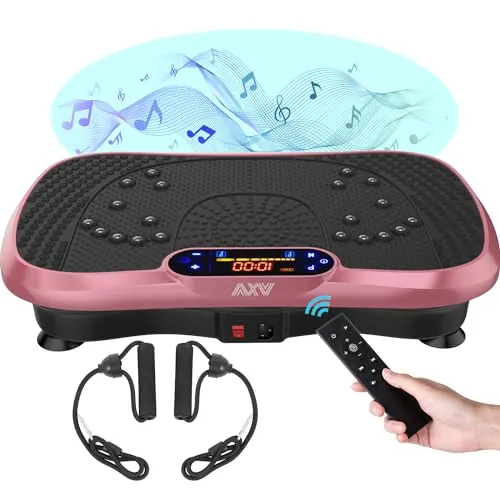
AXV Vibration Plate Fitness Platform
- Compact platform with a small footprint for home or office use.
Comparison
The AXV Vibration Plate and Cubii JR1 offer compact, low-impact ways to add movement at home, but they work very differently. AXV is a portable standing vibration platform with bands and broad intensity adjustment, while Cubii is a seated pedal elliptical built for consistent under-desk use. Cubii has the stronger evidence for quiet, durable daily exercise; AXV is the more compact and lower-cost alternative.
#1 Overall Winner
Contender
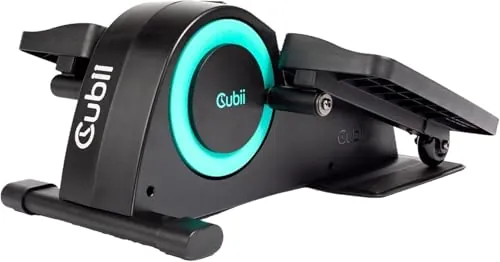
Choose the Cubii JR1 for quiet, seated, low-impact movement during desk work or television, especially if stable daily use matters most. Choose the AXV Vibration Plate if you want a smaller, lower-priced standing platform for short movement sessions and simple exercise variations. Cubii is the safer overall recommendation based on the supplied product and review evidence.
Overall winner
Depends on your needs
| Feature | AXV Vibration Plate Fitness Platform | Cubii JR1 Under Desk Elliptical | Winner |
|---|---|---|---|
| Primary use | Standing vibration platform |
Seated under-desk elliptical |
Depends |
| Training support | Vibration settings and included bands |
Pedaling resistance and activity tracking |
Cubii JR1 Under Desk Elliptical |
| Cardio role | Limited and indirect |
Light seated pedaling |
Cubii JR1 Under Desk Elliptical |
| Mobility use | Standing stretches and simple movements |
Seated leg movement |
AXV Vibration Plate Fitness Platform |
| Adjustability | Vibration speed range and modes |
Eight resistance levels |
AXV Vibration Plate Fitness Platform |
| Build and durability | Positive sturdiness feedback; some failure concerns |
Consistently sturdy, solid feedback |
Cubii JR1 Under Desk Elliptical |
| Stability | Anti-slip surface and positive stability feedback |
Heavy base; may slide on some surfaces |
Cubii JR1 Under Desk Elliptical |
| Noise | Generally described as quiet |
Frequently described as very quiet |
Cubii JR1 Under Desk Elliptical |
| Portability | Compact and easy to carry |
25.4 pounds |
AXV Vibration Plate Fitness Platform |
| Space efficiency | 12.6 by 21 by 4.7 inches |
23.2 by 17.56 by 10 inches |
AXV Vibration Plate Fitness Platform |
| Ease of use | Panel and remote controls |
Simple assembly and pedal operation |
Cubii JR1 Under Desk Elliptical |
| Value | Lower price with bands and remote |
Higher price with stronger build evidence |
Depends |
| Claim support | Broad claims with limited support |
Claims align more closely with seated pedaling features |
Cubii JR1 Under Desk Elliptical |
| Buyer satisfaction | Strong overall feedback |
Very strong, consistent feedback |
Cubii JR1 Under Desk Elliptical |
Evidence for recovery benefits is limited for both products. AXV's listing makes broad statements about circulation, lymphatic flow, pain, and repair, but these should be treated as marketing claims rather than verified outcomes. Buyers do report feeling relaxed or less stiff, which is personal feedback rather than clinical evidence. Cubii has a more modest and credible recovery-adjacent role: it facilitates gentle seated movement with low impact. Users seeking a comfortable, repeatable way to avoid prolonged inactivity may prefer Cubii, while AXV suits those who enjoy brief standing vibration sessions.
The AXV and Cubii support different training habits. AXV suits brief standing sessions and can be paired with simple squats, planks, stretches, or the included bands, though vibration itself does not provide a clear progression system for strength or conditioning. Cubii is more structured for frequent seated pedaling, with eight resistance levels and an LCD display to support repeatable desk-based movement. For a user who needs exercise to fit around computer work, Cubii is more practical. For someone who wants a compact platform for varied standing positions, AXV is the more flexible format.
Neither product is a primary strength-training tool because neither provides substantial progressive external load. AXV has an advantage for simple bodyweight variations performed on or around the platform and includes two resistance bands, but the supplied information does not specify band resistance. Cubii can provide light repeated work for the lower body through seated pedaling, yet reviews indicate that its top resistance may remain modest. For dedicated strength development, either product is best viewed as an accessory alongside progressive resistance training.
The Cubii JR1 is the more relevant choice for light cardio-oriented activity because continuous pedaling provides a direct, repeatable movement pattern. Its eight resistance levels and quiet operation make longer seated sessions realistic, although it is not designed for high-intensity conditioning. The AXV can make standing exercises feel more active, but the supplied evidence does not establish it as a comparable cardio machine. Shoppers seeking structured, low-impact activity while seated should favor Cubii; those seeking vigorous cardio should consider a full-size machine instead.
AXV is the more versatile option for mobility-oriented routines because its standing platform can be used alongside simple stretches, supported positions, and bodyweight movements. Its compact profile may also make it easy to bring out for short sessions. Cubii focuses on seated cyclical leg movement, which may be useful for adding motion during prolonged sitting but does not replace a full mobility or flexibility routine. Neither product includes detailed evidence that it improves range of motion; the better choice depends on whether standing movement or seated pedaling is more suitable for the user.
Both listings and reviews associate their products with low-impact movement and post-sitting comfort, but neither should be treated as a medical or rehabilitation device on the supplied evidence. AXV buyers often describe feeling more relaxed after use, while the listing makes broad recovery statements that are not adequately supported. Cubii is designed for seated, low-impact pedaling and is commonly used by buyers seeking gentle movement. For a straightforward, repeatable low-impact routine, Cubii has the clearer role; AXV may appeal to users who prefer brief standing sessions.
For their intended purposes, Cubii provides the more clearly defined performance package. Its seated elliptical motion, eight resistance levels, LCD tracking, and highly consistent feedback for smooth, quiet use support its role as a low-impact desk exerciser. AXV performs as a compact vibration platform with a wide speed range, remote control, and bands, and many buyers report that it feels strong and easy to incorporate into short routines. However, its performance claims extend beyond the evidence provided, particularly around fat reduction, pain relief, and recovery. The better performer therefore depends on whether seated pedaling or standing vibration is the desired activity.
Cubii is better equipped to support training consistency because it can remain under a desk and be used during work, television, or other seated time. The resistance dial and LCD monitor provide simple cues for progression and routine tracking, although advanced users may outgrow the available intensity. AXV supports variety through standing positions, vibration-speed adjustment, bands, and remote control, and its small size reduces setup friction. Its training role is less structured, however, and its strongest value comes from being an accessible movement accessory rather than a complete workout system.
Cubii has a slight advantage for consistent lower-body muscular activity because its seated elliptical pattern can be repeated for longer durations and adjusted across eight resistance levels. Still, multiple reviews characterize the resistance as limited for harder training. AXV can add instability and vibration to basic standing exercises and includes bands, but there is no specified band resistance or evidence of measurable load progression. Neither product should be selected as the main tool for progressive strength work. Cubii favors repeatable leg movement; AXV favors varied bodyweight-style use in a small space.
The Cubii JR1 is the better cardio-adjacent option because its pedals enable continuous, low-impact movement and can be used for extended seated sessions. Its quiet operation helps users fit activity into work or television time, which may improve adherence. Its ceiling is limited: the resistance may feel light, and the format is not intended to replicate a full elliptical workout. AXV can accompany short standing exercise sessions, but vibration speed should not be confused with sustained cardiovascular workload. Cubii is the more practical choice for low-intensity conditioning.
AXV has the stronger fit for a mobility routine because users can stand, shift position, or combine it with simple stretches and bodyweight movements. The anti-slip surface is relevant for controlled standing use, though users should start cautiously. Cubii offers seated lower-limb motion that may help break up static desk time, but its fixed pedaling motion and under-desk format are less adaptable for flexibility work. Neither product provides enough supplied evidence to promise range-of-motion improvements. Choose AXV for standing movement variety and Cubii for simple seated motion.
Evidence for recovery benefits is limited for both products. AXV's listing makes broad statements about circulation, lymphatic flow, pain, and repair, but these should be treated as marketing claims rather than verified outcomes. Buyers do report feeling relaxed or less stiff, which is personal feedback rather than clinical evidence. Cubii has a more modest and credible recovery-adjacent role: it facilitates gentle seated movement with low impact. Users seeking a comfortable, repeatable way to avoid prolonged inactivity may prefer Cubii, while AXV suits those who enjoy brief standing vibration sessions.
Cubii has the stronger safety profile in the supplied comparison because it is a stable, seated, low-impact device with a heavy base and simple manual resistance adjustment. Users should still ensure sufficient knee clearance and use an appropriate surface or mat if sliding occurs. AXV includes an anti-slip coating and a stated maximum weight recommendation of 280 pounds, but standing vibration requires attention to balance and gradual intensity changes. Its supplied safety evidence is weakened by reports of a motor failure and a voltage or plug mismatch. Neither product should be used beyond its instructions or individual comfort level.
Cubii is the more comfortable option for prolonged, low-impact use because it is designed to be operated while seated. Many reviewers describe smooth pedaling and report that it fits naturally into desk or television time, though desk clearance and chair positioning need attention. AXV can be comfortable for short standing sessions, and buyers often call its vibration strong but manageable. However, one reviewer found seated use awkward because the controls were easy to press accidentally. Cubii is better for sustained comfort; AXV is better for brief upright sessions.
Both products are straightforward, but Cubii has the edge for everyday simplicity. Reviewers frequently mention quick assembly, a simple resistance dial, quiet pedaling, and easy use while seated. Its included chair-wheel supports may also help with an office setup. AXV is similarly accessible, with panel controls, a remote, LED display, and a compact format that requires little storage planning. The need to select a safe standing position and adjust vibration gradually adds slightly more user consideration. Cubii is the lower-friction option for routine desk-based movement.
Both products have credible stability strengths, but their setup needs differ. AXV uses an anti-slip surface and receives positive user comments about standing securely on the platform. Cubii's heavier body keeps it planted for many users, though some reviews note forward sliding on certain floor surfaces and recommend a mat or stable base. For seated pedaling in a fixed home-office position, Cubii has the edge. For a low-profile standing platform that can be stored away, AXV remains a stable option when placed on an appropriate surface.
AXV has the clearer grip-related feature because it explicitly lists an anti-slip coating, and buyers describe the platform as secure during use. Cubii's relevant contact points are its pedals and floor base; users generally find it stable, but some report sliding on smooth floors. Cubii may benefit from a mat or suitable flooring setup. Neither listing provides detailed pedal-texture or surface-traction specifications, so the comparison is based mainly on the supplied design information and buyer feedback.
AXV offers more variation in its core setting, with adjustable vibration speed from 1 to 120 RPM, automatic and manual operation, and included bands for additional exercise options. Cubii has eight manual resistance levels, which are useful for gradual seated progression but may not feel demanding enough for stronger users. The right type of adjustment depends on the intended routine: AXV provides a broader range of vibration sensation, while Cubii provides familiar pedaling-resistance changes. Cubii's adjustment is more directly tied to exercise effort.
AXV is the better small-space product. Its listed footprint of 12.6 by 21 inches and 4.7-inch height make it easy to slide into storage or keep near a wall, and reviews describe it as lightweight. Cubii is compact relative to a full elliptical, but its 23.2-inch depth, 10-inch height, and 25.4-pound body make it more appropriate for a permanent under-desk position. Choose AXV when equipment must be moved and stored frequently; choose Cubii when there is a dedicated desk space.
Cubii has the advantage for quiet operation. Its smooth, seated pedaling is repeatedly described as quiet enough for work, calls, or television. AXV also earns favorable noise feedback, and several users say it can be used while watching a show. However, vibration noise can vary with the selected setting and floor surface. Both are reasonable choices for shared living spaces, but Cubii has the more consistently supported low-noise performance.
Cubii has the stronger build-quality case in the supplied data. Its 25.4-pound construction is frequently described as sturdy, smooth, and solid, and the added mass helps it remain in place. AXV also receives positive comments on sturdiness, anti-slip footing, and compact construction, with its metal-and-plastic design and ergonomic shell presented as durability features. However, a reported motor failure and electrical problem reduce confidence in consistency. AXV is better if low weight and small size matter most; Cubii is better for a substantial, dedicated under-desk unit.
Cubii is the more convincing durability choice. Buyers repeatedly describe a solid, heavy build, and the available feedback does not highlight a recurring mechanical-failure pattern. AXV has many favorable comments on build and stability, but the supplied reviews include one report of a motor failure within about ten months and a separate plug or voltage issue. These reports do not prove widespread defects, but they are relevant when comparing expected ownership confidence. No clear warranty length or formal support terms are provided for either product.
Both products appear low-maintenance based on the supplied information. Cubii uses battery power for its display and has a simple manual resistance mechanism; regular placement checks and surface cleaning are the main practical considerations mentioned by its design. AXV is corded and includes electronic controls, a remote, and a vibration motor, so users should keep the platform clean, follow electrical instructions, and inspect it if performance changes. The reported AXV motor issue makes careful ownership monitoring more important. No lubrication or detailed maintenance schedule is supplied for either product.
AXV is clearly more portable. Its compact, low-profile design is described by buyers as lightweight and easy to move, making it suitable for users who store equipment after each session. Cubii has a built-in handle, but at 25.4 pounds it is better carried occasionally than moved throughout the day. That weight improves stability during pedaling but reduces convenience. Choose AXV for flexible room-to-room use and Cubii for a stable, mostly stationary under-desk setup.
Material disclosure is broadly similar but limited. Both products are listed as metal and plastic, without detailed information on specific components, coatings, or material grades. AXV provides more functional specifications, including power source, display, maximum speed, and maximum recommended weight. Cubii provides dimensions, item weight, resistance-level count, stride length, and power source. Cubii's purpose and feature set are more clearly described, while AXV's listing includes a wider range of promotional claims that are not matched by equivalent supporting detail. Neither product has ingredient-related information because neither is consumable.
AXV offers stronger entry-level value for shoppers focused on purchase price, compact storage, remote control, vibration-speed adjustment, and included resistance bands. Its lower cost is meaningful, but value is moderated by limited evidence for its broad health and body-composition claims and by isolated durability and support concerns. Cubii costs more, yet it offers a more established, purpose-specific design, activity display, eight resistance levels, strong build feedback, and highly positive buyer satisfaction. Cubii is better value for frequent seated use; AXV is better value for budget-conscious buyers who specifically want a vibration platform.
Cubii has the stronger brand-trust position in the supplied data. The product has a large review base, consistent buyer feedback, clear core functionality, and at least one review describing prompt replacement support for a monitor issue. AXV also has many positive reviews and an accessible feature set, but its listing relies more heavily on broad promotional claims. The supplied AXV feedback also includes unresolved customer-service and failure concerns. This does not establish that either brand will provide a particular level of service, but Cubii has the more reliable evidence here.
Both products receive strong customer ratings and large review volumes. AXV buyers often praise its compact size, simple controls, quiet operation, and the way it feels during short sessions. Its feedback is not uniformly positive: one buyer reported a nonworking remote, another a plug mismatch, and another a motor failure with no seller response. Cubii has slightly stronger and more consistent sentiment around smoothness, quietness, sturdiness, and ease of integrating pedaling into daily life. Common Cubii complaints are its weight, limited top-end resistance, desk clearance, and possible sliding on smooth floors.
Neither product provides a clear warranty length or detailed return-and-repair process in the supplied data. AXV states a satisfaction guarantee and asks buyers to contact the seller, but one review reports difficulty obtaining a response after a motor failure. Cubii has no formal warranty details here, although one buyer describes a prompt monitor replacement. Buyers who place high importance on after-sales coverage should verify current warranty and return terms before ordering.
Cubii's core claims are better supported by the provided specifications and reviews. It is a seated under-desk elliptical with adjustable resistance and a display, and buyers consistently report quiet, low-impact pedaling in home and office settings. Claims about calories, weight loss, or rehabilitation should still not be assumed as guaranteed outcomes. AXV's basic feature claims—vibration adjustment, remote control, compact form, bands, and anti-slip surface—are supported by the listing. However, claims about rapid fat processing, chronic pain, injury repair, lymphatic effects, and other health outcomes are not sufficiently supported by the supplied data.
The Cubii JR1 is the better overall purchase for most people seeking a compact, low-impact exercise machine. Its main strength is a clear, usable seated-pedaling format supported by consistently positive feedback for smoothness, quietness, build quality, and daily convenience. Its main limitation is that it is relatively heavy, costs more, and may not offer enough resistance for demanding training.
The AXV Vibration Plate is the better specialist choice for shoppers who want a portable standing vibration platform with broad speed adjustment, a remote, and included bands at a lower price. Its main limitation is that several major listing claims are weakly supported, and the supplied feedback raises some concerns about durability and support. The best choice ultimately depends on whether seated pedaling or standing vibration better fits your routine.

Overall winner
Depends on your needs
The Cubii JR1 is the clearer all-round choice for regular seated movement because its intended use, build quality, quiet operation, and buyer feedback are better supported in the supplied data. The AXV is the better fit for shoppers who specifically want a compact standing vibration platform, included bands, and easier portability at a lower price.
The Cubii JR1 is designed specifically for under-desk seated pedaling and has an LCD monitor, eight resistance levels, and feedback supporting quiet use during work or television. The AXV can fit in a home or office, but its standing-platform format is less naturally suited to continuous desk work.
The supplied AXV listing makes extensive weight-loss and fat-burning claims, but the available evidence does not substantiate those outcomes. One customer specifically reported no weight change. It may be used as a movement accessory, but body-weight outcomes depend on broader factors and should not be assumed from the product listing.
Both products have straightforward controls and positive ease-of-use feedback. The Cubii JR1 is likely simpler for beginners who want to remain seated and pedal at a chosen resistance. The AXV is also easy to start, but users should become familiar with standing balance and begin conservatively with vibration intensity.
Both products receive positive comments about quiet operation. The Cubii JR1 has particularly consistent feedback for smooth, quiet pedaling during work, calls, and television. AXV buyers also describe low noise, but vibration-platform noise can depend on the floor surface, exercise position, and selected intensity.
The AXV is the stronger small-space option. Its listed dimensions are 12.6 by 21 by 4.7 inches, and buyers describe it as lightweight and easy to store. The Cubii is still compact for an elliptical, but its 23.2-inch depth and 25.4-pound weight make it better suited to a dedicated position under a desk.
Neither product is a direct replacement for a full cardio or progressive strength-training plan. The Cubii can add seated leg movement and light conditioning, while the AXV can add vibration to simple standing movements. Users wanting challenging cardio or progressive loading will generally need additional training equipment or activities.
For the AXV, check electrical compatibility, available floor space, and whether a corded standing platform suits your intended routine. For the Cubii, measure desk and knee clearance, account for its 25.4-pound weight, and consider a mat or stable surface if sliding is a concern. Neither listing provides clear warranty details.
Check our rankings and expert guides to find the best fitness products for your goals.