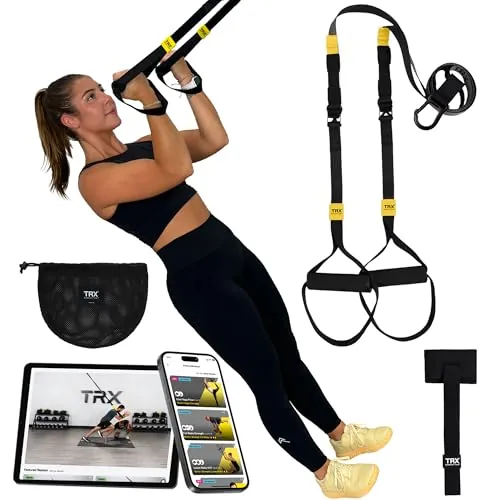
#1 Overall Winner
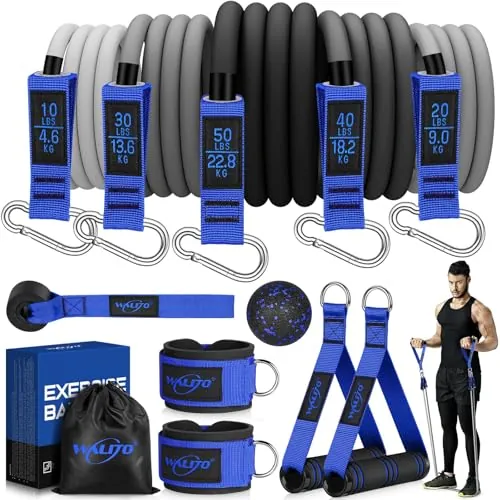
TRX GO Suspension Trainer, At Home, Portable Gym Workout, For Strength Training, Full Body Exercise Equipment
- Highly portable, lightweight setup that works for travel, apartments, and outdoor training.
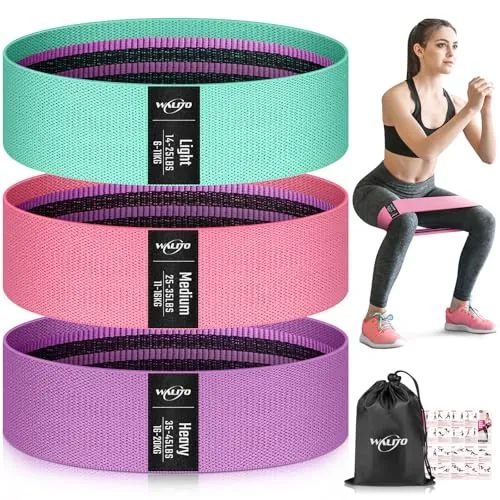
Comparison
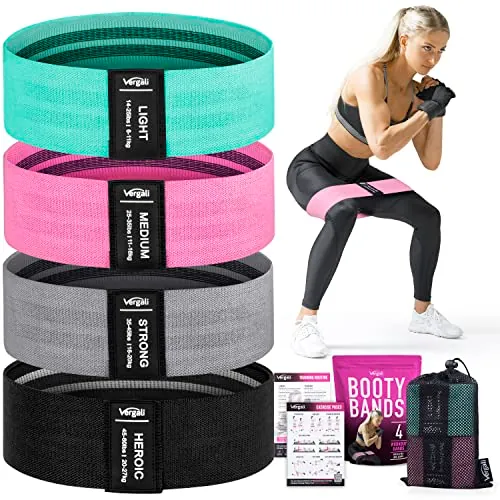
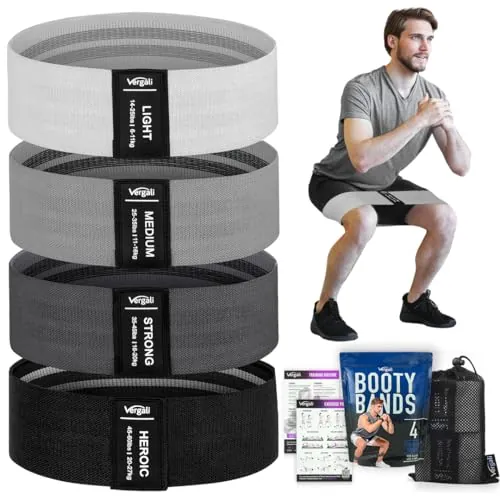
TRX GO and WALITO Resistance Bands are both portable training tools, but they serve different needs: TRX GO is a suspension trainer built for full-body bodyweight workouts, while WALITO’s fabric loop bands focus on lower-body and activation work. TRX GO stands out for training variety and app-guided sessions, while WALITO stands out for simple progression across three resistance levels and strong non-slip comfort at a very low cost.
#1 Overall Winner
Contender
Choose TRX GO if you want one portable system for varied full-body workouts and you’re happy anchoring straps to a door or outdoor point. Choose WALITO Resistance Bands if you mainly want comfortable, non-slip fabric loop bands for glutes/legs, warm-ups, and quick sessions—especially if budget matters.
Overall winner
Depends on your needs
| Feature | TRX GO Suspension Trainer, At Home, Portable Gym Workout, For Strength Training, Full Body Exercise Equipment | WALITO Resistance Bands for Working Out, Fabric Exercise Bands for Legs and Butt, Workout Bands for Women and Men, Booty Band for Yoga Starter Set, Pilates, Rehab, Fitness and Home Workout | Winner |
|---|---|---|---|
| Category / type | Suspension training system (bodyweight straps) | Fabric loop resistance band set | Depends |
| Best use case | Full-body strength + mobility with one setup | Glute/leg activation and lower-body accessories | Depends |
| Resistance levels | One level (intensity via leverage) | Three levels (Light/Medium/Heavy) | WALITO Resistance Bands for Working Out, Fabric Exercise Bands for Legs and Butt, Workout Bands for Women and Men, Booty Band for Yoga Starter Set, Pilates, Rehab, Fitness and Home Workout |
| Portability | Very travel-friendly; carry bag included | Very travel-friendly; carry bag included | Tie |
| Setup requirements | Requires door/indoor-outdoor anchor point | No anchor needed | WALITO Resistance Bands for Working Out, Fabric Exercise Bands for Legs and Butt, Workout Bands for Women and Men, Booty Band for Yoga Starter Set, Pilates, Rehab, Fitness and Home Workout |
| Home gym space efficiency | Stores extremely small; minimal footprint | Stores extremely small; minimal footprint | Tie |
| Training guidance | TRX app trial with many guided workouts (per listing) | Included training guide (per listing) | TRX GO Suspension Trainer, At Home, Portable Gym Workout, For Strength Training, Full Body Exercise Equipment |
| Build quality (based on provided data) | Strong materials (nylon straps, foam handles) + sturdy review feedback | Sturdy wide fabric bands + strong review feedback | Tie |
| Grip / anti-slip | Foam handles; generally secure grip in reviews | Non-slip inner grip; “no roll/no slide” commonly mentioned | WALITO Resistance Bands for Working Out, Fabric Exercise Bands for Legs and Butt, Workout Bands for Women and Men, Booty Band for Yoga Starter Set, Pilates, Rehab, Fitness and Home Workout |
| Comfort | Comfortable foam handles; bodyweight angles can reduce joint stress for some users (anecdotal) | Fabric bands praised for comfort and not pinching skin | Depends |
| Durability expectations | Sturdy straps and reliable door anchor use reported | Fabric bands described as durable and longer-lasting vs plastic/rubber loops | Tie |
| Customer satisfaction signals | Very high rating with substantial review volume | Very high rating with very large review volume | Tie |
| Value proposition | Higher cost; broader training versatility | Low cost; strong lower-body utility | WALITO Resistance Bands for Working Out, Fabric Exercise Bands for Legs and Butt, Workout Bands for Women and Men, Booty Band for Yoga Starter Set, Pilates, Rehab, Fitness and Home Workout |
| Brand/service support | Established fitness brand; app ecosystem | Lifetime replacement/refund policy stated in listing | Depends |
TRX GO and WALITO bands can both support recovery-style sessions through light resistance, controlled movement, and mobility work. TRX GO is more versatile for gentle full-body movement and supported stretching using an anchor point. WALITO bands are a simple way to add light-to-moderate tension for activation drills, commonly used alongside physiotherapy-style routines (as mentioned in the product context and reviews). The better choice depends on whether you want a supported strap system (TRX) or a quick, targeted loop band (WALITO).
TRX GO functions like a compact “portable gym” for bodyweight training: by changing your body angle and stance, you can scale difficulty across many movement patterns and build full sessions around it. WALITO bands are more of a focused accessory tool—excellent for lower-body activation, short workouts, and adding resistance to common leg/glute movements. If you want one tool to cover more total-body variety, TRX GO is typically the better match; if you want something fast, simple, and highly targeted, WALITO fits better.
For strength-focused training, TRX GO offers broader exercise coverage because suspension work can train pushing, pulling, legs, and core with many variations. WALITO’s fabric loops add resistance effectively for glute and leg work and can support accessory strength movements, but they’re not designed to replace a full-body strength setup. In practice, TRX GO is better as a primary strength tool for bodyweight-based training, while WALITO is better as a lower-body add-on for warm-ups, burnout sets, and targeted work.
Neither product is a cardio machine, but TRX GO can support higher-tempo circuits and full-body sessions that elevate heart rate, especially when paired with guided workouts (per the app trial details). WALITO bands are typically used for shorter sets focused on legs/glutes; they can be included in conditioning circuits, but the tool itself is less oriented to full-body, continuous movement. If your “cardio” goal is circuit-style training, TRX GO is generally the more flexible option.
TRX GO can double as a mobility and stretching tool because the straps can help you control range of motion and support positions while you stretch or warm up (also reflected in review use for stretching). WALITO bands can support mobility/activation work for hips and glutes and are often mentioned alongside yoga and Pilates use, but they’re less suited to supported stretching positions than suspension straps. For mobility variety and supported stretching, TRX GO tends to be more useful; for hip/glute activation in warm-ups, WALITO is very practical.
Both products can fit into recovery-style routines when used for gentle movement, activation, and mobility, but the emphasis differs. TRX GO is often used for controlled stretching and range-of-motion work with support from the straps, which some users find helpful around joint-friendly movement patterns (anecdotal review feedback). WALITO bands are commonly used for rehab-style exercises and activation, with comfort noted in reviews. Neither replaces medical care; they’re simply tools that may support consistent movement work.
TRX GO appears to perform best when you want one system that can handle a wide range of bodyweight exercises with consistent setup and reliable strap/handle feel. Review feedback highlights sturdy construction, comfortable grips, and practical anchoring to doors or outdoor points. WALITO bands perform very well for their intended purpose: lower-body band work where staying in place matters. The most repeated performance theme is that they don’t slide or roll up and provide usable resistance across three levels. Performance is strong for both, but aligned to different training goals.
TRX GO provides stronger training support for people who want structure, largely because the product details emphasize an app trial with a large library of guided workouts across multiple training styles. That can reduce “what do I do today?” friction and helps users build full sessions around one tool. WALITO supports training more simply through a printed training guide and easy-to-grab bands that make short routines more likely to happen. If you want coaching-style guidance and broader programming, TRX GO leads; if you want a simple prompt and quick setup, WALITO is excellent.
For strength training outcomes from minimal equipment, TRX GO has the advantage in exercise breadth and scalable difficulty through leverage, stance, and movement selection. It’s also better suited to full-body pulling patterns (rows) that many loop-band sets don’t replicate in the same way. WALITO’s three tension levels make progression easy for hip and leg work, and the non-slip fabric design supports consistent sets without readjusting. For lower-body accessory strength, WALITO is very effective; for whole-body strength variety, TRX GO is the stronger tool.
TRX GO is better suited to cardio-style circuits because you can move quickly between full-body exercises (upper body, lower body, core) without changing equipment, and the app-guided workouts (per listing) can encourage that training style. WALITO bands can raise intensity in leg-focused intervals, but workouts often become more localized to the hips and thighs, which may limit whole-body conditioning variety. If your cardio approach is “strength circuits,” TRX GO generally supports more options.
TRX GO typically provides more mobility flexibility because the straps can assist positions, help you control depth, and allow supported stretching. Reviews also mention using the system for stretching purposes and adjusting range of motion. WALITO bands fit well into mobility routines that emphasize hip stability and activation, and they’re frequently referenced for yoga/Pilates contexts. If you want supported stretching and range-of-motion practice, TRX GO is usually the better fit; for hip/glute activation, WALITO is often more convenient.
TRX GO and WALITO bands can both support recovery-style sessions through light resistance, controlled movement, and mobility work. TRX GO is more versatile for gentle full-body movement and supported stretching using an anchor point. WALITO bands are a simple way to add light-to-moderate tension for activation drills, commonly used alongside physiotherapy-style routines (as mentioned in the product context and reviews). The better choice depends on whether you want a supported strap system (TRX) or a quick, targeted loop band (WALITO).
Both products can be used safely when used as intended, but safety considerations differ. TRX GO safety depends heavily on proper anchoring (door/indoor/outdoor anchor point) and using a secure, stable attachment; reviews generally describe it as sturdy and reliable, but users should ensure the anchor is appropriate before loading bodyweight. WALITO bands reduce setup risk because no anchor is needed, and the fabric design is praised for staying in place; however, fit and placement still matter for comfort and control. Neither product’s details provide clinical safety testing, so practical setup and good form are key.
Comfort differs by tool. TRX GO comfort is mainly about hand feel and joint-friendly movement options; reviews mention comfortable grips and the ability to adjust range of motion. WALITO comfort is about skin contact: buyers repeatedly say the wide fabric bands feel comfortable and don’t pinch, while also staying in place. If your comfort concern is hand fatigue and exercise control, TRX GO is strong; if it’s band bite/rolling during lower-body work, WALITO is the safer bet.
WALITO bands are simpler to use immediately: pick a resistance level and start, with no anchoring required. TRX GO is also described as easy to set up and take down, but it does require a safe door/anchor setup and enough space to lean and move through exercises. Once installed, TRX can run full sessions smoothly. For “fastest start” ease of use, WALITO wins; for guided, repeatable sessions with more exercise variety, TRX is still user-friendly.
WALITO bands are the stability standout for their intended use: multiple reviews emphasize that they do not slide, roll, curl, or fold during leg and glute workouts, which reduces constant readjustment. TRX GO stability depends more on the anchor point and user setup; when properly anchored, reviews describe it as secure, including use on doors and outdoor bars. If “staying in place” on the body is your main stability concern, WALITO leads; if you can anchor safely, TRX is stable in motion.
WALITO’s inner non-slip grip is a consistent highlight, helping the bands stay secure on legs/hips during movement. TRX GO’s foam handles and rotating handle design (mentioned in reviews) support a comfortable, controlled hand grip during pulling and pressing. Grip is excellent on both, but aimed at different contact points: WALITO for thigh/hip placement, TRX for hands and strap control.
WALITO provides direct adjustability through three resistance levels, making it easy to switch intensity for different exercises. TRX GO adjusts differently: difficulty is changed by body position, stance, and leverage, and the system supports modifying range of motion (as referenced in reviews). If you prefer clear “light/medium/heavy” steps, WALITO is more straightforward; if you like continuous scaling through angles and exercise variations, TRX GO is highly adjustable in practice.
Both products are excellent for small spaces. TRX GO stores compactly in its carry bag and can be set up on a door or outdoor anchor without needing a permanent footprint. WALITO bands take up virtually no storage space and can be used in a small area without any installation. For absolute minimal storage and no setup constraints, WALITO is slightly easier; for a full-body system that still stores tiny, TRX GO is outstanding.
Both options are effectively silent in use compared with most home gym equipment. TRX GO and WALITO bands rely on bodyweight and fabric/strap tension rather than moving parts or impact, making them suitable for apartments and shared living spaces.
Both products show strong build-quality signals in the provided data. TRX GO is repeatedly described as engineered, sturdy, and durable in reviews, with comfortable foam handles and reliable straps; the included anchors and carry bag support practical everyday use. WALITO bands are frequently called sturdy and well made, with wide fabric and an inner non-slip design that helps them stay put during workouts. The main difference is complexity: TRX includes anchoring hardware/attachments, while WALITO is a simpler fabric loop design.
Durability looks strong for both based on customer feedback. TRX GO reviews mention straps holding up well over months of use, including door anchoring and outdoor setups, with no signs of breakdown reported in the included reviews. WALITO bands are often described as heavy duty and are specifically compared favorably to some plastic/rubber bands that can disintegrate over time (review sentiment). Long-term wear will still depend on use and storage, but neither shows major durability red flags in the provided data.
Maintenance is minimal for both. TRX GO primarily requires basic care like keeping straps and handles clean and checking the anchor/attachments for wear before use. WALITO bands mainly require keeping the fabric clean and storing them in the included bag to reduce unnecessary abrasion. Neither product requires charging, lubrication, or complex upkeep, making both low-friction tools for consistent training.
Both are highly portable. TRX GO is specifically positioned as a travel-friendly suspension trainer with a carry bag and easy setup in hotel rooms or outdoors (per reviews). WALITO bands are even simpler to pack due to their small size and light weight, also including a carry bag. If you want a complete full-body setup on the road, TRX GO is more capable; if you want the smallest possible kit, WALITO is slightly easier.
For materials transparency, WALITO provides clearer, more specific tension information and resistance levels, plus the material type (fabric) and dimensions/weight. TRX GO lists key materials (nylon straps, foam handles) and basic specs, but provides fewer quantified “levels” because suspension training scales by leverage rather than labeled tension. If you want clearly defined resistance tiers and published tension ranges, WALITO is more transparent; if you’re comfortable with bodyweight/leverage-based progression, TRX’s material detail is adequate.
WALITO Resistance Bands generally offer stronger value because they deliver three resistance levels, strong non-slip comfort feedback, and high buyer satisfaction at a very low price. TRX GO costs much more, but it bundles a broader training experience: a suspension system that can run full-body workouts and the app trial described in the product details. If you’ll use suspension training frequently and want one compact tool for many exercise patterns, TRX can justify its price. If you mainly want effective lower-body band work, WALITO is the smarter spend.
TRX shows stronger brand trust signals in the provided data: it’s a well-known suspension-training brand with an established training app ecosystem and consistently strong review sentiment. WALITO has very large review volume and strong ratings, plus a stated lifetime replacement/refund policy in the product details, but brand trust indicators appear less established versus TRX based on the provided scores and context. If brand reputation and ecosystem matter most, TRX leads; if review volume and a simple warranty promise matter most, WALITO is competitive.
Customer satisfaction is high for both products, with strong star ratings and large review counts. TRX GO reviews frequently mention durability, easy setup, and travel/apartment usefulness, with occasional notes about packaging or strap thickness preferences. WALITO reviews repeatedly praise comfort and that the bands don’t slide or roll, plus strong perceived value; there are a small number of complaints about fulfillment (e.g., missing a band) and occasional fit preferences. Overall sentiment for both is strongly positive with different emphasis.
Warranty/support information is clearer for WALITO in the provided details, which state a lifetime replacement for defects and an option for replacement or refund if not satisfied. TRX GO details focus more on the training app trial and included components; no clear warranty length is provided in the product data shown here. If warranty terms are a deciding factor, WALITO has the more explicit policy in the provided information.
TRX GO’s practical claims about portability, versatility, and ease of use are well supported by consistent review themes (travel setup, door anchoring, full-body exercise variety). Some broader transformation-style statements in the listing (e.g., fat loss/accelerated results) are not directly verifiable from the provided data and should be treated as marketing language rather than proof. WALITO’s claims around non-rolling, comfort, and multiple resistance levels are well supported by the specifications and repeated customer feedback. More specific “shaping” or “lift” outcomes are not something the provided data can confirm.
TRX GO is the stronger overall choice if you want one compact tool to support varied full-body training with strong ease of use, portability, and an app-guided workout ecosystem (as described in the listing). Its main limitation is that it’s still bodyweight-based and relies on anchoring and leverage rather than selectable resistance levels.
WALITO Resistance Bands are the better pick for budget-friendly, lower-body-focused training, especially if you value non-slip comfort and simple progression across three resistance levels. Their main limitation is narrower training scope compared with a suspension system. Overall, TRX GO wins for versatility; WALITO wins for value and glute/leg specificity.
Overall winner
Depends on your needs
Based on the provided data, TRX GO is the better “one tool” option for full-body training variety and guided workouts, while WALITO Resistance Bands are the better low-cost choice for targeted lower-body work and simple progression across three band levels. If you want one system that can cover more movement patterns, TRX GO tends to fit better; for quick glute/leg sessions, WALITO is hard to beat.
TRX GO is the stronger fit for full-body training because suspension exercises can cover pushing, pulling, hinging, and core work with many variations. WALITO bands can still add resistance to squats, bridges, and accessory moves, but they’re primarily a loop-band solution and are most commonly used for legs and glutes rather than complete full-body strength sessions.
WALITO Resistance Bands are purpose-built for legs and glutes, with three resistance levels and repeated review feedback that they don’t slide or roll up. TRX GO can also train legs and glutes (lunges, squats, hip hinges), but it’s not as “put on and go” for short lower-body activation work as a fabric loop band set.
Both can work for beginners, but in different ways. WALITO bands are simple: choose a resistance level and follow the included training guide. TRX GO is also described as easy to set up and use, and the app trial can help with coaching and exercise selection; however, it does require learning safe anchoring and controlling body angle for intensity.
Both are strong small-space options. TRX GO is frequently mentioned as apartment-friendly and stores easily, but you’ll need a safe anchor point (like a door setup). WALITO bands require even less setup and can be used almost anywhere you have a few feet of space, making them especially convenient for very tight spaces.
TRX GO references access to the TRX Training App trial with hundreds of guided workouts led by certified trainers (as provided in the listing details). WALITO bands include an “exclusive training guide” in the box. If you prefer app-led programming and follow-along sessions, TRX GO is the more built-out ecosystem; WALITO is a simpler guide-based approach.
Both have strong durability/build feedback in the provided data. TRX GO reviews commonly mention sturdy straps, comfortable grips, and reliable use on doors and outdoor anchors. WALITO reviews repeatedly call out sturdy fabric, wide bands, and better longevity versus some thin rubber bands. The main difference is that TRX involves hardware/anchoring use, while WALITO is a simpler loop-band design.
WALITO Resistance Bands are generally the better value if your goal is straightforward lower-body resistance and a portable set with multiple tension options. TRX GO costs more, but the value proposition is broader training variety and a more complete suspension-training setup (straps, anchors, carry bag) plus app-based guidance. The better value depends on whether you’ll use TRX’s added versatility.
For TRX GO, confirm you have a safe anchoring option (door, beam, outdoor bar, or tree limb) and enough clearance to lean back and move through exercises. For WALITO, consider band sizing and comfort around the thighs, and confirm the package contents (three bands, carry bag, training guide) on arrival. In both cases, match the product to your training goals: full-body variety vs targeted lower-body work.
Check our rankings and expert guides to find the best fitness products for your goals.