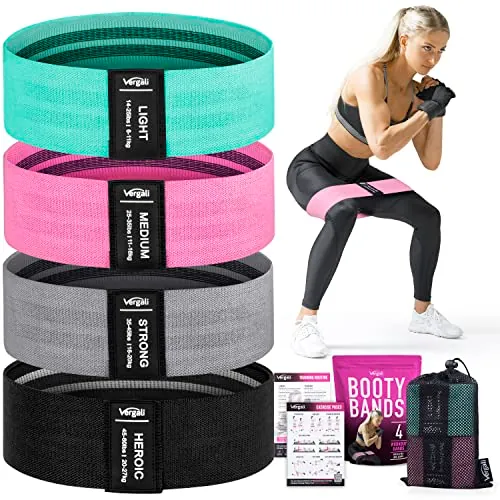
#1 Overall Winner
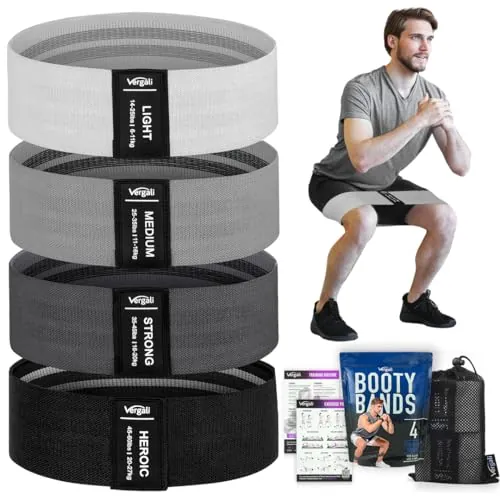
Vergali Fabric Booty Bands Set (4-Pack)
- Fabric band design is repeatedly praised for comfort on bare skin and reduced pinching compared with typical elastic loops.
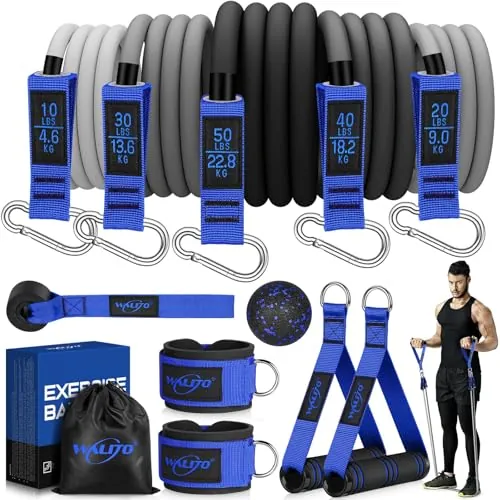
Comparison
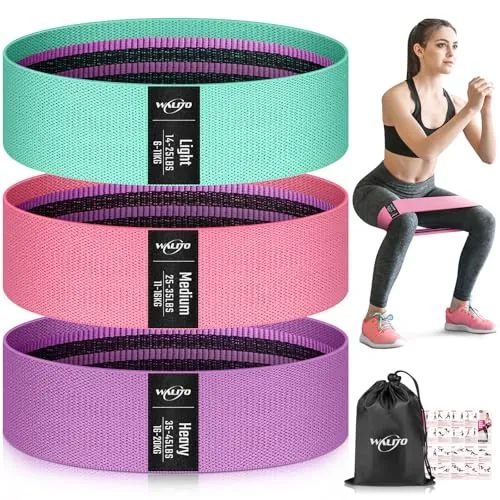
Vergali Booty Bands and the WALITO Resistance Bands Set both support effective home workouts, but they’re built for different styles of training. Vergali’s fabric loop bands are geared toward comfortable, non-slip glute and leg work, while WALITO’s handled system with a door anchor targets broader full-body exercise variety. The best pick depends on whether you want simple lower-body loops or a more modular “portable cable” setup.
#1 Overall Winner
Contender
Choose Vergali if you want comfortable, non-slip fabric loop bands mainly for glutes, hips, and legs, with simple progression and strong durability feedback. Choose WALITO if you want a more complete home-workout kit for full-body exercises using handles and a door anchor, and you’re okay with more parts and more mixed long-term durability feedback.
Overall winner
Depends on your needs
| Feature | Vergali Fabric Booty Bands Set (4-Pack) | WALITO Resistance Bands Set with Handles (5 Bands + Accessories) | Winner |
|---|---|---|---|
| Product type | Fabric loop booty band set (4-pack) | Handled resistance band kit (5 bands + accessories) | Depends |
| Best use case focus | Glutes/hips/legs activation and accessory work | Full-body strength-style movements with anchor point | Depends |
| Resistance levels | 4 levels (light to heavy; listed ranges) | 5 levels (listed in lbs; can combine) | WALITO Resistance Bands Set with Handles (5 Bands + Accessories) |
| Resistance combining/stacking | Not stated (separate loop levels) | Stackable/combines bands | WALITO Resistance Bands Set with Handles (5 Bands + Accessories) |
| Comfort on bare skin | Designed to avoid pinching; strong comfort feedback | Comfort depends on handles/attachments; mixed feedback not prominent | Vergali Fabric Booty Bands Set (4-Pack) |
| Non-slip / staying in place | Strong non-slip/anti-roll feedback | Secure grip is mixed per overview | Vergali Fabric Booty Bands Set (4-Pack) |
| Range of motion | Some users report limited ROM vs regular bands | Good stretch/ROM noted by reviewers; length can vary by user | WALITO Resistance Bands Set with Handles (5 Bands + Accessories) |
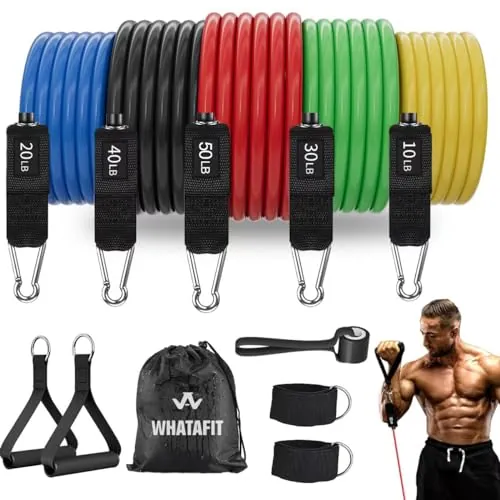
| Included accessories | Carry bag + printed guide + online videos | Handles, ankle straps, door anchor, massage ball, poster, bag | WALITO Resistance Bands Set with Handles (5 Bands + Accessories) |
| Portability | Very compact (4 loops + bag) | Portable but more components | Vergali Fabric Booty Bands Set (4-Pack) |
| Space efficiency | Minimal storage footprint | Minimal storage footprint | Tie |
| Durability feedback trend | Mostly positive durability comments | Mixed; some report breakage near connection points | Vergali Fabric Booty Bands Set (4-Pack) |
| Warranty/support clarity | Lifetime manufacturer’s warranty stated | Warranty details not clearly provided here | Vergali Fabric Booty Bands Set (4-Pack) |
| Customer rating & volume | Very high rating with large review count | High rating with smaller (but still large) review count | Vergali Fabric Booty Bands Set (4-Pack) |
| Value for included items | Low cost, strong quality feedback, guide/videos | Low cost, many accessories, strong value comments | Depends |
For recovery-style sessions (light movement, activation, gentle stretching), Vergali’s comfort and non-slip loop design makes it easy to use for low-intensity hip and leg work without the “pinching” commonly associated with thin elastic loops. WALITO can also serve for lighter workouts and includes a massage ball, which some users may incorporate into post-workout routines. Because no detailed recovery claims or protocols are provided, the practical difference is mostly comfort/simplicity (Vergali) versus accessory variety (WALITO).
For training use, these products complement different routines. Vergali’s loop bands are most naturally used for lower-body activation, glute-focused accessories, and adding resistance to bodyweight leg work. They’re also easy to integrate into quick workouts because there’s minimal setup.
WALITO’s kit plays more like a portable cable system: attach to a door, add handles or ankle straps, and you can run more complete sessions that include upper body and core. If your goal is a single kit to cover many movement patterns at home, WALITO has the broader training role; if your goal is consistent hip/glute work with high comfort, Vergali fits better.
Both products can support strength-focused training, but they do it differently. Vergali’s loop bands are best for strengthening hips, glutes, and thighs through banded squats, lateral walks, glute bridges, and similar movements where the band sits on the legs and needs to stay put. WALITO’s handled set can cover more full-body strength patterns (rows, presses, curls) when used with the door anchor and handles, and the bands can be combined to scale resistance. The trade-off is that WALITO’s connection points introduce another potential failure area based on mixed durability feedback.
Neither product is a dedicated cardio tool, but both can be used to add resistance to higher-rep circuits. Vergali loop bands are commonly used for fast lower-body finishers (lateral steps, high-rep squats, glute circuits) because they’re quick to put on and stay in place. WALITO can also be used in circuit training, especially if you rotate between upper- and lower-body moves using the door anchor and handles. For cardio-style conditioning, your exercise selection and pace matter more than the band type.
For mobility and flexibility work, both can fit, but in different ways. Vergali’s fabric loops are useful for activation and controlled mobility drills where comfort and non-slip placement matter. WALITO’s longer, handled/anchored bands can be helpful for assisted stretching patterns, and at least one reviewer notes good range of motion. If you want minimal fuss for warm-ups and hip activation, Vergali is simpler; if you want more leverage options for assisted movements, WALITO may offer more flexibility.
These are not medical recovery products, but they can support lighter post-workout movement. Vergali can work well for gentle activation and low-intensity leg/hip drills because the bands are designed to be comfortable and non-pinching. WALITO can also be used for lighter sessions and includes a massage ball, which may be useful as part of a general recovery routine for some users. Neither product includes detailed recovery protocols in the provided data, so recovery usefulness depends on how you program them.
In real-world use, Vergali appears to deliver more consistent performance for its intended job: stable, comfortable loop resistance during lower-body exercises. Reviews repeatedly mention that the bands stay in place, don’t roll up, and feel strong, which are key performance factors for hip/glute loops.
WALITO performs well when the goal is exercise variety and adjustable resistance via stacking, especially for door-anchored movements using handles. However, performance can be affected by the quality of connection points and the user’s setup, and durability/resistance-label concerns show up more often in feedback. If you want “set-and-forget” loops, Vergali is the safer bet; for a more versatile system, WALITO can perform well with good setup and inspection.
Vergali supports training consistency through simplicity and guidance: four labeled levels, quick on/off use, and included printed and online workout resources. That tends to reduce friction for beginners and helps keep workouts repeatable.
WALITO supports training variety by bundling accessories that expand your movement options (handles, ankle straps, door anchor) and by allowing multiple resistance combinations. This can help progression and program design, but it also requires more setup and awareness of wear at clip/connection points. For structured lower-body routines, Vergali is straightforward; for broader home-program building, WALITO offers more tools.
For strength training outcomes, the “best” option depends on the exercises you want to prioritize. Vergali’s loop design and strong non-slip comfort feedback make it highly practical for consistent lower-body accessory work, especially where band placement and rolling are common issues. WALITO’s handled, stackable system is better suited to upper-body and full-body patterns using an anchor point, and it can scale intensity by combining bands. The main limiter for WALITO is the more mixed durability pattern around connection points, which matters more as resistance and frequency increase.
As cardio support tools, both are secondary rather than primary. Vergali’s loops are easy to use for fast-paced leg circuits and glute finishers because there’s almost no setup and the bands are designed not to slip. WALITO can fit into conditioning circuits too, but transitions may be slower because you may be clipping bands, changing handles, or adjusting the anchor. If you want quick interval-style lower-body work, Vergali is typically easier; if you want mixed circuits that include upper-body band moves, WALITO offers more options.
Vergali tends to work best for activation-led mobility (hips/glutes) where comfort on skin and staying in place matter. WALITO’s longer bands and attachments can provide more ways to scale leverage in assisted mobility drills, and reviewers mention good stretch and range of motion for some movements. If your mobility sessions are primarily lower-body activation plus simple drills, Vergali is the more convenient tool. If you want to experiment with anchored assistance and longer movement arcs, WALITO may fit better.
For recovery-style sessions (light movement, activation, gentle stretching), Vergali’s comfort and non-slip loop design makes it easy to use for low-intensity hip and leg work without the “pinching” commonly associated with thin elastic loops. WALITO can also serve for lighter workouts and includes a massage ball, which some users may incorporate into post-workout routines. Because no detailed recovery claims or protocols are provided, the practical difference is mostly comfort/simplicity (Vergali) versus accessory variety (WALITO).
Both products are generally used safely when inspected and used as intended, but the risk profile differs. Vergali’s loop design avoids metal clips and is frequently described as staying in place, which can reduce distraction during leg work. It also lists latex content, which matters for users with latex sensitivities.
WALITO’s kit introduces more potential failure points (clips/connection areas and the door anchor). The provided buyer feedback includes reports of bands breaking near connection points and some concerns about resistance labeling, so routine inspection and conservative progression are sensible. For home use, ensure your anchor point is secure and the door setup is stable before loading the bands.
Vergali is the more comfort-forward choice based on the provided information. The listing emphasizes no pinching on bare legs, and customers repeatedly describe the fabric bands as comfortable, wide, and non-irritating.
WALITO comfort is generally positive (handles are described as comfortable), but it can vary more by user because the system depends on setup, band length, and attachment points. If comfort on skin during lower-body work is your priority, Vergali has clearer support in the buyer feedback.
Vergali is easier to use for quick sessions: you choose one of four loops, put it on, and start. The included printed guide and videos also reduce the effort of planning workouts.
WALITO is still user-friendly for a kit, but it’s inherently more involved. You may need to set up a door anchor, clip bands on/off, and swap accessories (handles vs ankle straps). That adds flexibility, but also adds steps. If you want minimal setup friction, Vergali wins; if you’re fine with a few extra steps for more exercise options, WALITO works well.
Stability here mostly means staying in position during movement. Vergali’s loop bands are repeatedly praised for not slipping down the legs and not rolling up, which improves stability during squats, lateral walks, and glute work. WALITO can be stable when anchored and set up well, but stability is more dependent on correct door-anchor placement and the integrity of clips/connection points. For “put it on and it stays put” leg work, Vergali is more reliably stable.
Vergali’s “grip” advantage shows up as traction against clothing/skin: buyers frequently mention that the bands don’t roll and stay in place. WALITO’s grip is more about handle comfort and security, and feedback is mixed in the overview (some secure, some fit/length issues). If your biggest issue is loop bands sliding during leg work, Vergali is the safer pick. If you need a secure handhold for rows/presses, WALITO’s handles are the relevant feature.
WALITO is more adjustable overall because it offers five resistance levels and can combine bands to scale intensity for different exercises. That flexibility is especially useful when moving between small-muscle and large-muscle movements in the same workout.
Vergali is still adjustable in a practical sense, with four distinct loop levels that are clearly labeled and designed for progression. However, you can’t “stack” loops in the same way, and the format is more specialized to lower-body placements. If maximum intensity scaling is the goal, WALITO has the advantage.
Both products are excellent for small spaces. Vergali’s four loops and small carry bag take up very little room and are easy to store in a drawer. WALITO also stores well and includes a carrying bag, but it has more components (handles, anchor, straps), so it needs slightly more organization. If you want the simplest storage footprint and least clutter, Vergali is marginally easier.
Both options are very quiet compared with most home gym equipment. Vergali’s fabric loops are essentially silent in use. WALITO’s bands are also quiet, though you may hear minor movement from clips/attachments depending on setup. For apartment-friendly training, either should be a low-noise choice.
Vergali’s build quality is strongly supported by buyer feedback describing the bands as well made, thick/sturdy, and resistant to rolling during use. The fabric construction is repeatedly highlighted as more comfortable than thinner “plastic” style loops.
WALITO’s set is often described as well made, and reviewers mention comfortable handles and solid stitching on accessories. However, the overall build quality perception is less consistent because some feedback points to failures near connection points, which can be the weak link in clip-based tube systems. If you prioritize simple, robust construction, Vergali has the edge.
Vergali shows a clearer durability pattern in the provided data, with many users describing the bands as strong and long-lasting and noting no ripping over time. That aligns with a fabric loop design that has fewer mechanical connection points.
WALITO durability feedback is mixed. Some reviewers report long use with only gradual wear, while others describe bands breaking near connection points or slipping through parts. For heavy, frequent training, that mixed feedback is important: you may need to inspect clips/ends regularly and replace bands if wear appears. Based on the data here, Vergali looks more consistently durable.
Maintenance is minimal for both, mainly involving keeping the bands clean and checking for wear. Vergali’s loop bands have a simple design, so there are fewer parts to inspect; users mainly need to check the fabric and elasticity over time. WALITO requires a bit more attention because clips, connection points, and the door anchor are integral to the system—regularly checking those areas for wear can help reduce the chance of unexpected failure. Both store easily in their included bags between sessions.
Both are portable and include carry bags, making them easy to take to the gym or travel with. Vergali is the more travel-friendly choice because it’s just four loops plus a small guide—fewer parts to pack and no anchor needed. WALITO is still compact, but the added accessories (handles, straps, door anchor, massage ball) make it a slightly bulkier kit and can be easier to misplace when traveling.
For equipment, “ingredient transparency” mainly means material clarity. Vergali lists latex and describes a cotton-and-latex blend, and it clearly states included components like the carry bag and training guide, plus resistance ranges for each level. WALITO states natural rubber/latex bands and lists the included accessories (handles, door anchor, ankle straps, massage ball, poster, bag) along with resistance levels. Overall, both disclose core materials and what comes in the package; Vergali is a bit clearer about the loop-band resistance ranges, while WALITO emphasizes stackability and kit contents.
Both sets are priced low and are frequently described as good value, but value depends on what you’ll actually use. Vergali offers strong value if your goal is reliable, comfortable loop resistance for lower-body sessions—buyers consistently praise quality, comfort, and durability, and the lifetime warranty adds reassurance.
WALITO can be excellent value if you want a full starter kit for home training. The included handles, door anchor, and ankle straps expand exercise variety significantly for the price. The main value risk is durability inconsistency: if bands fail early, the “kit value” drops. If you’ll use the accessories often, WALITO can be the better deal; for dependable loops, Vergali is hard to beat.
Based on the provided data, Vergali shows stronger overall trust signals: very high buyer satisfaction, consistent feedback on comfort and durability, and an explicitly stated lifetime manufacturer’s warranty. WALITO is well reviewed and commonly praised for value and versatility, but brand trust is tempered by more mixed durability reports and less clear warranty/support information in the details provided. If predictable ownership experience matters most, Vergali looks more dependable here.
Vergali has exceptionally strong customer sentiment in the provided reviews, with repeated themes: comfortable on skin, doesn’t roll up, stays in place, and feels durable. There are occasional complaints (such as receiving an unexpected size mix), but the overall pattern is highly positive.
WALITO also has strong satisfaction overall, with many users praising versatility, handles, and door-anchor use for home workouts. The bigger negative theme is inconsistency: some users report breakage near connection points and some question resistance labeling. If you want the most consistent satisfaction pattern, Vergali leads; if you want versatility and accept some variability, WALITO remains popular.
Vergali clearly states a lifetime manufacturer’s warranty and positions customer support as available if you’re unhappy. For WALITO, warranty/support terms are not clearly provided in the data here, and at least one reviewer expresses a desire to contact the manufacturer about a broken band. If warranty clarity is important, Vergali is the safer choice based on the provided information.
Vergali’s practical claims are well aligned with the user feedback provided: comfort on bare legs, non-slip performance, clearly labeled resistance levels, and usefulness for home workouts are repeatedly echoed by buyers. Claims like “target glutes and thighs” are consistent with how loop bands are commonly used, though outcomes still depend on training effort and programming.
WALITO lists stronger performance-style claims (very high maximum resistance and body-recomposition language). The product is clearly versatile and many users report good workouts, but the provided feedback also includes doubts about resistance labeling and some durability failures. Overall, Vergali’s claims appear better supported by consistent reviews, while WALITO’s broader claims are more mixed in support.
Vergali is the clearer winner for most people who specifically want loop “booty bands” that feel comfortable on skin and reliably stay in place during glute and leg exercises. Its main strength is consistent buyer feedback on comfort, stability, and durability, while its main limitation is that loop bands are less suited to cable-style full-body movements and some users want more range of motion.
WALITO is a better match if your goal is a versatile, all-in-one resistance kit for full-body training at home, thanks to handles, ankle straps, and a door anchor. Its main strength is exercise variety and adjustable resistance via stacking; its main limitation is more mixed durability feedback and less clear warranty support in the provided details.
Overall winner
Depends on your needs
If you mainly want comfortable, non-slip loop bands for hips, glutes, and legs, the Vergali fabric set is the cleaner fit and is backed by very strong buyer feedback on comfort and staying put. If you want a broader, “cable machine” style exercise menu using handles and a door anchor, WALITO offers more variety, but durability feedback is more mixed.
Vergali is purpose-built for glute and hip work: it’s a fabric loop design that reviewers say doesn’t roll up and can be used on bare skin without pinching. WALITO can still be used for lower-body training, especially with ankle straps, but it’s more of a full-body handled system than a dedicated hip-loop set.
WALITO is typically better for full-body routines because it includes handles and a door anchor, which supports rows, presses, curls, and other upper-body movements more naturally. Vergali can be used for full-body accessory work, but loop bands are most effective for legs, hips, and certain core drills rather than “handle” exercises.
Both can work for beginners, but Vergali is simpler: pick a loop resistance level and start, and the included printed guide and online videos can help with routine structure. WALITO also includes exercise guidance and easy resistance changes, but the extra attachments (clips, door anchor, straps) add a bit more setup and technique learning.
Vergali is commonly used for yoga- and Pilates-adjacent activation and lower-body work, and the non-slip fabric is a plus for comfort. WALITO is also used for yoga and Pilates-style training, but it’s better suited to strength-style movements where handles and a fixed anchor point help control the motion.
Both pack down well and include carrying bags. Vergali is especially straightforward for travel because it’s just four loop bands plus a small bag and guide. WALITO is still portable, but the handles, door anchor, ankle straps, and additional accessories mean more parts to pack and keep track of.
Vergali receives consistently strong durability comments, with several buyers noting the bands haven’t begun to rip and feel built to last. WALITO durability feedback is mixed: some users report the bands being strong, while others mention failures near connection points. If durability is your top priority, the review pattern favors Vergali.
Yes. Vergali lists latex in the product details (paired with a cotton/fabric blend). WALITO lists “natural rubber”/natural latex as the band material. If you’re avoiding latex, you’ll want to confirm material compatibility before buying, since the provided information indicates latex or rubber-based construction for both.
Loop booty bands (like Vergali) are typically best for lower-body work—glute bridges, banded squats, lateral walks—where you want a band that stays on the legs without rolling or pinching. Handled tube sets (like WALITO) are more like a portable cable system, adding options for upper-body pulling and pressing via handles and a door anchor.
Check our rankings and expert guides to find the best fitness products for your goals.