#1 Overall Winner
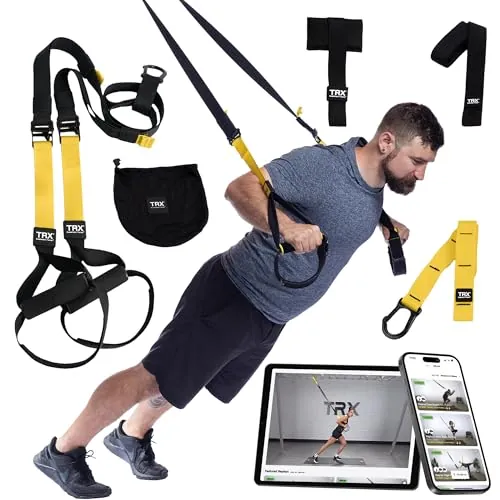
TRX All-In-One Home Gym System
- Complete kit approach with indoor/outdoor anchors plus travel bag and printed/video starter materials included.
Comparison
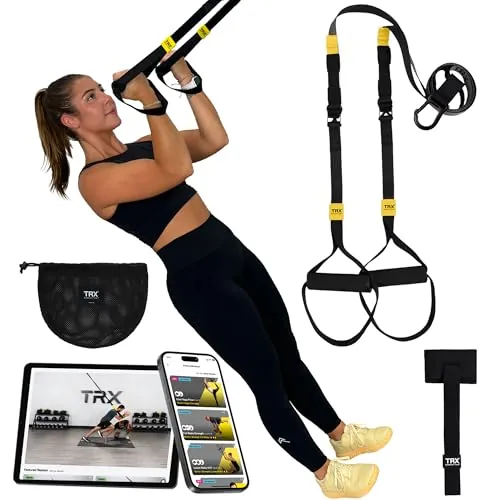
TRX All-In-One Home Gym System and TRX GO are both TRX suspension trainers built for full-body bodyweight workouts at home or on the go. The main choice is between a more complete kit with clearer warranty/max-load details (All-In-One) and a lighter, simpler setup with standout ease-of-use and comfort feedback (GO). Both are highly rated and popular for travel, apartments, and small-space training.
#1 Overall Winner
Contender
Choose TRX All-In-One if you want a more complete suspension training kit with clearer warranty/max-load information and extra included training materials. Choose TRX GO if you want a lighter, simpler setup with especially strong feedback for comfort, grip, and quick everyday use in small spaces or while traveling.
Overall winner
Depends on your needs
| Feature | TRX All-In-One Home Gym System | TRX GO Suspension Trainer | Winner |
|---|---|---|---|
| Category / type | Suspension trainer kit (All-in-One) | Suspension trainer (GO) | Tie |
| Price (listed) | 138.9 | 105.11 | TRX GO Suspension Trainer |
| Average rating | 4.8/5 | 4.8/5 | Tie |
| Review count | 7278 | 11317 | TRX GO Suspension Trainer |
| Item weight (listed) | 1.7 lb | 0.68 kg | Depends |
| Stated max weight recommendation | 700 lb | Not provided | TRX All-In-One Home Gym System |
| Included components (as provided) | Trainer + anchors + bag + workout guide/DVD/bonus items listed | Listed as “Go Suspension Trainer” (set description mentions anchors/bag) | TRX All-In-One Home Gym System |
| Workout content / programs | 500+ app workouts; number of programs listed as 500 | 500+ app workouts | Tie |
| Materials (as provided) | Nylon, thermoplastic rubber, steel | Foam handles, nylon | Depends |
| Ease of setup (from reviews) | Commonly described as easy to use; door setup works well | Repeatedly described as very easy to set up/take down | TRX GO Suspension Trainer |
| Comfort / grips (from reviews) | Some mixed handle feedback (foam softness; handle flex in rare full suspension) | Comfortable grips mentioned repeatedly | TRX GO Suspension Trainer |
| Durability sentiment | Strong long-term durability praise (years of use) | Strong durability praise (sturdy straps/stitched build) | Tie |
| Portability / travel fit | Very portable with mesh travel bag | Very portable; positioned as lightweight travel option | Tie |
| Warranty clarity (provided) | Two-year warranty stated | Not provided | TRX All-In-One Home Gym System |
Used conservatively, either system can support recovery-oriented movement, light activation work, and supported stretching. TRX GO has more direct review commentary around feeling better after workouts and using it for stretching routines, while the All-In-One highlights “prehab and rehab” style programming availability in the app. Neither replaces medical care, but both can fit a low-impact, controlled post-workout routine when used appropriately.
Both TRX All-In-One and TRX GO are built for suspension training—using body position and leverage to scale difficulty across rows, presses, squats/lunges, and core movements. That makes either option useful for general fitness, small-space training, and travel routines where you want a lot of exercise variety from one tool.
The main difference is how you want to train day-to-day. All-In-One is positioned more like a complete “home gym kit” with more included training materials and clearer support details, which can help if you want structure and a long-term setup. TRX GO is positioned as the lightweight, quick-deploy option that’s easy to pack and consistently gets praise for comfort and simple setup—ideal for frequent travelers and apartment workouts.
For strength-focused training, both products rely on the same principle: you create more resistance by changing your body angle, stance, and range of motion. Reviews for both highlight that you can hit major muscle groups (upper body pulling/pushing, legs, and core) and progress over time.
TRX All-In-One has a slight edge if you want more “system” around your strength training, thanks to the broader kit and clear max weight recommendation in the provided data. TRX GO still performs strongly for strength sessions, especially if you want a lightweight tool that complements other training rather than replacing traditional external loading.
Neither product is a cardio machine, but both can support conditioning-style workouts (for example, circuits that combine rows/presses/squats/planks with short rests). The provided information for both emphasizes quick sessions and exercise variety, which can be used to keep heart rate elevated depending on how you program it.
If cardio-style circuits are a priority, the practical deciding factor is setup speed and routine friction. TRX GO’s consistently “easy to set up, take down, and stow away” feedback can make it easier to stick to frequent, shorter conditioning sessions. All-In-One is similarly capable, especially if you use its included training resources for structured circuits.
Both suspension trainers can fit mobility-focused training because you can use the straps for assisted positions and controlled range-of-motion work. In the provided reviews, TRX GO is frequently mentioned as useful for stretching routines and warm-ups/cool-downs, while the All-In-One is positioned as versatile enough to support mobility and flexibility training alongside strength work.
If you plan to use a TRX system mainly for stretching and mobility, TRX GO has strong buyer commentary around flexibility in day-to-day use and being an easy “grab-and-go” option. If you want mobility plus a more complete training bundle for broader workouts, All-In-One may be the better fit.
Neither product is a dedicated recovery tool, but both can be used for gentle movement, supported stretching, and controlled rehab-style patterns where appropriate. In the provided content, TRX GO reviewers specifically mention using it for stretching and feeling better after workouts, while the All-In-One kit is described as supporting mobility training and “prehab and rehab” via app programming.
For recovery-oriented use, the better pick typically comes down to comfort and how easy it is to set up consistently. TRX GO has especially strong ease-of-use and comfort feedback, which can matter for frequent light sessions. All-In-One remains a strong option if you value the fuller kit and structured guidance resources.
Performance is very close because both products are TRX suspension trainers intended to deliver scalable bodyweight resistance via anchoring and strap-based movement. In the provided data, each has extremely strong buyer feedback for workout effectiveness and versatility across many exercises.
The separation comes from practical execution details: TRX GO gets especially consistent feedback for comfort and quick setup/takedown, which can improve real-world “use it often” performance. TRX All-In-One performs as a more complete system, with buyers frequently highlighting durability over years and confidence tied to the stated max weight recommendation. If you want the simplest daily driver, GO edges it; if you want the most complete kit with clear support details, All-In-One is strong.
Both products emphasize access to a large library of guided workouts in the TRX app, which is useful if you want programming ideas, coaching cues, and variety. That matters for suspension training because progression is often based on technique, body angle, and exercise selection rather than changing plates or dumbbells.
TRX All-In-One offers extra support in the provided data through additional included materials (for example, a workout guide and DVD listed), which can help when you’re learning movement patterns or building a repeatable routine. TRX GO’s training support advantage is simplicity: reviewers repeatedly note it’s easy to set up, use, and store—reducing friction and making it easier to train consistently in small spaces or while traveling.
Both systems can challenge strength through leverage-based progression (stepping farther, lowering the body, increasing instability, or extending range of motion). The All-In-One kit slightly favors users who want a more “complete” strength-training setup in the box and added confidence from the clearly stated max weight recommendation. TRX GO slightly favors users who want a comfortable, simple tool that they’ll actually use frequently, even if suspension training is only part of their overall strength plan.
Cardio outcomes depend more on how you program sessions (intervals, circuits, rest times) than on the strap system itself. Both can support fast-paced full-body circuits, but TRX GO’s strong ease-of-use feedback makes it easier to do frequent short workouts with minimal setup time. The All-In-One works similarly well, especially if you prefer following structured guided workouts rather than building your own circuits.
For mobility, both can act as an “assistance” tool—helping you control depth, balance, and range of motion during stretches and movement prep. TRX GO has clearer review evidence of regular stretching use and warm-up/cool-down routines, while All-In-One leans on being a broader system with multiple training modalities available via included guidance and the app. If mobility is your main goal, the more comfortable, easy-to-deploy option is often the better daily choice.
Used conservatively, either system can support recovery-oriented movement, light activation work, and supported stretching. TRX GO has more direct review commentary around feeling better after workouts and using it for stretching routines, while the All-In-One highlights “prehab and rehab” style programming availability in the app. Neither replaces medical care, but both can fit a low-impact, controlled post-workout routine when used appropriately.
Both systems are widely used for bodyweight training, but safety depends on correct anchoring, strap inspection, and controlled technique—especially for shoulder-intensive moves and more unstable positions. The All-In-One listing includes a clear stated maximum weight recommendation and notes safety testing, which helps clarify its intended load handling. Reviews also suggest proper form matters, with at least one user recommending instruction from a certified trainer to avoid unnecessary strain.
TRX GO reviews frequently describe it as secure when anchored properly, but the provided data does not include the same explicit max-load detail. If you want clearer stated safety specs, All-In-One is more transparent here.
Comfort is where the two products separate most clearly in the provided data. TRX GO is repeatedly described as comfortable in the hands and easy to use for a wide range of people, including those training at home and on the road. TRX All-In-One is also well-liked overall, but comfort-related comments are more mixed, including notes about softer foam and handle feel under heavier suspended loading.
If you’re sensitive to handle comfort or plan longer sessions, TRX GO is the safer comfort pick based on the provided reviews.
Both are designed to be simple: anchor the strap, adjust length, and train. That said, TRX GO has particularly consistent feedback for quick setup, takedown, and storage, which is valuable if you’re training in a small space or fitting workouts into a busy schedule. TRX All-In-One is also described as easy to use and adaptable for all fitness levels, with the added benefit of more included training materials for learning movements.
If you want the most frictionless day-to-day experience, GO has the edge; if you want more guidance bundled in, All-In-One can be more supportive.
Stability is heavily influenced by anchor choice (solid door setup, mounted bracket, or secure outdoor anchor point). In the provided data, both products are commonly used on doors and outdoors and are described as secure when properly anchored.
There is no strong evidence here that one is materially more stable than the other in typical use. If you plan more advanced suspended work, consider a fixed mount where possible and follow setup guidance closely, since stability depends on the environment more than the straps.
TRX GO has stronger grip-specific sentiment in the provided reviews, with multiple mentions of comfortable grips and a secure hold. TRX All-In-One is generally viewed as high quality, but at least one review comments on handle feel/rigidity and expects faster wear on softer foam compared with higher-tier models.
If grip comfort is a major deciding factor (longer sessions, sweaty hands, or frequent travel workouts), GO has the clearer advantage based on the provided feedback.
Both products are adjustable in practical use (changing strap length and changing your body position to scale difficulty). TRX All-In-One has stronger adjustability emphasis in the provided reviews and description, including users noting how small position changes increase or decrease resistance and that length is easy to tailor.
TRX GO is also used across a wide range of exercises, but its provided specs list one resistance level, suggesting fewer “built-in” intensity settings beyond leverage-based changes. If adjustability and progression are a top priority, All-In-One has the clearer edge in the provided data.
Both products are excellent for small spaces because they store in a compact bag and don’t require a permanent footprint like a rack or machine. They’re commonly used with a door anchor for indoor workouts and can be packed away quickly after training.
TRX GO is often highlighted as particularly apartment-friendly and easy to stow. TRX All-In-One is similarly space-efficient, with the trade-off that it comes as a more complete bundle. In practical terms, either is a strong choice if you need a “home gym” that fits in a closet or suitcase.
Both systems are quiet compared with most traditional home gym equipment because there are no motors and minimal impact with controlled movements. Any noise typically comes from the anchor point (for example, a door) or the environment, not the straps themselves.
If you’re training in an apartment or shared home, either option is a strong fit for low-noise workouts—especially when you avoid jumping movements and keep strap hardware from tapping surfaces.
Both products receive strong build-quality sentiment in the provided buyer summaries and reviews, with repeated mentions of sturdy straps and reliable hardware for regular use. TRX All-In-One is frequently described as “serious gear” that holds up over years, and it provides a clear stated max weight recommendation, which can add confidence for many users.
TRX GO also scores very well in buyer feedback for finishing, stitching, and secure feel. Where they differ is feel: GO reviews repeatedly praise comfortable grips, while the All-In-One has some mixed comments about handle rigidity/foam feel for more demanding fully suspended positions.
Durability looks excellent for both products based on the provided review themes. TRX All-In-One has multiple long-term use mentions (including multi-year, high-frequency training) and buyers regularly describe it as lasting through many workouts and years. TRX GO also has consistent durability feedback, with users describing sturdy straps, robust stitching, and reliable performance over months of use.
If you’re prioritizing durability evidence, All-In-One has slightly more explicit long-term anecdotes in the provided reviews, while GO has a larger overall review base describing a similarly solid ownership experience.
Maintenance is minimal for both products: keep straps clean and dry, inspect stitching and hardware periodically, and store the system in the carry bag when not in use. Because these are portable straps rather than machines, there’s no lubrication or complex upkeep mentioned in the provided data.
For users who train frequently, the practical difference is simply how often you’ll pack/unpack it. TRX GO’s “easy to stow away” feedback can make routine storage simpler, while All-In-One’s included materials may mean you also keep guides handy if you use them.
Portability is a strength for both products, with many buyers using them in hotels, parks, and at home. TRX All-In-One includes a mesh travel bag and is repeatedly described as easy to pack for travel. TRX GO is explicitly positioned as lightweight and convenient for carrying along, and reviewers frequently mention taking it anywhere and setting it up quickly.
If you travel often and want the lightest, most minimal pack, TRX GO has a slight portability advantage. If you want a more complete kit while still staying travel-friendly, All-In-One is the better match.
These are equipment products, so transparency is mostly about materials and what’s included. TRX All-In-One lists its material types (nylon, thermoplastic rubber, steel) and provides detailed included components in the provided data. TRX GO lists foam handles and nylon and describes the set as including anchors and a mesh carry bag, but its listed included components are minimal in the provided specs section.
If you care about knowing exactly what comes in the box and having clearer material/component disclosure, the All-In-One listing is more specific in the information provided here.
Value depends on whether you’ll use the extra kit components and how much you care about clearly stated warranty/max-load details. TRX GO costs less in the provided listings and has strong feedback for comfort, ease of use, and apartment-friendly practicality, making it a compelling “use it often” purchase for many people.
TRX All-In-One costs more but appears to justify the premium for buyers who want a more complete bundle (more included training materials listed) plus clear warranty information and a stated maximum weight recommendation. If you’ll follow guided programming and train frequently, either can be good value; the best pick is the one you’ll set up consistently.
Both products are from TRX and have very large review counts with consistently high ratings, which supports strong brand trust in day-to-day ownership. The All-In-One listing also references longer-term and professional-style use cases and provides explicit warranty details, which can increase confidence for some buyers.
TRX GO benefits from a broader base of user feedback and repeated mentions of reliable setup and build quality. In practice, brand trust is high for both; the difference is mainly how much product-specific support detail is included in the listing information provided here.
Customer satisfaction is extremely strong for both products, shown by high star ratings and large review volumes. TRX All-In-One feedback repeatedly highlights versatility, durability over years, and travel convenience, with the most common drawback being price for some buyers. TRX GO feedback emphasizes ease of setup, comfortable grips, and how well it fits apartment or travel life, with occasional notes about packaging and that the straps feel thinner than higher-tier options.
If you want the option with the larger review base while keeping similarly high satisfaction, TRX GO leads. If you want more explicit bundle completeness and warranty clarity, All-In-One remains highly trusted by buyers.
Warranty information is clearer for TRX All-In-One, which explicitly states a two-year warranty in the provided listing. For TRX GO, warranty/support details are not clearly provided in the data shown, so it’s harder to compare support terms directly. If warranty clarity is a priority, confirm GO’s current coverage before buying.
Both listings include strong “results” style statements. In the provided data, the most directly supported claims are practical and experience-based: people can do many exercises, train full-body, use the systems at home and outdoors, and find them durable and easy to travel with. Reviews also support progression through position changes and routine variety.
Claims about specific outcomes (for example, fat loss, accelerated results, or injury-risk reduction) are not directly validated by the provided review excerpts or specs, even if users report positive experiences. If you prefer clearer support through concrete specs and included resources, All-In-One provides more explicit listing detail (max weight recommendation, warranty, included materials) in the data provided here.

TRX All-In-One Home Gym System and TRX GO are both top-tier suspension trainers with very high buyer satisfaction and strong portability for home and outdoor workouts. Neither is a clear universal winner; the best choice depends on how you want to use it.
All-In-One is the better pick if you want a more complete kit with clearer listing details (including a stated max weight recommendation and a two-year warranty) and extra included training materials. Its main limitation is higher price and more mixed handle comfort feedback. TRX GO is the better pick if you want the simplest, lightest system with standout ease-of-use and comfort/grip sentiment, with the main limitation being a more minimal bundle and less clearly provided warranty/max-load detail in the data.
Overall winner
Depends on your needs
Both are well-reviewed TRX suspension trainers. The TRX All-In-One Home Gym System is the better pick if you want a more complete bundle and clearly stated warranty and max weight recommendation. TRX GO is better if you want a lighter, simpler setup that’s easy to pack and has very strong ease-of-use and comfort feedback.
TRX GO tends to be the smoother starting point for many beginners because reviews repeatedly highlight easy setup and comfortable grips. The All-In-One kit can also work well for beginners, especially if you want extra included guidance materials, but getting good form matters with either option, particularly for more challenging suspended positions.
Both are designed for travel and can anchor to doors and outdoor structures. TRX GO is positioned as the lightweight, packable choice, which can matter if you’re flying or keeping gear minimal. The All-In-One also travels well and comes as a more complete kit, but it’s heavier in the provided specs.
Yes, both product descriptions mention indoor/outdoor anchors and a mesh carry bag. The All-In-One listing also details additional included items (such as a workout guide and DVD) in the provided data, while TRX GO’s listed included components are much more minimal.
For bodyweight-based strength training, both can work well because you can make movements harder by changing your body angle and position. The All-In-One leans slightly more toward “complete home gym” use with a higher stated max weight recommendation and a bundle built around long-term home use. TRX GO is still strong for strength work, especially as an add-on to other training.
Both are excellent for small spaces because they store in a bag and can be anchored to a door. TRX GO has especially strong buyer sentiment for apartment living and quick setup/takedown. The All-In-One is similarly space-efficient, but users choosing between them often decide based on whether they want the larger bundle of included materials.
The most strongly supported benefits here are practical: portability, versatility, and strong buyer feedback on durability and training usefulness. Both listings contain performance-style statements (for example around results and injury risk), but the provided data mainly supports that they’re well-made suspension trainers that many people use consistently for full-body training.
Confirm where you’ll anchor it most often (door, beam, or outdoor post) and whether you want a more complete kit (All-In-One) or a lighter, simpler setup (GO). Also consider comfort preferences (handle feel), the need for clear warranty details, and whether you’ll follow guided workouts in the TRX app for structure.
Check our rankings and expert guides to find the best fitness products for your goals.