#1 Overall Winner
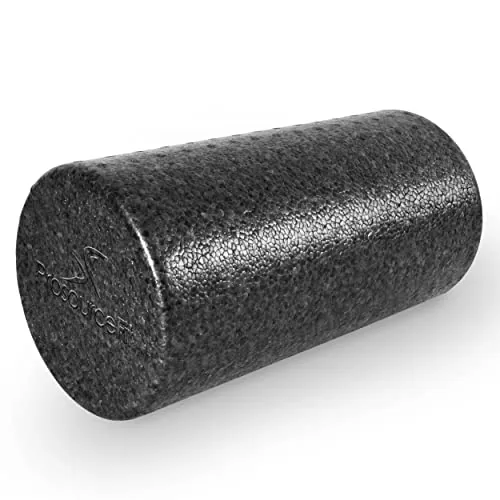
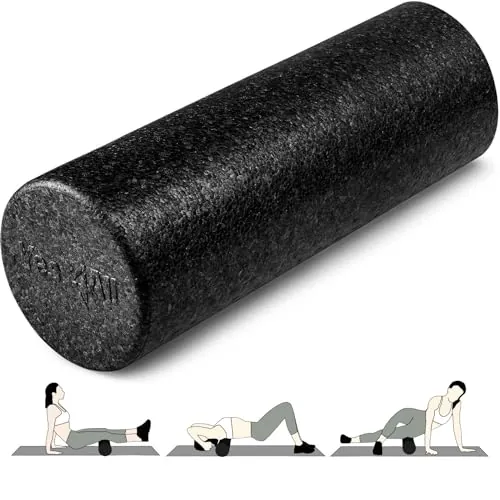
ProsourceFit High Density Foam Roller 12-inch
- Firm high-density EPP foam is designed to retain its shape under pressure.
Comparison
The ProsourceFit High Density Foam Roller and READAEER Ab Roller are compact home-workout tools, but they address different needs. ProsourceFit is geared toward firm self-massage, mobility, and Pilates or yoga support, while READAEER is designed for stable, rollout-based core training. Both are portable and well reviewed, but the better choice depends on whether recovery work or abdominal training comes first.
#1 Overall Winner
Contender
Choose the ProsourceFit if mobility, firm foam rolling, and post-workout self-massage are priorities. Choose the READAEER if you want a compact, stable ab wheel for direct core workouts. The ProsourceFit is more versatile for recovery routines; the READAEER is more specific to strength-focused rollouts.
Overall winner
Depends on your needs
| Feature | ProsourceFit High Density Foam Roller 12-inch | READAEER Ab Roller Wheel with Knee Pad | Winner |
|---|---|---|---|
| Primary role | Foam rolling, mobility, and self-massage | Ab-wheel core training | Depends |
| Recovery use | Designed for pre- and post-workout rolling and stretching | Not positioned as a recovery tool | ProsourceFit High Density Foam Roller 12-inch |
| Core training | Can support Pilates core and balance work | Direct rollout-based core exercise | READAEER Ab Roller Wheel with Knee Pad |
| Mobility and flexibility | Useful for stretching, range of motion, yoga, and Pilates | Limited relevance | ProsourceFit High Density Foam Roller 12-inch |
| Build materials | High-density expanded polypropylene foam | Plastic, rubber, and stainless steel | Depends |
| Stability | Stable cylindrical support for floor exercises | Dual non-skid wheels intended to improve rollout stability | READAEER Ab Roller Wheel with Knee Pad |
| Comfort | Very firm pressure; may feel intense | Rubber handles and included knee pad | Depends |
| Portability | 12-inch size is intended for travel and small spaces | Compact, lightweight ab-wheel format | Tie |
| Maintenance | Water-resistant and easy to clean | Simple equipment with no stated complex maintenance | ProsourceFit High Density Foam Roller 12-inch |
| Noise | No moving parts | Rubber wheel surface is described as quiet | Tie |
| Buyer feedback | More reviews; repeated praise for firmness and shape retention | Positive feedback on stability, assembly, and value | ProsourceFit High Density Foam Roller 12-inch |
| Value | Low-cost, durable mobility tool | Lower listed price and included knee pad | Depends |
The ProsourceFit offers more practical recovery support because it is designed for pre- and post-workout rolling and self-massage. Buyer feedback frequently mentions use on the back, hips, glutes, thighs, and calves, but these are personal experiences rather than guaranteed outcomes. Its high density is likely to suit people wanting substantial pressure, while softer alternatives may suit those who find firm rolling uncomfortable. The READAEER has no comparable recovery-specific design or supplied recovery use information.
The ProsourceFit supports the preparation and recovery side of training: users can incorporate it into warm-ups, cool-downs, stretching blocks, Pilates, yoga, and self-massage routines. The READAEER supports the working portion of a session by providing a direct core exercise that can be progressed through rollout distance and control. For a general home-training routine, the foam roller offers more varied non-strength uses, while the ab wheel offers a more specific strength-training stimulus. They work well as complementary tools rather than competing solutions.
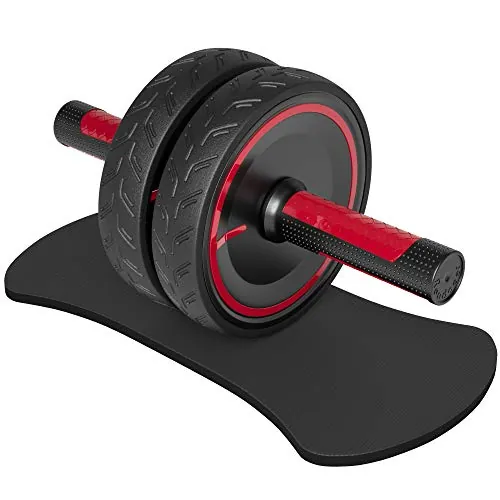
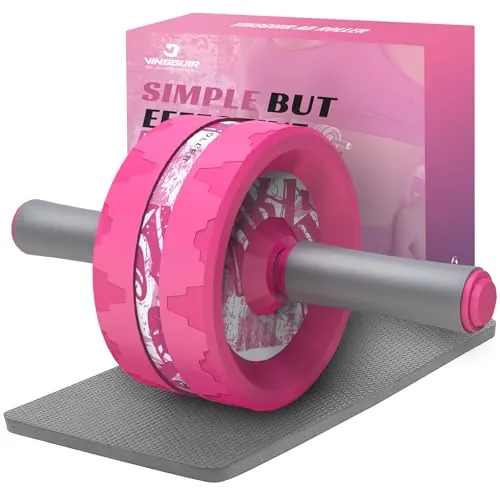
The READAEER is the more relevant product for conventional strength-focused training because ab-wheel rollouts challenge the trunk, shoulders, and arms through controlled bodyweight movement. Its dual-wheel layout is intended to make that movement more stable. The ProsourceFit does not add external resistance, but it can support Pilates core work, balance exercises, warm-ups, and positioning around strength sessions. Choose the READAEER for direct core exercise; choose the ProsourceFit for movement preparation, mobility, and post-session rolling.
The ProsourceFit is clearly better suited to mobility and flexibility work. Its stated applications include gentle stretching, range-of-motion work, spinal stabilization, yoga, Pilates, and rolling areas such as the calves, thighs, hamstrings, glutes, lats, and upper back. The 12-inch format is compact, though its length may be less convenient for full-back work than longer versions. The READAEER does not have a meaningful mobility-specific role beyond any flexibility demands involved in performing a rollout.
The ProsourceFit is the clear recovery-oriented option. It is designed for pre- and post-workout self-massage and can be used as part of a routine focused on working through areas that feel tight after activity. Its firm density gives deeper pressure, which experienced users may appreciate, but it can be uncomfortable for people new to foam rolling. The READAEER is intended for exercise rather than recovery; it may be useful during a workout, but the provided information does not establish it as a post-workout recovery product.
Both products appear to perform well within their respective categories. The ProsourceFit’s firm EPP construction is designed to maintain its form, and reviews commonly report that it remains firm over time. Its short length makes it effective for targeted rolling and compact storage, although it is less expansive than longer rollers. The READAEER is widely described as smooth, sturdy, and stable, with dual wheels intended to improve control during rollouts. However, isolated feedback raises concerns about small wheels and friction. Neither product replaces the other because their intended performance roles are different.
The ProsourceFit supports routine consistency by making mobility, stretching, Pilates, and self-massage accessible in a small format that is easy to keep nearby. Its firm surface may be more appealing to experienced users than to people just starting to roll. The READAEER supports progression in core training because users can adjust effort through range of motion and control, and reviews frequently describe it as easy to assemble and use. For broad workout support, ProsourceFit is more versatile; for a focused core-training habit, READAEER is more purposeful.
The READAEER provides the clearer strength-training application. Rollouts create a controlled bodyweight challenge, and the dual-wheel design is intended to reduce side-to-side instability compared with a single-wheel format. Rubber handle surfaces may also help maintain hand control. The ProsourceFit can be used for Pilates core exercises and body awareness, but it does not offer the same direct resistance or exercise progression. Users seeking a dedicated abdominal-training accessory should favor the READAEER; those seeking a supporting mobility tool should favor the ProsourceFit.
The ProsourceFit is the substantially better fit for mobility work because it is specifically described for gentle stretching, range-of-motion support, yoga, Pilates, and balance assistance. Its firm foam can provide strong pressure for targeted rolling, though this may require a gradual approach for sensitive users. The READAEER is not designed to support stretching positions or rolling-based mobility work. Its main use is a dynamic core exercise, so it adds little value when flexibility and movement preparation are the primary goals.
The ProsourceFit offers more practical recovery support because it is designed for pre- and post-workout rolling and self-massage. Buyer feedback frequently mentions use on the back, hips, glutes, thighs, and calves, but these are personal experiences rather than guaranteed outcomes. Its high density is likely to suit people wanting substantial pressure, while softer alternatives may suit those who find firm rolling uncomfortable. The READAEER has no comparable recovery-specific design or supplied recovery use information.
Both tools require controlled use, but their considerations differ. The ProsourceFit’s very firm surface may be uncomfortable for users unaccustomed to deep pressure, so a gradual approach is sensible. It has no moving parts and is described as maintaining firmness under pressure. The READAEER’s dual non-skid wheel design is intended to support stable rollouts, and users can limit rollout distance while learning. Its knee pad provides some protection, although one review reports early wear. Neither product’s listing replaces attention to exercise technique, a suitable surface, and individual comfort.
Comfort depends heavily on intended use and personal tolerance. The ProsourceFit’s high-density foam is designed for firm pressure, which some experienced users value for targeted rolling, but multiple reviews indicate it can feel too hard for beginners or some older users. The READAEER includes rubber handle surfaces and an EVA knee pad, which add basic comfort during rollouts. However, one buyer found the knee pad thin and short-lived. Users wanting gentler contact should be cautious with the ProsourceFit; users needing substantial knee cushioning may need more than the included READAEER pad.
Both products are straightforward, but in different ways. The ProsourceFit has no assembly, no settings, and a water-resistant surface that can be cleaned easily. Proper positioning may take some practice, particularly because of its firmness. The READAEER is reported to assemble quickly and is frequently described as easy to use, while rollout difficulty can be adjusted by limiting range of motion. For immediate, no-setup use, ProsourceFit is simpler. For guided progression in a single exercise pattern, READAEER is highly accessible.
The READAEER has the edge for stability in its intended exercise. Its dual non-skid rubber wheels are designed to provide more stable tracking than a single wheel, and customers frequently mention controlled, stable rolling. The ProsourceFit is inherently stable when placed on the floor for supported stretching or rolling, but its cylindrical shape can intentionally introduce instability in some Pilates core exercises. For secure rollout mechanics, choose READAEER; for stable floor support and optional balance challenges, ProsourceFit remains practical.
The READAEER is the more grip-focused product. It has rubber-surfaced handles and rubber wheel contact surfaces, with customer feedback commonly describing stable, controlled use. The ProsourceFit has no handle texture because it is a foam cylinder; its practical contact quality relates instead to how securely it stays positioned beneath the body. Grip is therefore a meaningful advantage for READAEER’s rollout use, while it is less relevant to the ProsourceFit’s function.
Neither product has built-in mechanical adjustment. The ProsourceFit can be used across different body areas and exercise positions, but the 12-inch model has a fixed size and firm density. The READAEER has a fixed wheel design, although users can change training difficulty by controlling rollout distance, tempo, and range. For exercise progression, READAEER offers more practical variation through use. For varied mobility applications rather than resistance adjustment, ProsourceFit is more flexible.
Both products are excellent for limited space. The ProsourceFit’s 12 x 6-inch format is specifically identified as a space-saving and travel-friendly option, and it can be stored on a shelf or in a gym bag. The READAEER’s compact dimensions and lightweight design also make it easy to keep in a small home gym or closet. The READAEER has a slightly flatter storage profile, while the ProsourceFit’s simple cylinder has no separate parts to manage. This category is effectively a tie.
The ProsourceFit is nearly silent in normal use because it has no moving components. The READAEER is also designed for low-noise exercise through its thick rubber wheel surface, and buyers often describe its operation as smooth. Surface choice can still affect the sound and feel of an ab wheel. For quiet apartments or early-morning routines, either option is practical, with the foam roller being the more inherently silent choice.
The ProsourceFit has a simple one-piece high-density foam construction with no moving parts, and customers commonly report that it keeps its form. Its lightweight, foam-like feel may not appeal to every buyer, but feedback is generally positive on its quality. The READAEER uses a more mechanically complex layout of dual rubber wheels, a central bar, and stainless-steel handles. Reviews often call it sturdy, though one buyer questioned the wheel interface. For uncomplicated construction and fewer potential failure points, ProsourceFit has the advantage; READAEER adds function through its moving design.
The ProsourceFit has the stronger durability case in the supplied information. Its high-density EPP foam is described as maintaining firmness under pressure, and several reviews mention retained shape after ongoing use. The READAEER receives many positive reports for sturdiness, and its metal handles are a positive construction detail. However, its included knee pad has a reported wear issue, and one review raises a concern about friction at the wheel assembly. The roller is therefore the more predictable long-term low-maintenance option, while the ab wheel’s durability is more dependent on its moving components.
The ProsourceFit has the maintenance advantage. Its EPP foam is described as water-resistant, hygienic, and easy to maintain, with no hardware to tighten or moving parts to inspect. The READAEER is also simple equipment, but its wheels, handles, and knee pad create more components to keep clean and monitor for wear. The reported knee-pad durability issue is worth noting for frequent users. Both should be stored dry and checked periodically, but ProsourceFit requires less ongoing attention.
Portability is a major strength for both products. The ProsourceFit’s 12-inch length is specifically intended for travel and space saving, and its lightweight foam construction is easy to carry. The READAEER is also compact and lightweight, with reviews highlighting convenient storage and transport. The deciding factor is shape: the foam roller is bulkier but very light, while the ab wheel is flatter and can be packed with its knee pad. Neither has a meaningful portability disadvantage.
Material information is more clearly stated for both products than health or performance outcomes. ProsourceFit identifies the roller as high-density expanded polypropylene and describes it as water-resistant and recyclable. READAEER lists plastic, rubber, and stainless steel, along with rubber wheel surfaces and an EVA foam knee pad. The ProsourceFit provides more detail about the foam’s intended properties, while the READAEER gives a straightforward component list. Neither listing provides extensive independent material testing or certification information.
Both products offer strong value within their separate categories. The ProsourceFit combines a low listed price with durable high-density foam, broad mobility applications, easy cleaning, and a large base of favorable buyer feedback. It is particularly useful if one tool will be used across stretching, Pilates, yoga, and post-workout routines. The READAEER has a lower listed price, includes a knee pad, and receives positive feedback for stable, smooth core training. Its value is strongest for users who specifically want an ab wheel, though the pad’s reported wear and isolated wheel concerns should be considered.
ProsourceFit has a modest advantage in the supplied comparison because its roller has a much larger review history and consistently positive patterns around firmness, value, and shape retention. READAEER also has a strong buyer rating and many favorable reports for stability and ease of assembly, but it has fewer reviews and more limited brand-specific information in the provided data. Neither listing provides detailed third-party testing, extensive support information, or certification evidence, so confidence should remain focused on the stated specifications and buyer feedback.
Both products have the same strong displayed star rating, but the ProsourceFit has a substantially larger review count. Its recurring positives include firm support, durability, light weight, and good value; the most repeated drawback is that the density can feel too hard. READAEER feedback commonly praises sturdiness, smooth rolling, easy assembly, and dual-wheel stability. Its main reported concerns are a thin knee pad, small wheel size, and one complaint about wheel friction. Overall sentiment is positive for both, with broader review-volume support for ProsourceFit.
The core product claims are more supportable than broad outcome claims for both items. ProsourceFit’s high-density EPP construction, compact dimensions, water-resistant material, and intended uses are stated in the product data and generally align with review feedback about firmness and shape retention. READAEER’s listed materials, dual-wheel configuration, included knee pad, compact dimensions, and easy assembly are similarly concrete. Buyer reports support usability impressions, but statements about changes in recovery, body composition, strength, or injury risk should be treated as individual experiences rather than verified results.
The ProsourceFit High Density Foam Roller is the better all-round accessory for mobility and recovery-focused home routines. Its firm EPP construction, compact travel-friendly size, simple maintenance, and extensive positive feedback make it a practical tool for people who regularly stretch, roll, or practice Pilates and yoga. Its main limitation is the intensity of its firm surface.
The READAEER Ab Roller is the better specialist choice for direct core training. It is compact, stable by design, easy to assemble, and well suited to controlled bodyweight rollouts. Its main limitations are the reported thin knee pad and isolated concerns about wheel friction. The best option depends entirely on whether your priority is recovery and mobility or abdominal strength work.

Overall winner
Depends on your needs
Neither is a direct substitute for the other. The ProsourceFit is the stronger fit for firm self-massage, stretching, mobility, and Pilates or yoga support. The READAEER is the better fit for controlled ab-wheel rollouts and direct core training. Choose based on the role the tool needs to play in your routine.
It can be used by beginners, but its high-density construction is notably firm. The product details and review feedback indicate that newer users may find the pressure intense. Starting gradually and using controlled positioning may be more practical than choosing it solely for its compact size.
The READAEER is well suited to compact home workouts because it has a small footprint, requires little assembly, and uses dual wheels intended to improve stability. Buyers commonly report smooth operation and easy use. Its training role is specific, however: it is primarily a core-training accessory rather than a full-body mobility tool.
The ProsourceFit foam roller is the clearer choice for recovery-oriented and mobility routines. Its stated uses include self-massage, gentle stretching, range-of-motion work, and post-workout use. The READAEER ab wheel can be part of a training session, but its supplied information does not position it as a recovery or flexibility tool.
The READAEER is the more focused core-training option. Its dual-wheel layout, rubberized handles, and rollout format are built for abdominal and trunk-focused bodyweight exercise. The ProsourceFit can support Pilates core exercises and balance work, but it does not provide the same direct rollout challenge or progression.
Both products are highly practical for small spaces. The 12-inch ProsourceFit roller is specifically described as a travel- and space-saving size, while the READAEER has a compact, lightweight form. The better choice depends on whether you need a cylindrical roller for mobility work or an ab wheel for core sessions.
The included EVA foam knee pad adds basic protection for kneeling rollouts, but feedback is mixed. One buyer reported that the pad was thin and developed a hole after a few uses. It is best viewed as a useful included accessory rather than a reason to choose the product on its own.
The supplied specifications support the core construction and intended-use claims: firm EPP foam for the ProsourceFit and dual rubber wheels, metal handles, and a knee pad for the READAEER. Customer feedback generally supports usability and durability impressions, but individual reviews do not verify broader fitness or recovery outcomes for every user.
Check our rankings and expert guides to find the best fitness products for your goals.