#1 Overall Winner
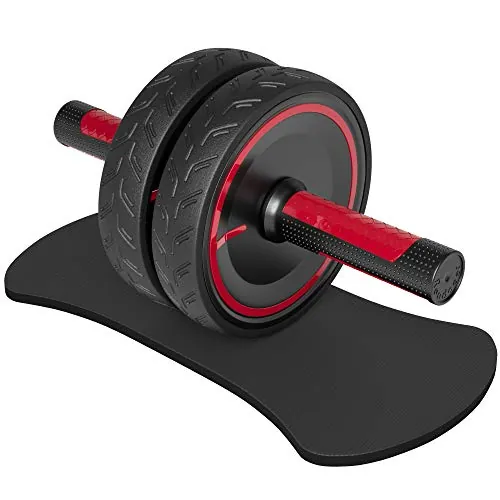
READAEER Ab Roller Wheel
- Dual non-skid rubber wheels are designed to provide stable, controlled rollouts.
Comparison
READAEER and VINSGUIR are compact dual-wheel ab rollers for home core-training routines. READAEER costs less and lists a higher maximum supported weight, while VINSGUIR adds a specified wide-wheel design, a much larger review base, and stated warranty and return terms. Both are easy-to-store options with broadly positive feedback for stability, but neither included knee pad appears ideal for hard floors.
#1 Overall Winner
Contender
Choose VINSGUIR if you prefer a specified wide dual wheel, a larger body of buyer feedback, and stated warranty support. Choose READAEER if low cost, compact size, and a higher listed weight limit matter more. For either roller, consider using a thicker mat or separate kneeling pad.
Overall winner
Depends on your needs
| Feature | READAEER Ab Roller Wheel | VINSGUIR Ab Roller Wheel | Winner |
|---|---|---|---|
| Primary use | Compact dual-wheel rollout training | Compact wide dual-wheel rollout training | Tie |
| Price | 9.76 | 19.52 | READAEER Ab Roller Wheel |
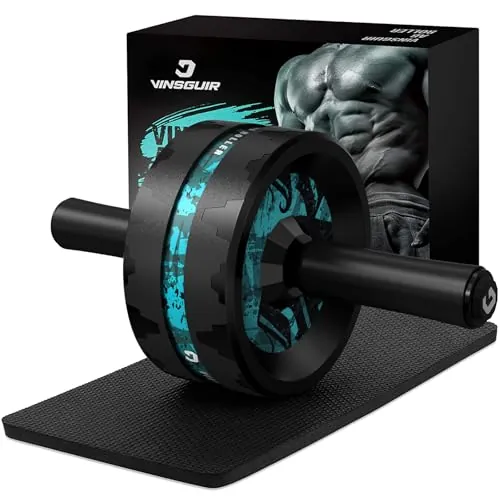
| Wheel design | Dual non-skid rubber wheels | 3.2-inch ultra-wide dual wheel | VINSGUIR Ab Roller Wheel |
| Listed maximum weight | Up to 550 lb | Up to 440 lb | READAEER Ab Roller Wheel |
| Stability | Dual wheels; positive stability feedback | Wide dual wheel; positive stability feedback | Tie |
| Handle materials | Stainless steel with rubber surface | EVA rubber-cotton handles; stainless-steel shaft | Depends |
| Knee pad | EVA foam pad; reported thin | Included pad; reported minimal | Tie |
| Assembly | Frequently described as quick and easy | Usually easy; one handle-fit complaint | READAEER Ab Roller Wheel |
| Portability and storage | 820 g; compact listed dimensions | 1.41 lb; compact format | Tie |
| Noise | High-density rubber surface specified as quiet | Strong quiet-use assessment | VINSGUIR Ab Roller Wheel |
| Buyer feedback | 4.6/5 from 4,955 reviews | 4.6/5 from 23,313 reviews | VINSGUIR Ab Roller Wheel |
| Warranty and support | No details supplied | 30-day returns, 12-month warranty, lifetime service stated | VINSGUIR Ab Roller Wheel |
| Value focus | Lower-cost basic roller | Higher-cost roller with stated support terms | Depends |
Both rollers are most useful for bodyweight rollout training, where the user controls range, tempo, and volume. They can fit into compact home strength routines without requiring a bench, rack, or large floor footprint. VINSGUIR has a slight training-use advantage through its wide dual-wheel specification and stronger evidence base from customer feedback. READAEER is similarly practical for frequent short sessions and may be the simpler purchase for a low-cost home setup. Neither product replaces adjustable resistance equipment, and neither provides built-in programming or form guidance.
For strength-oriented use, both products challenge trunk control while the shoulders and arms contribute to the rollout movement. READAEER lists dual non-skid wheels, rubber-surfaced stainless-steel handles, and a higher maximum supported weight. VINSGUIR lists a wide dual-wheel design and padded non-slip handles, which may appeal to users who prioritise lateral stability. Neither provides externally adjustable load, so progression depends on technique and rollout range rather than changing resistance. VINSGUIR has a small edge for its overall training support, while READAEER is a credible lower-cost alternative.
Both products appear well suited to their intended role as simple home ab rollers. READAEER receives repeated positive comments for controlled, smooth rolling, and its dual rubber wheels are designed to avoid slipping. VINSGUIR’s specified ultra-wide dual-wheel format, stable buyer feedback, and strong review volume give it a modest edge for confidence in regular rollout use. Performance is still technique-dependent: an ab roller is demanding at longer ranges, and neither listing provides a mechanism that makes progression automatic. Isolated concerns include READAEER wheel friction and a VINSGUIR handle-fit issue.
VINSGUIR has a small advantage for ongoing home training because it combines a stable wide-wheel design with stated customer-service and warranty coverage. Its compact form also supports convenient repeat use, and buyers commonly describe it as easy to set up. READAEER is nearly as practical, with strong feedback for quick assembly, quiet operation, and very compact storage. Both work best for users willing to progress gradually through range of motion and repetition volume. Neither includes resistance adjustment, structured workouts, or a substantial kneeling surface, so additional programming and a thicker mat may be useful.
VINSGUIR is the slight choice for core-focused strength training due to its wide dual-wheel specification and favourable feedback around stability and construction. The broad wheel format may help users maintain a more predictable path while learning controlled rollouts. READAEER is also capable for the same movement pattern and lists a higher maximum supported weight, alongside stable dual non-skid wheels. Its lower price makes it attractive for basic home use. In both cases, progression comes from controlled range and technique, not from adjustable resistance.
Both models use a dual-wheel format intended to provide more lateral stability than a single-wheel design, and both receive generally positive feedback for stable rolling. READAEER lists a higher maximum supported weight, while VINSGUIR lists a wide wheel and a stainless-steel shaft with a lower maximum recommendation. The principal practical concern is kneeling comfort: supplied pads for both products may be insufficient on hard floors. Users should inspect handle fit and wheel movement before use, train on a clear surface, and progress rollout distance gradually. Product claims about reducing injury risk are not established by the available data.
Comfort is the least convincing area for both products because the bundled knee pads receive weak feedback. READAEER’s EVA foam pad is described as thin and subject to wear in one review. VINSGUIR’s pad is similarly described as minimal, and comfort opinions also include a report of shoulder pain. The handles on both are intended to improve grip comfort, but users training on hard floors should factor in the likely need for a thicker separate mat.
READAEER has a very slight ease-of-use advantage. Buyers repeatedly describe assembly as quick and simple, with one review estimating roughly a minute to put it together. VINSGUIR is also widely described as easy to assemble and use, but one buyer reported a handle that needed excess plastic trimmed before it would fit fully. Once assembled, both are uncomplicated: they are lightweight, compact, and require no charging, app connection, or complex adjustment.
This is a close tie. READAEER uses two non-skid rubber wheels and has repeated feedback praising controlled, stable rolling, including on carpet. VINSGUIR specifies a 3.2-inch ultra-wide dual wheel and receives similar praise for balance and support. VINSGUIR’s stated wheel width provides a clearer design rationale, but the supplied stability evidence for both products is strong. Stable equipment does not remove the need for controlled technique and a clear, suitable training surface.
READAEER specifies stainless-steel handles with rubber surfaces, while VINSGUIR specifies non-slip EVA rubber-cotton handles. Both are designed to support a secure hold during rollouts, and supplied feedback is generally positive. VINSGUIR reviewers mention reasonably padded grips, whereas READAEER feedback emphasises control and smooth rolling. There is no decisive comfort or traction winner from the available data, so handle preference is likely personal.
Neither product offers a listed resistance setting, wheel-width adjustment, or handle-position adjustment. Difficulty is changed through range of motion, body position, tempo, and total repetitions. That simplicity keeps both rollers compact and accessible, but users seeking more precisely measured progression may prefer equipment with adjustable resistance. This category is therefore a tie: both provide technique-based progression rather than mechanical adjustment.
Both are excellent choices for limited space. READAEER measures approximately 14.17 by 7.87 by 1.96 inches and weighs 820 g, making it especially slim for storage. VINSGUIR is also lightweight and compact, with a listed 6.5 by 12 by 6.5 inch size; buyers mention storing it conveniently in a closet. Neither needs permanent floor space, and both can be brought out for short sessions. READAEER has a marginal edge for its flatter listed profile.
VINSGUIR has a slight edge for quiet-use confidence, while both products should be suitable for indoor sessions. READAEER specifically describes a high-density rubber wheel surface intended to be quiet and floor-friendly, and reviews often call its motion smooth. VINSGUIR also rates strongly for low-noise use in the supplied assessment. Actual sound will vary with flooring, technique, and whether the wheel tracks cleanly.
VINSGUIR has a small build-quality advantage based on its stainless-steel shaft, stated handle material, and consistently positive feedback from a large number of buyers. Its reported construction is not flawless: one customer described excess plastic preventing a handle from seating fully. READAEER also has a sound stated construction, including stainless-steel handles and rubber wheels, with many reviews calling it sturdy. One reviewer questioned the wheel-and-bar friction design, so build feedback is positive overall but not entirely uniform. Both pads are weaker points than the rollers themselves.
VINSGUIR holds a modest durability edge in the available comparison. A supplied long-term review reports continued quality and performance after use since 2022, and many other buyers call it sturdy. READAEER is also frequently described as durable, and its stainless-steel handles support that impression. The main READAEER wear concern is the knee pad, which one reviewer said developed a hole after only a few uses. VINSGUIR’s included pad is likewise minimal, so a separate kneeling mat is sensible for users planning frequent sessions.
Both rollers are low-maintenance products. There are no batteries, electronics, lubricating instructions, or complex mechanisms listed. Routine care is mainly checking that handles are fully seated, wiping down the wheel and grips after use, and storing the roller and knee pad dry. VINSGUIR has a slight advantage because it includes clear published support terms if a product issue arises. READAEER’s simple, compact construction is similarly easy to maintain, though one wheel-friction review makes periodic movement checks sensible.
This category is effectively a tie. READAEER weighs 820 g and has a low-profile listed shape, while VINSGUIR weighs 1.41 lb and is marketed as compact for home, office, gym, or outdoor use. Both can fit easily into a small home-gym storage area or be carried for travel. READAEER is slightly lighter by the supplied measurements, but the practical difference is unlikely to matter for most users.
READAEER provides the more complete material description in the supplied data, listing plastic, rubber, and stainless steel, along with EVA foam for the knee pad. VINSGUIR clearly identifies a stainless-steel shaft and describes EVA rubber-cotton handles, although its formal material field only lists stainless steel. Neither product has consumable ingredients or nutritional information. Material details support a basic understanding of construction, but they do not independently establish long-term durability or comfort.
READAEER is the clearer value choice for shoppers whose priority is a low initial outlay. It costs substantially less, includes a knee pad, lists a higher maximum supported weight, and receives strong feedback for stable, smooth use. VINSGUIR costs more but provides a stated wide-wheel measurement, a larger review base, and published 30-day return, 12-month warranty, and lifetime service terms. Its price premium may be reasonable for buyers who place value on after-sales coverage. Neither bundled knee pad appears sufficiently robust to be a major value advantage.
VINSGUIR has a small advantage in the available brand-trust evidence. Its product has a much larger supplied review count at the same star rating, and the listing includes explicit return, warranty, and customer-service terms. READAEER also has thousands of positive reviews and consistent feedback around basic product function, but no warranty or support details are provided here. This comparison reflects the supplied listing and review data rather than an independent assessment of either company’s wider reputation.
Both products have the same supplied star rating and overwhelmingly positive review patterns. VINSGUIR has the edge because that rating is supported by a much larger number of reviews, with recurring praise for stability, easy assembly, compact storage, and sturdy construction. Its recurring complaint is the minimal knee pad, with isolated feedback about handle fit and shoulder discomfort. READAEER users similarly praise smooth, stable rolling, simple assembly, and good value. Its main negatives are mixed views on size, a thin pad, and one reported wheel-friction concern.
VINSGUIR is the clear winner for warranty and support transparency. Its listing states 30-day no-hassle returns, a 12-month warranty, and lifetime customer service. One review notes difficulty with a European return, so the practical experience may depend on location. No warranty, return, replacement, or support information is supplied for READAEER, making it harder to compare post-purchase coverage.
Both listings provide reasonable support for basic product claims through stated dual-wheel designs, material information, dimensions or weight details, and buyer feedback about assembly, stability, and compact storage. VINSGUIR offers more explicit support information, including a stated wheel width, maximum weight recommendation, and after-sales terms. READAEER provides a fuller material list and a higher listed maximum supported weight. Claims relating to sculpting the body, fat loss, faster six-pack development, or lower injury risk are not established by the supplied data and should not be treated as guaranteed outcomes.
VINSGUIR is the narrow overall winner because it pairs a wide dual-wheel specification with positive feedback from a much larger review base and clearly stated warranty and return support. Its main limitation is that the included knee pad is minimal, while some comfort feedback is mixed. It is the stronger choice for buyers who prioritise reassurance, stability-focused design, and post-purchase coverage.
READAEER is the better budget alternative. It is cheaper, lighter, lists a higher maximum supported weight, and is widely praised for smooth, stable, quiet use. Its main drawbacks are the thin, less durable knee pad and isolated feedback about wheel friction. Both are compact, practical core-training tools, provided users progress carefully and add more knee cushioning if needed.

Overall winner
Depends on your needs
VINSGUIR is the stronger overall pick for buyers who value a wide dual-wheel design, extensive buyer feedback, and stated after-sales coverage. READAEER is the more compelling budget choice, with positive feedback for stable, smooth rolling and a higher listed maximum supported weight. Both have similarly limited included knee pads.
Either can suit a beginner because both use two wheels for added lateral stability and allow the user to limit rollout distance. VINSGUIR emphasises its wider wheel support, while READAEER is less expensive and is also frequently described as easy to assemble and control. Beginners should progress gradually and use sufficient knee cushioning.
The supplied feedback suggests caution with both included pads. READAEER’s pad was described as thin, with one report of it wearing through after a few uses. VINSGUIR buyers also describe its pad as minimal and recommend a thicker separate pad on hard floors. A larger mat may improve kneeling comfort.
It is effectively a tie for small spaces. Both products are compact, lightweight ab rollers designed for easy storage, and neither requires the footprint of a bench or large machine. READAEER has slightly smaller listed dimensions, while VINSGUIR is also described by buyers as small enough for nearby closet storage.
READAEER offers the clearer value case for shoppers focused on upfront cost: it is cheaper, includes a knee pad, and has strong feedback for ease of use and stable rolling. VINSGUIR costs more, but its published 30-day returns, 12-month warranty, and lifetime customer-service statement may justify the difference for some buyers.
No adjustable resistance system is listed for either product. Training difficulty instead comes from technique, rollout distance, tempo, repetition volume, and body positioning. This makes both simple to use, but users wanting fixed resistance levels or guided progression may need a different type of core-training equipment.
Most supplied reviews describe both rollers as sturdy. For READAEER, the most notable concern is the knee pad, plus one report of wheel friction. For VINSGUIR, feedback includes one handle-fit defect and concerns about the thin pad. These are isolated reports within otherwise favourable buyer feedback, not proof that every unit will have the same issue.
The supplied specifications and reviews support basic claims around dual-wheel construction, compact storage, assembly, and use for rollout-based core training. Statements about specific physique changes, fat loss, or reduced injury risk should be treated as marketing language rather than outcomes established by the available product data. Results depend on training, technique, and individual factors.
Check our rankings and expert guides to find the best fitness products for your goals.