#1 Overall Winner
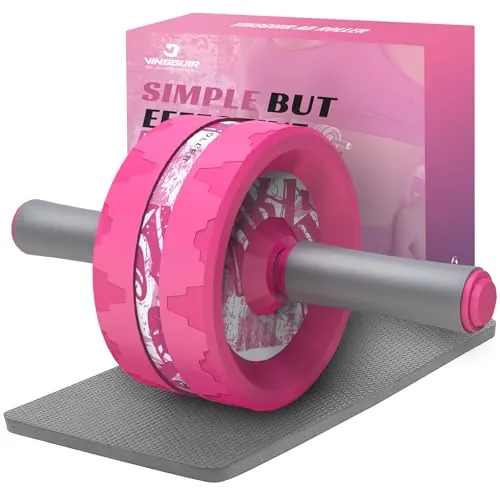
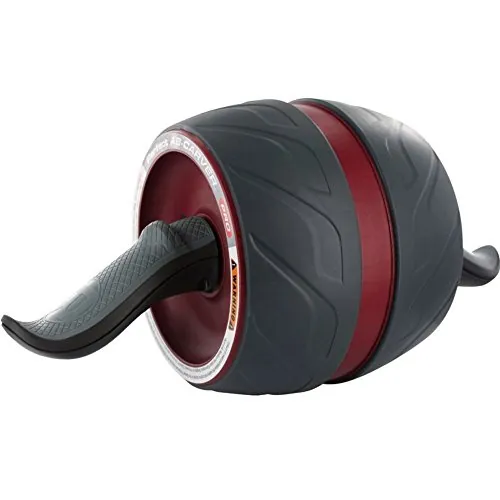
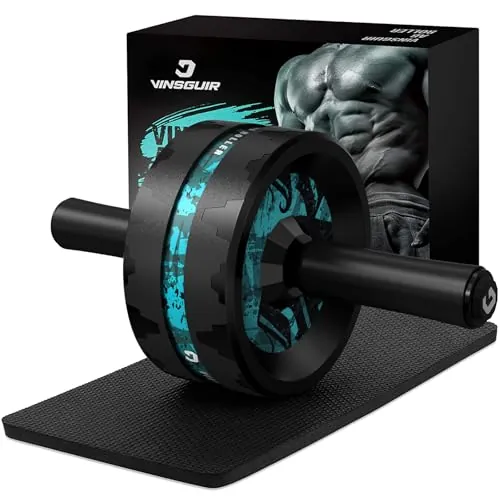
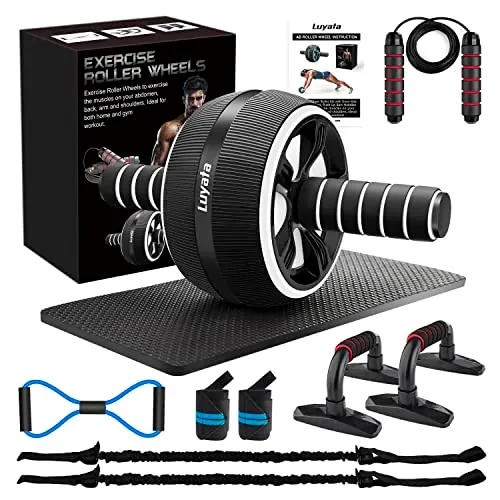
Luyata Ab Roller Wheel 10-in-1 Ab Exercise Wheels Kit
- All-in-one kit includes ab wheel, knee mat, push-up bars, wrist wraps, resistance band, jump rope, and guide book.
Comparison
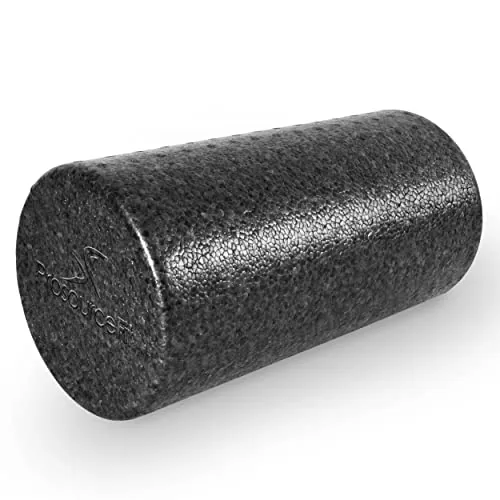
The Luyata Ab Roller Kit is a multi-piece home workout set built around an ultra-wide ab wheel plus accessories like push-up bars, a resistance band, and a jump rope. The ProsourceFit High Density Foam Roller is a compact, very firm rolling tool aimed at mobility work and post-workout self-massage. If you want training variety in one box, Luyata fits better; if you want a dedicated recovery tool that stays firm, ProsourceFit fits better.
#1 Overall Winner
Contender
Choose the Luyata Ab Roller Kit if you want a compact home workout bundle centered on core rollouts plus push-up and jump-rope options. Choose the ProsourceFit High Density Foam Roller if your priority is a firm, durable recovery and mobility tool you’ll use before or after training. Neither replaces the other; they complement different parts of a routine.
Overall winner
Depends on your needs
| Feature | Luyata Ab Roller Wheel 10-in-1 Ab Exercise Wheels Kit | ProsourceFit High Density Foam Roller 12-inch (Firm) | Winner |
|---|---|---|---|
| Product type | Ab roller exercise kit (multi-piece) | High-density foam roller (single tool) | Depends |
| Primary use | Core training + bodyweight accessories | Self-massage, stretching, mobility | Depends |
| Included accessories | Ab wheel, knee mat, push-up bars, wrist wraps, band, jump rope, guide | Foam roller only | Luyata Ab Roller Wheel 10-in-1 Ab Exercise Wheels Kit |
| Firmness/feel | Mixed comfort feedback; knee mat size debated | Very firm; firmness feedback is polarizing | Depends |
| Build materials (disclosed) | Stainless steel + non-slip rubber wheel; NBR knee mat | High-density EPP foam (water-resistant) | Tie |
| Stability in use | Wide wheel design; positive stability feedback | Stable cylindrical roller; consistent shape retention mentioned | Tie |
| Durability expectations | Mixed: some call it durable, others say it feels cheap | Many reports of shape retention and long use | ProsourceFit High Density Foam Roller 12-inch (Firm) |
| Ease of use | Easy to use/assemble; rollouts require technique | Simple to use; intensity depends on pressure tolerance | Tie |
| Space efficiency | Compact kit; multiple items to store | Compact 12-inch roller | ProsourceFit High Density Foam Roller 12-inch (Firm) |
| Portability | Portable kit but includes multiple pieces | Lightweight, travel-friendly size option | ProsourceFit High Density Foam Roller 12-inch (Firm) |
| Noise | Quiet wheel use on many floors (per description) | Silent use typical; no moving parts | ProsourceFit High Density Foam Roller 12-inch (Firm) |
| Maintenance | Low maintenance; multiple items to keep clean | Water-resistant and hygienic; simple wipe-down | ProsourceFit High Density Foam Roller 12-inch (Firm) |
| Customer satisfaction pattern | Strong ratings; some complaints about mat size/missing parts | Very high satisfaction; firmness is the main debate | ProsourceFit High Density Foam Roller 12-inch (Firm) |
| Best fit for beginners | Good starter kit, but rollouts can be challenging | Very firm roller may be too intense for some | Depends |
ProsourceFit is the clear recovery-focused option, positioned for pre/post-workout self-massage and commonly used for areas like calves, IT band, hamstrings, lats, and upper back. Reviews frequently mention long-term firmness and usefulness as part of a regular recovery routine. Luyata is better viewed as training equipment; it may indirectly support recovery by enabling consistent core work, but it isn’t designed to provide massage or tissue work. If recovery is your top priority, ProsourceFit fits the job better.
For day-to-day training use, the Luyata kit acts like a mini “home gym starter pack”: it supports core rollouts, push-up variations, band work, and jump rope sessions, which can help add variety without much space. The ProsourceFit roller plays a different role—less about workout stimulus and more about keeping your warm-ups, cool-downs, and mobility sessions consistent. If you want one product to do exercises, Luyata is the more direct fit; if you want one product to support how you feel moving before/after sessions, ProsourceFit fits better.
The Luyata kit is more strength-training relevant because the ab wheel directly challenges the core and shoulders during rollouts, and the push-up bars/resistance band add basic upper-body pushing and light resistance options. The ProsourceFit foam roller isn’t a resistance tool; it’s better viewed as support equipment that can help you maintain mobility and comfort around strength sessions. If your goal is progressive strength work, Luyata contributes more directly, while ProsourceFit complements strength training rather than replacing it.
The Luyata kit has a clearer cardio angle because it includes an adjustable jump rope that can be used indoors or outdoors for simple conditioning sessions. The ProsourceFit foam roller isn’t a cardio tool; it’s typically used before or after cardio to support mobility or relieve tight areas. If you want a product that can contribute to conditioning workouts, Luyata is the more relevant option.
The ProsourceFit foam roller is purpose-built for mobility and flexibility work, including gentle stretching, range-of-motion routines, and Pilates/yoga-style body awareness drills. The Luyata kit isn’t focused on mobility, though the included knee mat can make floor-based work more comfortable. For dedicated stretching and mobility sessions, ProsourceFit is the stronger choice—just note that its very firm feel won’t suit everyone.
For recovery use, the ProsourceFit roller is the more direct tool, designed for self-massage and post-workout muscle work across areas like calves, thighs, glutes, and upper back. The Luyata kit is mainly aimed at training (core and bodyweight movements), not recovery, although some users may still use the mat for comfort during floor mobility. If your main goal is a consistent post-workout routine, ProsourceFit is the better match.
In terms of doing the main job each product is intended for, the ProsourceFit foam roller looks very consistent: many buyers report it stays firm over time and provides deep pressure for rolling and stretching routines. The Luyata kit performs well as a starter training bundle, with repeated praise for the wheel’s stable, smooth feel and the overall usefulness of the set. The main performance risk on Luyata is variability in accessory quality or completeness, while the main performance risk on ProsourceFit is that the firmness may feel too aggressive for some users.
The Luyata kit supports training routines by providing multiple tools in one package, making it easier to build simple circuits (rollouts, push-ups, band work, jump rope) without extra purchases. That can be helpful for beginners who want variety and consistency at home. The ProsourceFit roller supports training differently: it’s easy to keep near your workout area and use for warm-ups, cool-downs, and mobility work, which can make training feel more sustainable. If you want exercise variety, Luyata supports training more; if you want routine-friendly recovery work, ProsourceFit supports training better.
For strength-style training, Luyata has the advantage because the ab wheel and push-up bars are direct exercise implements that can be progressed by range, tempo, and volume. The wheel’s wider design and non-slip materials are frequently associated with stable rollouts in buyer feedback. ProsourceFit’s roller doesn’t add load, but it can be used to support movement quality (mobility work and body awareness) around lifting days. If you only buy one for strength training impact, Luyata is the more relevant tool.
Luyata contributes more directly to cardio training thanks to the included jump rope, which can be used for simple intervals or steady skipping when space allows. ProsourceFit doesn’t create cardio intensity, but it can be useful after cardio sessions to roll calves, thighs, and hips as part of a cooldown. If your goal is adding a conditioning tool to your home setup, Luyata is the better match; if your goal is making cardio recovery routines easier to follow, ProsourceFit helps more.
ProsourceFit is designed specifically for mobility/flexibility routines, with firm pressure intended to help target tight areas and support stretching and body awareness work. The range of sizes also lets users pick a format that matches their space and coverage needs. Luyata’s kit is more exercise-centric, and while the knee mat can improve comfort for floor-based movements, it doesn’t provide the same mobility-specific function as a foam roller. The main caveat for ProsourceFit is that the very firm feel may be uncomfortable for some users.
ProsourceFit is the clear recovery-focused option, positioned for pre/post-workout self-massage and commonly used for areas like calves, IT band, hamstrings, lats, and upper back. Reviews frequently mention long-term firmness and usefulness as part of a regular recovery routine. Luyata is better viewed as training equipment; it may indirectly support recovery by enabling consistent core work, but it isn’t designed to provide massage or tissue work. If recovery is your top priority, ProsourceFit fits the job better.
Neither product is inherently high-risk when used as intended, but safety considerations differ. With Luyata, controlled ab rollouts matter: rushing range of motion or losing control can strain technique-sensitive positions, and a too-small knee mat may reduce comfort and positioning consistency. With ProsourceFit, the main issue is intensity—very firm pressure can feel too aggressive for some users, so gradual exposure and lighter pressure are sensible. As always, use stable flooring, move slowly, and adjust to comfort and ability.
Comfort is a “depends” category for both. Luyata includes a knee mat intended to improve comfort during rollouts, but multiple users mention the mat can feel too small or still leave knees on the floor after reps. ProsourceFit comfort largely depends on your tolerance to pressure: many users like the deep, firm feel, while others find it too hard. If you’re sensitive to pressure or joint discomfort, comfort will require more trial-and-error with either option.
Both products are easy to integrate into a routine. Luyata is commonly described as easy to assemble and use, and it offers multiple tools for simple circuits; the main friction is learning good rollout form and keeping track of multiple accessories. ProsourceFit is as simple as placing it on the floor and using it, but effective rolling still requires finding positions that match your tolerance, especially with a very firm roller. Overall, they are similarly beginner-accessible in setup, with different learning curves in practice.
The Luyata ab wheel’s wider design and non-slip rubber are aimed at controlled rollouts, and aggregated feedback often highlights stability and smooth rolling. The ProsourceFit roller is inherently stable for floor rolling and balance drills, though its firmness can make pressure feel more intense. If you mean stability during loaded movement (like rollouts), Luyata has the clearer advantage; if you mean stable contact for rolling, both are solid.
Grip matters more for the Luyata kit because it includes push-up bars and an ab wheel, where handle comfort and control affect execution. Buyer feedback includes positive mentions of grip and functionality, though comfort can vary. With ProsourceFit, grip is less central because you’re typically positioning your body on the roller rather than relying on handles; the main “feel” factor is surface and firmness rather than hand grip.
The Luyata kit offers practical “adjustability” through variety: you can switch between rollouts, push-ups, band resistance, and jump rope intensity, and the rope is described as adjustable to height. The ProsourceFit roller itself isn’t adjustable, but it is offered in multiple sizes (including 12, 18, 24, and 36 inches), which is the main way users can tune coverage and convenience. If you want more ways to change workouts with one purchase, Luyata has the edge.
Both are strong for small spaces, but they do it differently. ProsourceFit’s 12-inch roller is extremely easy to store and can slide into a closet or travel bag with minimal hassle. Luyata’s kit is also compact, and it can reduce clutter by bundling several tools into one purchase, though you’ll still have multiple pieces to keep organized. For the simplest footprint and storage, ProsourceFit is slightly better.
Both are generally apartment-friendly. The ProsourceFit foam roller has no moving parts and is typically close to silent. The Luyata wheel is described as quiet and floor-friendly, and many users use it at home without issue; noise can still vary depending on flooring and how the jump rope is used. If noise is the top concern, the foam roller is the safer bet.
ProsourceFit has more consistently positive build-quality feedback, with repeated mentions of shape retention and a solid feel over time. Its simple one-piece design also reduces points of failure. Luyata’s wheel itself is often described as stable and smooth, but the kit includes multiple accessories, and buyer feedback suggests some of those pieces can feel more basic. If you care most about a single, durable item with fewer variables, ProsourceFit looks stronger; if you care about having many tools in one purchase, Luyata’s build quality may be “good enough” for starter use.
Durability trends favor ProsourceFit: many buyers report the roller keeps its firmness and doesn’t get “squashed” over time, which is a common failure point with softer foam rollers. The Luyata kit gets mixed durability feedback—some users report it holds up well (including long-term family use), while others describe it as cheaper-feeling or less comfortable. Also, because Luyata is a multi-piece kit, durability depends on the weakest accessory rather than the wheel alone.
Maintenance is minimal for both, but ProsourceFit is the easiest: the EPP material is described as water-resistant and hygienic, so wipe-down cleaning is straightforward. The Luyata kit is also low-maintenance, but it includes multiple items (wheel, handles, wraps, band, rope, mat), which means more surfaces to keep clean and stored properly. If you want the lowest-effort upkeep, ProsourceFit has the advantage.
The ProsourceFit 12-inch roller is more portable because it’s lightweight and compact, making it easy to carry to the gym or pack for travel. The Luyata kit is still portable for home use, but it includes several pieces and will typically require a bag or box to keep everything together. For grab-and-go convenience, ProsourceFit wins.
For materials and product clarity, ProsourceFit is straightforward: it identifies the roller as high-density expanded polypropylene (EPP) and describes it as water-resistant and hygienic. Luyata discloses key build materials for the wheel (stainless steel and non-slip rubber) and specifies the knee pad material as NBR. Neither product provides unusually detailed technical breakdowns beyond core materials, but both give enough information for most buyers to understand what they’re getting.
Value depends on what you’ll use consistently. The Luyata kit offers strong “value through volume” by bundling an ab wheel with multiple accessories, and many buyers describe it as worth the money as a starter set. ProsourceFit offers “value through longevity” and simplicity, with many reviews highlighting durability and long-term firmness. If you want one purchase that enables multiple workout types, Luyata can be better value; if you want a durable recovery tool you’ll use frequently for years, ProsourceFit can be better value.
Based on the available information, ProsourceFit appears stronger on brand trust signals, supported by very large review volume over a long product history and consistent feedback about build and durability. Luyata’s kit has strong overall ratings and many reviews, but buyer feedback shows more variation in perceived accessory quality and occasional missing components, which can affect reliability impressions. Neither listing provides third-party testing or warranty details here, so trust is inferred mainly from consistency of buyer experiences.
Both products are rated highly, but ProsourceFit shows especially consistent satisfaction across a very large number of reviews, with durability and usefulness frequently praised. The most common negative theme is that it can be too firm. Luyata also has strong satisfaction overall, with repeated praise for stability, ease of use, and value, but the negatives are more varied: knee mat size, mixed accessory feel, and occasional missing parts on delivery. If you want fewer “surprises,” ProsourceFit looks more consistent.
ProsourceFit’s claims are largely aligned with typical foam-rolling use (self-massage, stretching, and mobility support), and buyers frequently confirm firmness and practical usefulness. Luyata’s claims around core and home workouts align with what an ab wheel, push-up bars, and a jump rope can help you practice, and reviews commonly support stability and workout utility. Where support is weaker for Luyata is in consistency across the entire kit, since some accessories are described as basic or occasionally missing, which can limit the “10-in-1” experience.
If you’re picking a single product as the “winner,” the ProsourceFit High Density Foam Roller is the more consistently reliable choice, with strong durability feedback, easy maintenance, and a clear recovery/mobility purpose—though its very firm feel won’t suit everyone. The Luyata Ab Roller Kit is the better buy for training variety on a budget, centered on a stable ab wheel with useful add-ons for home circuits, but it’s held back by mixed comfort feedback (especially the knee mat) and variability across accessories.
In practice, these products aren’t true substitutes: Luyata is for doing workouts, while ProsourceFit is for supporting how your body feels moving before and after workouts.
Overall winner
Depends on your needs
They serve different purposes. The Luyata kit is better if you want a compact set for core training (ab rollouts) plus extras like push-up bars, a resistance band, and a jump rope. The ProsourceFit foam roller is better if your priority is mobility and post-workout self-massage, especially if you like a very firm roller feel.
The Luyata kit is the clearer fit for core-focused workouts because the ab wheel is designed for rollouts that challenge the trunk and shoulders. The ProsourceFit foam roller can be used in Pilates-style stability drills, but it’s primarily a recovery and mobility tool rather than a direct core strength builder.
The ProsourceFit foam roller is designed for pre- and post-workout use, including self-massage and gentle stretching across areas like calves, thighs, glutes, and upper back. The Luyata kit can support general training, but it isn’t a dedicated recovery tool in the same way.
Both are simple to start using, but “beginner-friendly” depends on tolerance. The Luyata ab wheel can be challenging without regressions, and some users mention comfort issues with accessories like the knee mat. The ProsourceFit roller is very firm, which some beginners find too intense; a gentler roller may feel easier.
Both are strong small-space options. The Luyata kit stores easily and gives you multiple tools in one package, which can reduce the need for extra gear. The ProsourceFit 12-inch roller is especially compact and travel-friendly, and it’s quiet and low-maintenance.
For the Luyata kit, feedback is mixed on accessory quality, and a few buyers report missing items; the knee mat size is also a repeated gripe. For the ProsourceFit foam roller, the main complaint is firmness—some users love the deep pressure, while others find it uncomfortably hard.
Both are commonly described as good value, but the value depends on what you’ll actually use. The Luyata kit can be better value if you’ll use the ab wheel plus the push-up bars, band, and jump rope. The ProsourceFit roller can be better value if you want a durable, long-lasting recovery tool you’ll use frequently.
Support is clearest when claims match the product’s straightforward function. The Luyata kit’s claims around core and home workouts align with what an ab wheel and basic accessories can help you practice. The ProsourceFit claims around self-massage and mobility align with typical foam rolling use, but results vary by consistency and user tolerance.
Check our rankings and expert guides to find the best fitness products for your goals.