#1 Overall Winner
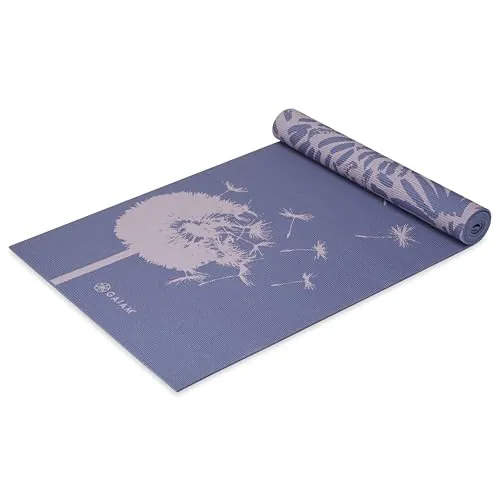
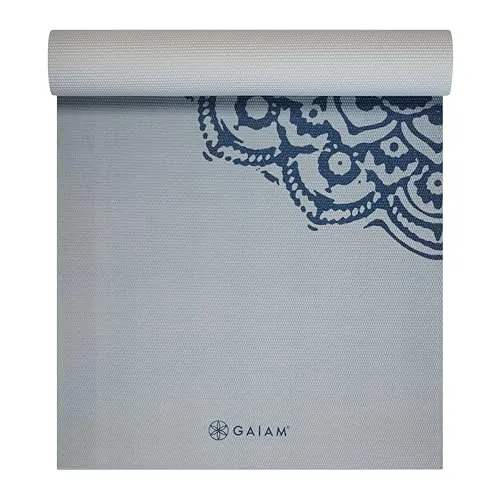
Gaiam Premium Print Reversible Yoga Mat
- 6 mm cushioning provides supportive comfort for yoga, Pilates, and floor exercises.
Comparison
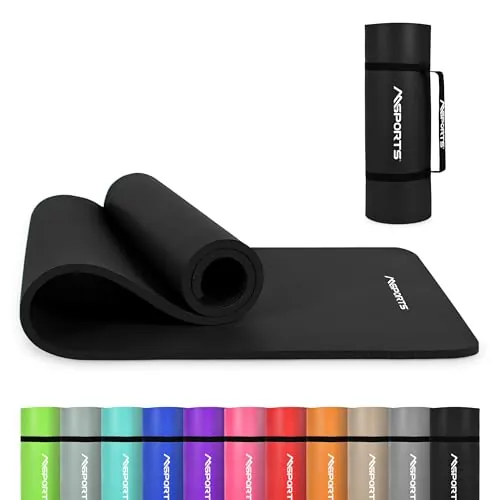
The Gaiam Premium Print Reversible Yoga Mat is a lighter, lower-cost 6 mm mat designed for yoga, Pilates, and floor exercise. The MSPORTS Premium Yoga Mat is a much thicker, larger NBR foam option built around cushioning and room to move. Choose Gaiam for compact value and a reversible design; choose MSPORTS for deeper padding, stronger reported grip, and a wider training surface.
#1 Overall Winner
Contender
Choose the Gaiam mat if you want lower-cost, compact cushioning for yoga, Pilates, and everyday home workouts. Choose MSPORTS if your priority is a roomy, exceptionally padded surface for stretching and floor exercise. MSPORTS wins on comfort and grip; Gaiam wins on storage practicality, price, and all-round value.
Overall winner
Depends on your needs
| Feature | Gaiam Premium Print Reversible Yoga Mat | MSPORTS Premium Non Slip Thick Yoga Mat | Winner |
|---|---|---|---|
Primary use |
Yoga, Pilates, and floor workouts |
Yoga, Pilates, stretching, and home workouts |
Depends |
Thickness |
6 mm |
0.6 inches |
MSPORTS Premium Non Slip Thick Yoga Mat |
Dimensions |
68 by 24 inches |
74.5 by 32 inches |
MSPORTS Premium Non Slip Thick Yoga Mat |
Material |
PVC, free of six specified phthalates |
NBR foam |
Depends |
Comfort |
Supportive 6 mm cushioning |
Very thick, soft foam cushioning |
MSPORTS Premium Non Slip Thick Yoga Mat |
Grip |
Textured surface; feedback is mixed |
Textured surface; feedback is strongly positive |
MSPORTS Premium Non Slip Thick Yoga Mat |
Storage |
Smaller, thinner, and lighter |
Thicker and wider; includes strap |
Gaiam Premium Print Reversible Yoga Mat |
Portability |
3.12 pounds |
1.5 kilograms with strap |
Gaiam Premium Print Reversible Yoga Mat |
Care |
Spot clean; dry flat; avoid prolonged sun |
Hand wash only |
MSPORTS Premium Non Slip Thick Yoga Mat |
Odor on arrival |
Odor is specifically disclosed |
Several buyers report little or no odor |
MSPORTS Premium Non Slip Thick Yoga Mat |
Durability feedback |
Mixed |
Mixed, including tear reports |
Tie |
Listed price |
$20.90 |
$39.99 |
Gaiam Premium Print Reversible Yoga Mat |
Overall value |
Lower-cost, compact all-round mat |
Higher-cost, comfort-led oversized mat |
Depends |
MSPORTS is more useful for comfort-oriented stretching after exercise because the additional foam can reduce direct pressure from the floor during gentle mobility work. Gaiam is also well suited to cooldown routines, with buyer feedback noting supportive cushioning for knees and wrists. The practical advantage shifts to Gaiam if the mat must be stored in a small home between sessions. Neither product should be viewed as a treatment tool; their role is to provide a more comfortable exercise surface.
Both mats support low-impact training at home, including yoga flows, Pilates, mobility routines, stretching, planks, and bodyweight floor sessions. Gaiam is the more versatile everyday choice for people who alternate between yoga and general exercise but need a mat that can be rolled away without much fuss. MSPORTS has the advantage for comfort-led routines because its larger, thicker surface gives more usable room and more separation from a hard floor. For standing yoga sequences requiring a firmer base, Gaiam may feel more controlled; for floor-heavy workouts, MSPORTS is the stronger fit.
Neither product is a substitute for a lifting platform or a mat designed to absorb dropped-weight impact. For bodyweight strength work, core training, planks, and light floor exercises, MSPORTS offers more cushioning and width, which can be useful for kneeling and supine movements. Gaiam provides a firmer, thinner base that may feel more stable under hands and feet for controlled bodyweight work. The supplied reviews describe MSPORTS as suitable for weightlifting support, but also note that its foam can compress under the feet.
Neither mat is primarily a cardio-training product, and neither has supplied features for tracking, resistance, or conditioning progression. Both can provide a more comfortable surface for low-impact warm-ups, cooldowns, or mat-based cardio movements. Gaiam is likely easier to move, roll out, and store between short sessions. MSPORTS offers more cushioning for floor-based conditioning but occupies more space. For high-impact cardio, the provided data does not establish either mat as the better dedicated option.
Both products are highly suitable for mobility, stretching, yoga, and Pilates. MSPORTS has the comfort advantage for long-held stretches, kneeling positions, and floor sequences because of its deeper foam and wider area. Gaiam offers adequate cushioning with a more conventional yoga-mat feel, which may be preferable for users who want less compression beneath their hands and feet. Gaiam's reversible design may appeal to frequent yoga users, while MSPORTS is more compelling for people who want to spread out during mobility work.
For gentle post-workout stretching and relaxation-oriented floor routines, both mats can provide a more comfortable surface than bare flooring. MSPORTS is the better recovery-routine choice where padding is the main concern, as its thicker foam is repeatedly praised for cushioning knees, elbows, and joints. Gaiam remains a good option for shorter stretching sessions and users who need a mat that stores compactly. These products provide surface comfort only; the supplied data does not support broader recovery claims.
Both mats appear to perform well for their intended low-impact exercise roles, but they emphasize different qualities. Gaiam offers a dense 6 mm surface that buyers often find supportive for poses, knees, and wrists, while its reversible textured finish is intended to provide traction. MSPORTS performs especially well where softness and floor cushioning are needed, with many buyers describing it as comfortable and non-slip. The main performance caution for Gaiam is mixed grip feedback when users sweat heavily. For MSPORTS, the very soft foam may be less suitable for users seeking a firm, planted feel in standing poses.
Gaiam and MSPORTS both work well as accessible foundations for consistent home routines, and both include a beginner-oriented workout resource. Gaiam supports regular use through its lighter, compact dimensions and simple roll-up storage, reducing friction for users with limited space. MSPORTS supports longer floor sessions with a wider and longer area that accommodates more stretching positions and bodyweight movements. Beginners who need comfort may prefer MSPORTS, while beginners who want an easy-to-store, less expensive mat may prefer Gaiam. Neither mat provides adjustable resistance or progression features.
For mat-based strength sessions, MSPORTS has an advantage in cushioning for knees, elbows, and floor-based core work. Its wider format can also give more room for movements such as mountain climbers, planks, and bodyweight drills. However, a review notes that the soft foam allows the feet to sink during squats, which may not suit users who want a firm standing base. Gaiam's denser 6 mm platform is likely more controlled for bodyweight balance and plank work, though it provides less impact separation from the floor.
The provided information gives neither mat a meaningful advantage for dedicated cardio training. Both are most relevant as surfaces for low-impact movement, mobility work, or floor conditioning before and after cardio sessions. Gaiam's lighter, smaller design is more convenient to set up and put away. MSPORTS offers more protection for floor exercises but is thicker and less compact. Buyers seeking equipment for sustained conditioning should not choose between these mats based on cardio capability alone.
MSPORTS is the stronger option for cushioning-focused mobility and flexibility work. Its 0.6-inch foam and wider dimensions can make kneeling, seated, and lying stretches more comfortable, especially on hard household flooring. Gaiam still provides strong support for yoga and mobility through its 6 mm cushioning and textured surface, while its firmer profile can suit users who want more direct contact with the floor during standing transitions. Both are appropriate for Pilates and stretching; comfort preference is the deciding factor.
MSPORTS is more useful for comfort-oriented stretching after exercise because the additional foam can reduce direct pressure from the floor during gentle mobility work. Gaiam is also well suited to cooldown routines, with buyer feedback noting supportive cushioning for knees and wrists. The practical advantage shifts to Gaiam if the mat must be stored in a small home between sessions. Neither product should be viewed as a treatment tool; their role is to provide a more comfortable exercise surface.
Both mats are intended to create a more cushioned surface for low-impact exercise, but buyers should select the firmness that fits their routine. Gaiam provides specific disclosure that its PVC is free from six named phthalates, while its care instructions recommend airing it out after unwrapping because an odor may occur. MSPORTS has more consistently positive grip feedback, which may be useful for reducing unwanted mat movement, but its soft foam can compress in standing movements. Neither product is designed in the provided information for dropped weights or high-impact protection. Use either on a suitable, level surface and inspect for wear.
MSPORTS is the comfort leader because its 0.6-inch NBR foam is substantially thicker than Gaiam's 6 mm profile. Buyer feedback repeatedly highlights its softness and cushioning for knees, elbows, joints, and floor exercise. Gaiam is still a comfortable mat, with strong praise for its support during yoga poses and its cushioning for knees and wrists. The trade-off is firmness: Gaiam is better for users who do not want the more compressive, squishy feel reported with MSPORTS.
Gaiam is easier to manage for routine setup and storage because it is smaller, thinner, and lighter. It can be spot cleaned with cold water and mild detergent, though buyers need to air it out after opening and should avoid extended sun exposure. MSPORTS includes a carrying strap and is reported to be easy to clean, but its thick, wide foam is less convenient to roll tightly. Choose Gaiam for lower day-to-day storage friction, or MSPORTS if the supplied strap and softer surface matter more.
MSPORTS has a slight advantage for staying positioned on the floor, based on repeated positive non-slip feedback. Its greater size may also provide a broad base for floor work. However, its soft foam can compress under the feet, which some users may interpret as less stable during standing balances or squats. Gaiam has a textured sticky surface and many positive traction comments, but grip reports are more mixed, especially under heavy sweat. For floor work, MSPORTS is the steadier choice; for users wanting a firmer feel, Gaiam may be preferable.
MSPORTS is the clearer grip choice. Customers frequently describe the textured surface as non-slip, including during sweaty workouts. Gaiam is also designed with a textured sticky surface and has many satisfied users, but the aggregated feedback is less consistent: some buyers find good traction while others find it slippery. Users expecting high perspiration or demanding traction should lean toward MSPORTS based on the supplied information.
Gaiam is the clear choice for smaller homes, apartments, and users who need to store the mat frequently. At 68 by 24 inches and 6 mm thick, it has a more compact footprint and rolls into a smaller package than MSPORTS. MSPORTS gives much more workout room at 74.5 by 32 inches, but the 0.6-inch foam naturally creates a bulkier roll. Its included strap helps with carrying, not with reducing storage volume. Choose based on whether training space or stored space is more limited.
Gaiam's build is centered on a 6 mm PVC format with a textured, reversible printed surface. Buyers often describe it as dense, resilient, and attractive, though some report less favorable long-term wear. MSPORTS uses high-density NBR foam and earns strong feedback for softness, thickness, and apparent quality. Its construction is tailored more toward cushioning than a firm yoga-studio feel. Because both products have some durability complaints, the provided evidence does not establish a decisive build-quality winner. Choose Gaiam for a denser compact mat and MSPORTS for a deeper foam surface.
Durability is a shared uncertainty. Gaiam has buyers who describe the mat as holding up well over regular use, but its review overview also includes reports that it is not durable. MSPORTS receives positive comments about feeling sturdy, yet some customers report that the foam tears easily. Gaiam's care instructions specifically warn against prolonged sun exposure, which may lead to fading and brittleness. MSPORTS users should consider that soft foam can be more vulnerable to damage from sharp edges or rough surfaces, although the listing does not provide detailed wear testing.
MSPORTS has simpler listed maintenance: hand wash only. Gaiam requires more specific care, including spot cleaning with a mat wash or a damp cloth, drying flat, and avoiding prolonged sun exposure that can cause fading and brittleness. Gaiam also needs airing out for two to three days after initial unwrapping if odor is present. Neither listing provides a detailed maintenance schedule beyond these instructions. For buyers who value straightforward cleaning guidance, MSPORTS has the edge; for buyers willing to follow more detailed care, Gaiam's requirements are clearly stated.
Gaiam is lighter at 3.12 pounds and has a shorter, narrower 68 by 24 inch format, making it the more portable choice overall. MSPORTS is listed at 1.5 kilograms and is longer, wider, and much thicker, so it will be bulkier despite the included carrying strap. The strap is a practical benefit for trips to a studio, park, or gym, but it does not offset the larger rolled size. Frequent travelers and commuters are likely to prefer Gaiam.
Gaiam provides clearer material disclosure in the supplied data. It identifies the mat as PVC and states that it is free from DEHP, DBP, BBP, DINP, DIDP, and DNOP. It also gives detailed care and sun-exposure guidance. MSPORTS identifies its material as nitrile butadiene rubber foam and specifies hand washing, but the provided details offer less information about material composition or additional substance standards. That does not establish a safety difference beyond the disclosed information; it means Gaiam is more transparent in the available listing data.
Gaiam has the stronger value case for most shoppers based on its lower listed price, supportive 6 mm cushioning, reversible design, and very strong buyer satisfaction. It offers the core features most people need for yoga, Pilates, and basic floor work without requiring much storage space. MSPORTS costs more, but the premium is linked to tangible differences: far more foam thickness, a longer and wider exercise area, a carrying strap, and stronger reported grip. It can therefore be better value for users who genuinely need extra cushioning or space, rather than simply a less expensive mat.
Gaiam has the stronger trust position in the supplied data, supported by higher brand-related assessment, a large review base, and detailed material and care disclosure. Several reviewers also mention buying Gaiam mats more than once. MSPORTS has a substantial review count and generally favorable buyer response, but the provided information offers less material detail and fewer indicators of established category reputation. This comparison reflects the data provided rather than an independent assessment of either company's wider practices or support quality.
Both products have high star ratings and thousands of reviews, showing broad positive buyer response. Gaiam has the larger supplied review count and stronger overall satisfaction signal, with recurring praise for design, thickness, knee comfort, and price. Its repeated negatives are odor after unboxing and inconsistent grip and durability experiences. MSPORTS buyers consistently praise the deep padding, generous size, softness, and traction. Its main recurring concerns are reduced rollability due to thickness, a soft feel under standing movements, and some reports of tearing. Neither product has uniformly positive durability feedback.
Gaiam's core listing claims are supported by specific dimensions, material identification, care guidance, and a stated list of six phthalates excluded from the PVC. Customer feedback broadly supports its cushioning and reversible design, although the non-slip and durability claims receive mixed real-world feedback. MSPORTS supports its cushioning and large-format claims with clear dimensions and numerous customer comments about softness and comfort. Its non-slip claim is also well aligned with buyer feedback, while durability is less certain because some users report tears. Listing claims and reviews should not be treated as independent product testing.
The Gaiam Premium Print Reversible Yoga Mat is the better overall choice for most shoppers. It offers a balanced combination of 6 mm cushioning, compact dimensions, reversible styling, detailed material disclosure, strong buyer feedback, and a lower listed price. Its main drawbacks are the initial odor and inconsistent reports on grip and long-term wear.
The MSPORTS Premium Non Slip Thick Yoga Mat is the better comfort-first alternative. Its deeper foam, larger surface, and stronger reported traction make it especially appealing for Pilates, stretching, and floor-based home workouts. Its limitations are the bulkier storage footprint, softer feel for standing movements, and mixed tearing feedback. Pick Gaiam for practical all-round value; pick MSPORTS when maximum padding and space are non-negotiable.

Overall winner
Depends on your needs
The Gaiam is the stronger all-round value choice for buyers wanting a lighter, conventional-size yoga mat with a reversible design. MSPORTS is the better fit when maximum cushioning and a larger workout area matter more than compact storage. Both have positive buyer feedback, but each also has mixed durability reports.
MSPORTS is generally the better match for Pilates and floor workouts because its 0.6-inch foam, 74.5-inch length, and 32-inch width provide more padding and usable space. Gaiam remains suitable for these routines, particularly for users who prefer a firmer, more compact 6 mm yoga-mat format.
Gaiam is the more storage-friendly option. It is shorter, narrower, thinner, and lighter than the MSPORTS mat, so it is likely to be easier to roll and place in a mat bag or cupboard. MSPORTS includes a strap, but its thick foam and wider dimensions create a bulkier roll.
It depends on the practice. Customer feedback describes MSPORTS as soft and squishy, with one reviewer noting that feet can sink into it during standing work. That may be welcome for comfort-focused exercise, but users who prefer a firmer base for balance poses may favor the thinner Gaiam mat.
MSPORTS has the clearer advantage for grip based on the supplied comparison data and repeated customer comments describing it as non-slip. Gaiam also has a textured sticky surface and many positive traction comments, but its review overview notes mixed feedback, including reports of slipping during sweaty sessions.
MSPORTS is the more cushioning-focused choice, with 0.6-inch NBR foam and frequent buyer praise for knee and joint comfort. Gaiam's 6 mm surface is also well regarded for cushioning knees and wrists, but it does not offer the same depth of padding as MSPORTS.
Gaiam explicitly advises airing the printed mat out for two to three days because a harmless odor may be present after unwrapping. Some buyers say the smell fades, while others find it unpleasant. MSPORTS is described by several reviewers as having little or no strong odor, although that is buyer feedback rather than a guarantee.
Gaiam offers the better value for buyers who want reliable cushioning, a reversible design, and a lower listed price. MSPORTS costs more but adds notably greater thickness, length, width, and a carrying strap. The better value therefore depends on whether compact practicality or extra comfort and room is more important.
Check our rankings and expert guides to find the best fitness products for your goals.