#1 Overall Winner
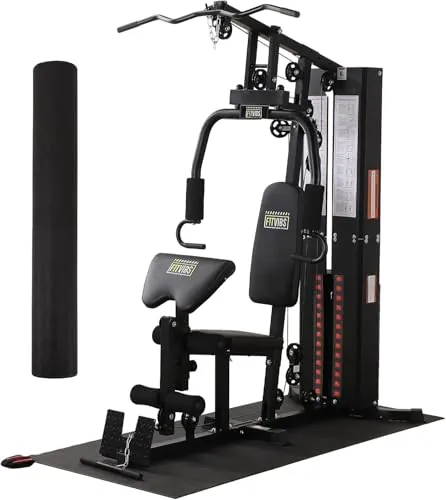
Fitvids High Density 1/4-Inch Gym Equipment Mat
- High-density rubber construction with a stated 1/4-inch thickness.
Comparison
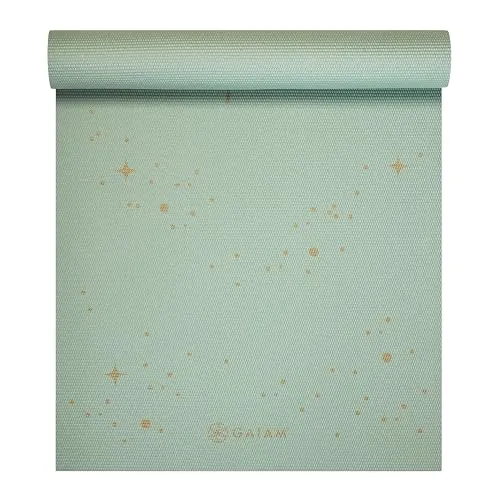
The Fitvids High Density Gym Equipment Mat and Gaiam Premium Yoga Mat are both well-reviewed exercise mats, but they solve different problems. Fitvids is the stronger choice for supporting treadmills and bikes while protecting flooring, whereas Gaiam is designed for cushioned yoga, Pilates, stretching, and floor workouts. Choose based on whether your priority is a stable equipment base or a portable personal practice surface.
#1 Overall Winner
Contender
Choose Fitvids for a treadmill, bike, or other home-gym machine where floor protection and a secure base matter most. Choose Gaiam for yoga, Pilates, stretching, and cushioned floor work. Fitvids is more robust for equipment; Gaiam is more portable and comfortable for personal practice.
Overall winner
Depends on your needs
| Feature | Fitvids High Density 1/4-Inch Gym Equipment Mat | Gaiam Premium 6mm Print Yoga Mat | Winner |
|---|---|---|---|
Primary use |
Treadmill, bike, and equipment floor protection |
Yoga, Pilates, and floor workouts |
Depends |
Material |
Rubber; PVC-free |
PVC; free from six specified phthalates |
Depends |
Listed size |
78 by 36 inches |
68 by 24 inches |
Fitvids High Density 1/4-Inch Gym Equipment Mat |
Thickness |
1/4 inch |
6mm described |
Depends |
Equipment stability |
Slip-resistant, high-density equipment base |
Personal exercise mat |
Fitvids High Density 1/4-Inch Gym Equipment Mat |
Yoga and Pilates fit |
Occasional general floor use |
Dedicated yoga, Pilates, and stretching surface |
Gaiam Premium 6mm Print Yoga Mat |
Comfort for floor work |
Firm, dense surface |
Extra-thick cushioned practice surface |
Gaiam Premium 6mm Print Yoga Mat |
Portability |
6.5 pounds; larger format |
1.36 kilograms; rollable |
Gaiam Premium 6mm Print Yoga Mat |
Grip feedback |
Generally secure for equipment and dry floor work |
Generally sticky, but mixed feedback when sweaty |
Fitvids High Density 1/4-Inch Gym Equipment Mat |
Maintenance |
Wipe down; hand wash instruction |
Spot clean and dry flat |
Fitvids High Density 1/4-Inch Gym Equipment Mat |
Initial odor |
Reported by some buyers |
Air-out guidance provided; reported by some buyers |
Tie |
Listed price |
$34.99 |
$28.42 |
Gaiam Premium 6mm Print Yoga Mat |
Gaiam has the better fit for a post-workout stretching or gentle movement routine because its cushioning is designed for direct body contact and repeated floor use. Reviews commonly mention comfort while stretching and working on knees. Fitvids is valuable indirectly where protecting a workout area is the priority, but it is primarily an equipment mat rather than a comfort-focused recovery accessory. Neither listing provides evidence that the mat itself produces a specific recovery outcome.
Fitvids supports a home workout routine by making an equipment station more stable and helping isolate a treadmill or bike from the floor beneath it. This makes it particularly useful for regular indoor cardio setups. Gaiam supports routines built around movement on the mat: yoga flows, Pilates, stretching, barre, abdominal work, and bodyweight exercises. For a mixed home gym, Fitvids can remain under equipment while Gaiam serves as a separate floor-work surface. Using either one outside its primary role involves trade-offs.
For strength-oriented use, Fitvids is more useful beneath stationary equipment and can provide a durable layer for a home-gym floor. One review also describes use of a cut section as a kettlebell drop mat, but that is individual buyer experience rather than a stated product purpose. Gaiam is better for low-load bodyweight work, core training, and kneeling movements because of its cushioning. Neither product is presented as a dedicated platform for repeated heavy weight drops.
Fitvids is the clear cardio-training choice when the workout uses a treadmill, exercise bike, trainer, or elliptical-type machine. Its size, high-density rubber construction, and stability focus directly address equipment placement, floor contact, and workout-area protection. Gaiam can support mat-based conditioning such as low-impact bodyweight circuits, but it is not designed as a machine base. For a cardio corner with permanent equipment, Fitvids offers the more relevant surface and the more convincing buyer feedback.
Gaiam is the better mat for mobility and flexibility sessions. Its purpose-built cushioned surface supports yoga poses, Pilates movements, stretching, and floor work, while its light roll-up construction makes it easy to use in different rooms or take to class. Fitvids has a firm, dense rubber construction intended for equipment, so it may suit occasional basic stretching but is not the more comfortable or practical option for a dedicated mobility routine.
For gentle stretching and post-workout floor mobility, Gaiam is the more suitable option because buyers regularly describe its cushioning as comfortable for knees and floor contact. Fitvids can protect the underlying floor in a home gym, but it does not offer the same personal-practice focus. Neither product should be treated as a recovery device; their practical role is simply to create an appropriate, more comfortable or better-protected workout surface.
Both mats appear to perform well when judged against their intended uses. Fitvids has stronger evidence for supporting heavy home-gym equipment: product details and buyer reports consistently point to floor protection, reduced movement, a firm base, and long-term use beneath treadmills and bikes. Gaiam performs better as a personal practice mat, with frequent praise for cushioning, dry-use grip, and comfort during yoga and floor exercises. Its performance is less consistent in high-sweat situations, where some reviewers report hand slippage. The best-performing choice therefore depends on the activity, not a shared use case.
Fitvids can reduce setup friction for people who use a treadmill or bike regularly because it creates a dedicated, stable equipment area and is simple to wipe down after sessions. It offers little exercise variety on its own. Gaiam supports more varied mat-based routines, including yoga, Pilates, stretching, and bodyweight exercises, and its included downloadable class may help new users begin. Gaiam is easier to move between rooms or carry to class; Fitvids is more useful as a fixed part of a home-gym layout.
Fitvids is the stronger option for strength-adjacent home-gym protection, particularly under stationary equipment where a dense, non-slip layer can help protect flooring. Its firm surface is not primarily designed to cushion repeated heavy impacts. Gaiam is more useful for core work, glute exercises, mobility drills, and kneeling bodyweight movements, where its thicker personal-practice cushioning is an advantage. Buyers looking for a mat beneath heavy lifting equipment should confirm the equipment footprint and avoid assuming either mat is designed for repeated dropped weights.
Fitvids provides better cardio support for machine-based training. It is specifically marketed for treadmills and bikes, and reviews repeatedly mention machines sitting firmly on the mat and floors remaining protected. It may also help reduce some transmitted noise, although the exact reduction will depend on the machine and floor. Gaiam suits floor-based conditioning but does not have the dimensions or equipment-support focus needed for a treadmill or exercise bike. For machine cardio, the difference is clear: Fitvids is the appropriate choice.
Gaiam is the more capable choice for flexibility and mobility practice. The mat is intended for yoga, Pilates, and floor workouts, and buyers describe useful cushioning for knees, backs, and hard floors without finding it excessively unstable for balance. Its 68-inch length and 24-inch width are a typical personal-practice format. Fitvids is wider and longer, but its dense rubber equipment construction makes it a less natural surface for prolonged poses, transitions, and floor-based mobility work.
Gaiam has the better fit for a post-workout stretching or gentle movement routine because its cushioning is designed for direct body contact and repeated floor use. Reviews commonly mention comfort while stretching and working on knees. Fitvids is valuable indirectly where protecting a workout area is the priority, but it is primarily an equipment mat rather than a comfort-focused recovery accessory. Neither listing provides evidence that the mat itself produces a specific recovery outcome.
Fitvids is the more safety-relevant choice for stationary equipment because it is designed to reduce shifting and create a stable, floor-protective base. Reviews describe improved treadmill stability, including on thin carpet, but users should still follow their machine manufacturer's placement and safety guidance. Gaiam is more appropriate for controlled yoga and floor exercise, with cushioning that can make kneeling positions more comfortable. Its traction is not universally consistent when wet with sweat, so users performing planks, balance work, or fast transitions should account for that feedback and keep the surface clean and dry.
Gaiam is clearly more comfortable for direct floor exercise. Its extra-thick yoga-mat design is repeatedly praised for cushioning knees and making stretching, Pilates, abdominal work, and yoga poses more comfortable on hard surfaces. Fitvids provides a firm, dense layer that can make occasional calisthenics more tolerable than a bare floor, but floor comfort is not its primary purpose. Choose Gaiam when body contact, kneeling, and extended time on the mat are central to the workout.
Both mats are straightforward, but their easiest use cases differ. Fitvids can be unrolled beneath a machine, wiped clean, and left in position as a low-maintenance home-gym base. Its larger, heavier format makes initial placement more of a task. Gaiam is easier to roll out for a workout, roll up afterward, and transport around the home or to class. It needs more care around cleaning, drying flat, and avoiding extended sun exposure, but it is more convenient for flexible daily practice.
Fitvids is the stronger stability option. Its dense rubber construction and slip-resistant design are specifically intended to reduce equipment shifting, and reviews describe treadmills and bikes staying in place on carpet and hard floors. Gaiam receives positive feedback for staying put during general yoga and floor work, but its stability is designed around a person moving on the mat rather than a heavy machine resting on it. For equipment security, Fitvids has the clearer advantage.
Fitvids receives more consistent grip feedback for its intended role, with buyers noting a firm equipment base and textured surface. Its traction can diminish when dust builds up, but wiping it clean is a practical solution. Gaiam's sticky texture works well for many users in dry practice, yet multiple reviews describe hand slippage once sweat accumulates. For yoga with high perspiration, a towel may be worth considering. For machine placement, Fitvids is the stronger choice.
Gaiam is the better choice for small spaces because it is a lightweight roll-up mat intended to be stored after use. Its 68-by-24-inch format takes up relatively little floor area during practice and can be moved easily. Fitvids occupies a larger 78-by-36-inch footprint and works best when left beneath a treadmill, bike, or other equipment. That larger surface is useful for protection, but it is less flexible in apartments or multipurpose rooms without a permanent workout zone.
Fitvids is the more relevant option for reducing noise and vibration transfer from cardio equipment, as its product details specifically identify noise reduction as a feature. The actual result will vary with the machine, workout intensity, and flooring. Gaiam does not serve as an equipment-vibration mat, but its cushioned surface can make quiet, low-impact yoga, Pilates, and floor sessions more comfortable. If treadmill or bike noise is the concern, Fitvids is the more appropriate starting point.
Fitvids has the stronger build case for equipment use. Its high-density rubber construction, substantial stated thickness, and buyer reports of multi-year treadmill and bike use indicate a robust, functional build for a fixed workout area. Gaiam is well suited to a different standard: a lightweight, cushioned mat that can be rolled and carried. Buyers generally describe it as sturdy and supportive, but it is not engineered for the concentrated load and machine contact expected from an equipment mat.
Fitvids has more convincing durability feedback in its intended environment. Reviews describe mats remaining functional under treadmills and bikes for years, and users report simple wipe-down upkeep. Gaiam also receives positive reports of regular use without visible wear, including one report after more than a year. However, its care guidance warns that prolonged sun exposure can lead to fading and brittleness, and personal yoga mats are more exposed to hand, foot, and rolling wear. Fitvids is the safer durability choice for heavy equipment; Gaiam is sufficiently durable for normal mat practice with appropriate care.
Fitvids has simpler maintenance for a fixed home-gym setup: the listing emphasizes wipe-down cleaning, while the care instruction specifies hand washing. It is also described as resistant to carpet bleeding. Gaiam requires spot cleaning with a mat wash or damp cloth using cold water and mild detergent, followed by drying flat. Its care guidance also advises avoiding long sun exposure and using a mat bag for storage. Fitvids is easier for routine equipment-area cleanup; Gaiam needs more attentive storage care.
Gaiam is substantially more portable. At 1.36 kilograms, it is designed to roll up, move around the home, and travel to a yoga or fitness class; buyers specifically praise this convenience. Fitvids weighs 6.5 pounds and is larger, making it better suited to a semi-permanent location beneath equipment. It can be moved and some reviewers report cutting it for custom uses, but portability is not its main advantage.
Both listings provide useful material information, though the level of detail differs. Fitvids identifies the mat as rubber and PVC-free, with a stated 1/4-inch thickness. Gaiam identifies PVC as its material and specifies that it is free from DEHP, DBP, BBP, DINP, DIDP, and DNOP. Gaiam also gives clear care and storage instructions. Neither listing provides a full material composition beyond these disclosures, so buyers with specific material sensitivities should review the current listing information before purchase.
Both products offer good value when used for the purpose they were designed for. Fitvids costs more at the listed price, but its larger high-density rubber surface, equipment-specific design, and strong long-term feedback make that cost reasonable for treadmill and bike owners. Gaiam has the lower listed price and combines personal-workout cushioning, portable storage, printed designs, and a downloadable class. It is a better value for yoga and floor exercise, not for supporting equipment. A lower purchase price does not offset buying the wrong mat type for your setup.
Both products have high average ratings across large review volumes, which provides useful evidence of broad buyer experience. Fitvids has particularly consistent feedback around its stated equipment-mat function, including durability and machine stability. Gaiam has established positive feedback for yoga-mat comfort, design selection, and portability, while also providing specific material and care disclosures. Neither product includes warranty information in the supplied data. Brand confidence should therefore come primarily from the disclosed specifications, care guidance, and fit for the intended workout use.
Buyer satisfaction is strong for both mats. Fitvids has a large review base with repeated praise for floor protection, size, thickness, stable treadmill and bike placement, easy cleaning, and value. Its recurring negatives are mainly an initial smell and occasional grip reduction when dusty. Gaiam also has extensive positive feedback, especially for attractive designs, cushioning, portability, and comfort during yoga and floor work. The principal complaint is inconsistent traction during sweaty sessions, alongside occasional odor reports. Fitvids feedback is more consistent within its narrower equipment-mat role.
Fitvids' core claims are reasonably aligned with its disclosed construction and buyer feedback. The rubber material, stated thickness, slip-resistant feature, and equipment-focused dimensions support its floor-protection and stability positioning, while reviews offer practical examples of treadmill and bike use. Gaiam's claims about cushioning, yoga and Pilates suitability, and lightweight portability are similarly supported by its product details and reviews. Its non-slip claim is less consistent because some users report slipping when sweaty. Neither product's buyer feedback should be read as proof of broader health, performance, or recovery outcomes.
There is no single winner because these mats belong in different parts of a workout setup. Fitvids is the better overall choice for heavy home-gym equipment: its high-density rubber construction, larger footprint, stable base, and durable buyer feedback make it the practical option for treadmills and bikes. Its main limitation is that it is heavier, firmer, and less convenient for personal floor practice.
Gaiam is the better choice for yoga, Pilates, mobility, and floor workouts. It offers more cushioning, easy roll-up portability, and broad positive feedback for comfort. Its main limitation is that grip can be inconsistent when hands are sweaty, and it is not meant to protect flooring under large machines. For a complete home gym, the products can complement rather than replace one another.

Overall winner
Depends on your needs
They serve different primary purposes. The Fitvids mat is the better match for placing beneath a treadmill, exercise bike, or similar home-gym equipment because its larger, denser rubber format focuses on floor protection and equipment stability. The Gaiam mat is better for yoga, Pilates, stretching, and floor work because it is cushioned, lightweight, and designed to roll up for personal exercise use.
The available product information positions the Gaiam as a 68-by-24-inch yoga, Pilates, and floor-workout mat, not as a treadmill base. Its dimensions and cushioned PVC construction are less appropriate for large equipment. For a treadmill, the Fitvids mat is the more suitable option because it is specifically described for treadmill and bike use and offers a larger 78-by-36-inch surface.
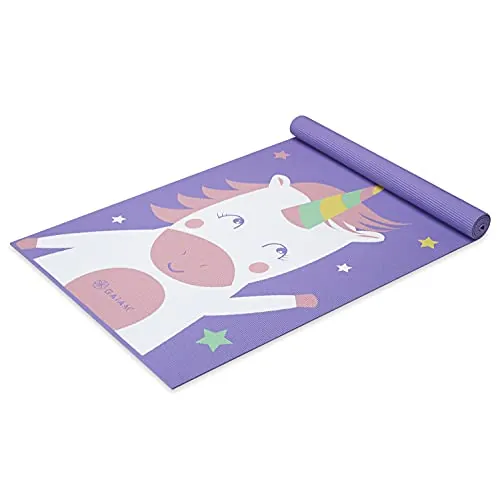
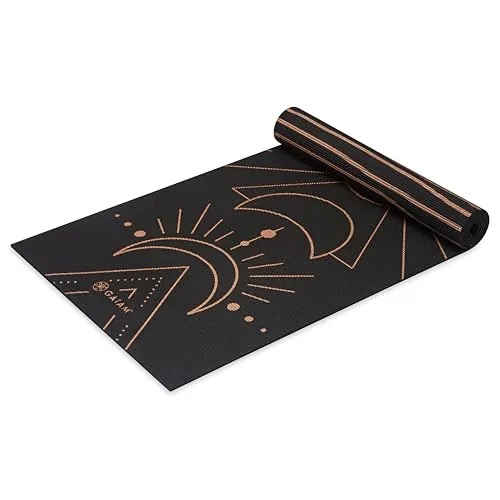
The Gaiam mat is the clearer choice for yoga and Pilates. Its product details emphasize a cushioned, sticky-textured practice surface, and buyers frequently mention comfort for knees, stretching, poses, barre, and floor exercises. The Fitvids mat may work for occasional basic floor work, but its main role is protecting floors beneath equipment rather than supporting a dedicated yoga or Pilates routine.
The Fitvids mat offers the more relevant floor protection for heavy exercise equipment. It is made from high-density rubber, is stated to be 1/4 inch thick, and is designed to help prevent equipment movement while protecting floors and carpet. Reviews describe successful use beneath treadmills, bikes, trainers, and other heavy home-gym items. Check that its 78-by-36-inch footprint fits your equipment.
Fitvids is described as slip resistant, and reviews generally praise its secure equipment base and grippy texture, though dust may reduce traction. Gaiam receives many positive comments for dry-use traction, but several reviews report that hand placement can become slippery during sweaty yoga or barre sessions. For hot or high-sweat practice, traction needs may depend on your routine and whether you use a towel.
Both products have occasional odor reports. Some Fitvids buyers mention a rubber or chemical-like smell that improved after airing the mat outside. Gaiam specifically advises airing printed mats for two to three days after unwrapping, and some buyers report a noticeable initial odor. Other reviewers of both products report little or no smell, so the experience appears to vary.
The Gaiam yoga mat is easier to transport for most users. It weighs 1.36 kilograms, rolls up, and reviewers describe carrying it around the house or to class with ease. The Fitvids mat weighs 6.5 pounds and has a larger 78-by-36-inch equipment footprint. It can be moved when needed, but it is generally better left beneath a machine in a dedicated workout space.
Value depends on the job you need it to do. At the listed prices, Fitvids has stronger value for treadmill or bike owners because it is purpose-built for equipment support, stability, and flooring protection. Gaiam has stronger value for people who need a portable, cushioned yoga and floor-work mat. Buying the mat designed for your primary activity is more important than the small price difference.
Check our rankings and expert guides to find the best fitness products for your goals.