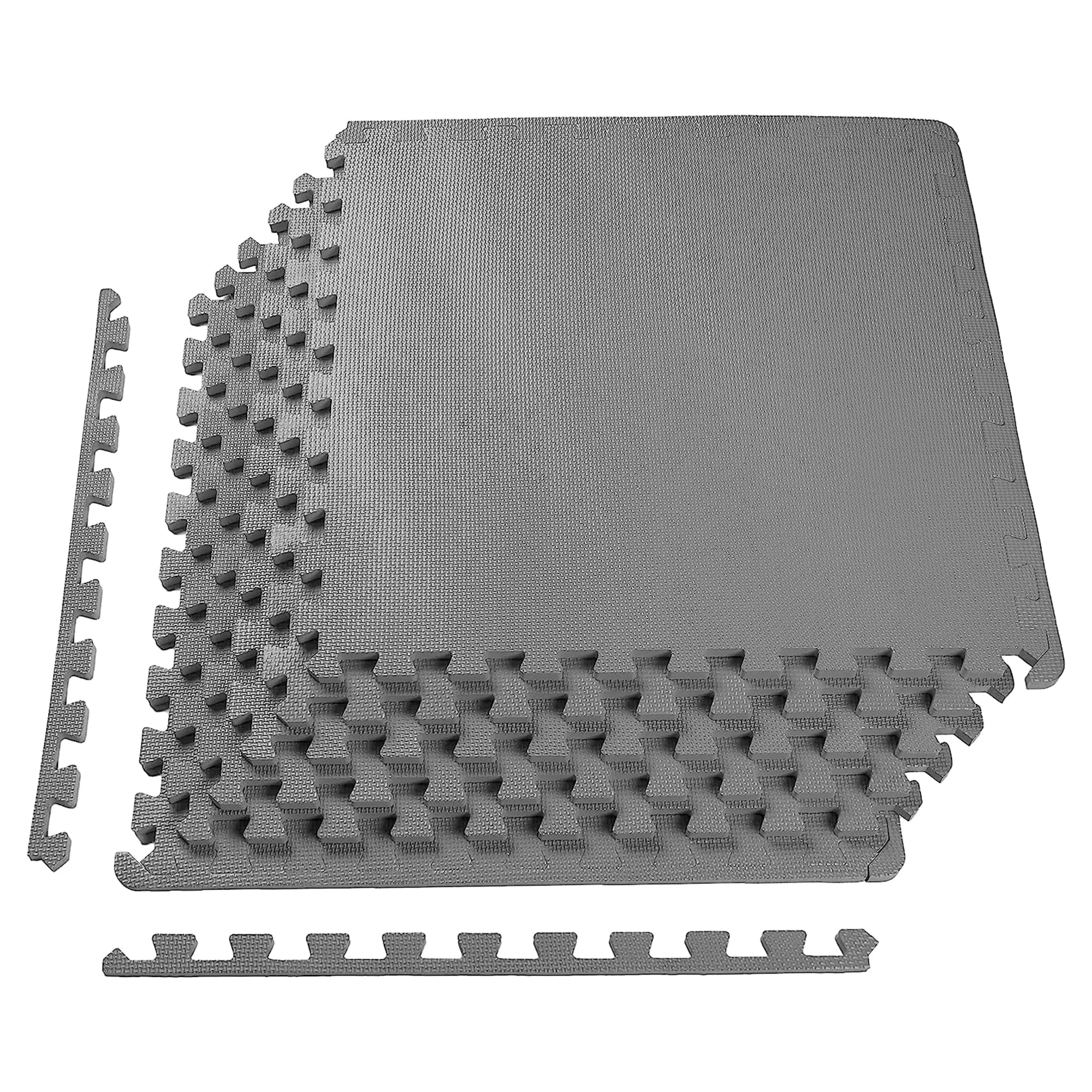
#1 Overall Winner
BalanceFrom Puzzle Exercise Mat 1/2" Thick, EVA Interlocking Foam Floor Tiles (24 Sq Ft, 6 Tiles)
- Interlocking EVA foam tiles make it easy to customize coverage for a home gym or play area.
Comparison
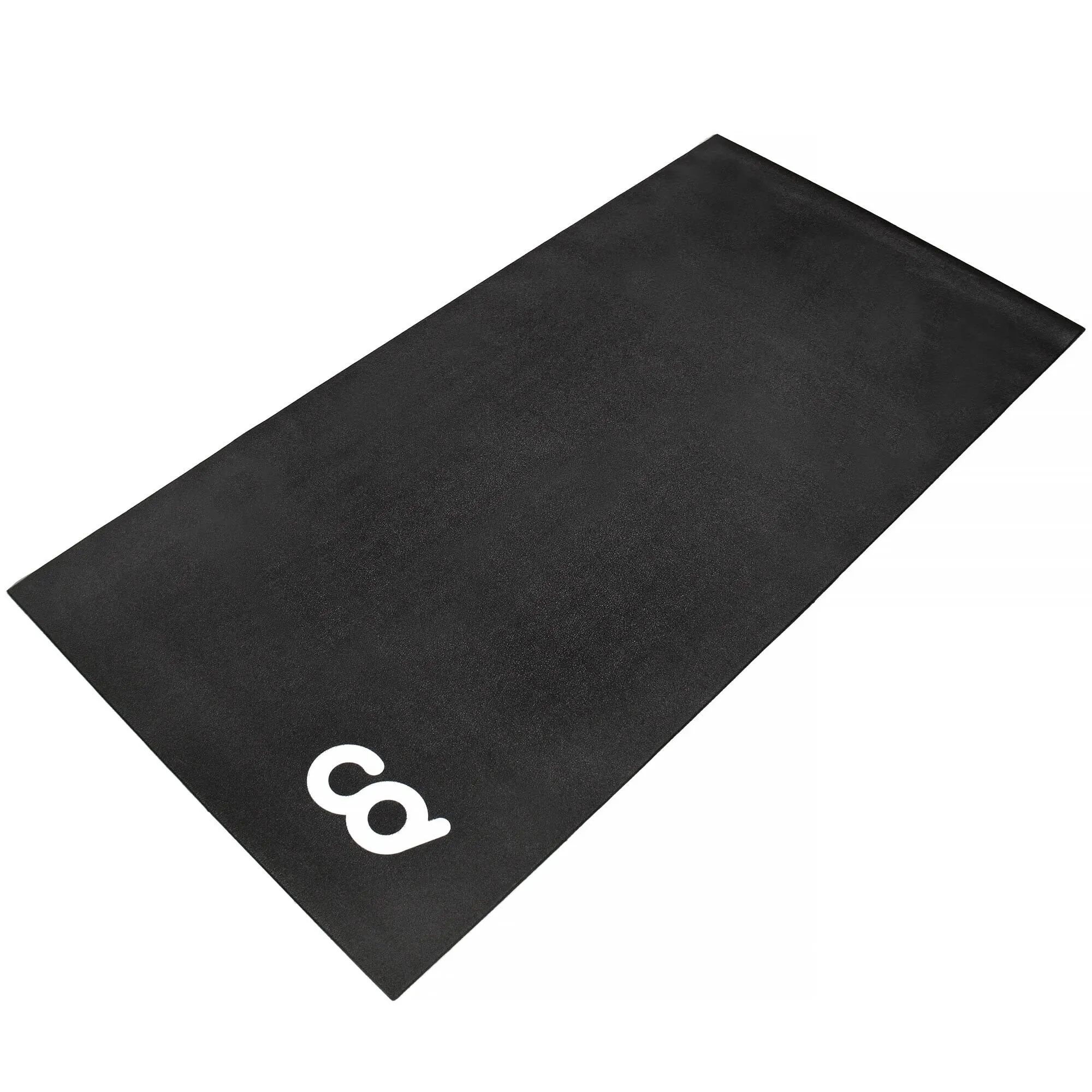
The BalanceFrom Puzzle Exercise Mat and the CyclingDeal Bike Trainer Floor Mat both protect floors in a home gym, but they’re designed for different setups. BalanceFrom uses interlocking EVA foam tiles for flexible, room-style coverage and extra cushioning for floor work. CyclingDeal is a single waterproof PVC mat sized for indoor bikes and cardio machines, with stronger durability feedback for equipment use.
#1 Overall Winner
Contender
Choose CyclingDeal if you’re protecting floors under an indoor bike or similar cardio equipment and want a single waterproof mat with strong durability feedback. Choose BalanceFrom if you want to cover more square footage for general home workouts, mobility work, and cushioned floor exercises—accepting that puzzle tiles can separate or shift for some setups.
Overall winner
Depends on your needs
| Feature | BalanceFrom Puzzle Exercise Mat 1/2" Thick, EVA Interlocking Foam Floor Tiles (24 Sq Ft, 6 Tiles) | CyclingDeal Bike Trainer Floor Mat (Soft 30" x 60", 7mm PVC) | Winner |
|---|---|---|---|
| Type / format | Interlocking EVA foam tiles | Single roll PVC mat (soft) | Depends |
| Primary best use | Multipurpose room flooring, floor exercises | Indoor cycling and cardio equipment under-mat | CyclingDeal Bike Trainer Floor Mat (Soft 30" x 60", 7mm PVC) |
| Coverage size (as sold here) | 24 sq ft (6 tiles) | 30" x 60" | BalanceFrom Puzzle Exercise Mat 1/2" Thick, EVA Interlocking Foam Floor Tiles (24 Sq Ft, 6 Tiles) |
| Thickness (listed) | 1/2 inch (tile thickness) | 7mm (0.27 inch) | BalanceFrom Puzzle Exercise Mat 1/2" Thick, EVA Interlocking Foam Floor Tiles (24 Sq Ft, 6 Tiles) |
| Water resistance | Water-resistant, easy to clean | 100% waterproof (as stated) | CyclingDeal Bike Trainer Floor Mat (Soft 30" x 60", 7mm PVC) |
| Noise / vibration focus | Noise-resistant design; cushioning feedback | Vibration absorption claim; mixed noise feedback | Depends |
| Stability under cardio equipment | Some reports of shifting/coming apart | Generally stable; some anti-slip disputes | CyclingDeal Bike Trainer Floor Mat (Soft 30" x 60", 7mm PVC) |
| Grip / traction feel | Textured anti-slip tiles | Non-slip claim; most positive, some negative | Depends |
| Comfort for floor exercises | High-density foam cushioning | Firm cushion (yoga-mat-like) | BalanceFrom Puzzle Exercise Mat 1/2" Thick, EVA Interlocking Foam Floor Tiles (24 Sq Ft, 6 Tiles) |
| Ease of setup | Snap-together tiles + borders | Unroll and place | CyclingDeal Bike Trainer Floor Mat (Soft 30" x 60", 7mm PVC) |
| Cleaning / maintenance | Water + soap wipe-down | Damp cloth; avoid harsh chemicals/bleach | Tie |
| Portability | Light tiles; can be moved/stacked | Light roll mat; easy to carry | Depends |
| Durability signals from reviews | Mostly positive, some separation reports | Consistent durability praise (incl. cleats) | CyclingDeal Bike Trainer Floor Mat (Soft 30" x 60", 7mm PVC) |
| Warranty / support | Not provided in data | 2-year warranty (stated) | CyclingDeal Bike Trainer Floor Mat (Soft 30" x 60", 7mm PVC) |
| Value perception | Strong budget/value feedback | Strong value feedback for equipment use | Depends |
For post-workout recovery routines (cool-down stretching, relaxed mobility, gentle floor work), BalanceFrom has the advantage of thicker foam cushioning and broader coverage. CyclingDeal’s benefit is more about keeping the area under and around cardio equipment clean and sweat-protected, which can make quick cool-down habits easier to maintain. Neither product provides recovery “features” beyond comfort and a usable surface, so the best choice depends on whether you recover on the floor (tiles) or next to a cardio station (roll mat).
BalanceFrom functions more like flooring for a training zone: it’s useful for warm-ups, stretching, bodyweight sessions, and light equipment areas where you want more cushion under hands, knees, and feet. CyclingDeal functions more like an equipment base: it’s sized and marketed for stationary bikes and cardio units, focusing on sweat protection, vibration absorption, and a tougher surface.
If your routine is mostly floor work or you want to pad a section of a room, BalanceFrom fits better. If your routine revolves around a single bike or cardio machine, CyclingDeal is usually the cleaner, more purpose-specific solution.
For strength training setups, BalanceFrom’s thicker foam tiles are better aligned with general comfort for floor-based accessory work (lunges, core work, stretching between sets) and covering a wider lifting area. CyclingDeal can still be useful for strength training if your goal is simply to protect flooring under a single machine or small footprint, but it’s more specialized for cardio equipment than building a full strength-training platform.
CyclingDeal is the clearer match for cardio equipment because it’s explicitly designed for stationary bikes (and other cardio units) and is described as waterproof and durable, including under cleats. BalanceFrom can work in a general cardio corner (for example, bodyweight HIIT or light equipment), but puzzle seams and mixed durability feedback make it less purpose-built for heavy, fixed cardio machines.
BalanceFrom is the better option when you want a larger cushioned surface for stretching, mobility sessions, and floor drills. Buyers frequently mention comfort and cushioning, which can matter for kneeling and longer holds. CyclingDeal’s soft PVC mat is described as suitable for body stretching before and after exercise, but its fixed, narrower footprint is best when stretching is an add-on to indoor cycling rather than the main session.
Neither product is a dedicated recovery tool, but both can support recovery routines indirectly by making floor-based cool-downs more comfortable. BalanceFrom’s thicker foam tiles are generally more forgiving for knees and elbows during mobility work. CyclingDeal works well as a clean, easy-to-wipe surface next to or under cardio equipment for quick post-ride stretching.
Performance here mainly means how well each mat does its intended job. CyclingDeal appears to perform better as an equipment mat: it’s sized for indoor bikes, widely reported to be durable, and designed to protect floors from sweat while standing up to cleats. BalanceFrom performs strongly as modular flooring, with lots of feedback about cushioning and practical coverage, but it’s more dependent on correct assembly and floor conditions—some users report tiles shifting or separating over time.
If your “performance” need is equipment stability and floor protection under a bike, CyclingDeal leads. If your need is comfortable, customizable room coverage, BalanceFrom is the better match.
BalanceFrom supports broader training variety because the tiled layout can create a dedicated space for mobility, bodyweight work, and mixed home workouts. It’s also easy to expand as your home gym grows. CyclingDeal supports training consistency in a different way: by making an indoor cycling station cleaner, more floor-safe, and simpler to maintain (wipe down sweat, protect wood/carpet).
For general home fitness routines across many movement types, BalanceFrom is more adaptable. For a cardio-first routine with a stationary bike or similar unit, CyclingDeal provides more targeted support.
BalanceFrom’s thicker foam and tile coverage tend to suit strength-adjacent use cases like floor accessories, kettlebell technique work (light-to-moderate), and creating a more comfortable standing/kneeling surface across an area. CyclingDeal’s design cues (cleat-friendly, equipment footprint, waterproofing) point more toward cardio equipment protection than building out a full strength zone. If you lift heavy, neither product is presented here as a dedicated lifting platform; BalanceFrom is simply the more flexible “area coverage” option.
CyclingDeal is optimized for cardio stations: the dimensions match typical bike placement, the surface is meant to handle sweat, and durability feedback is consistently strong for indoor cycling use. BalanceFrom can still support cardio done off-equipment (HIIT circuits, jumping jacks, general conditioning), with many users appreciating the cushioning. For placing heavy cardio machines, CyclingDeal has clearer positioning and more consistent equipment-specific review patterns.
BalanceFrom appears more supportive for mobility work because it provides a larger, more cushioned surface that users commonly describe as comfortable for kneeling and floor exercises. CyclingDeal can work for stretching sessions, especially right next to a bike setup, but the narrower footprint limits how much room you have to move and change positions. If stretching is a main training block, the tiles are usually the easier way to build a dedicated space.
For post-workout recovery routines (cool-down stretching, relaxed mobility, gentle floor work), BalanceFrom has the advantage of thicker foam cushioning and broader coverage. CyclingDeal’s benefit is more about keeping the area under and around cardio equipment clean and sweat-protected, which can make quick cool-down habits easier to maintain. Neither product provides recovery “features” beyond comfort and a usable surface, so the best choice depends on whether you recover on the floor (tiles) or next to a cardio station (roll mat).
Both mats are intended to reduce slip and protect flooring, which can indirectly improve workout safety, but neither eliminates risk. CyclingDeal’s single-piece format can reduce trip points from seams and is designed to keep equipment from sliding, though a small number of reviews dispute the anti-slip performance. BalanceFrom offers thicker cushioning that can make kneeling and floor drills more comfortable, but tile joints can create edges if sections separate. For either product, placing it on a clean, dry surface and checking for movement before hard efforts is a practical safety step.
BalanceFrom is typically more comfortable for floor-based training because the foam tiles provide noticeable cushioning that users often mention for kneeling and general workout comfort. CyclingDeal is described as providing cushioning without being overly thick, which can feel more stable under machines and when stepping around a bike. If comfort means joint-friendly floor work, BalanceFrom leads; if comfort means a firm, stable surface under cardio equipment, CyclingDeal fits that role well.
CyclingDeal is simpler day-to-day: unroll it, let it air out if needed, place the bike, and wipe it down after sessions. BalanceFrom is also easy to use, but setup involves connecting tiles, aligning borders, and occasionally re-seating seams if they separate. If you want a quick, single-step setup for one machine, CyclingDeal is easier. If you want a configurable room layout that can change over time, BalanceFrom is more flexible.
CyclingDeal is generally described as stable under bikes and trainers, with many users saying it lays flat and doesn’t slip. That said, at least one review reports the mat still moves during use, so your floor type and bike movement matter. BalanceFrom tiles can be stable once interlocked, but some users note shifting or separation, and seams can be a weak point under repetitive lateral forces. For a fixed bike footprint, the single-piece CyclingDeal mat typically stabilizes the setup better.
BalanceFrom’s textured tile surface and anti-slip positioning can work well for bare feet and general workouts, but tiles can still shift depending on the surface below (for example, smooth concrete). CyclingDeal is marketed as non-slip and many reviews support that, though a small number of users disagree. If grip is critical, consider your flooring (tile, wood, carpet) and whether the mat will be loaded by heavy equipment or used for dynamic bodyweight movement.
Both options are space-friendly, but in different ways. BalanceFrom tiles can cover more area per pack and can be arranged to fit corners or odd-shaped zones, which helps when you’re building a dedicated workout space. CyclingDeal is efficient for a single cardio station because its footprint is fixed and predictable—easy to position under a bike without covering more floor than necessary. If you want room-scale coverage, tiles win; if you want minimal footprint under equipment, the roll mat wins.
BalanceFrom is described as noise-resistant and has strong cushioning feedback, which can help reduce some impact noise from bodyweight movement. CyclingDeal is described as absorbing vibration, but reviews are mixed on whether it meaningfully reduces noise compared to a basic mat. Actual noise reduction depends heavily on your floor type and the machine itself. If noise is a major concern, pairing either mat with stable equipment placement and checking for rocking often matters as much as mat choice.
CyclingDeal shows stronger build-quality signals for an equipment mat: reviewers frequently call it high quality and durable, and it’s specifically described as suitable for stepping on with cycling shoes with cleats. BalanceFrom’s build quality is generally seen as good for the price, with many buyers praising thickness, density, and cushioning, but it’s still foam tiles with seams—meaning overall “feel” and solidity can depend on how well the tiles interlock and how the surface underneath behaves.
CyclingDeal has the edge on durability based on the provided review patterns and product positioning. Multiple reviews note it holds up well under a stationary bike and even against cycling cleats, which is a common wear point for thinner mats. BalanceFrom durability feedback is more mixed: many users say it holds up well, while others report the tiles can come apart over time. If long-term equipment placement is your priority, CyclingDeal looks like the safer bet from the available data.
Both are low-maintenance. BalanceFrom can be cleaned with water and soap, making it straightforward for general gym use and multipurpose rooms. CyclingDeal is also easy to clean with a damp cloth and is designed to handle sweat, with guidance to avoid harsh chemicals and bleach. For frequent cardio sessions where sweat pooling is common, CyclingDeal’s waterproof positioning may make cleanup feel more predictable, while BalanceFrom is still easy to wipe but has tile seams to pay attention to.
BalanceFrom is very portable in a modular way: you can carry a few tiles at a time, reconfigure your layout, or store extra pieces easily. CyclingDeal is lightweight for its size and can be moved as one roll, which is convenient if you relocate a bike occasionally. If you travel with a mat or need compact packing, tiles can be simpler; if you want one grab-and-go piece for a bike station, the roll mat is easier.
BalanceFrom is relatively clear about materials for what it is: it’s described as high-density EVA foam tiles and includes care guidance (water/soap). CyclingDeal states the mat is made from new PVC material with a 7mm thickness and describes a hardened top layer, but the specification section lists “Material: Aluminum,” which doesn’t align with the product description for a floor mat. Based on the provided data alone, BalanceFrom has fewer internal inconsistencies, while CyclingDeal’s description is detailed but the spec sheet appears less clear.
Both products have strong value feedback, but the “best value” depends on what you need. BalanceFrom tends to be better value when you measure value by square footage covered and cushioning for a general workout zone. CyclingDeal tends to be better value when you measure value by equipment-specific protection, durability under a stationary bike (including cleats), and the added reassurance of a stated warranty. If you’re buying for a full room or multipurpose area, tiles often stretch your budget further; for a bike setup, CyclingDeal can be the more efficient purchase.
Both products show strong buyer reception, but CyclingDeal has clearer support signals in the provided data due to the stated 2-year warranty and consistent cardio-equipment positioning. BalanceFrom has very high review volume and strong overall buyer sentiment, suggesting the product is widely used, but warranty/support details aren’t provided here. If brand trust for you includes clear support policies, CyclingDeal has the advantage based on the available information.
Both mats are very well rated with substantial review volume. BalanceFrom buyers frequently praise ease of assembly, cushioning, and overall value, with recurring mentions that it works well for home gyms and multipurpose spaces; the most common negative theme is tiles separating or “falling apart” for some users. CyclingDeal reviews are strongly positive for indoor bike use (including Peloton mentions), durability, and size, with one recurring caution: a small set of users say it still slips or doesn’t noticeably reduce noise.
CyclingDeal clearly states a 2-year warranty for the mat, which provides a concrete support benchmark if you’re placing heavy equipment on it long term. No warranty or support terms are provided for the BalanceFrom tiles in the supplied data, so it’s difficult to compare support policies directly beyond what is explicitly listed.
BalanceFrom’s claims (easy-to-clean, cushioning, multipurpose use) are broadly supported by many consistent customer comments about comfort, thickness, and simple assembly. CyclingDeal’s core claims (waterproof, equipment protection, durability under bikes and cleats) are also supported by a large amount of buyer feedback, especially around indoor cycling. The weaker area for CyclingDeal is that a small number of reviews challenge anti-slip and noise-reduction results, suggesting those outcomes can be surface- and setup-dependent.
CyclingDeal Bike Trainer Floor Mat is the clearer overall winner for a cardio-equipment setup: it’s purpose-built for indoor bikes, gets consistent durability praise (including use with cleats), and includes a clearly stated warranty. Its main limitation is that some users still report slipping or limited noise reduction depending on the surface and setup.
BalanceFrom Puzzle Exercise Mat is the better choice when you want a cushioned, configurable training area rather than a single equipment base. Its key strength is comfortable, flexible coverage with easy assembly; its main drawback is more mixed long-term durability and the reality that tile seams can separate or shift for some users. The best choice depends on whether you’re building a room-scale workout zone or a dedicated bike station.
Overall winner
Depends on your needs
If you mainly need a dedicated mat under a stationary bike or other cardio machine, the CyclingDeal mat is the more purpose-built choice thanks to its durability focus, waterproof surface, and consistent equipment-specific feedback. If you want to cover a wider area for mixed training (mobility, floor work, light equipment protection), the BalanceFrom interlocking tiles are typically the more flexible option.
The CyclingDeal Bike Trainer Floor Mat is designed around indoor cycling use, with many buyers specifically mentioning Peloton-style bikes and noting it holds up well (including against cleats). The BalanceFrom tiles can work for general floor protection, but they’re not as clearly positioned for heavy cardio equipment in the provided product details.
BalanceFrom is usually the better fit for multipurpose rooms because the interlocking tiles let you scale coverage (and shape) to your space. It’s commonly used for workouts, stretching, and general floor padding. CyclingDeal is more of a single-station solution intended to sit under one piece of cardio equipment.
Both products are presented as helping with noise/vibration, but the evidence differs. BalanceFrom is described as water- and noise-resistant and has positive feedback on cushioning. CyclingDeal is described as absorbing vibration, but a small number of reviews dispute noticeable noise reduction. Results can vary based on flooring type and equipment weight.
BalanceFrom tiles are quick to assemble and can be expanded by adding more sets, but you do have to connect pieces and align borders. CyclingDeal is simpler in the sense that you unroll it and let it lay flat, then place equipment on top. For frequent reconfigurations of a room, tiles can be more adaptable; for a single bike spot, the roll mat is straightforward.
BalanceFrom is generally more suitable for floor-based training because it provides a broader padded area and users frequently mention kneeling comfort and general cushioning. CyclingDeal’s “soft” PVC mat can work for stretching, but its main design intent is equipment protection under cardio machines rather than creating a larger training surface.
BalanceFrom has mixed durability feedback: many users say it holds up well, while others report tiles separating or wearing sooner than expected. CyclingDeal receives more consistent durability praise in reviews, including comments about holding up under cycling cleats, though there is still at least one negative review disputing performance claims like anti-slip.
CyclingDeal notes a light smell when new and advises it should fade after a short time; reviews also mention airing it out before indoor use. For BalanceFrom, the aggregated summary doesn’t highlight odor, but individual experiences can vary with foam products. If you’re sensitive to smells, airing out either product after unboxing is a practical step.
Check our rankings and expert guides to find the best fitness products for your goals.