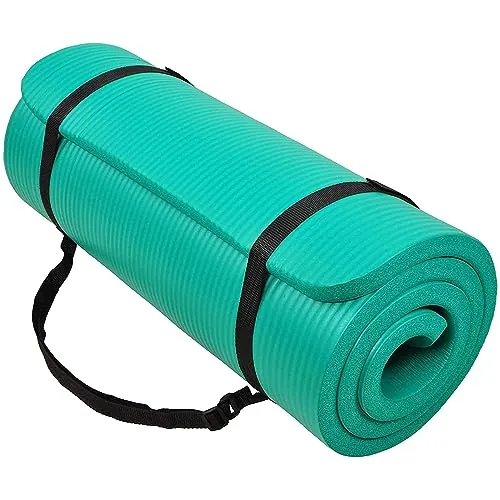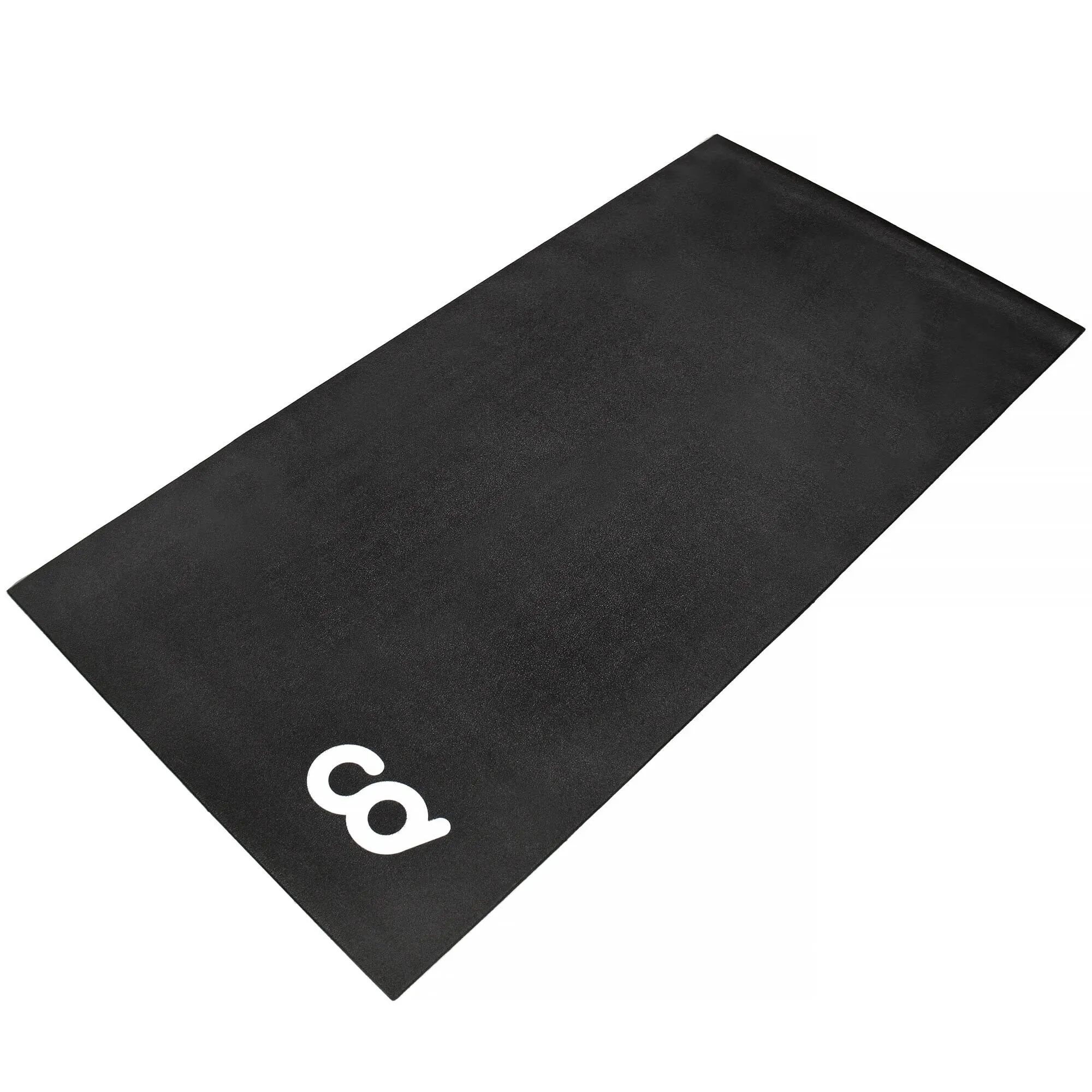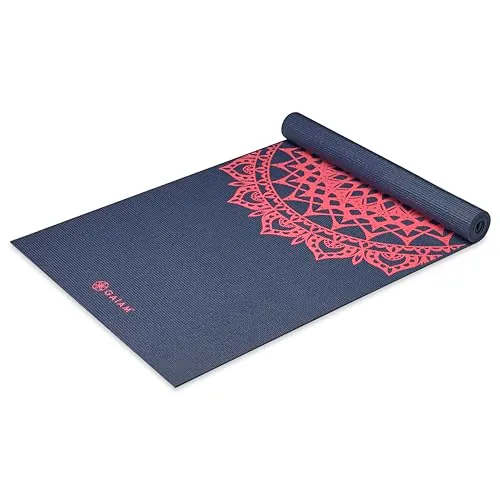
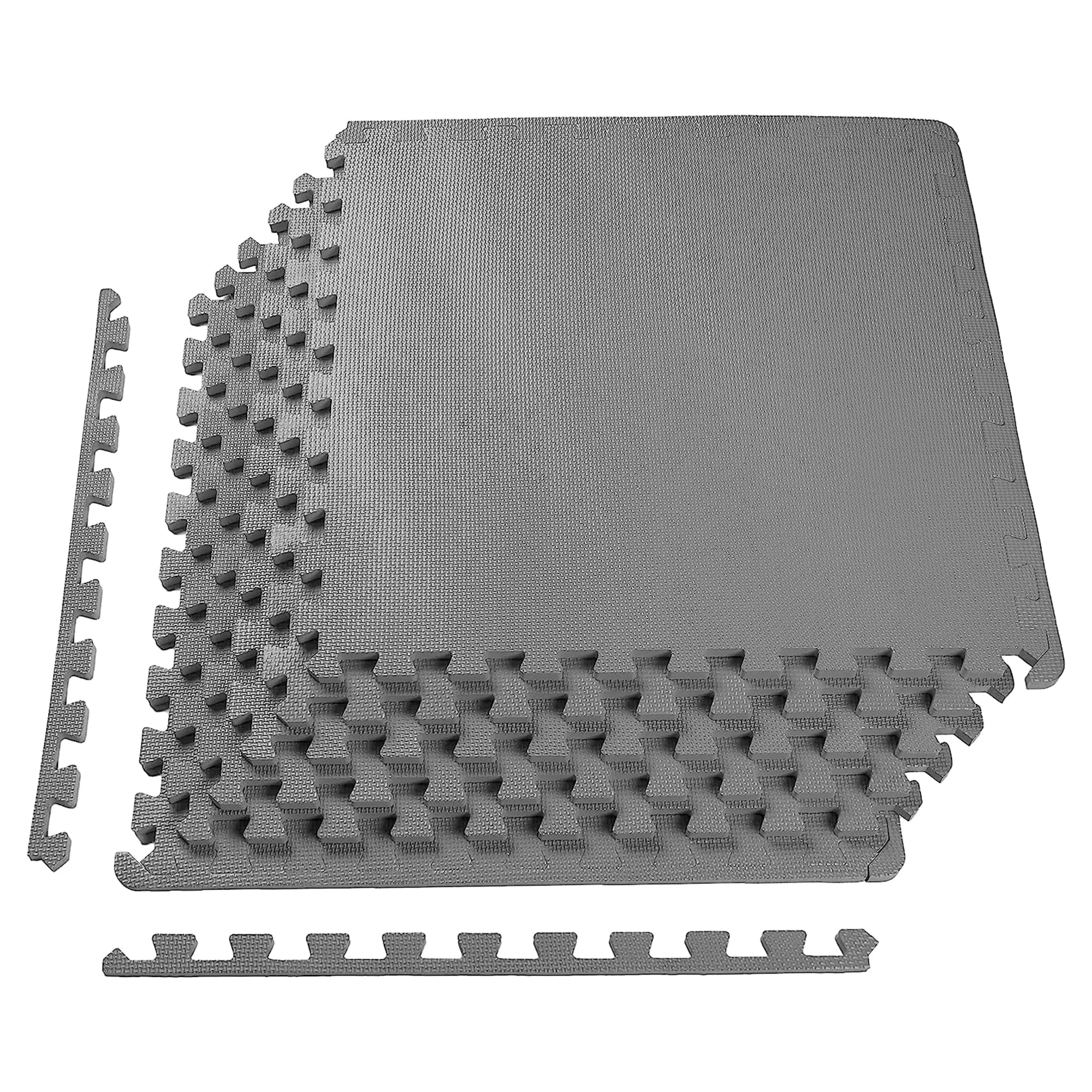
#1 Overall Winner
BalanceFrom Puzzle Exercise Mat 1/2" Thick, EVA Interlocking Foam Floor Tiles (24 sq ft, 6 tiles)
- Interlocking tile format makes it easy to size to a home gym corner or room section.
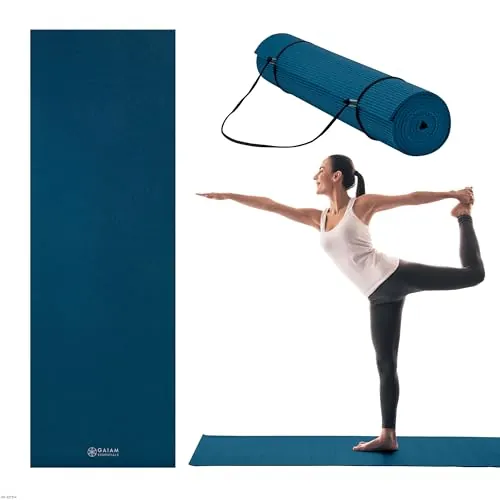
Comparison
BalanceFrom Puzzle Exercise Mat and Gaiam Essentials target different “mat” needs: flooring-style coverage vs a portable yoga mat. BalanceFrom is designed to cover a larger home-gym area with interlocking EVA foam tiles, while Gaiam Essentials is a single roll-up mat aimed at yoga, Pilates, and floor exercises. The clearest trade-off is modular room coverage versus better portability and yoga-focused grip.
#1 Overall Winner
Contender
Pick BalanceFrom if you need affordable, modular floor coverage for a home gym area or multipurpose room. Pick Gaiam Essentials if you want a portable, grippy mat for yoga, Pilates, and stretching. If odor sensitivity is a concern, factor in airing-out time for the Gaiam mat; if you hate seams, the single-piece mat is simpler than tiles.
Overall winner
Depends on your needs
| Feature | BalanceFrom Puzzle Exercise Mat 1/2" Thick, EVA Interlocking Foam Floor Tiles (24 sq ft, 6 tiles) | Gaiam Essentials 1/4" (6mm) Yoga & Pilates Mat with Carrier Strap | Winner |
|---|---|---|---|
| Category / primary role | Interlocking foam floor tiles for home gym flooring | Roll-up yoga & Pilates mat for floor exercise | Depends |
| Coverage format | 6 interlocking tiles + end borders (set coverage) | Single mat (72" x 24") | Depends |
| Cushioning feel (for floor work) | High-density EVA foam; strong feedback on kneeling comfort | Extra-thick for a yoga mat; generally comfortable | Depends |
| Traction / grip focus | Textured, anti-slip flooring style | Textured non-slip “sticky” surface emphasized | Gaiam Essentials 1/4" (6mm) Yoga & Pilates Mat with Carrier Strap |
| Portability | Best left assembled; not designed for carry | Rolls up; includes carrier strap | Gaiam Essentials 1/4" (6mm) Yoga & Pilates Mat with Carrier Strap |
| Ease of setup | Snap-together tiles; end borders included | Unroll and use; may benefit from airing out | Tie |
| Noise reduction potential | Noise-resistant flooring tiles | Standard mat dampening for floor exercise | BalanceFrom Puzzle Exercise Mat 1/2" Thick, EVA Interlocking Foam Floor Tiles (24 sq ft, 6 tiles) |
| Cleaning / care | Water and soap wipe-down | Hand wash only (per care instructions) | BalanceFrom Puzzle Exercise Mat 1/2" Thick, EVA Interlocking Foam Floor Tiles (24 sq ft, 6 tiles) |
| Durability signals from reviews | Mixed: many say holds up; some report tiles separating | Often described as durable; odor complaints more common than failure | Gaiam Essentials 1/4" (6mm) Yoga & Pilates Mat with Carrier Strap |
| Best for strength training setups | Better as protective flooring under/around equipment | Better for bodyweight floor work than equipment protection | BalanceFrom Puzzle Exercise Mat 1/2" Thick, EVA Interlocking Foam Floor Tiles (24 sq ft, 6 tiles) |
| Best for mobility & stretching | Works well for multipurpose stretching area | Designed for yoga/Pilates; grippy for poses | Gaiam Essentials 1/4" (6mm) Yoga & Pilates Mat with Carrier Strap |
| Common downside | Seams and occasional separation/sliding on some floors | Off-gassing/chemical smell complaints | Depends |
| Buyer feedback (volume & sentiment) | Very high review volume; frequent praise for value/ease | High review volume; frequent praise for grip/size | Tie |
| Value for money (positioning) | Budget-friendly way to cover a defined floor area | Budget-friendly yoga mat with strap included | Depends |
For recovery sessions, Gaiam Essentials is usually the simpler choice because it rolls out fast, offers dependable grip, and stores easily—useful for short daily routines. BalanceFrom tiles can be a better recovery surface if you want a permanently padded area in a home gym, especially on hard floors, but it’s less portable and the tile joints may be less comfortable for some floor positions.
BalanceFrom functions more like home gym flooring: it’s meant to cover a section of a room and create a general-purpose training zone for warm-ups, bodyweight work, and equipment protection. Gaiam Essentials functions more like a personal practice surface: it’s best for yoga, Pilates, stretching, and floor exercises where consistent traction and easy roll-up storage matter.
If you frequently switch rooms, travel, or attend classes, Gaiam’s roll-up format is more practical. If you’re building a dedicated garage/home-gym corner and want broader coverage, BalanceFrom’s tiles are the more natural tool.
For strength training, the key difference is coverage and protection. BalanceFrom tiles are intended to pad a larger area and can help protect flooring and reduce noise around a lifting or training zone. Gaiam Essentials is better suited to strength sessions that are mostly bodyweight (core work, push-ups, mobility between sets) rather than supporting or protecting floors from equipment.
If your “strength training” includes setting down dumbbells or building a garage gym area, the tile format is typically more useful. If you mainly need grip for planks and floor work, the yoga mat is simpler.
Neither product is a cardio machine, but both can support floor-based cardio sessions. BalanceFrom’s larger, modular surface can be helpful for home circuits where you move around (warm-ups, burpees, jumping jacks) and want impact and noise reduction over a wider area. Gaiam Essentials can work for cardio intervals that include floor positions, but its single-mat footprint is smaller and primarily designed for individual practice space.
Gaiam Essentials is the stronger fit for mobility work because it’s designed for yoga and Pilates, with a textured non-slip surface that supports balance positions and smooth transitions. BalanceFrom tiles can still be comfortable for stretching—especially if you want to stretch in a larger area—but seams can be noticeable during certain poses, and the “flooring” feel is less tailored to yoga flows.
For recovery routines like light stretching, breathing work, and gentle floor mobility, both can work. Gaiam Essentials is typically easier to use for consistent recovery sessions because it rolls out quickly and provides reliable traction under hands and feet. BalanceFrom tiles can be useful if you want a dedicated, cushioned recovery zone in a home gym space, especially on hard floors, but the interlocking seams may be less comfortable for some positions.
Gaiam Essentials performs best as a dedicated yoga/Pilates mat: it provides a single, consistent surface with traction-focused texture, and reviews frequently mention good grip and comfortable thickness for floor routines. BalanceFrom performs best as modular home-gym padding: it’s designed to cover more area, dampen noise, and add cushioning and basic anti-slip texture underfoot.
The main performance caveats are different. BalanceFrom performance can be limited by tile seams and occasional reports of tiles shifting or separating. Gaiam’s biggest performance “friction” is the out-of-box smell reported by multiple buyers, which can make initial use unpleasant until aired out.
Gaiam Essentials supports consistent training well for anyone doing regular yoga, Pilates, stretching, or bodyweight sessions. It’s quick to deploy, easy to roll up, and the included strap lowers the hassle of storage and transport—helpful for staying consistent.
BalanceFrom supports training best when you’re creating a space for training: a dedicated area for warm-ups, circuits, and general floor protection in a home gym. It’s especially useful if you want to expand coverage over time. If you need a mat you can take with you, the tile format is less convenient despite being easy to assemble once.
BalanceFrom is the more supportive option for strength-focused home setups because the tile system can define a broader workout zone and add cushioning underfoot and under equipment. The trade-off is that interlocking seams can create minor unevenness and, in some cases, tiles may shift depending on floor type. Gaiam Essentials is better viewed as a companion mat for floor drills within strength training (core work, stretching), not as general gym flooring.
For home cardio circuits, BalanceFrom’s larger coverage can better accommodate movement across a space and can help reduce impact noise in multipurpose rooms. Gaiam Essentials works well for cardio sessions that include transitions to the floor (mountain climbers, plank work), but its role is more “personal station” than room coverage. Neither product includes cardio-specific tracking or intensity controls, so the main decision is surface area and traction.
Gaiam Essentials is purpose-built for mobility work: the textured surface is meant to provide traction for poses, and the mat length supports full-body stretching. BalanceFrom tiles can be very comfortable for kneeling and general stretching, especially across a larger space, but the seams can be noticeable in positions where you slide or pivot. If mobility is your main focus, the single-piece yoga mat format is typically easier.
For recovery sessions, Gaiam Essentials is usually the simpler choice because it rolls out fast, offers dependable grip, and stores easily—useful for short daily routines. BalanceFrom tiles can be a better recovery surface if you want a permanently padded area in a home gym, especially on hard floors, but it’s less portable and the tile joints may be less comfortable for some floor positions.
For Gaiam Essentials, the main safety-related theme in the provided data is odor/off-gassing complaints; several reviews recommend airing it out before close-contact use. Traction is generally a positive, with many users reporting good grip and low slip during practice.
For BalanceFrom, safety relates more to surface stability and tile integrity: most users find it secure, but some report sliding on certain floors or tiles separating over time. Keeping the underlying floor clean and ensuring tight interlock can help reduce trip or slip risk in a tile layout.
Both products are commonly described as comfortable, but comfort is delivered differently. BalanceFrom tiles provide a cushioned “flooring” feel and receive strong feedback for kneeling comfort and general padding over hard surfaces. Gaiam Essentials provides comfort through a consistent, extra-thick yoga-mat profile that many users find supportive on hardwood or carpet.
If you want comfort across a larger area (moving around during a workout), tiles tend to feel better. If you want comfort in yoga poses and floor exercises without seams, the single-piece mat is more consistent.
Gaiam Essentials is simple: unroll, practice, wipe down, and roll up using the included strap. The main ease-of-use downside is that many buyers recommend airing it out first due to odor, which adds a waiting step.
BalanceFrom tiles are also easy to use once installed, with many reviewers highlighting quick snap-together assembly. Day-to-day, it’s “leave it in place” flooring, which can be very convenient for home gyms. However, aligning borders, managing seams, and preventing sliding on certain floors can add small setup friction.
Gaiam Essentials is frequently described as not moving around during practice, especially on indoor surfaces, which supports stable balance work. BalanceFrom tiles can feel stable once assembled, but stability can vary with floor type and preparation; at least one review notes sliding on cement until something was placed underneath.
If you need predictable stability for single-leg poses and transitions, the roll-up mat is typically more consistent. If you’re building a fixed workout zone, tiles can be stable after proper setup and floor cleaning.
Gaiam Essentials has the clearer advantage for grip-sensitive training because its textured non-slip surface is designed for traction in yoga and is repeatedly praised in reviews. BalanceFrom tiles are also textured and positioned as anti-slip, but the grip experience can depend on the underlying floor and whether the tile layout shifts.
If your workouts include a lot of hand/foot pressure changes (planks, down dog, lunges), the Gaiam mat’s grip-focused design is usually the safer, more predictable option.
It’s close, but the best choice depends on how you use your space. Gaiam Essentials is space-efficient for storage because it rolls up and can be strapped, making it easy to tuck into a closet. BalanceFrom is space-efficient for a dedicated workout area because it lets you cover exactly the footprint you want, without leaving unused mat space around the edges.
If you need to reclaim floor space after workouts, the roll-up mat is simpler. If you want a permanent training zone, tiles can be more space-smart in the room.
Both surfaces can reduce noise compared with hard flooring, but BalanceFrom is designed as noise-resistant flooring and can dampen impact across a wider area—useful for home circuits in garages or multipurpose rooms. Gaiam Essentials can reduce sound and impact for yoga and floor work, and the soft surface helps limit “slap” noise from hands/feet during transitions.
If noise reduction for a whole workout zone matters, the tile layout typically has the edge due to broader coverage.
Gaiam Essentials shows stronger build-quality signals for a single-piece mat: reviews frequently describe it as well made, durable, and easy to roll up without shifting during practice. The included strap adds convenience, though some buyers call it basic.
BalanceFrom’s build quality is generally seen as good for the price, with buyers praising thickness, density, and how the tiles fit together. However, because it’s a multi-piece system, the “build” experience depends on how well tiles lock and stay locked—some users report separation over time or with certain use patterns.
Gaiam Essentials appears more consistently durable in typical use for yoga and floor exercise, with multiple reviews mentioning it “lasts a long time.” Its single-piece design avoids the specific failure mode of interlocking joints loosening.
BalanceFrom tiles have more mixed durability signals: many users report they hold up well, including over years of moderate use, but others mention the tiles can fall apart or separate. If your training includes frequent repositioning, dragging equipment, or high traffic, the tile joints may be the first durability constraint.
BalanceFrom tiles are low-fuss: the care instructions highlight cleaning with water and soap, and the surface is positioned as easy to wipe down—handy for garages and sweaty training areas. Gaiam Essentials is also described as easy to wipe down in reviews, but the listed care instruction is hand wash only, which may be less convenient for some users.
For ongoing upkeep in a high-use home gym, the wipe-clean tile system tends to be simpler, especially when covering more floor area.
Gaiam Essentials is the clear winner for portability. It rolls up and includes a carrier strap, making it suitable for moving between rooms or taking to a class. BalanceFrom tiles are portable in the sense that they can be disassembled, but they’re designed to be installed as flooring; carrying multiple tiles and borders is more cumbersome than transporting a single mat.
Both listings provide reasonable material clarity for this category. BalanceFrom identifies the material as foam and positions it as high-density EVA, and it also lists “rubber free, plastic free, metal free” under material-type-free information (as provided in the product data). Gaiam Essentials specifies nitrile butadiene rubber and includes a “6P free” statement (free of several listed phthalates) plus guidance to air out the mat before use.
Neither listing provides third-party testing details in the provided data, so transparency is mainly based on stated materials and care instructions.
Both products are positioned as budget-friendly and are strongly rated, but value depends on what you’re buying a mat for. BalanceFrom tends to offer better value when you need more covered area for a home gym zone, especially if your priority is cushioning, noise reduction, and general floor protection at a low entry cost.
Gaiam Essentials tends to offer better value for personal practice because you get a grippy, full-length yoga/Pilates mat plus a carry strap, and durability feedback is generally consistent. If odor is a dealbreaker, that can reduce perceived value unless airing out solves it for you.
Based on the provided data, Gaiam shows slightly stronger trust signals: the listing includes more explicit material details (including “6P free”), and the overall pattern of reviews emphasizes consistent use for yoga and fitness routines. BalanceFrom has extremely high review volume and strong satisfaction for value and ease of setup, but there are more mixed notes around long-term tile integrity.
Neither product includes third-party testing details or warranty specifics in the provided information, so brand trust here is mainly inferred from review consistency and listing clarity.
Both products have high buyer ratings and large review counts, suggesting broad satisfaction. BalanceFrom buyers frequently praise easy assembly, thickness, cushioning, and value, with a recurring negative theme around tiles separating or shifting for some setups. Gaiam Essentials buyers frequently praise grip, size, comfort, and easy storage, with the most repeated complaint being a strong chemical smell out of the package.
If you want fewer “moving parts,” the single-piece mat tends to generate fewer mechanical complaints. If you want room coverage at low cost, the tile set’s satisfaction remains very strong despite occasional durability concerns.
Both listings make mostly practical, checkable claims. BalanceFrom’s claims about coverage, tile size, included borders, and basic properties (water/noise resistance, easy cleaning) align with the product format and with many review comments about setup and cushioning. Gaiam Essentials’ claims about dimensions, included strap, and non-slip texture are also commonly reflected in reviews.
Where claim support is weaker, it’s mainly around subjective or batch-dependent experiences: BalanceFrom durability can vary depending on use and floor conditions, and Gaiam’s “non-toxic/air out” positioning is complicated by repeated odor/off-gassing complaints. Neither listing provides testing documentation in the provided data.
Final verdict: Gaiam Essentials is the better all-around pick if you’re shopping for a traditional exercise mat for yoga, Pilates, and mobility, with strong grip, consistent feel, and easy portability. Its main limitation is the repeated chemical smell/off-gassing complaints, which may require airing out before use.
BalanceFrom is the smarter choice when you need flooring more than a mat: modular coverage, cushioning, and noise reduction for a home gym zone at a budget price. Its main limitation is mixed long-term durability/stability feedback (tile separation or sliding on some floors). Neither is universally “better”—they’re best in different setups.
Overall winner
Depends on your needs
They solve different problems. BalanceFrom Puzzle Exercise Mat is better if you want broader floor coverage for a home gym area and general equipment/floor protection. Gaiam Essentials is better if you want a single, grippy mat for yoga, Pilates, and floor exercises with easy roll-up storage. Your best pick depends on whether you need room coverage or personal practice space.
Gaiam Essentials is the more purpose-built choice for yoga and Pilates because it’s a single-piece mat with a textured non-slip surface and a full-length size for poses and transitions. BalanceFrom tiles can work for yoga or stretching, but the seams between tiles and the “flooring” style are typically less convenient than a roll-out yoga mat for practice flow.
BalanceFrom Puzzle Exercise Mat is generally the better fit for home gym setups where you want to cover a larger area and add cushioning under equipment or around a workout zone. The tiles are designed to be assembled into a larger surface and are described as water- and noise-resistant. The Gaiam mat is better suited to personal floor exercise, not room-scale coverage.
Buyer feedback suggests odor can be an issue, especially for Gaiam Essentials, where multiple reviews mention a strong chemical smell that improves after airing out. For BalanceFrom tiles, some reviews also mention a “new-mat smell,” though it appears less central in the review pattern provided. If you’re sensitive to odors, airing out before use is a practical step.
Gaiam Essentials is easier to store and transport because it rolls up and includes a carrier strap. BalanceFrom tiles are more space-efficient once installed as a semi-permanent flooring section, but they’re not as convenient for quick take-and-go use. If you need a mat for classes, travel, or moving between rooms, the Gaiam format is simpler.
Gaiam Essentials emphasizes a textured non-slip surface designed for traction during yoga, including heated practices, and reviews often mention good grip. BalanceFrom tiles are described as anti-slip, but some users report occasional sliding depending on the underlying surface (for example, smooth cement) and floor prep. For traction-critical yoga poses, the Gaiam mat is typically the safer bet.
Yes. The BalanceFrom listing positions the tiles as multipurpose floor padding and reviews mention use in kids’ areas and general room comfort. The modular tiles can cover larger sections than a single yoga mat. The Gaiam mat can be used for floor play in a pinch, but it’s primarily sized and designed for individual exercise and stretching space.
For BalanceFrom, confirm the coverage you need (the set covers a defined area) and consider your floor type, since traction can vary by surface and prep. For Gaiam Essentials, consider odor sensitivity and plan to air it out if needed, plus confirm the thickness matches your comfort preference. For both, think about whether you need room coverage or a portable mat.
Check our rankings and expert guides to find the best fitness products for your goals.