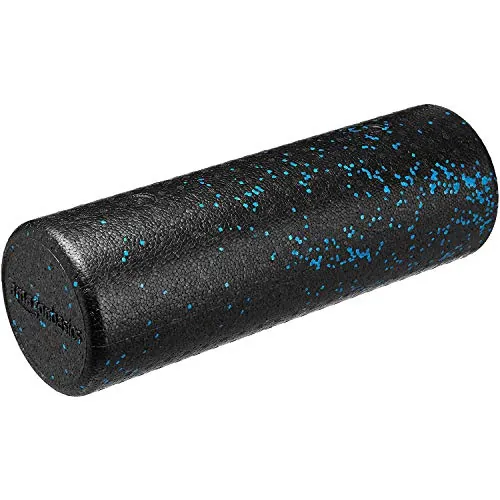
#1 Overall Winner
Amazon BasicsHigh Density Foam Roller
- High-density, firm polypropylene construction designed to maintain shape over time
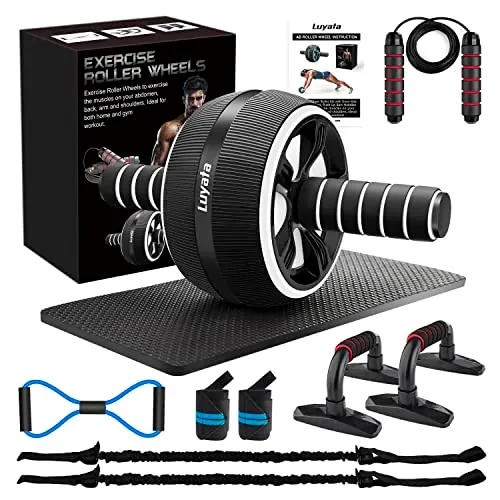
Comparison
Amazon BasicsHigh Density Foam Roller and the Luyata 10-in-1 Ab Roller Kit target different needs: one is built for mobility and muscle rolling, while the other is a core-training kit with multiple workout accessories. The foam roller stands out for simple, durable recovery-style use, while the ab roller kit is better if you want exercise variety in a compact home setup. Comfort is a common trade-off for both, based on user tolerance and technique.
#1 Overall Winner
Contender
Choose the Amazon BasicsHigh Density Foam Roller if you want a durable, low-maintenance tool for mobility, flexibility, and muscle rolling. Choose the Luyata 10-in-1 Ab Roller Kit if you want a budget-friendly core-training tool with extra accessories for broader home workouts, and you’re comfortable checking the package contents and potentially relying most on the wheel and a few key pieces.
Overall winner
Depends on your needs
| Feature | Amazon BasicsHigh Density Foam Roller | Ab Roller Wheel, 10-In-1 Ab Exercise Wheels Kit with Resistance Bands, Knee Mat, Jump Rope, Push-Up Bar - Home Gym Equipment for Men Women Core Strength & Abdominal Exercise | Winner |
|---|---|---|---|
| Product type | High-density foam roller (single tool) | Multi-piece ab wheel workout kit | Depends |
| Primary use case | Mobility, flexibility, muscle rolling | Core training + home workout variety | Depends |
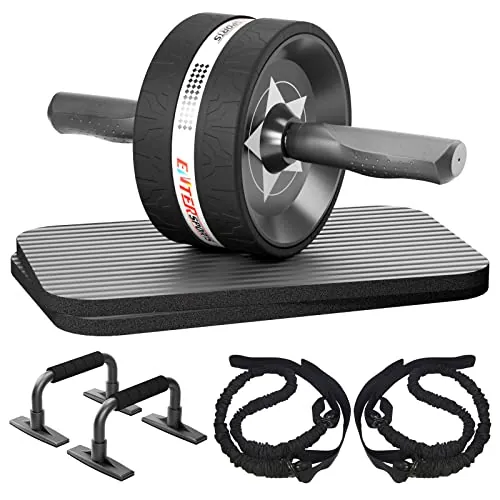
| Included accessories | None (roller only) | Knee mat, bands, push-up bars, jump rope, wrist wraps, more | Ab Roller Wheel, 10-In-1 Ab Exercise Wheels Kit with Resistance Bands, Knee Mat, Jump Rope, Push-Up Bar - Home Gym Equipment for Men Women Core Strength & Abdominal Exercise |
| Materials disclosed | Polypropylene; listed as chemical free | Stainless steel + non-slip rubber (wheel); other parts not fully detailed | Amazon BasicsHigh Density Foam Roller |
| Cleaning & upkeep | Wipes clean easily | Multiple items; generally simple to maintain | Amazon BasicsHigh Density Foam Roller |
| Portability | Lightweight (listed 0.42 lb) | Heavier kit (listed 3.9 lb) | Amazon BasicsHigh Density Foam Roller |
| Comfort (buyer sentiment) | Mixed; firmness can feel great or too uncomfortable | Mixed; knee mat size and rollout discomfort mentioned | Tie |
| Stability during use | Stable for floor rolling; firm body | Wheel described as stable/smooth; non-slip rubber wheel | Depends |
| Space efficiency | Single fixed-size roller | Compact items that can pack away | Ab Roller Wheel, 10-In-1 Ab Exercise Wheels Kit with Resistance Bands, Knee Mat, Jump Rope, Push-Up Bar - Home Gym Equipment for Men Women Core Strength & Abdominal Exercise |
| Durability (based on data) | Firm, durable construction; holds shape in reviews | Mixed durability sentiment; some say strong, others say cheap | Amazon BasicsHigh Density Foam Roller |
| Customer feedback volume | Very high review count and strong rating | High review count and strong rating | Amazon BasicsHigh Density Foam Roller |
| Best fit for mobility/recovery routines | High fit (rolling, flexibility, balance work) | Lower fit (primarily training tools) | Amazon BasicsHigh Density Foam Roller |
| Best fit for core strength training | Indirect/limited | Direct (ab wheel rollouts + accessories) | Ab Roller Wheel, 10-In-1 Ab Exercise Wheels Kit with Resistance Bands, Knee Mat, Jump Rope, Push-Up Bar - Home Gym Equipment for Men Women Core Strength & Abdominal Exercise |
| Value proposition | Low-cost single tool with strong satisfaction | Budget kit with many pieces; value depends on using accessories | Depends |
For recovery support, the foam roller is more directly aligned with muscle release routines and is repeatedly described as effective for rolling out muscles. Its wipe-clean surface and simple design make it easy to use frequently, which matters for recovery habits. The ab roller kit is better viewed as training equipment; it may help you build fitness routines, but the provided details and reviews don’t position it as a primary recovery tool. If your goal is a dedicated recovery add-on, the roller is the clearer fit.
These products plug into a routine in different ways. The Amazon BasicsHigh Density Foam Roller is mainly a support tool: it fits best before training (to loosen up), after training (to roll out), or on rest days for mobility-focused sessions. The Luyata kit is more of a “workout driver,” built to create training stimulus through ab rollouts plus accessory-based exercises like push-ups, band movements, and jump rope. If you want one item that supports recovery and flexibility, the foam roller is the cleaner fit; if you want more exercise variety from one purchase, the kit is more versatile.
For strength-style training, the Luyata 10-in-1 Ab Roller Kit is the more direct option. Ab rollouts are a challenging bodyweight movement, and the included push-up bars and resistance band(s) can add additional upper-body and core-focused work. The Amazon BasicsHigh Density Foam Roller can support strength training indirectly—such as warm-ups, mobility between sets, or post-training muscle rolling—but it isn’t designed for progressive resistance. If your goal is to build a strength-focused home routine, the kit contributes more training options.
The Luyata 10-in-1 Ab Roller Kit has a clearer cardio/conditioning hook because it includes a jump rope, which can be used for short conditioning blocks or warm-ups. The foam roller is not a cardio tool; it’s better suited to mobility and recovery work that may help you stay consistent with training, but it won’t directly raise workout intensity in the same way. If you want a simple way to add quick conditioning at home, the kit has the advantage.
The Amazon BasicsHigh Density Foam Roller is purpose-built for mobility and flexibility sessions, and customer feedback frequently highlights rolling out muscles and using it for yoga/physio-style work. Its firm build helps it keep shape while applying pressure, but it can be intense for sensitive users. The Luyata kit can complement mobility indirectly (for example, warming up with light band movements), but it isn’t positioned as a dedicated mobility tool in the provided details. If flexibility and muscle rolling are primary goals, the foam roller is the stronger match.
For recovery routines, the foam roller is the more relevant product: it’s designed for muscle rolling and is repeatedly described as helpful for sore muscles and everyday use. It’s also easy to clean and simple to keep in a consistent routine because there’s nothing to assemble. The Luyata kit is mainly training equipment; while a knee mat and wrist wraps can make sessions more comfortable, the kit doesn’t target recovery in the same direct way. If you’re building a basic recovery setup, the roller is the more focused choice.
Performance depends on the intended job. For muscle rolling and mobility sessions, the Amazon BasicsHigh Density Foam Roller appears to deliver reliably: it’s described as dense, firm, and able to maintain shape, and reviewers commonly say it works well for rolling out muscles. For core-training performance, the Luyata kit’s ab wheel is frequently described as stable and smooth, which matters for controlled rollouts. The kit’s performance can be less consistent across the whole package because some accessories are described as basic or occasionally missing, but the wheel itself is often the highlight.
The Luyata 10-in-1 Ab Roller Kit supports training variety more directly because it includes multiple tools that can be mixed into a routine (ab rollouts, push-ups with handles, band work, jump rope). That can help beginners build a simple home program without buying extra items. The foam roller supports training differently: it’s a consistency tool that can make warm-ups, cool-downs, and mobility work easier to keep up with. If you want more exercise options, the kit supports that; if you want a simple add-on that complements nearly any routine, the roller is easier to integrate.
The Luyata kit has the stronger strength-training role because the ab wheel targets challenging bodyweight strength and bracing, and the push-up bars and resistance band(s) expand the exercise menu. Reviews often highlight good grip and a stable wheel, which helps with controlled reps. The foam roller’s strength value is mostly supportive—improving readiness and helping you do mobility work around strength sessions—rather than directly creating progressive overload. If strength is the priority, the kit is the more “training-forward” purchase.
Cardio relevance is mostly about whether you’ll use the jump rope included in the Luyata kit. A rope can provide quick, space-efficient conditioning sessions, and it can also serve as a warm-up tool. The foam roller doesn’t serve a cardio purpose; it’s closer to a recovery/mobility accessory. If conditioning is part of your plan and you want a tool that can raise intensity without taking much space, the kit has the clearer advantage.
The Amazon BasicsHigh Density Foam Roller is the stronger mobility tool because it’s designed for flexibility and rolling, with firm density that helps it maintain shape under pressure. Reviews consistently frame it as useful for rolling out sore areas and supporting yoga/physio routines. The main limitation is that comfort is subjective: some users love the firmness, others find it too intense. The Luyata kit can add general movement variety, but it is not primarily designed for mobility-focused sessions.
For recovery support, the foam roller is more directly aligned with muscle release routines and is repeatedly described as effective for rolling out muscles. Its wipe-clean surface and simple design make it easy to use frequently, which matters for recovery habits. The ab roller kit is better viewed as training equipment; it may help you build fitness routines, but the provided details and reviews don’t position it as a primary recovery tool. If your goal is a dedicated recovery add-on, the roller is the clearer fit.
Both products require basic care with technique. With a firm foam roller, the main practical issue is tolerance to pressure—some users find it very intense—so starting gently and avoiding excessive pressure can help. With an ab wheel, form and control matter: rollouts can place significant demand on the core and shoulders, and the knee mat size may affect comfort and positioning. The kit highlights a non-slip wheel and stability intent, but buyer feedback about discomfort suggests users should progress gradually and prioritize controlled reps.
Comfort is a “depends” category for both products. The foam roller is intentionally firm, and customer feedback is split: some find it amazing for sore muscles, while others find it extremely uncomfortable. The Luyata kit also has mixed comfort feedback, with particular mention that the knee mat can feel too small for some users and that rollouts can be uncomfortable depending on form and tolerance. If you’re sensitive to pressure, comfort may require trial-and-error with either product.
The foam roller is the simplest: there’s no assembly, it’s easy to reposition, and it wipes clean. The Luyata kit is still beginner-friendly, but it has more parts to unpack, organize, and potentially assemble (and you’ll need to learn how to use each tool safely and effectively). If you want the lowest friction option for daily use, the foam roller is easier. If you want guided variety and don’t mind extra pieces, the kit can still be straightforward.
The Luyata ab wheel is frequently described as stable and smooth, and it uses a wide rubberized wheel surface intended to reduce slipping. The foam roller is stable for its purpose (rolling on the floor), but stability is more about controlling body position and pressure rather than keeping a wheel from wobbling. If you mean “stability under load while moving,” the ab wheel has the clearer stability focus; for floor-based rolling and positioning, both can work well with proper technique.
Grip matters more for the ab wheel kit because you’re holding handles and supporting bodyweight through the arms. Reviews mention good grip and functionality for the Luyata set, which is important for controlled rollouts and push-ups. The foam roller doesn’t rely on hand grip in the same way, and it’s primarily a body-contact tool. If your priority is a secure handhold during exercises, the kit is the better match.
The foam roller is essentially non-adjustable: you change intensity by shifting bodyweight and position. The Luyata kit has limited adjustability through how you set up and use different pieces (for example, varying band tension by stretch and changing jump rope length), and you can scale ab rollouts by range of motion. If you want “one tool with variable difficulty,” the kit offers more ways to scale sessions, while the roller’s adjustability is mostly technique-based.
Both are home-friendly, but they store differently. The foam roller is a single cylinder that’s easy to tuck in a corner or under a bench, though it remains a fixed-size item. The Luyata kit includes several smaller pieces that can be packed into a small bin or drawer, which can be more space-efficient overall—at the cost of managing more items. If your priority is minimal clutter, the foam roller is simpler; if you want maximum variety per stored volume, the kit wins.
Neither product is inherently loud. The foam roller is typically quiet during use and doesn’t have moving parts. The ab wheel can create some rolling noise depending on surface type, but it’s generally described as smooth, and it’s intended not to damage common floors. If you’re training in an apartment, both can be relatively low-noise options, with the jump rope (kit) being the most likely item to create impact noise depending on flooring.
The Amazon BasicsHigh Density Foam Roller is described as firm and durable, and buyer feedback frequently reinforces that it holds its shape and feels solid. The Luyata kit’s ab wheel is often described as stable and smooth, with non-slip rubber and stainless steel listed, but the overall kit build quality is more mixed because some accessories are described as basic or cheap-feeling. If you care most about one consistently sturdy piece, the foam roller is the safer bet; if you mainly care about the wheel and treat the extras as bonuses, the kit can still make sense.
The Amazon BasicsHigh Density Foam Roller has stronger durability signals in the provided data: it’s positioned as firm, shape-holding polypropylene, and reviewers commonly report it maintains form without denting. The Luyata kit has mixed durability sentiment—some users say the set is durable and holds up, while others describe it as cheap-feeling. With multi-piece kits, durability can also vary by component, and a single weak accessory can affect overall satisfaction. For predictable long-term wear, the foam roller looks more consistent.
The foam roller is low maintenance: it wipes clean and doesn’t require assembly, lubrication, or parts checks. The Luyata kit is still simple, but it includes multiple items that may need occasional cleaning and inspection (for example, checking grips, wraps, and the rope). Multi-piece kits also add the minor “maintenance” of keeping everything organized and ensuring nothing is missing or damaged. For the simplest care routine, the foam roller is easier to maintain.
The foam roller is notably lightweight in the provided specs and is explicitly described as easy to carry to class and reposition during workouts. The Luyata kit is heavier overall, though it can still travel if packed, and smaller items like the rope can be convenient on the go. If you want the easiest grab-and-go option, the foam roller is the more portable choice; if you’re traveling by car and want multiple training tools, the kit can be practical.
For these non-consumable products, transparency mainly means how clearly materials and construction are described. The Amazon BasicsHigh Density Foam Roller clearly states polypropylene and includes “chemical free” in the materials section. The Luyata kit lists stainless steel and non-slip rubber for the wheel, but the materials for all included accessories (bands, wraps, jump rope, push-up bars, knee mat beyond NBR) are not equally detailed in the provided data. If you want the clearest single-item material disclosure, the foam roller has the edge.
Both products are priced as budget-friendly options with strong overall buyer ratings, but the value story differs. The Amazon BasicsHigh Density Foam Roller is a single-purpose tool, and its value is tied to consistency: durable feel, easy cleaning, and a large body of positive feedback. The Luyata kit can offer strong value if you’ll use several included pieces (wheel, rope, push-up bars, bands), effectively covering more training needs in one purchase. However, value can depend on accessory quality and whether everything arrives as expected.
Based on the provided information, Amazon Basics has stronger brand trust signals for this category due to very high review volume and consistent feedback on build and value. Luyata’s kit also has many positive reviews, but there are more mixed comments about accessory quality and occasional missing items, which can affect confidence in consistency. Neither product includes third-party testing or warranty details in the data provided, so brand trust here is primarily inferred from review patterns and product clarity.
Both products are well-rated, but the foam roller shows exceptionally strong customer satisfaction signals in the provided summary: many buyers describe it as solid, dense, and effective, with repeated praise for value and durability. The Luyata kit has positive feedback focused on the wheel’s stability and the variety of accessories for home workouts. The main satisfaction drags for the kit are mixed durability/comfort sentiment, a knee mat size complaint, and occasional reports of missing parts, which can create uneven experiences.
Claim support is stronger when it aligns with clear product design, specs, and consistent buyer feedback. The foam roller’s core claims (firmness, durability, shape retention, and suitability for rolling/mobility work) are supported by its material disclosure and many reviews describing it as dense and effective for rolling out muscles. The Luyata kit’s claims around being a comprehensive home workout set are supported by the included item list, and reviews often confirm the wheel’s stability and usefulness. However, broader performance claims (for example, specific physique outcomes) are not something the provided data can verify.
If you’re deciding between these two, there isn’t a single “best” because they serve different parts of training—but the Amazon BasicsHigh Density Foam Roller is the more consistently dependable purchase for mobility and recovery-style use. Its main strength is a firm, shape-holding build with strong value and broad buyer satisfaction; its main limitation is that firmness can be uncomfortable for some users.
The Luyata 10-in-1 Ab Roller Kit is the better pick for a budget home workout setup focused on core training and exercise variety. Its main strength is the stable, smooth ab wheel plus multiple included tools; its main limitation is mixed accessory quality and occasional reports of missing items, along with knee-mat size complaints.
Overall winner
Depends on your needs
They serve different purposes. The Amazon BasicsHigh Density Foam Roller is the more direct choice for muscle rolling, mobility, and post-workout release. The Luyata 10-in-1 Ab Roller Kit is better if you want a core-focused training tool plus extras like push-up bars, bands, and a jump rope. The better pick depends on whether you prioritize recovery/mobility or strength-style workouts.
The Amazon BasicsHigh Density Foam Roller fits mobility and flexibility work more naturally because it’s designed for rolling and floor-based stretching support. Reviews also frequently mention rolling out sore muscles and using it with yoga/physio routines. The ab roller kit can complement training, but it’s not positioned as a primary mobility tool in the provided product details.
The Luyata 10-in-1 Ab Roller Kit is the more direct core-training option since the ab wheel rollout is the main exercise focus, and the kit adds push-up bars and resistance bands for extra training variety. The foam roller can be used in core or balance drills, but it’s primarily purchased for rolling and flexibility/recovery routines based on the provided information.
It can be, depending on tolerance. The roller is described as high-density and firm, and buyer feedback on comfort is mixed—some say it feels great on sore muscles, while others find it extremely uncomfortable. If you’re new to rolling, consider shorter sessions and lighter pressure at first, and note that firmness is part of what helps it keep its shape.
It includes multiple pieces (ab wheel, knee mat, push-up bars, wrist wraps, resistance band, jump rope, guide book). That makes it suitable for a basic at-home routine covering core work plus push-ups and band movements. However, reviews mention occasional missing items and mixed accessory quality, so it’s worth checking the box contents promptly after delivery.
Both are relatively small. The foam roller is a single cylinder that stores easily but is still a fixed-size piece. The ab roller kit includes multiple smaller items that can pack into a drawer or a small bin, though there are more parts to keep organized. If you want “one item, no clutter,” the foam roller is simpler; for compact variety, the kit can work well.
Comfort is mixed for both. The foam roller’s firmness is a common reason some users love it and others dislike it. The ab wheel kit’s comfort depends on knee support and grip, and reviews mention both positive comfort experiences and discomfort, including criticism that the knee mat can be too small. Your sensitivity and technique will strongly affect comfort with either option.
Both are positioned as budget-friendly. The foam roller is often described as a strong value because it’s durable, simple, and widely reviewed. The ab roller kit can be good value if you’ll use multiple included items (wheel, rope, bands, push-up bars), but the value can drop if accessory quality or box completeness is an issue for you.
Check our rankings and expert guides to find the best fitness products for your goals.