#1 Overall Winner
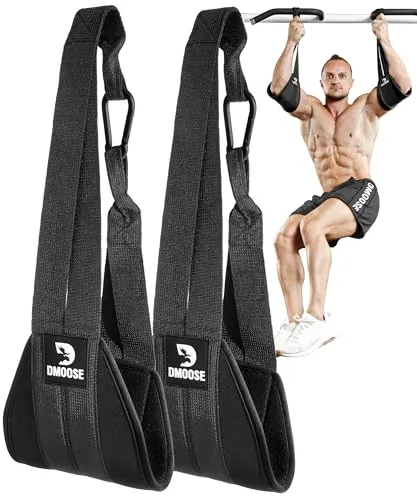
DMoose Fitness Hanging Ab Straps
- High-weight capacity and compatibility with most pull-up bars and multi-gyms for hanging core work.
Comparison
DMoose Hanging Ab Straps and the Luyata 10-In-1 Ab Roller Kit are both budget-friendly core training options for home workouts, but they train your abs in very different ways. DMoose is built for hanging leg raises on a pull-up bar with comfort-focused padding, while Luyata is a floor-based ab wheel bundle that adds extra accessories for more exercise variety. The best choice mainly depends on whether you have (and want to use) an overhead bar setup.
#1 Overall Winner
Contender
Choose DMoose Hanging Ab Straps if you have a pull-up bar/rack and want comfortable, stable hanging leg raise work with minimal storage. Choose the Luyata 10-In-1 Ab Roller Kit if you want a floor-based ab wheel plus extra home-workout accessories for variety and strong bundle value, and you’re okay with more mixed feedback on the add-ons.
Overall winner
Depends on your needs
| Feature | DMoose Fitness Hanging Ab Straps | Luyata 10-In-1 Ab Roller Wheel Kit | Winner |
|---|---|---|---|
| Type / category fit | Hanging ab straps for pull-up bar/rack | Ab wheel plus accessory kit | Depends |
| Primary core movements | Hanging knee raises, leg raises, twists | Ab rollouts; plus accessory exercises | Depends |
| Required equipment | Needs pull-up bar or compatible station | Floor-based; no bar required | Luyata 10-In-1 Ab Roller Wheel Kit |
| Listed max weight recommendation | 330 lb | 440 lb | Luyata 10-In-1 Ab Roller Wheel Kit |
| Comfort (user feedback) | Padding commonly praised; avoids pinching | Mixed comfort; knee mat sometimes criticized | DMoose Fitness Hanging Ab Straps |
| Build materials disclosed | Nylon + alloy steel; neoprene/nylon listed | Stainless steel + non-slip rubber wheel; NBR knee pad | Tie |
| Stability feel (reviews/context) | Stable during hangs; strong clips | Wheel described as stable and smooth | Tie |
| Ease of setup | Quick install/remove with carabiners | Easy to assemble and use | Tie |
| Versatility / exercise variety | Focused on hanging core training | Multiple tools: wheel, bars, rope, bands | Luyata 10-In-1 Ab Roller Wheel Kit |
| Portability | Very light and packable | Portable but heavier with more pieces | DMoose Fitness Hanging Ab Straps |
| Space efficiency | Stores extremely small | Compact but more components to store | DMoose Fitness Hanging Ab Straps |
| Potential issues noted by buyers | Fit/length concerns; possible bar scratching | Small mat; mixed accessory quality; occasional missing items | Depends |
| Customer sentiment signal | Very high review volume; strong consistency | High review volume; more mixed notes on accessories | DMoose Fitness Hanging Ab Straps |
| Value perception | Good investment for adding hanging ab work | Strong bundle value for a starter home kit | Luyata 10-In-1 Ab Roller Wheel Kit |
DMoose is best viewed as a specialist add-on for anyone who already trains with a pull-up bar or rack and wants to focus on hanging core work. It’s easy to clip on for a few sets at the end of strength sessions and easy to store afterward.
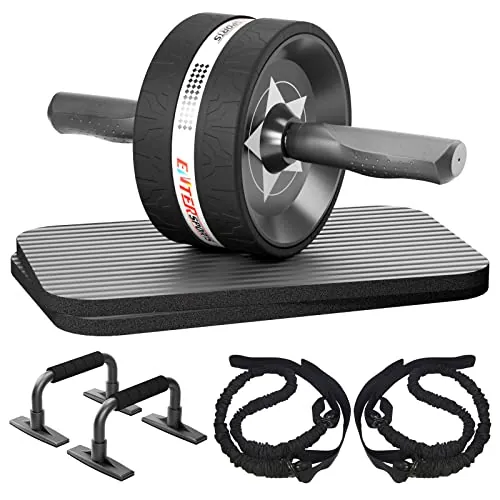
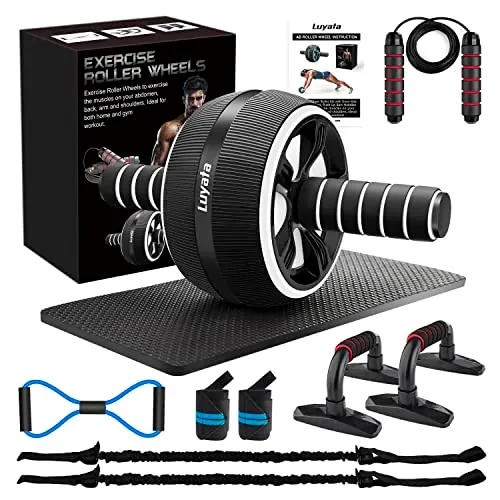
Luyata is more of a starter toolkit. The ab wheel can anchor short core sessions, while the push-up bars, band, and jump rope can add variety to full-body home workouts. If your goal is one simple core accessory with consistent comfort, DMoose is the cleaner choice; if your goal is variety with minimal planning, Luyata is more flexible.
Both products support strength-oriented training, but in different ways. DMoose supports strength-based core work through hanging knee raises and leg raises, and it may also challenge grip and upper-body endurance during hangs. Luyata’s ab wheel rollouts are a bracing-heavy movement that can load the trunk and shoulders, and the included push-up bars and resistance band provide additional options for upper-body work. For pure core isolation with an overhead setup, DMoose is more targeted; for mixed bodyweight strength variety, Luyata offers more tools.
DMoose isn’t designed for cardio conditioning; it’s primarily a hanging core accessory. The Luyata kit includes a jump rope, which can be used for conditioning sessions and warm-ups, and it’s described as adjustable. If you want core equipment that also supports basic cardio at home, Luyata has the advantage due to the included rope.
Neither product is a dedicated mobility tool like a yoga strap or stretching band, but the Luyata kit includes a resistance band that can be used in general exercise routines where band tension is helpful. DMoose is mainly intended for hanging ab work rather than flexibility-focused sessions. If you want any crossover into broader movement prep at home from the items included, Luyata is slightly more versatile.
For its intended purpose, DMoose performs strongly: reviewers repeatedly describe the straps as well made, stable when hung from pull-up bars/racks, and comfortable enough for multiple sets of leg raises without pinching. The most notable performance caveat is fit—some users mention the straps feel short or the arm slings feel large/stiff, which can affect positioning.
Luyata’s performance is strongest around the ab wheel itself, which buyers often call stable and smooth. However, the overall kit experience can be uneven due to mixed feedback on accessory quality and comfort, plus occasional reports of missing pieces.
DMoose supports consistent training by reducing friction: it clips on quickly, stores easily, and is focused on a small set of hanging core movements that are easy to program and progress (more reps, stricter form, added pauses). It’s especially useful if you already do pull-ups or use a rack and want to add core work without another station.
Luyata supports broader routine building because it includes multiple tools for different exercises. That can help beginners add variety, but it also means the “support” depends on which components you actually use and whether you’re satisfied with the accessory quality and comfort.
DMoose is the more specialized option for hanging core strength, where stability and arm comfort matter. Feedback suggests the padding and build help users stay in position and focus on leg raise variations, though smaller athletes may struggle with sling sizing and stiffness.
Luyata’s strength value comes from combining ab rollouts with push-up bars and a resistance band. The wheel itself is frequently described as stable, but accessory quality varies, so the overall “strength toolkit” feel can range from solid starter set to more basic depending on expectations.
DMoose has limited direct cardio use because it’s designed for hanging core sets. Luyata has a clearer conditioning angle because it includes a jump rope, which can be used for warm-ups, intervals, or short conditioning blocks. If cardio support is part of your decision, the kit format is more accommodating, though the core of the product is still ab training rather than a dedicated cardio machine.
Neither product is purpose-built for mobility or stretching, and the provided data doesn’t emphasize flexibility outcomes. The Luyata kit’s included band can add some general-purpose training variety where bands are commonly used, while DMoose is focused on hanging positions for core work. If mobility is a major goal, you may want a dedicated mobility tool; between these two, Luyata offers slightly more crossover via included accessories.
Neither product comes with unusual safety information in the provided data, so the main considerations are practical. With DMoose, safe use depends on a secure pull-up bar/rack and correct attachment with the carabiners; fit/length issues could affect positioning and comfort, and buyers note the carabiners may scratch coated bars (a bar-protection issue more than a user-safety issue). With Luyata, safe use is about maintaining control during rollouts and using the knee mat for comfort; the biggest quality-related concern is kit completeness if items are missing on arrival.
DMoose has the more consistent comfort profile in the provided data, with repeated comments about the padding being comfortable and not pinching during multiple sets. That said, comfort can still depend on body size, as some smaller users report the slings feel too large or stiff.
Luyata comfort is more variable: the included knee pad is appreciated by some, but others call it too small, and aggregated feedback mentions mixed comfort during use. If comfort is a top priority, DMoose is generally the safer choice.
Both are easy to use, with different “setup friction.” DMoose clips on quickly and is easy to remove, making it convenient for people who already have a pull-up bar or rack. Luyata is described as easy to assemble and use, and it doesn’t require overhead mounting, which can make it simpler for beginners without a bar. If you have the right hanging setup, DMoose is very plug-and-play; otherwise, Luyata is easier to start using immediately.
Both products receive positive stability feedback, but in different contexts. DMoose is described as stable when hanging from a pull-up bar, with strong clips and secure support. Luyata’s wheel is frequently called stable and smooth, and the wider wheel design is intended to help with control. If your stability concern is overhead sway and secure hanging, DMoose stands out; if your concern is rollout tracking and wheel control on the floor, Luyata performs well.
Luyata has an advantage for direct hand grip because the ab wheel and push-up bars are hand-held tools, and at least one reviewer mentioned good grip and functionality. DMoose shifts load to the forearms/elbows via padded slings, which can reduce hand grip limitation but may not suit everyone’s preferred feel. If you want to train rollouts and push-ups with dedicated handles, Luyata is the clearer fit; if you want to take the hands out of the equation for hanging leg raises, DMoose is often more comfortable.
DMoose is described as easy to adjust for a secure fit, but user feedback suggests sizing can still vary by person and setup, with some users wanting more length. Luyata’s most explicit adjustability note is the jump rope being adjustable to height. Overall, neither is highly “dial-in adjustable” like an adjustable weight system; adjustability is more about basic fit and setup, with a slight edge to Luyata due to the rope adjustment plus multiple components for different movements.
Both options are well suited to small home gyms. DMoose is exceptionally space efficient: the straps store in a very small space and don’t add permanent floor footprint. Luyata’s kit is still compact, but the wheel and accessories take more room than straps and are easier to misplace if not stored together. If maximizing space is the priority, DMoose is the better minimalist solution.
Both are generally quiet compared with machines. DMoose hanging straps produce minimal noise in typical use. Luyata’s wheel is designed for smooth rolling and is described as silent and floor-friendly, but any floor-based rolling can vary by surface. In most home settings, neither should be a major noise concern.
DMoose has stronger build-quality signals in the provided data: rip-resistant nylon, steel carabiners, and repeated customer comments about high quality, stability, and durability. The padding thickness is also specified, and comfort feedback is consistent.
Luyata’s ab wheel is often described as sturdy and smooth, and the wheel’s materials are stated. However, build impressions across the entire kit are more mixed, with some buyers describing accessories as basic or cheap. If you care most about one consistently solid item, DMoose is the safer bet; if you’re okay with a “good wheel + basic extras,” Luyata can still work well.
DMoose is positioned as durable, with reviews frequently describing it as sturdy and well made for repeated hanging use. The simpler design (straps + carabiners) also means fewer components that can vary in quality.
Luyata durability feedback is split: some users report the wheel holds up well over time, while others feel parts of the kit are cheaper. Because the set contains multiple accessories, long-term durability may depend on which pieces you rely on most and how hard they’re used.
Maintenance is low for both. DMoose mainly requires basic inspection of straps and carabiners and keeping the padding clean and dry between sessions. Luyata’s kit involves more pieces to keep track of (wheel, bars, rope, band, wraps, mat), but care is straightforward: wipe down after use and store the set together. Neither product appears to require lubrication, charging, or complex upkeep based on the provided information.
DMoose is easier to carry and travel with due to its very low weight and flexible strap design. Luyata is still portable, but the kit includes a heavier wheel and multiple accessories, which is less convenient to pack unless you want the entire bundle with you. For a simple “throw it in a bag” core accessory, DMoose is the more portable choice.
As non-consumable products, transparency here is mainly about materials and included parts. DMoose clearly describes a nylon strap build with steel carabiners and notes neoprene/nylon materials, plus a defined maximum weight recommendation. Luyata lists stainless steel construction and non-slip rubber for the wheel and specifies NBR material for the knee pad, while also outlining the full kit contents. The main transparency weakness for Luyata is that some accessory materials aren’t fully described, and buyers report occasional missing pieces, which can make the “what you receive” less consistent.
Both products are priced in the budget range, but value depends on what you need. DMoose offers strong value if you already have a pull-up bar and want a durable, comfortable way to train hanging leg raises without buying a larger station. Luyata’s value is strongest for beginners because the kit includes multiple tools in one purchase, and many reviewers call it a good deal—especially if you’ll use more than just the wheel. If you only want one high-quality item, DMoose tends to feel more consistent; if you want maximum variety per purchase, Luyata usually wins.
Based on the provided data, DMoose shows stronger trust signals through consistent review commentary around quality, durability, and overall satisfaction at high review volume. Luyata also has high review volume and generally positive ratings, but brand confidence is somewhat tempered by mixed feedback on accessory quality and occasional missing-item reports. Without third-party testing or warranty details provided, brand trust here is mainly inferred from buyer consistency and product reliability feedback.
DMoose has very strong satisfaction signals: reviewers frequently describe the straps as comfortable, sturdy, stable, easy to install/remove, and a good investment for home/garage gyms. Negative feedback is more specific—mostly about fit/length for some users and potential bar scratching.
Luyata satisfaction is also strong overall, especially around the ab wheel’s stability and the kit’s value. The negatives are more scattered across the bundle: small knee mat complaints, some discomfort reports, some accessories feeling basic, and occasional missing components on delivery.
DMoose’s main claims (compatibility with pull-up bars, support for hanging core exercises, comfort from padding, and durable materials) are broadly supported by the provided specifications and repeated customer feedback about stability, comfort, and build quality. The main “depends” area is fit: reviews show that body size and strap length can affect the experience.
Luyata’s functional claims for the ab wheel (stable, smooth rollouts) are reasonably aligned with customer feedback, while broader claims tied to the “10-in-1” experience are more variable because accessory quality and completeness are inconsistent for some buyers. Treat body-transformation language as marketing rather than guaranteed outcomes.
Verdict: DMoose Hanging Ab Straps are the better overall pick for a reliable, comfortable, space-saving way to train hanging leg raises—especially for garage gym owners with an existing pull-up bar or rack. Its main limitation is fit/length: some users find the slings too large or the straps too short, and bar scratching is possible.
The Luyata 10-In-1 Ab Roller Kit is the better choice if you want maximum training variety from a low-cost bundle. The wheel itself gets strong stability and smoothness feedback, but the kit’s main limitation is inconsistency across accessories (small knee mat complaints, mixed comfort/durability, and occasional missing items). If you want one focused tool, pick DMoose; if you want a starter bundle, pick Luyata.
Overall winner
Depends on your needs
It depends on how you want to train your core. The DMoose straps are best if you want hanging knee raises, leg raises, and twists using a pull-up bar or rack, with padding designed for comfort. The Luyata kit is better if you want floor-based ab rollouts plus extra tools (push-up bars, bands, jump rope) for more variety.
If you don’t already have a pull-up bar or rack, the Luyata kit is easier to use right away because the ab wheel is floor-based and the bundle includes multiple accessories. If you already have a pull-up bar or multi-gym station, the DMoose straps are a simple add-on that can expand your hanging core exercise options without adding a large footprint.
Based on the provided review summaries, comfort is a consistent strength for the DMoose straps, with users noting they don’t pinch the back of the arms and feel easier on wrists and shoulders during multiple sets. That said, fit can vary; at least one reviewer found the arm sling too large/stiff for a smaller frame.
Feedback is mixed. Many reviewers describe the wheel as stable, smooth, and durable enough for regular home use, and the kit is often praised for value. However, some buyers report accessories feeling basic or cheap, and at least one review mentions missing items in the box. The wheel appears to be the most consistently liked part.
Both are space-friendly. The DMoose straps are extremely easy to store (they hang or fold into a small bag) and install quickly. The Luyata kit is still compact, but it includes multiple pieces (wheel, bars, rope, bands, mat), which can take a bit more organization to keep together.
The DMoose straps are primarily for hanging core work (knee raises, leg raises, twists) and may indirectly challenge grip and upper body during hangs. The Luyata kit is more oriented toward a broader home routine because it includes push-up bars, resistance bands, and a jump rope alongside the ab wheel, which can support more exercise variety.
The Luyata kit is typically the more beginner-friendly starting point because it includes a guide book and multiple tools for basic home training, and it doesn’t require a pull-up bar. The DMoose straps can be straightforward too, but hanging leg raise variations may be more demanding and also require compatible overhead equipment.
Both products provide clear use-cases (hanging ab work vs ab rollouts and accessory exercises) and have substantial customer feedback supporting basic functionality and usability. Beyond that, more specific performance claims (for example, “build bigger abs” or injury-risk reduction) aren’t directly verified in the provided information and should be treated as marketing language rather than proven outcomes.
Check our rankings and expert guides to find the best fitness products for your goals.