
#1 Overall Winner
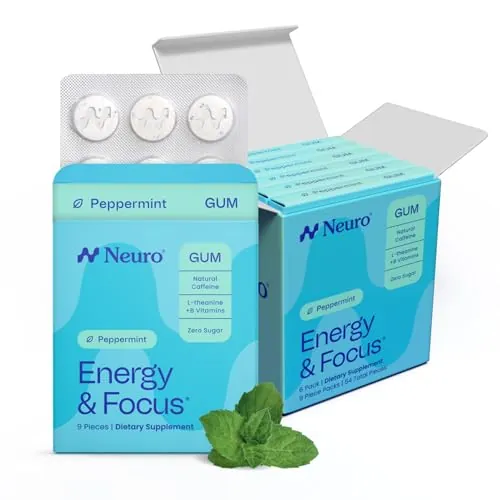
Neuro Energy & Focus Gum - Caffeine Gum with 40mg Natural Caffeine & L-Theanine - Nootropic Energy Supplement with B Vitamins - Sugar Free, Vegan - Peppermint, 54ct
- Fast-acting format that many buyers say kicks in within minutes.
Comparison
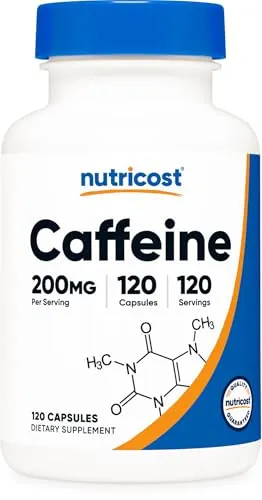
Neuro Energy & Focus Gum and Nutricost Caffeine Pills are two convenient caffeine options for workouts, workdays, and on-the-go focus. Neuro delivers a smaller 40mg dose per piece with added L-theanine and B vitamins in a peppermint gum format, while Nutricost provides a straightforward 200mg caffeine capsule. The biggest difference is dosing style: incremental chewing vs a higher-dose capsule.
#1 Overall Winner
Contender
Choose Nutricost Caffeine Pills if you want a simple, strong caffeine capsule with excellent value and clear dosing. Choose Neuro Energy & Focus Gum if you prefer smaller, flexible caffeine boosts in a chewable format and want L-theanine and B vitamins included. If you’re caffeine-sensitive, the gum’s lower dose per piece may be easier to manage.
Overall winner
Depends on your needs
| Feature | Neuro Energy & Focus Gum - Caffeine Gum with 40mg Natural Caffeine & L-Theanine - Nootropic Energy Supplement with B Vitamins - Sugar Free, Vegan - Peppermint, 54ct | Nutricost Caffeine Pills 200mg, 120 Capsules - Gluten Free, Non-GMO | Winner |
|---|---|---|---|
| category / use | Caffeine gum for energy & focus | Caffeine capsules for energy | Depends |
| caffeine per serving (listed) | 40mg per piece | 200mg per capsule | Depends |
| added functional ingredients | L-theanine + vitamins B6/B12 | Caffeine-only (primary supplement type) | Neuro Energy & Focus Gum - Caffeine Gum with 40mg Natural Caffeine & L-Theanine - Nootropic Energy Supplement with B Vitamins - Sugar Free, Vegan - Peppermint, 54ct |
| taste / flavor | Peppermint gum (generally liked) | No flavor (capsule) | Neuro Energy & Focus Gum - Caffeine Gum with 40mg Natural Caffeine & L-Theanine - Nootropic Energy Supplement with B Vitamins - Sugar Free, Vegan - Peppermint, 54ct |
| ease of use | Chew anytime; no water needed | Swallow capsule; simple routine | Tie |
| portability | Very pocketable gum box | Portable bottle of capsules | Tie |
| space efficiency | Small box | Small bottle | Tie |
| value for money | Mixed; often viewed as pricey | Widely praised as budget-friendly | Nutricost Caffeine Pills 200mg, 120 Capsules - Gluten Free, Non-GMO |
| customer satisfaction (reviews) | High volume; some “doesn’t work for me” complaints | High volume; strong “works well” sentiment | Nutricost Caffeine Pills 200mg, 120 Capsules - Gluten Free, Non-GMO |
| stimulant side effects (reported) | Some restlessness/jitters; many report smooth feel | Some jitters/nausea reported | Depends |
| training support (general) | Often used for quick focus or pre-workout | Common coffee replacement for work/study/training | Nutricost Caffeine Pills 200mg, 120 Capsules - Gluten Free, Non-GMO |
| ingredient transparency | Lists caffeine source + L-theanine amount + B vitamins | Clear caffeine amount; fewer formula details noted | Neuro Energy & Focus Gum - Caffeine Gum with 40mg Natural Caffeine & L-Theanine - Nootropic Energy Supplement with B Vitamins - Sugar Free, Vegan - Peppermint, 54ct |
Both products are used as “functional caffeine” for workouts, work focus, and long days when you want energy without a sugary drink. Nutricost fits best for people who want a repeatable, consistent caffeine routine—take a capsule and move on. Neuro fits best when you want a smaller boost that you can use more flexibly (one piece at a time) and when a chewable option is more practical than a capsule.
In training contexts, Nutricost’s higher per-serving caffeine can feel more like a traditional pre-workout stimulant approach, while Neuro is more like a light pre-workout or an “in-between” option for a quick pick-up.
For strength sessions, Nutricost is generally the more direct choice if you want a strong, predictable caffeine hit in a single serving—many reviewers describe using it before lifting and appreciating the consistency versus coffee. Neuro can still work for strength workouts, but the lower caffeine per piece is better suited to lighter stimulation or topping up energy and focus without committing to a large dose at once.
For cardio and conditioning, both can be used as a caffeine option, but Nutricost is more likely to suit people who want a stronger single serving prior to a session. Neuro’s gum is useful when you want a smaller amount of caffeine and a fast, convenient option you can take right before heading out the door. Individual tolerance matters: what feels “just right” for one person can feel overstimulating for another.
These are both stimulant-style supplements intended for energy management rather than complete sports nutrition. Nutricost keeps it simple with caffeine in capsule form and positions itself as a way to avoid the sugar and calories common in energy drinks. Neuro adds L-theanine plus vitamins B6 and B12, and many buyers describe the effect as smoother and more focused, with the added benefit of a peppermint gum format.
If you want the simplest possible ingredient approach, Nutricost is the cleaner “single-purpose” option. If you want caffeine combined with L-theanine in one product, Neuro is the more targeted fit.
Nutricost Caffeine Pills appear to deliver more consistent “performance” for pure caffeine effects, largely because the dose is high and clearly defined at 200mg per capsule and reviewers frequently describe reliable wakefulness and focus. Neuro Energy & Focus Gum performs well for many users who want a quicker, smaller boost; reviews often highlight fast onset and a smoother feel that they attribute to the caffeine + L-theanine combo.
The biggest performance caveat for Neuro is variability—some buyers report they don’t notice much. For Nutricost, the main limitation is tolerance: a higher-dose capsule can feel too strong for some users.
Nutricost generally supports consistent training routines better because it’s easy to standardize: one capsule equals a known amount of caffeine, and the bottle size and price make regular use more realistic for many people. It’s also frequently described as a coffee replacement, which can reduce friction in early-morning training schedules.
Neuro supports training in a different way—its chewable format is easy to keep on hand and use “as needed,” and the lower dose per piece can be useful when you don’t want a full capsule’s worth of caffeine. However, the higher cost per piece can limit how often users want to rely on it.
For strength-focused sessions, Nutricost tends to come out ahead because it aligns with the most common use case for caffeine in lifting: a strong, predictable pre-session dose with minimal extras. Neuro is better when you want to modulate intake more gradually (piece by piece) or when you specifically want caffeine paired with L-theanine. If your strength training benefits from a bigger stimulant push, the capsule format is the more direct match.
For cardio, Nutricost still has the advantage for users who want a stronger single serving, especially when training intensity is high and you prefer a set dose. Neuro’s advantage is flexibility: it’s easier to take a small amount close to start time, and many users describe it as less “spiky” in feel. The better option depends on caffeine sensitivity and whether you prefer a strong single dose or a smaller incremental boost.
Both products center on caffeine, so the primary safety consideration is stimulant tolerance and total daily caffeine intake from all sources. Nutricost provides 200mg per capsule, which can be a lot for some users; reviews include reports of jitters and nausea, suggesting some people should be cautious with dose timing and frequency. Neuro provides 40mg per piece, which may be easier to manage in smaller steps, though some users still report restlessness.
Neither product should be treated as a substitute for sleep or a solution for underlying fatigue, and individual responses can vary widely.
Nutricost tends to be comfortable for users who like capsules, with reviews frequently calling them easy to swallow, though some report nausea or jitters (a common issue with stimulant dosing). Neuro can feel gentler for some due to its lower caffeine per piece and the inclusion of L-theanine, and many users find chewing gum easy. However, sweeteners/sugar alcohols are mentioned by reviewers and may not agree with everyone.
Both are easy to use and score well for convenience. Neuro is as simple as chewing a piece when you need a boost—no water, no prep, and easy to keep in a pocket. Nutricost is also simple: take one capsule as a serving, which many users prefer for a consistent routine. The deciding factor is mainly whether you prefer chewable delivery (more “as needed”) or a capsule (more “set and done”).
Both are highly space-efficient compared with canned energy drinks or tubs of powdered supplements. Neuro comes in a small box of gum pieces that can be stored in a desk, gym bag, or car. Nutricost comes in a compact bottle, and a single purchase can last a long time due to the capsule count. Either works well for small home setups and minimal-counter routines.
“Durability” is less critical for consumable supplements than for equipment, but practical reliability still matters. Nutricost’s capsules are described by many buyers as consistent and easy to store, and the large count supports long-term use. Neuro’s gum is also stable and portable, but value concerns can impact “durability” in a different sense—some users don’t want to keep buying it regularly at the listed price.
Maintenance is minimal for both. Neuro requires no mixing or cleanup—just standard gum disposal and keeping the box sealed and stored. Nutricost is also low-maintenance: open the bottle, take a capsule, and store it in a cool, dry place as you would any supplement. If you prefer “no water needed,” Neuro has a slight edge in day-to-day friction.
Both are easy to carry, but they travel differently. Neuro is extremely pocketable and can be carried as a few individual pieces without bringing the whole box. Nutricost capsules are portable too, but many people will carry them in the bottle or a pill case. If you want something that feels more like a snack/mint than a supplement, the gum format is more discreet.
Neither product is a complete nutrition solution; both are primarily about caffeine-based energy management. Nutricost’s “nutrition quality” strength is its simplicity and lack of sugar/calories compared with many energy drinks, plus clear per-capsule dosing. Neuro adds L-theanine and B vitamins and is sugar-free, which some users prefer for a more “balanced” supplement approach. If you want the simplest ingredient purpose (caffeine only), Nutricost fits better; if you want caffeine plus L-theanine in one product, Neuro is more aligned.
Neuro Energy & Focus Gum is more descriptive about its active blend in the provided data, including caffeine amount per piece, a stated natural caffeine source (green coffee beans), L-theanine amount, and included B vitamins (B6 and B12). That makes it easier to understand why it may feel different from caffeine alone.
Nutricost is straightforward about caffeine dose per capsule and serving size, but the provided information emphasizes the primary ingredient rather than a broader blend. Some customer feedback also suggests people want more clarity beyond the headline caffeine claim.
Taste only applies meaningfully to Neuro. Many reviewers like the peppermint flavor and mention it isn’t overly sweet, and some appreciate the “fresh breath” aspect. A minority mention a medicinal note or aftertaste and that flavor can fade. Nutricost is a capsule, so taste is mostly irrelevant (though some users like that capsules avoid caffeine’s bitter taste).
Nutricost Caffeine Pills are the clear value leader in this matchup. The price and capsule count make the cost per serving very low, and many reviewers explicitly compare it favorably to daily coffee expenses. Neuro Energy & Focus Gum has strong convenience and a more complex formula (caffeine + L-theanine + B vitamins), but value feedback is mixed and “overpriced” is a recurring theme in reviews.
If you’ll use caffeine frequently, Nutricost is typically the more economical long-term option; Neuro may make more sense for occasional use when format and feel matter more than price.
Nutricost has an edge in brand trust signals in the provided data due to its facility/manufacturing statements (NSF-certified, GMP-compliant, FDA-registered facility) and a large base of positive reviews focused on consistency. Neuro also has strong review volume and positions itself as science-backed, with many customers praising the “clean” ingredient approach. If brand trust for you means third-party facility standards and long-term value consistency, Nutricost reads stronger here.
Both products have very large review counts and generally positive ratings, but the sentiment patterns differ. Neuro receives frequent praise for taste, portability, and a smoother-feeling boost, but it also has a notable subset of reviewers who say they don’t feel an effect and/or that it’s too expensive. Nutricost receives repeated “works well” feedback, and strong value comments show up frequently; complaints tend to focus on stimulant side effects (jitters, nausea) or occasional doubts about effectiveness.
Nutricost’s claims are relatively easy to evaluate because they’re narrow and measurable: a stated caffeine amount per capsule and a straightforward “get caffeine without sugar/calories” positioning. Reviews generally align with the idea that it’s an effective coffee replacement for many users, though individual experiences vary.
Neuro makes broader “energy and clarity” positioning but also provides specific active amounts (caffeine and L-theanine) and includes B vitamins. Customer feedback often matches the fast-acting and smoother-focus narrative, but there’s also a meaningful minority who report no noticeable effect, which weakens claim consistency across users.
Nutricost Caffeine Pills are the better overall buy for most people: they offer strong, consistent caffeine performance, excellent value, and a simple routine-friendly capsule format backed by a large amount of positive buyer feedback. Their main limitation is that 200mg per capsule can be too intense for some users, and there are reports of jitters or nausea.
Neuro Energy & Focus Gum is the better niche choice if you want smaller, flexible caffeine boosts and you specifically prefer the caffeine + L-theanine combination in a sugar-free gum. Its main limitation is value and consistency—some users love the effect, while others don’t notice much, making it a harder recommendation for frequent daily use.
Overall winner
Depends on your needs
Nutricost Caffeine Pills are the better pick for most people who want a simple, strong, cost-effective caffeine supplement with clear dosing. Neuro Energy & Focus Gum can be a better fit if you want a smaller dose per serving, prefer a chewable format, and like the idea of caffeine paired with L-theanine plus B vitamins. The best choice depends on your caffeine tolerance and how you prefer to take it.
Both can work as a pre-workout caffeine option, but they suit different needs. Nutricost delivers a much larger dose per capsule, which may appeal to experienced caffeine users who want a stronger single serving. Neuro’s gum offers a lower dose per piece and a fast, convenient chewable format, which some users prefer for a more incremental approach.
Neuro Energy & Focus Gum is typically easier to start with because each piece provides a smaller caffeine amount, making it simpler to test your tolerance. Nutricost’s 200mg capsule is more “all at once,” which can be too much for some people. If you’re new to caffeine supplements, pay close attention to total daily intake from all sources.
Nutricost Caffeine Pills are generally more cost-effective based on the low price and the 120-capsule count, and many reviewers call them a cheaper alternative to coffee. Neuro gum gets more mixed value feedback: some buyers like the convenience, but many describe it as expensive for the amount of product, especially if you use it frequently.
Responses vary by person and total caffeine intake. Neuro gum is frequently described as smoother, and the inclusion of L-theanine is often credited by reviewers for a calmer feel, though some still report restlessness. Nutricost pills are praised by many for clean energy, but there are also reports of jitters or nausea, which is common with higher-dose caffeine.
Both are portable, but the “type” of convenience is different. Neuro gum is pocket-friendly and doesn’t require water or swallowing a capsule, and it also doubles as a breath-mint style product. Nutricost capsules are also easy to carry and store, but they’re still a pill format, which some people prefer to avoid while traveling.
Neuro Energy & Focus Gum combines natural caffeine (listed as from green coffee beans), L-theanine, and vitamins B6 and B12 in a sugar-free gum. Nutricost is a straightforward caffeine supplement providing 200mg caffeine per capsule, with gluten-free and non-GMO positioning. If you specifically want caffeine plus L-theanine in one product, Neuro is the more direct match.
Neuro lists a more detailed “stack” (caffeine amount plus L-theanine amount and included B vitamins), which can make it easier to understand what you’re getting beyond caffeine. Nutricost is simple and clearly states caffeine per capsule, but customer feedback suggests some people want more detail about the formulation beyond the headline caffeine and dietary claims.
If you want no-prep caffeine you can take anywhere, both are easy—but in different ways. Neuro’s gum is chew-and-go and many users like the rapid, “as needed” feel. Nutricost’s capsules are easy to swallow and are typically treated like a standard supplement. Choose based on whether you prefer chewing vs swallowing.
Check our rankings and expert guides to find the best fitness products for your goals.