#1 Overall Winner
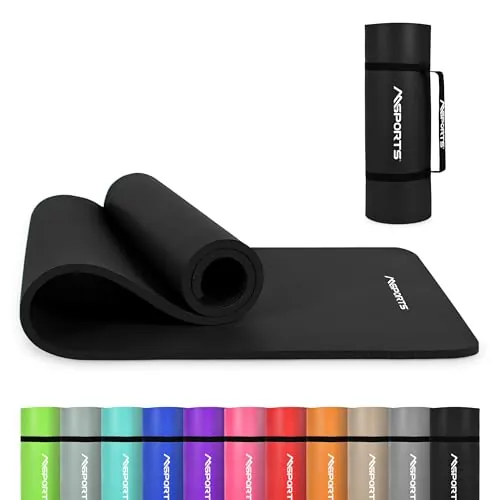
MSPORTS Yoga Mat Premium Non Slip Thick
- Thick 0.6-inch NBR foam provides substantial cushioning for floor work.
Comparison
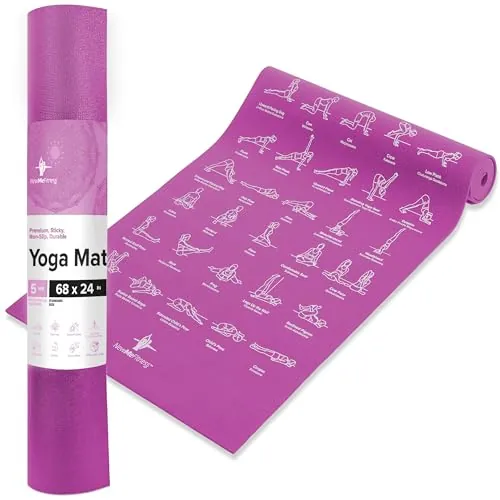
MSPORTS and NewMe Fitness both offer yoga and exercise mats for home stretching, Pilates, and floor workouts. MSPORTS prioritizes a larger, much thicker cushioned surface, while NewMe Fitness stands out with 70 printed yoga-pose illustrations for self-guided sessions. The key choice is between comfort-focused padding and built-in practice prompts in a thinner, more compact mat.
#1 Overall Winner
Contender
Choose MSPORTS if you want maximum cushioning, more room, and a mat that better suits comfortable floor work. Choose NewMe Fitness if printed yoga-pose prompts and compact storage matter more than thick padding. For most users exercising on hard floors, MSPORTS has the more versatile physical design.
Overall winner
Depends on your needs
| Feature | MSPORTS Yoga Mat Premium Non Slip Thick | NewMe Fitness Yoga Mat with 70 Printed Poses | Winner |
|---|---|---|---|
| Primary advantage | Thick cushioning and larger surface | 70 printed pose illustrations | Depends |
| Material | Nitrile Butadiene Rubber foam | Polyvinyl Chloride | Depends |
| Thickness | 0.6 inches | 0.2 inches / 5 mm | MSPORTS Yoga Mat Premium Non Slip Thick |
| Dimensions | 74.5 by 32 inches | 68 by 24 inches | MSPORTS Yoga Mat Premium Non Slip Thick |
| Comfort | Plush foam with strong cushioning feedback | Moderate cushioning with mixed thickness feedback | MSPORTS Yoga Mat Premium Non Slip Thick |
| Yoga guidance | Free yoga e-book listed | 70 poses printed on mat | NewMe Fitness Yoga Mat with 70 Printed Poses |
| Grip | Textured surface; generally positive feedback | Mixed feedback, especially with sweaty hands | MSPORTS Yoga Mat Premium Non Slip Thick |
| Durability feedback | Mixed; some reports of tearing | Generally positive long-term reports | NewMe Fitness Yoga Mat with 70 Printed Poses |
| Portability | Includes carry strap; thicker roll | Thin, compact rolling format | Depends |
| Storage efficiency | Bulkier due to thick foam | Thinner profile for compact storage | NewMe Fitness Yoga Mat with 70 Printed Poses |
| Care | Hand wash only | Hand wash only | Tie |
| Value context | Similar price with larger, thicker mat and strap | Similar price with printed guidance | Depends |
MSPORTS is the more supportive mat for gentle recovery-oriented use, based on its substantial cushioning and repeated feedback about comfort during knee and floor contact. It may make post-exercise stretching, relaxed mobility, and floor exercises more comfortable on a hard surface. NewMe Fitness can support similar routines, especially for pose-led stretching, but its thinner profile offers less separation from the floor. Neither product makes a medical recovery claim in the information provided.
Both mats support low-impact home training, including yoga, Pilates, stretching, warm-ups, and bodyweight floor work. MSPORTS is more versatile where sessions include kneeling, lying, or extended floor contact because its deeper foam reduces direct contact with a hard floor. NewMe Fitness is more focused on guided yoga practice: the printed poses can help users assemble or remember a sequence at home. Neither product is primarily designed for high-impact cardio, and MSPORTS's soft surface may not be ideal for users seeking a very firm base for standing balance positions.
Neither mat is a load-bearing strength-training tool, but both can support warm-ups, mobility drills, core work, and bodyweight exercises. MSPORTS is more suitable for kneeling movements, planks, and floor-based strength work because its thicker foam offers more cushioning and a larger surface. Its softness may be less desirable for users who want a firm footing during standing exercises. NewMe Fitness provides a firmer, thinner base, but its narrower dimensions and lighter padding are less accommodating for extended floor sessions.
Mobility and flexibility work are central use cases for both products. MSPORTS is the more comfortable choice for long holds, seated stretches, and recovery-style floor routines because of its thick cushioning and wide layout. NewMe Fitness brings a different advantage: its printed pose illustrations can prompt a self-led yoga or stretching flow, particularly for newer users. For users who already know their sequence and need more support from the floor, MSPORTS is the more practical mat. For users learning poses, NewMe Fitness has a distinct training aid.
For gentle post-workout stretching and floor mobility, MSPORTS has the clearer advantage because its thick foam is repeatedly described as comfortable for knees and joints. Its larger surface also gives more room for relaxed stretching positions. NewMe Fitness can still serve a recovery routine, particularly when its pose images help a user select stretches, but the thinner construction provides less padding. These mats can support a comfortable stretching environment; they are not substitutes for individualized medical advice or treatment.
For their main role as exercise surfaces, both mats have credible strengths. MSPORTS performs best as a cushioned, spacious base for low-impact exercise, with a textured surface and reviews that frequently praise comfort and steadiness. NewMe Fitness performs best as a yoga-practice aid, using printed poses to make unguided sessions easier to navigate. The main performance concern for MSPORTS is that its soft foam can feel less firm during standing work. For NewMe Fitness, grip is the more notable concern because feedback becomes mixed when hands are sweaty.
Training support is strong for both products, but it comes from different features. MSPORTS supports routine consistency by making floor exercise more comfortable and giving users a large, versatile surface for Pilates, stretching, yoga, and bodyweight work. NewMe Fitness supports consistency through visual pose references that can help beginners practice at their own pace. NewMe Fitness therefore has a specific advantage for building simple yoga routines, while MSPORTS is more adaptable across different floor-training formats. Advanced users who already know their flows may get more practical benefit from MSPORTS's added space and cushioning.
MSPORTS is the better companion for floor-based strength work. The thicker foam can make planks, core sessions, kneeling drills, and mobility work more tolerable on hard flooring, and the wider surface allows more freedom of movement. However, the foam is intentionally soft, so users who prioritize a firm, planted feel for squats or balance-focused standing movements may find it compresses too much. NewMe Fitness offers a lower-profile base but has fewer benefits for strength-oriented floor work due to its narrower dimensions and reduced cushioning.
Both mats are highly relevant to mobility and flexibility practice. MSPORTS is better for comfort-heavy routines, including seated positions, kneeling stretches, and longer floor holds, because of its thicker foam and larger area. NewMe Fitness is particularly useful for users still learning yoga positions because the printed illustrations keep visual references within view. The choice comes down to physical support versus instructional support: MSPORTS provides more of the former, while NewMe Fitness provides more of the latter.
MSPORTS is the more supportive mat for gentle recovery-oriented use, based on its substantial cushioning and repeated feedback about comfort during knee and floor contact. It may make post-exercise stretching, relaxed mobility, and floor exercises more comfortable on a hard surface. NewMe Fitness can support similar routines, especially for pose-led stretching, but its thinner profile offers less separation from the floor. Neither product makes a medical recovery claim in the information provided.
Both mats are intended to create a more comfortable exercise surface, but stable use still depends on the movement, floor, and individual technique. MSPORTS has generally stronger grip feedback and more padding, which can be useful for low-impact floor work. Its soft foam may compress during standing poses, so users seeking a very firm base should assess that trade-off. NewMe Fitness provides pose illustrations, but these are visual references rather than personalized instruction; beginners should avoid forcing unfamiliar positions. Its mixed sweaty-hand grip feedback also means users should check traction before balance-focused practice.
MSPORTS is decisively more comfort-oriented. Its 0.6-inch NBR foam is much thicker than NewMe Fitness's 5 mm PVC construction, and feedback repeatedly highlights cushioning for knees and floor exercise. The extra width and length also give users more room to move without reaching the edge. NewMe Fitness offers some cushioning, and some users find its padding a good balance for yoga, but others specifically want it thicker. Choose NewMe Fitness only if a lower-profile feel is preferable to plush support.
NewMe Fitness has the clearer ease-of-use advantage for novice yoga practice. Its printed pose illustrations offer immediate visual prompts and can make a screen-free routine easier to follow. The thinner mat also rolls into a more compact format. MSPORTS is straightforward to roll out, clean, and carry with its included strap, but its thicker foam is less compact when stored. For exercise comfort, MSPORTS may reduce friction in floor routines; for learning and setting up a basic yoga sequence, NewMe Fitness is simpler.
MSPORTS has the stronger stability case for floor exercise because its textured surface receives generally positive non-slip feedback. Its foam does compress, however, and one review notes that feet can sink into the mat during standing movements; that softness may feel less stable for users who want a very firm base. NewMe Fitness has a thinner profile that can feel firmer underfoot, but its grip feedback is mixed, particularly with sweaty hands. For reliable traction, MSPORTS has the more consistent evidence.
MSPORTS is the better choice for grip based on the supplied evidence. Its textured surface is designed to keep the mat in place, and several reviews describe good or truly non-slip performance. NewMe Fitness also claims a non-slip design, but buyer feedback is divided: some find it effective while others report a slippery feel when hands get sweaty. Cleaning or surface conditions may affect either mat, but MSPORTS has the clearer feedback advantage.
NewMe Fitness is more space-efficient. Its thinner 5 mm profile and 68 by 24-inch dimensions make it easier to roll tightly and fit into smaller storage areas. MSPORTS includes a strap for carrying and storage, but its 0.6-inch foam and wider, longer layout create a bulkier roll. The MSPORTS mat is the better choice for users who have a dedicated exercise area and want extra room; NewMe Fitness better suits users storing a mat in a cupboard, bag, or compact home setup.
Both mats receive generally positive build-quality feedback, but their construction priorities differ. MSPORTS uses thick NBR foam designed for softness and cushioning; customers commonly describe it as substantial, comfortable, and easy to clean. NewMe Fitness uses a thinner PVC construction that buyers describe as lightweight yet sturdy, with positive reports of longer-term use. MSPORTS has more mixed reports around tearing, while NewMe Fitness has a potential long-term consideration around the printed surface. Material preference should reflect whether a plush or lower-profile feel is wanted.
NewMe Fitness has the stronger durability pattern in the supplied information. Alongside generally favorable customer feedback, one reviewer describes regular use over several years without needing a replacement. MSPORTS also has buyers who find it durable and well made, but its aggregated feedback includes reports that it can tear easily. Thick, soft foam can be more vulnerable to damage than a thinner mat depending on storage and use, although the provided information does not establish a specific cause. Neither product includes usable warranty detail here.
Both products list hand washing as their care instruction, so neither has a complicated maintenance requirement. MSPORTS buyers commonly describe the foam as easy to clean, and several note little or no odor. NewMe Fitness feedback is more variable: some users report no discernible odor, while others mention a distinct smell. The printed artwork on NewMe Fitness may warrant gentler cleaning to preserve its visibility, although no specific cleaning method beyond hand washing is provided. Drying and storing either mat cleanly should help maintain usability.
Both mats are portable for home, studio, or outdoor use, but their strengths differ. MSPORTS weighs 1.5 kg and includes a carrying strap, which is useful for transporting its larger, thick foam body. NewMe Fitness does not list a carrier, but its thinner profile makes it easier to roll into a compact package. Choose MSPORTS if a strap and cushioning matter most; choose NewMe Fitness if minimizing rolled bulk is the main concern.
Both listings identify their primary mat material and provide basic care information. MSPORTS specifies Nitrile Butadiene Rubber and describes its foam as high density; NewMe Fitness specifies PVC and additionally states that the material is BPA-free and phthalate-free. MSPORTS supplies more detail on dimensions, thickness, weight, and included strap, while NewMe Fitness clearly identifies the printed-pose feature and its 5 mm construction. Neither listing provides extensive technical detail on all coatings, inks, or manufacturing processes, so material assessment is limited to the stated information.
The listed prices are very close, so value is driven more by use than cost. MSPORTS offers a much larger, thicker mat, an included strap, and strong comfort and grip feedback, giving it a stronger value case for users who need a durable-feeling cushioned exercise surface. NewMe Fitness justifies its similar price through its 70 printed pose illustrations and generally favorable long-term durability feedback. It is less compelling for users who need generous padding or width. Neither option is automatically better value; the useful feature should determine the purchase.
Both brands have strong customer-response signals in the supplied listings, with high star ratings and substantial review counts. NewMe Fitness has a slight advantage in the supplied information for its long-term durability comments and clearly stated PVC material attributes. MSPORTS has particularly strong feedback for comfort, grip, and the practical size of its mat. Neither product dataset provides detailed independent testing, comprehensive support information, or warranty terms, so brand trust should be judged mainly from the listed specifications and buyer feedback rather than broader claims.
Customer satisfaction is high for both mats. MSPORTS receives repeated praise for its thickness, soft feel, wide surface, knee cushioning, and generally effective grip; complaints center on occasional tearing and the bulk created by thick foam. NewMe Fitness is well received for its printed pose guidance, beginner usefulness, compact handling, and reports of durability. Its recurring drawbacks are mixed grip when sweaty, requests for more padding, occasional odor comments, and concern that printing could fade. MSPORTS has the stronger comfort pattern, while NewMe Fitness has the clearer beginner-guidance appeal.
Many of the core claims are supported by listed specifications and relevant buyer feedback. MSPORTS's thickness, dimensions, NBR material, strap, and hand-wash care are directly stated, while reviews broadly support its cushioning and grip claims. NewMe Fitness directly lists its dimensions, 5 mm thickness, PVC material, and 70 printed poses; reviews strongly support the usefulness of the pose illustrations. The non-slip claim is less consistently supported for NewMe Fitness because sweaty-hand feedback is mixed. General wellness wording in either listing should be treated as marketing language rather than verified outcome evidence.
MSPORTS narrowly wins as the more versatile exercise mat. Its main strengths are substantial cushioning, a larger usable surface, and more consistently positive grip feedback. It is particularly well suited to home users doing Pilates, stretching, yoga, and floor workouts on hard surfaces. Its main limitations are the bulkier roll, soft underfoot feel, and mixed reports of tearing.
NewMe Fitness remains the better targeted pick for beginner-led yoga practice. The printed 70-pose layout is its standout feature, and its thinner build stores more easily with generally favorable durability feedback. Its limitations are reduced cushioning, smaller dimensions, and variable traction feedback. Choose based on whether physical comfort or visual yoga guidance matters more.

Overall winner
Depends on your needs
The better choice depends on the priority. MSPORTS is the stronger option for users wanting a larger, substantially thicker mat with more cushioning and generally stronger grip feedback. NewMe Fitness is more distinctive for beginners and self-guided yoga because its surface includes 70 pose illustrations and its thinner design is easier to roll compactly.
The NewMe Fitness mat has the clearer beginner-focused feature: its printed pose illustrations provide at-a-glance prompts during independent practice. That does not replace instruction for unfamiliar movements. Beginners who need more comfort on hard floors, however, may prefer the thicker cushioning and larger working area of the MSPORTS mat.
The MSPORTS mat provides more cushioning based on its listed 0.6-inch thickness and NBR foam construction, compared with the NewMe Fitness mat's listed 5 mm thickness. Buyer feedback for MSPORTS repeatedly highlights softness and comfort for knees and floor exercise. The trade-off is that the softer surface can compress during standing work.
NewMe Fitness is the more practical option for limited storage because it is thinner, lighter in use, and described by buyers as rolling into a neat, compact roll. MSPORTS can still be stored with its included strap, but its thicker foam construction creates a bulkier roll and may take up more storage space.
Yes. Both products are listed for Pilates, stretching, yoga, and home workouts. MSPORTS is particularly suitable where floor cushioning is important, while NewMe Fitness offers pose illustrations that can help structure a simple stretching or yoga session. Users should choose based on desired padding, available space, and whether visual guidance is useful.
MSPORTS has the stronger grip case in the supplied information. It has a textured surface, and reviews commonly describe it as stable or non-slip. NewMe Fitness is also marketed as non-slip, but buyer feedback is mixed, with some users reporting slipperiness when hands become sweaty. Grip can also vary with surface conditions and use.
NewMe Fitness is likely easier to pack into a compact roll because of its thinner 5 mm design. MSPORTS includes a carry strap and is portable, but its 0.6-inch foam is bulkier when rolled. Choose NewMe Fitness for compact storage, or MSPORTS if extra cushioning is worth the larger rolled size.
NewMe Fitness has more consistently favorable supplied durability feedback, including one report of frequent use over several years. MSPORTS has positive comments on material quality, but its feedback is more mixed because some customers report tearing. Neither listing provides a warranty detail here, so long-term durability cannot be guaranteed from the available data.
Check our rankings and expert guides to find the best fitness products for your goals.