#1 Overall Winner
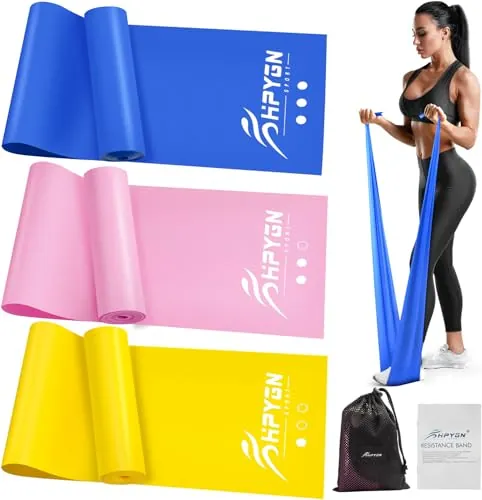
HPYGN 3 Levels Non-Latex Exercise Bands for Physical Therapy & Yoga
- Long flat band style works well for stretching, rehab movements, and full-body exercises.
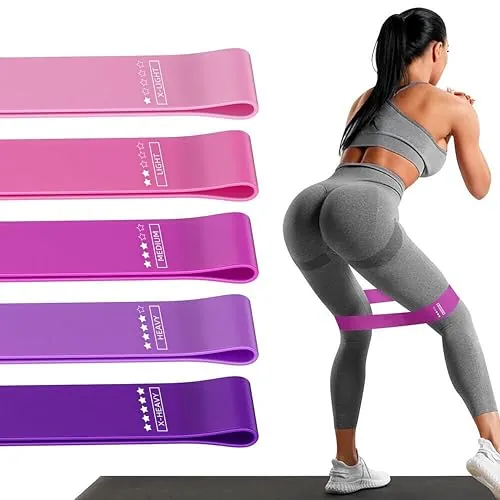
Comparison
HPYGN and JAKKOFOXX are both budget-friendly resistance band sets designed for home workouts, stretching, and strength training. HPYGN uses long flat therapy-style bands that suit mobility and longer-range movements, while JAKKOFOXX uses compact loop bands that are especially convenient for lower-body activation. Both have high review counts and generally positive feedback, with mixed reports on durability for lighter bands.
#1 Overall Winner
Contender
Pick HPYGN if you want long, flat bands for stretching, mobility, and physical-therapy-style routines (and you want explicit latex-free positioning). Pick JAKKOFOXX if you prefer loop bands for glute/leg work and want five resistance levels for finer progression. Both are portable, quiet, and strong value, with mixed durability feedback on lighter bands.
Overall winner
Depends on your needs
| Feature | HPYGN 3 Levels Non-Latex Exercise Bands for Physical Therapy & Yoga | JAKKOFOXX Resistance Loop Exercise Bands Set of 5 | Winner |
|---|---|---|---|
| Band style / format | Long flat therapy-style bands | 12" x 2" loop bands | Depends |
| Resistance levels included | 3 levels (Light/Medium/Heavy) | 5 levels (Extra Light to Extra Heavy) | JAKKOFOXX Resistance Loop Exercise Bands Set of 5 |
| Material disclosure | TPE; listed as synthetic rubber; latex-free stated | Thermoplastic elastomer (TPE) stated | Depends |
| Best fit for mobility & stretching | Strong fit (long bands; mobility-focused positioning) | Good, but loop length can limit some stretches | HPYGN 3 Levels Non-Latex Exercise Bands for Physical Therapy & Yoga |
| Best fit for glute/leg loop drills | Possible, may require knotting/doubling | Natural fit for loop-based drills | JAKKOFOXX Resistance Loop Exercise Bands Set of 5 |
| Stability (rolling / staying put) | Anti-roll design emphasized; mixed but generally stable | Mixed feedback; rolling up noted by customers | HPYGN 3 Levels Non-Latex Exercise Bands for Physical Therapy & Yoga |
| Durability sentiment | Mixed; some report light band breaking | Mixed; some report lighter bands snapping | Tie |
| Ease of use | Simple, adjustable by grip position; includes guide | Quick to use for many drills; includes booklet | Tie |
| Portability | Very portable; carry bag included | Very portable; compact loops; carry bag included | Tie |
| Space efficiency | Excellent for small spaces | Excellent for small spaces | Tie |
| Noise | Very quiet | Very quiet | Tie |
| Value for money (based on price + feedback) | Very strong budget value | Very strong budget value | Tie |
| Included accessories | Carry bag + instruction manual/starter guide | Carry bag + instruction booklet | Tie |
| Best for latex-avoidant buyers (info provided) | Latex-free explicitly stated | Not explicitly stated as latex-free (TPE listed) | HPYGN 3 Levels Non-Latex Exercise Bands for Physical Therapy & Yoga |
HPYGN provides stronger recovery routine support in the provided data because it’s consistently framed as a rehab and mobility tool and is reviewed in that context (for example, shoulder mobility and post-treatment use). JAKKOFOXX can also support recovery-style sessions, but mixed feedback on rolling and occasional snapping in lighter bands may add friction if your priority is gentle, repeatable, high-rep work. For either set, careful inspection for nicks/tears before use matters for consistent sessions.
Both products support full-body training, warm-ups, and accessory work, but they shine in different parts of a program. HPYGN’s long flat bands are typically easier for mobility circuits, rehab-style drills, and movements that need more length (for example, longer pulls, assisted stretches, or standing movements that would feel cramped with a small loop). JAKKOFOXX’s loop bands are often simpler for lower-body sessions—glute bridges, lateral steps, and hip activation—where a loop sits in place without needing knots.
If your training is Pilates-leaning, either can work; your deciding factor is usually whether your favorite moves are better with a long band (HPYGN) or a closed loop around the legs (JAKKOFOXX).
For strength-focused accessory work, both sets can add resistance to presses, rows, curls, and lower-body drills, but the experience differs. HPYGN provides three levels and lets you fine-tune difficulty by changing grip position or doubling the band. JAKKOFOXX offers five levels, which can make it easier to pick a “just right” tension for a specific exercise, especially for lower-body band work.
Neither set replaces heavy free weights for maximal loading, but both can support progressive overload within band-based training and help add variety to home workouts.
HPYGN is the stronger match for mobility and flexibility work because the longer flat band makes it easier to set up stretches across different heights and ranges of motion. It is also positioned directly for physical therapy and joint-mobility style training. JAKKOFOXX can still support stretching and Pilates warm-ups, but the shorter loop size can be limiting for certain shoulder, back, and longer-range flexibility drills.
If your main use is stretching, yoga-adjacent mobility, or rehab-style routines, the flat band format generally offers more options with fewer workarounds.
Both sets are marketed for physical-therapy-style use, but HPYGN is more explicitly oriented toward rehab and mobility routines in the provided details, with reviews mentioning shoulder work and post-treatment use. The long band format can make gentle, controlled resistance easier to apply across a wider range of exercises. JAKKOFOXX also fits rehab contexts and is commonly compared to bands used in physical therapy, but rolling and snapping reports (particularly in lighter bands) are worth considering if you plan on frequent, high-rep rehab sessions.
Both band sets appear to perform well for their intended role: adding portable resistance for home workouts, stretching, and accessory strength work. HPYGN tends to perform best when you need band length for setup and range of motion, and many users describe the set as effective and easy to integrate into routines. The main performance concern is that a minority of buyers report inconsistent resistance feel through larger ranges.
JAKKOFOXX performs strongly for loop-based drills and provides more resistance options, but performance can be undermined if the band rolls during an exercise or if lighter loops fail early for some users. For most users, the “best performer” is the one that matches the movement patterns you do most.
HPYGN offers strong training support for mobility days, rehab routines, and general accessory work thanks to its long-band versatility and easy difficulty changes by grip and band doubling. It’s also an easy add-on for small-space home gyms because storage and setup are minimal.
JAKKOFOXX supports progression particularly well by giving five distinct resistance levels, including very light options for beginners and heavier options for more demanding work. The loop format is also convenient for quick sessions because you can keep a band around the legs and transition between movements. If you want more “steps” in intensity, JAKKOFOXX supports that better; if you want more movement variety from one band length, HPYGN often supports that better.
For band-based strength work, JAKKOFOXX’s five levels can make it simpler to match resistance to the lift—especially for glute and leg accessories where loop placement is straightforward. HPYGN’s long bands are more adaptable for standing upper-body work and longer pulling patterns, and you can increase challenge by shortening your grip or doubling the band. If you’re sensitive to resistance “ramping” through the range of motion, note that a small number of HPYGN reviews mention uneven stretch feel.
HPYGN is better aligned with mobility and flexibility training because long flat bands generally make assisted stretching and range-of-motion drills easier to set up across different body sizes and positions. Reviews and product positioning emphasize therapy-style use and shoulder/hip mobility. JAKKOFOXX can still be used for mobility (especially lower-body work), but the loop size can restrict leverage for certain stretches, and the rolling complaints can make longer holds or repeated stretching sets less comfortable.
HPYGN provides stronger recovery routine support in the provided data because it’s consistently framed as a rehab and mobility tool and is reviewed in that context (for example, shoulder mobility and post-treatment use). JAKKOFOXX can also support recovery-style sessions, but mixed feedback on rolling and occasional snapping in lighter bands may add friction if your priority is gentle, repeatable, high-rep work. For either set, careful inspection for nicks/tears before use matters for consistent sessions.
Both products are generally safe when used as intended, but band safety depends on condition and setup. Reviews for both sets include snapping/breaking reports (often involving lighter bands), so it’s sensible to inspect for nicks, small tears, or overstretching before each session. HPYGN reviews include a note that punctures can lead to failure; that same principle applies to loop bands as well.
HPYGN’s flat, longer format can reduce awkward angles for some rehab and mobility drills, while JAKKOFOXX’s rolling complaints could increase distraction during movements. For either set, controlled tension and avoiding sharp anchors help reduce risk.
Comfort is similar overall, with both sets described as easy on skin by many buyers. HPYGN’s wider flat bands can feel more comfortable during stretches and longer holds because they spread pressure and are designed to stay flat. JAKKOFOXX can be very comfortable when it stays in place, but rolling can create pinching or pressure points for some users during lower-body movements. If you plan longer mobility sessions, HPYGN has a small edge in comfort consistency.
Both are easy to start with: they’re lightweight, require no assembly, and include carry bags plus basic guidance. HPYGN is straightforward for stretching and can be adjusted by grip position without changing bands as often. JAKKOFOXX is quick for loop-based drills and includes an illustrated booklet that can help beginners try more exercises.
The main ease-of-use deciding factor is whether you want a long band that you can wrap/hold in many ways (HPYGN) or a loop you can slip on and start moving with (JAKKOFOXX).
HPYGN has an advantage on stability because the product is designed to stay flat, and the wider, long-band format typically resists rolling in many use cases. JAKKOFOXX’s stability feedback is more mixed, with multiple buyers noting the loops can roll up, which can disrupt form and comfort—especially on the legs during repeated reps.
If rolling is a deal-breaker for your workouts, HPYGN is the safer pick based on the provided review summaries.
HPYGN’s wider flat design can feel easier to hold during pulls and stretches because pressure is distributed over more surface area, and the listing emphasizes a non-slip experience. JAKKOFOXX loops are compact and easy to position, but when they roll they can feel harder to manage mid-set. Neither set includes handles, so “grip” depends on band texture and how comfortably you can hold or anchor the band for your exercises.
JAKKOFOXX provides more built-in adjustability via five resistance levels, which can help you progress in smaller steps or tailor resistance to different muscle groups. HPYGN has three levels, but it’s also adjustable in practice because you can shorten the band by changing hand placement, doubling it, or knotting it for loop-like work.
If you want more “preset” options, JAKKOFOXX is better. If you prefer manipulating length and leverage to fine-tune difficulty, HPYGN’s long bands can feel more adaptable.
Both sets are excellent for small spaces because they replace many accessory movements that might otherwise require dumbbells, cables, or machines. HPYGN’s long flat bands roll up easily and store in the included bag. JAKKOFOXX’s loops are even more compact due to their smaller dimensions and also come with a carry bag.
If you’re building a minimal home gym, either set works well; the better choice is based on the movements you’ll actually use consistently.
Both products are effectively silent during use, making them well suited to apartments, early-morning training, and shared spaces. Noise differences are negligible compared with weights or cardio machines.
Both sets are generally described by customers as well-made for the price, with comfortable feel and included bags/manuals supporting everyday use. HPYGN emphasizes anti-roll design and a non-sticky experience, which aligns with many users treating them as reliable Pilates/therapy tools. JAKKOFOXX is often described as smooth and comfortable, but buyer feedback is more mixed on how well the loops stay flat during exercise.
Overall build quality looks comparable at a budget level, with the main practical difference being how each format behaves under tension (flat bands staying flatter vs loops sometimes rolling).
Durability is a mixed area for both products. HPYGN has many users who expect long life, but there are reports of the light (yellow) band breaking in some cases, and one review notes puncture/tearing can quickly lead to failure. JAKKOFOXX also receives mixed feedback, with multiple comments that lighter bands can snap sooner while thicker bands hold up better.
If durability is your top priority, treat either set as needing basic care: avoid sharp edges, inspect for small tears, and store them clean and dry in the included bag.
Maintenance is simple for both: wipe them down as needed and store them in the included bag. HPYGN reviewers specifically mention cleaning with a spray and air drying without issues. JAKKOFOXX includes sleeves/case elements in at least one review to prevent sticking and supports clean storage.
Because durability complaints exist for lighter bands on both sets, basic maintenance also includes inspection for small tears and avoiding storage near sharp objects.
Both sets are highly portable and include carry bags, making them easy to keep in a suitcase, backpack, or desk drawer. JAKKOFOXX’s loop dimensions make it especially compact. HPYGN remains travel-friendly, but the longer flat bands may take slightly more space when rolled compared with small loops.
Since these are equipment products, transparency mainly means how clearly materials and key specs are described. JAKKOFOXX lists the material type as thermoplastic elastomer (TPE) and clearly labels the resistance range categories (extra light through extra heavy). HPYGN strongly emphasizes being latex-free and identifies TPE, but the specs also list “synthetic rubber,” which can be less specific for shoppers comparing materials.
Neither listing provides exact resistance/tension measurements per band, so if you need precise loading targets, you may have to rely on the labeled levels and user testing rather than published numbers.
Both sets are priced as budget options and are widely described as good value by buyers. HPYGN offers a low-cost entry into long therapy-style bands with strong mobility and rehab utility, plus a bag and guide. JAKKOFOXX costs a bit more but includes five resistance levels, which can improve day-to-day usefulness if you want more progression steps.
Value ultimately depends on whether you’ll use the long-band versatility (HPYGN) or the loop convenience and extra resistance options (JAKKOFOXX). Mixed durability feedback for lighter bands is the main value risk for both.
Based on the provided data, both brands are primarily represented through product listings and large volumes of customer reviews rather than detailed company transparency. JAKKOFOXX is described as “USA designed” in the listing, while HPYGN emphasizes latex-free materials and durability testing claims. With both, trust is better supported by broad buyer feedback and clear basic specs than by deep brand documentation. If you prioritize brand reputation beyond reviews, the available information here is limited.
Both products have large review counts and strong average ratings, suggesting many buyers are satisfied with performance for home workouts. HPYGN is repeatedly praised for ease of use, portability, and usefulness for Pilates and therapy-style work, with mixed feedback on durability and stretch consistency. JAKKOFOXX is commonly praised for convenient resistance levels and comfort, while repeated negatives include rolling up and lighter bands snapping.
In short: satisfaction is high for both, but the most common complaints map directly to their weak spots—HPYGN’s consistency/durability edge cases and JAKKOFOXX’s rolling and lighter-band durability.
Both listings make typical resistance-band claims about versatility for home workouts, stretching, and physical-therapy-style use. Those claims are broadly supported by customer feedback describing effective workouts, portability, and integration into routines (including Pilates and rehab-style sessions). However, neither listing provides exact resistance/tension values per band, which limits how verifiable “strength gain” or progression claims are in precise terms.
Both sets also include durability-related claims, but reviews show mixed real-world outcomes—especially for lighter bands—so durability expectations should be practical rather than absolute.
This comparison is best called a tie that depends on format. HPYGN is the better choice if you want a long, flat therapy-style band set for mobility, stretching, and rehab-style routines, with standout portability and strong value; its main limitation is mixed feedback on durability and stretch consistency for some users. JAKKOFOXX is the better fit if you want loop bands for glute/leg work and appreciate having five resistance levels for finer progression; its main limitation is mixed stability (rolling) and durability complaints, especially in lighter loops.
Pick the band style that matches your most common exercises, and you’ll get the best results from either set.
Overall winner
Depends on your needs
Neither is a universal winner because the formats suit different training. HPYGN’s long flat bands are better for longer-range stretching and many physical-therapy-style movements. JAKKOFOXX’s loop bands are often more convenient for lower-body activation and quick at-home sets. Both have strong value and high review volume, with mixed durability feedback.
HPYGN is the more natural fit for mobility and rehab-style routines because the longer, flat band design works well across larger ranges of motion and is positioned specifically for therapy use. JAKKOFOXX can still work for rehab, especially for lower-body exercises, but the shorter loop format can be limiting for some shoulder and upper-body movements.
JAKKOFOXX loop bands are typically easier for glute/hip activation because the loop design stays around the legs without needing knots. HPYGN can be used for similar goals, but you may need to knot or double the band to create a loop, which adds a small setup step and may change how secure it feels during fast transitions.
Rolling can depend on exercise selection and positioning. HPYGN highlights an anti-roll, wide flat design and many users find them comfortable for Pilates-style moves. JAKKOFOXX has mixed stability feedback, with multiple customers noting the loops can roll up, which may be distracting during longer sets or when the band is under uneven tension.
Both are beginner-friendly, but in different ways. JAKKOFOXX includes five levels including extra light options, which can make it easier to start very gently and progress in smaller steps. HPYGN’s long bands are straightforward for stretching and light resistance work, and many users like being able to adjust difficulty by changing hand/foot position.
HPYGN explicitly states the bands are latex-free and made from TPE. JAKKOFOXX lists the material as thermoplastic elastomer (TPE) but does not explicitly state latex-free in the provided data. If latex avoidance is a must-have, HPYGN provides clearer confirmation based on the information available.
Both are highly portable and include carry bags. JAKKOFOXX loop bands are very compact due to their small loop dimensions, making them easy to drop into a small bag. HPYGN is still travel-friendly, but the longer flat bands can take slightly more space when rolled, depending on how you pack them.
Buyer feedback is mixed for both sets. Many customers describe them as well-made and effective, but there are also reports of lighter bands breaking (HPYGN’s light band and JAKKOFOXX’s lighter loops in some reviews). Care matters: avoiding sharp edges, punctures, and overstretching can help reduce early failure.
Check our rankings and expert guides to find the best fitness products for your goals.