TrainingRanker
Menu
Gaiam Print Yoga Mat vs innhom Gym Flooring Tiles

Comparison

Gaiam Print Yoga Mat vs innhom Gym Flooring Tiles

The Gaiam Print Yoga Mat is a lightweight, single-piece mat aimed at yoga, Pilates, and general floor exercises, while the innhom interlocking tiles are designed to build out a larger home gym floor area. Both are well-reviewed, but they solve different problems: portability and a defined practice surface vs coverage, cushioning, and floor protection. Buyer feedback highlights odor and occasional grip/thickness complaints for Gaiam, and occasional shifting/edge-fit issues for innhom.

Expert tested Data driven Unbiased reviews Updated 18 May 2026
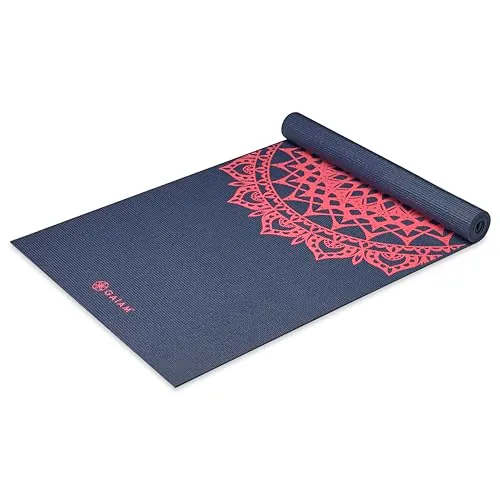
Gaiam Print Yoga Mat, Non Slip Exercise & Fitness Mat for All Types of Yoga, Pilates & Floor Exercises

#1 Overall Winner

Gaiam Print Yoga Mat, Non Slip Exercise & Fitness Mat for All Types of Yoga, Pilates & Floor Exercises

81/100
  • Lightweight single mat that’s easy to carry and roll up for class or travel
View review
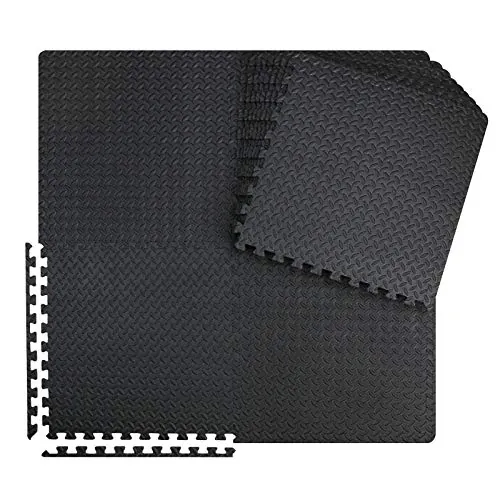
innhom 12/24/48 Tiles Gym Flooring Gym Mats Exercise Mat for Floor Workout Mat Foam Floor Tiles for Home Gym Equipment Garage

Contender

innhom 12/24/48 Tiles Gym Flooring Gym Mats Exercise Mat for Floor Workout Mat Foam Floor Tiles for Home Gym Equipment Garage

82/100
  • Covers a large area (up to 48 sq ft per 12-tile set) for home gym flooring
View review

Quick verdict

Choose the Gaiam Print Yoga Mat if you want a lightweight, roll-up mat for yoga or Pilates in a small footprint. Choose innhom interlocking gym flooring tiles if you’re building a home gym area and want broader floor coverage, more cushioning, and easier wipe-down maintenance. If you do both, many people use tiles as the base floor and a yoga mat on top for practice.

Overall winner

Depends on your needs

At-a-glance comparison

Feature Gaiam Print Yoga Mat, Non Slip Exercise & Fitness Mat for All Types of Yoga, Pilates & Floor Exercises innhom 12/24/48 Tiles Gym Flooring Gym Mats Exercise Mat for Floor Workout Mat Foam Floor Tiles for Home Gym Equipment Garage Winner
Product type Single roll-up yoga mat Interlocking foam floor tiles Depends
Primary use case Yoga, Pilates, floor exercises Home gym flooring, equipment area, floor exercises Depends
Size / coverage 68 in x 24 in Up to 48 sq ft per 12 tiles innhom 12/24/48 Tiles Gym Flooring Gym Mats Exercise Mat for Floor Workout Mat Foam Floor Tiles for Home Gym Equipment Garage
Thickness (listed) 4 mm 10 mm (3/8 in) innhom 12/24/48 Tiles Gym Flooring Gym Mats Exercise Mat for Floor Workout Mat Foam Floor Tiles for Home Gym Equipment Garage
Portability Very portable, rolls up Portable but bulkier; tiles can be disassembled Gaiam Print Yoga Mat, Non Slip Exercise & Fitness Mat for All Types of Yoga, Pilates & Floor Exercises
Ease of setup Unroll and use Interlock tiles; may need fitting/cutting Gaiam Print Yoga Mat, Non Slip Exercise & Fitness Mat for All Types of Yoga, Pilates & Floor Exercises
Grip / traction (buyer feedback) Mixed: some praise, some slipping (esp. hot yoga) Generally positive; some shifting reported Depends
Stability under movement Single piece; no seams Some reports of tiles coming apart or shifting Gaiam Print Yoga Mat, Non Slip Exercise & Fitness Mat for All Types of Yoga, Pilates & Floor Exercises
Comfort underfoot Moderate cushioning; mixed thickness feedback Often praised for cushioning and comfort innhom 12/24/48 Tiles Gym Flooring Gym Mats Exercise Mat for Floor Workout Mat Foam Floor Tiles for Home Gym Equipment Garage
Durability sentiment Mixed: some early wear/falling apart reports Mixed: many say durable; some seam/edge issues Depends
Cleaning / maintenance Spot clean; avoid sun exposure; air out initially Wipe with damp cloth/mild soap; closed-cell surface innhom 12/24/48 Tiles Gym Flooring Gym Mats Exercise Mat for Floor Workout Mat Foam Floor Tiles for Home Gym Equipment Garage
Odor on unboxing Commonly reported; advised to air out 2–3 days Reported by some; others report little/no smell innhom 12/24/48 Tiles Gym Flooring Gym Mats Exercise Mat for Floor Workout Mat Foam Floor Tiles for Home Gym Equipment Garage
Value for money (buyer sentiment) Frequently praised as a good starter value Frequently praised for home gym coverage value Depends
Best fit for small spaces Excellent; minimal footprint Good, but designed for covering areas Gaiam Print Yoga Mat, Non Slip Exercise & Fitness Mat for All Types of Yoga, Pilates & Floor Exercises

Detailed comparison

Recovery Support

For recovery routines, the innhom tiles tend to be more accommodating when you want to move around, change positions, or spend longer on the floor, since they can soften a whole area and are easy to wipe down. The Gaiam mat is still a strong choice for recovery sessions that mirror yoga practice—especially if you want a defined space that you can roll out and put away quickly.

If odor is a concern, note that both products have odor mentioned in reviews, with Gaiam’s listing explicitly recommending airing out for a few days.

Training Use

The Gaiam mat is best viewed as a personal practice surface for yoga, Pilates, and bodyweight floor work where you want a single, consistent surface you can place anywhere and roll up after use. The innhom tiles function more like room-scale flooring, helping you create a dedicated training space that can support mixed sessions (strength, mobility, and general conditioning) and add protection under equipment.

If your workouts move around a room (circuits, dumbbells, benches, racks), tiles usually fit better. If your workouts stay within a mat footprint (flows, stretching, core work), a single mat is simpler.

Strength Training

For strength-focused home gyms, the innhom tiles are the more natural fit because they’re designed to cover larger areas and provide a cushioned surface under equipment. Reviews mention using them with power cages, plates, and weight training, though they’re also described as not being the thick, heavy-duty rubber found in some commercial gyms.

The Gaiam mat can work for light strength sessions (core work, dumbbell circuits, kneeling movements), but it’s not intended to protect floors across a full lifting area and has mixed durability feedback for heavier-use scenarios.

Cardio Training

Neither product is a dedicated cardio machine, but flooring still matters for conditioning workouts. The innhom tiles are better suited to cardio circuits that use more space (step-outs, burpees, mixed intervals) because they can cover a wider area and are positioned to reduce vibration and noise. The Gaiam mat is more limiting for cardio because it defines a smaller footprint, but it can still be useful for low-impact cardio, warm-ups, and floor-based interval work where you stay mostly in place.

Mobility & Flexibility

Both products can support mobility and stretching, but the experience differs. The Gaiam mat is purpose-built for yoga/Pilates practice with a single-piece surface and a textured feel intended to help with traction in poses. The innhom tiles can create a comfortable stretching zone across a whole room, which is useful for longer mobility sessions, but seams between tiles and occasional shifting reports may matter if you need a very consistent surface for balance-heavy poses.

Recovery

For recovery sessions like gentle stretching, mobility drills, and breathing work, either option can work. The Gaiam mat offers a familiar yoga-mat feel in a portable format, while innhom tiles can make an entire area softer underfoot, which some users prefer for longer floor sessions. If your recovery routine includes moving around (stretch stations, foam rolling across an area), tiles tend to be more practical.

Performance

Performance here is mainly about how well each product delivers its intended training surface. The Gaiam mat generally performs well as a basic yoga/Pilates mat: many reviewers praise the grip, stability, and how easy it is to roll out and clean, but there are also credible reports of slipping in hot yoga and concerns about thinness. The innhom tiles tend to perform better as a home gym flooring solution because they provide broader coverage, cushioning, and floor protection benefits, with the main performance downside being tile movement or imperfect edge fits for some setups.

Training Support

For building consistent routines at home, innhom tiles offer stronger “training support” because they can turn a room corner, garage, or basement into a dedicated workout zone—helpful for lifting, circuits, stretching, and equipment placement. The ability to add tiles, adjust the layout, and wipe them down easily can reduce friction for frequent training.

The Gaiam mat supports consistency in a different way: it’s quick to grab, easy to store, and well-suited to guided yoga/Pilates sessions. If you need something you can take to class or move between rooms, the single mat is the simpler tool.

Strength Training Analysis

In practical strength use, innhom tiles are better aligned with home gym demands because they’re repeatedly discussed in reviews alongside racks, plates, and weight training, and they’re positioned to reduce vibration and protect floors. The trade-off is that interlocking seams can be a weak point: some users mention tiles shifting or separating, which can be distracting during dynamic lifts or footwork.

The Gaiam mat can support accessory work and kneeling movements, but its thinner profile and mixed durability feedback make it less ideal as the primary surface for a heavier lifting area.

Cardio Training Analysis

For cardio-style sessions at home, innhom tiles better support varied movement because you can create a larger non-slip, cushioned zone and benefit from the product’s positioning around vibration/noise reduction. That said, if tiles shift at the edges in your space, fast direction changes can expose the seams.

The Gaiam mat is better for low-impact cardio where you stay mostly on the mat (warm-ups, mountain climbers, core intervals). If you tend to sweat heavily, keep in mind grip feedback is mixed, particularly for hot yoga-style conditions.

Mobility & Flexibility Analysis

Both options can work well for mobility and flexibility, but with different strengths. The Gaiam mat provides a consistent, single-piece platform for balance-focused poses and controlled transitions, which many users find helpful for yoga and Pilates. Its main drawback is variability in grip and thickness preferences across reviewers.

The innhom tiles can create a larger “comfort zone” for stretching and floor drills, and many users find them comfortable underfoot. However, seams and occasional shifting reports may matter if you want a uniform surface for precision work.

Recovery Support

For recovery routines, the innhom tiles tend to be more accommodating when you want to move around, change positions, or spend longer on the floor, since they can soften a whole area and are easy to wipe down. The Gaiam mat is still a strong choice for recovery sessions that mirror yoga practice—especially if you want a defined space that you can roll out and put away quickly.

If odor is a concern, note that both products have odor mentioned in reviews, with Gaiam’s listing explicitly recommending airing out for a few days.

Gaiam Print Yoga Mat, Non Slip Exercise & Fitness Mat for All Types of Yoga, Pilates & Floor Exercises

Pros

  • Lightweight single mat that’s easy to carry and roll up for class or travel
  • Good-sized standard yoga footprint (68 in x 24 in) for most yoga and Pilates sessions
  • Light-tack textured surface designed for traction during poses and floor work
  • Large review volume with strong average ratings, suggesting broad buyer acceptance
  • Good value positioning for a starter yoga/Pilates mat
  • Free bonus downloadable yoga workout included, helpful for getting started
  • Phthalate-free claim (6P free) is clearly stated in the listing

Cons

  • Grip is mixed in reviews; some users report slipping, especially in hot yoga
  • Thickness feedback is inconsistent, and some users describe it as thin
  • Odor on unboxing is a common complaint; requires airing out for a few days
  • Durability feedback is mixed, with some reports of wear or early breakdown
  • PVC material may not suit users specifically trying to avoid PVC (listing does not offer an alternative)
Gaiam Print Yoga Mat, Non Slip Exercise & Fitness Mat for All Types of Yoga, Pilates & Floor Exercises

innhom 12/24/48 Tiles Gym Flooring Gym Mats Exercise Mat for Floor Workout Mat Foam Floor Tiles for Home Gym Equipment Garage

Pros

  • Covers a large area (up to 48 sq ft per 12-tile set) for home gym flooring
  • Interlocking design allows quick assembly, reconfiguration, and partial coverage
  • Thicker foam tile format (10 mm) provides cushioning underfoot for mixed training
  • Designed for floor protection under equipment and for reducing vibration/noise
  • Closed-cell surface helps resist sweat/moisture absorption and simplifies cleaning
  • Strong buyer feedback for home gym setups and overall comfort
  • Good value for creating a “gym-like” training area at home

Cons

  • Some users report tiles shifting, coming apart, or edge-fit inconsistencies during workouts
  • Foam tiles are not the same as heavy-duty rubber gym flooring; caution is still needed with heavy drops
  • Color/texture variation can occur across multi-pack sets (noted by reviewers)
  • Odor is mentioned by some reviewers (though others report little to no smell)
  • Coverage is modular but can require cutting or room-measuring to fit cleanly
innhom 12/24/48 Tiles Gym Flooring Gym Mats Exercise Mat for Floor Workout Mat Foam Floor Tiles for Home Gym Equipment Garage

Final verdict

Neither product is “better” for everyone because they serve different roles, but innhom tiles are the stronger all-around choice for building a functional home gym floor. Their biggest advantage is room coverage with comfortable cushioning and easy wipe-down maintenance; their main limitation is that some users report shifting or imperfect edge fit.

The Gaiam Print Yoga Mat is the better choice when you want a single, portable practice mat with a defined yoga/Pilates surface and good value. Its main strengths are portability and a simple roll-out experience, while its main drawbacks are the commonly reported initial odor and mixed feedback on grip/thickness and durability. Match the product to how and where you train.

Overall winner

Depends on your needs

Frequently asked questions

Which is better: Gaiam Print Yoga Mat or innhom interlocking gym floor tiles?

It depends on your setup. The Gaiam Print Yoga Mat is a single, portable mat designed for yoga, Pilates, and floor exercise in a small footprint. The innhom tiles are better for building a larger home-gym floor area and protecting surfaces under equipment. If you need room coverage and cushioning, tiles are usually the more practical choice.

Which option is better for yoga and Pilates?

For traditional yoga and Pilates where you want a defined practice space, the Gaiam mat fits the use case well (standard 68 in x 24 in). The innhom tiles can also work for yoga and stretching, but they’re mainly designed as gym flooring; seams between tiles and the larger footprint may feel different than a single-piece mat.

Which is better for a home gym with weights and equipment?

The innhom interlocking tiles are built for covering larger areas and are described as helpful for protecting floors from impacts and scratches, as well as reducing vibration/noise. The Gaiam mat is better treated as a personal exercise surface rather than equipment flooring, especially if you’re placing heavy machines or frequently moving weights.

Do either of these mats smell when you first open them?

Odor is mentioned for both, but it’s more consistently called out for the Gaiam printed yoga mat, where the listing recommends airing it out for 2–3 days. For the innhom tiles, some reviewers report noticeable “rubber gym” smell while others say there was little to no odor, so it appears more variable.

Which is easier to clean and maintain?

Both are designed for wipe-down cleaning. Gaiam recommends spot cleaning with a mat wash or damp cloth and drying flat, plus avoiding prolonged sun exposure. innhom tiles use a closed-cell surface and are described as easy to clean with a damp cloth or mild soap, which can be convenient for a larger workout space.

Will the innhom tiles come apart during workouts?

Some buyers report the tiles can shift or come apart, particularly at the edges or during heavier use, while many others say they lock together well. If you anticipate lots of lateral movement, frequent repositioning, or higher-impact training, careful assembly and stable placement can matter more than with a single-piece yoga mat.

Is the Gaiam mat thick enough for sensitive knees and wrists?

The Gaiam mat is listed as 4 mm thick, and reviews are mixed: some users find the cushioning “just right,” while others describe it as thin. If you know you prefer more padding for kneeling work, you may want to factor that in (or consider adding a knee pad/towel), especially on hard floors.

Which is more portable for taking to class?

The Gaiam mat is more portable: it’s lightweight, rolls up, and is designed to be carried to yoga or Pilates sessions. The innhom tiles are meant to be assembled into flooring; while they can be disassembled and transported, they are bulkier and better suited to staying in a home gym once installed.

Are the product claims well supported by the information provided?

Both listings provide practical, use-based claims (traction/cushioning for Gaiam; coverage, assembly, and floor protection for innhom) that align with many customer comments. However, buyer feedback is mixed on specific points such as grip consistency (Gaiam) and tile stability/edge fit (innhom), so expectations should account for variability.

Related comparisons

Still not sure which one to choose?

Check our rankings and expert guides to find the best fitness products for your goals.

View all rankings